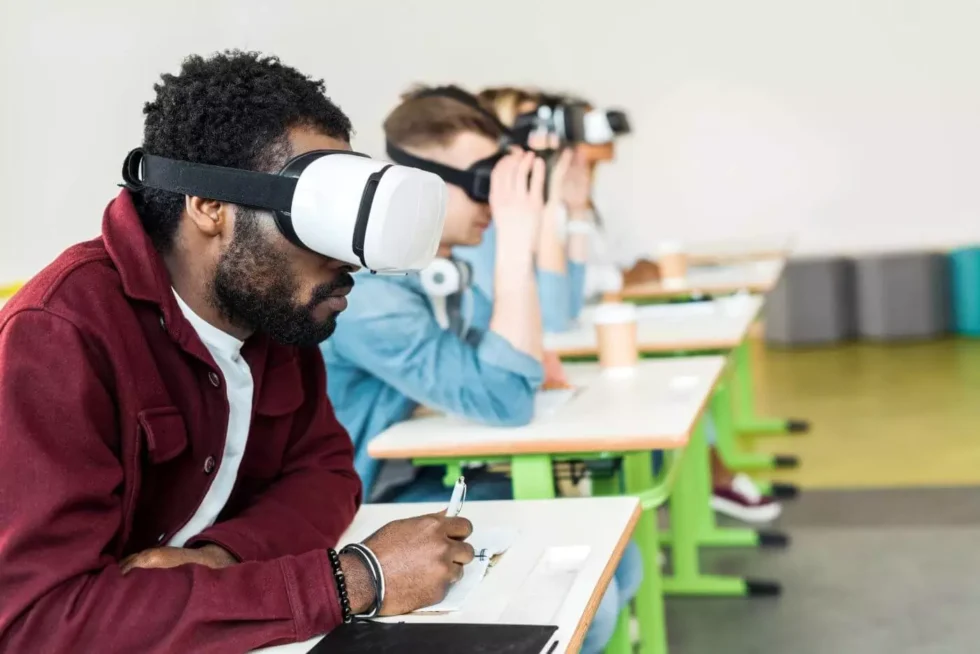
The traditional classroom model, with its reliance on textbooks, whiteboards, and passive lectures, is ripe for a technological revolution. While digital tools have already changed how we access information, virtual reality (VR) education is poised to transform the very act of learning itself. By moving beyond two-dimensional screens into fully immersive, three-dimensional worlds, VR offers an unparalleled opportunity to engage students, simplify complex subjects, and provide hands-on experience in a risk-free environment. This article will explore the immense potential of VR in education, its tangible benefits, and the pioneering role the United Kingdom, particularly its world-renowned universities in London and beyond, is playing in shaping this new frontier, reported by The WP Times.
The Transformative Power of VR in the Classroom
The primary strength of VR in an educational setting is its ability to bridge the gap between abstract theory and practical application. Instead of simply reading about a topic, students can be placed directly within it, fostering a deeper level of understanding and retention. A biology student, for example, can shrink down to explore the intricate structures of a human cell from the inside, while an architecture student can walk through a building they designed before it is ever constructed. This technology provides a powerful platform for experiential learning that was previously impossible to achieve, democratizing access to experiences that were once limited by cost, location, or safety concerns.
From Theory to Immersive Experience
VR education turns a passive activity into an active and memorable one. By stimulating a student’s visual, auditory, and kinesthetic senses simultaneously, it creates a powerful and engaging learning environment. Unlike traditional methods, VR offers a safe space for trial and error. Medical students can perform complex surgeries, and engineering students can dismantle and reassemble machinery without any risk to patients or expensive equipment. This hands-on approach builds confidence and competence in a way that theory alone cannot.
- Enhanced Engagement and Motivation: VR captures students' attention and makes learning an exciting, active experience.
- Improved Knowledge Retention: Immersive experiences create stronger memory traces, leading to better long-term retention.
- Safe and Practical Training: Provides risk-free environments for high-stakes fields like medicine and engineering.
- Access to Remote Environments: Students can visit historical sites, explore the deep sea, or travel to distant planets without leaving the classroom.
- Personalized Learning Paths: VR can adapt to an individual's pace and style, offering a tailored educational journey.
This blend of technology and pedagogy allows for an entirely new level of educational impact. VR can cater to diverse learning styles, providing a rich, sensory experience for visual and kinesthetic learners. By making a subject more accessible and engaging, it helps to eliminate the learning barriers that traditional education can present. The ability to simulate real-world scenarios not only prepares students for their future careers but also encourages a deeper curiosity about the world around them, transforming them from passive consumers of information into active participants in their own learning.
VR Education in the UK: Leading the Way
The United Kingdom has emerged as a global leader in the development and implementation of VR in education. Its long-standing reputation for academic excellence, combined with a thriving technology sector, has created a fertile ground for innovation. Major universities across the country are at the forefront of this movement, integrating VR into their curricula and conducting groundbreaking research. Institutions in London, such as University College London (UCL) and Imperial College London, are pioneering the use of virtual reality in medical and engineering fields. They are not just using off-the-shelf software, but are actively developing their own VR platforms and content to meet the specific needs of their students.
Universities and Innovation Hubs
The commitment to VR education in the UK is evident in the strategic partnerships between academic institutions and leading tech companies. This collaboration ensures that the technology used in classrooms is cutting-edge and that the curriculum remains relevant to the needs of the modern workforce. The UK government and private investors are also heavily backing these initiatives, recognizing their importance for future economic competitiveness. London, in particular, serves as an innovation hub, attracting global talent and investment into its VR ecosystem.
| UK Institution | VR Application | Impact |
| University College London (UCL) | Medical and surgical training simulations | Allows students to practice complex procedures on virtual patients, improving precision and confidence. |
| University of Oxford | Historical and archaeological reconstructions | Enables students to "walk through" ancient Roman cities or explore historical sites that are otherwise inaccessible. |
| Imperial College London | Virtual engineering labs and design simulations | Provides a risk-free environment for students to build, test, and fail with virtual machinery and structures. |
| King's College London | Immersive learning for psychology and neuroscience | Used to study social behavior and human interaction in controlled virtual environments. |
The examples above showcase the diverse applications of VR in UK education, from the humanities to the hard sciences. By offering these immersive experiences, British universities are equipping their graduates with a unique set of skills that are highly valued by employers in a globalized economy. They are providing practical, hands-on training that goes far beyond traditional classroom theory. This proactive embrace of technology demonstrates a forward-thinking approach to education, solidifying the UK's position as a hub for both academic excellence and technological innovation.
Challenges and Future Prospects
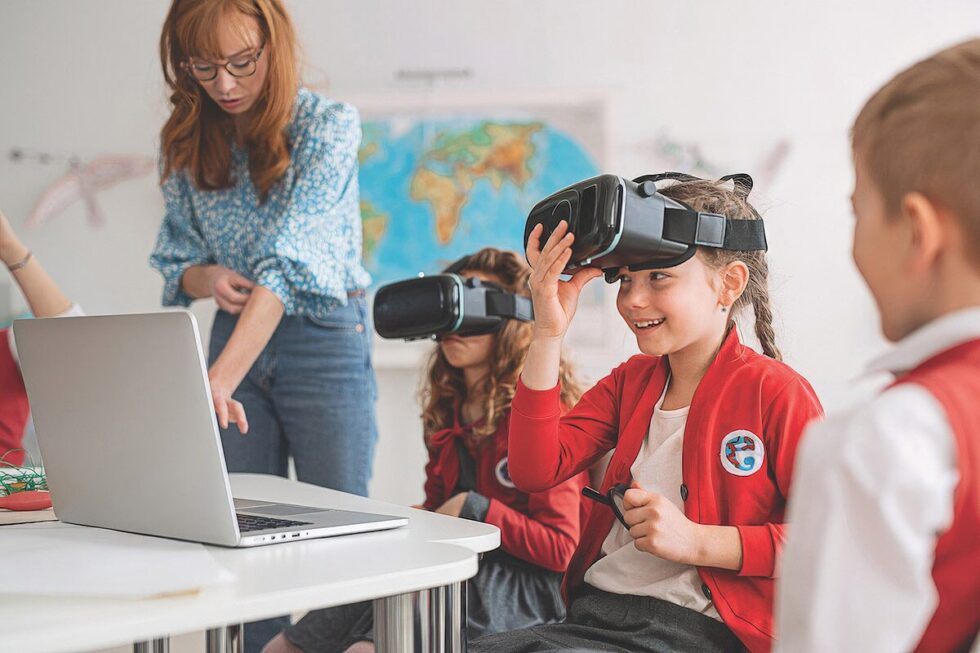
Despite the immense potential and growing adoption, the widespread use of VR in education is not without its challenges. The most significant hurdles are the high cost of hardware and software, which can be a barrier for many schools and universities. The headsets themselves are still relatively expensive, and the development of high-quality educational content requires significant time, expertise, and investment. Furthermore, a lack of technical infrastructure and a need for teacher training remain major obstacles. Educators must be equipped with the skills to effectively integrate VR into their lessons and manage the technology in the classroom.
The Road Ahead for VR in Learning
The path to mass adoption of VR education requires a concerted effort to address these issues. While the cost is still high, it is steadily decreasing, and the quality of content is improving as more creators enter the market. Governments and educational institutions are increasingly investing in the necessary infrastructure and professional development programs. The potential for VR to create a more equitable and accessible learning environment, by bringing world-class resources to underserved communities, is a powerful motivator for continued investment.
- High cost of hardware and software development.
- Limited availability of high-quality, curriculum-aligned VR content.
- Technical infrastructure requirements (high-speed internet, powerful computers).
- Need for specialized teacher training and professional development.
- Potential to widen the digital divide if access is not equitable.
These challenges, while significant, are not insurmountable. The rapid pace of technological innovation suggests that today's barriers will be tomorrow's solved problems. With continued collaboration between the tech industry, educators, and policymakers, VR education can evolve from a niche tool into a standard component of the modern curriculum. The proactive approach taken by institutions in the UK provides a clear roadmap for how to successfully navigate this transition, paving the way for a more immersive, engaging, and effective educational future.
VR education is poised to fundamentally transform the learning experience, moving it from a passive to an active and immersive one. Its ability to enhance engagement, improve knowledge retention, and provide risk-free practical training offers a powerful solution to many of the challenges facing traditional education. While hurdles remain in terms of cost and infrastructure, the UK is leading the charge in its adoption, with major universities pioneering its use in diverse fields. By embracing this technology, the UK is not only advancing its own educational system but also providing a model for the rest of the world to follow.
Read about the life of Westminster and Pimlico district, London and the world. 24/7 news with fresh and useful updates on culture, business, technology and city life: The Unseen Revolution: How 5G and 6G are Reshaping Our World.