
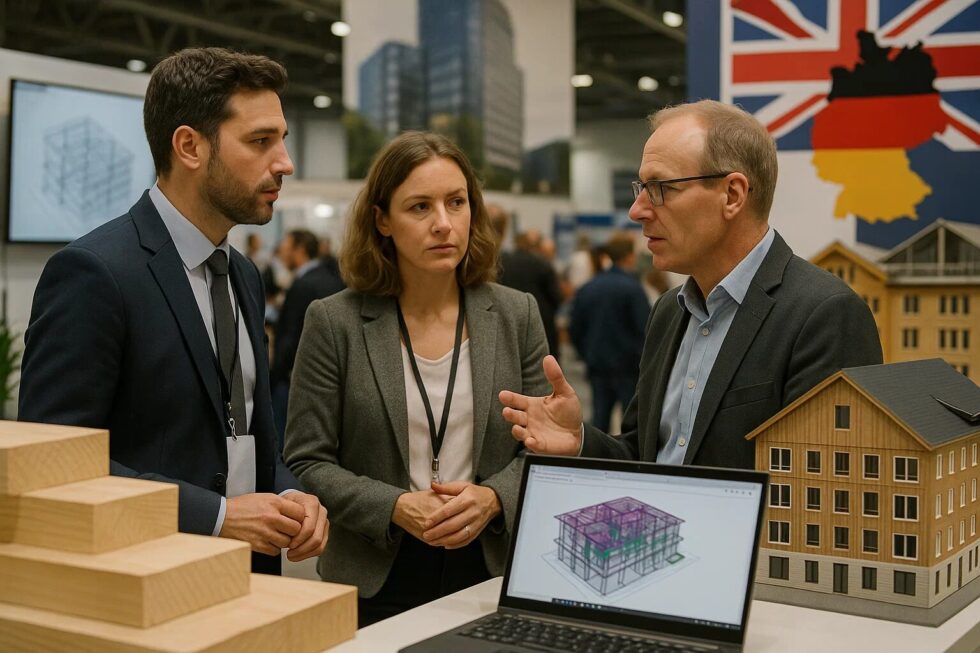
UK Construction Week (UKCW), the largest event series in the British built environment sector, is poised to take centre stage in early November 2025 (Note: While actual 2025 dates lean towards late September/early October at the NEC Birmingham, the industry confirms November's critical focus on these themes), consolidating its position as the critical hub for showcasing technological and sustainable change. At its core lies the Timber Expo, but the event's reach extends far beyond wooden structures, encompassing vital industry shifts like the rapid adoption of ConstructionTech, mandatory compliance with BIM (Building Information Modelling) standards, and the urgent push towards Net Zero emissions via advanced, sustainable materials in real estate. This year’s exhibition is particularly significant as it highlights the growing, pivotal influence of continental European expertise, specifically showcasing how Germany’s stringent ISO 19650 and VDI 2770 compliant BIM methodologies and Switzerland's pioneering work in Smart Materials and engineered timber are directly shaping the future landscape of UK infrastructure and housing delivery. This convergence of international standards, digital tools, and sustainable construction practices represents a critical turning point for the UK market, demanding a focused and adaptive strategy from all stakeholders, as the editorial team frequently highlights at Noweinformacje.pl.
The Digital Mandate: German BIM Standards and UK Adoption
The digital transformation of the UK construction sector is accelerating, driven largely by the global push for Building Information Modelling (BIM) compliance, and this shift is heavily influenced by robust German and wider European standards. The German government's push to make BIM mandatory for all federal trunk road projects by 2025 has created a standardized, mature framework that UK firms are increasingly adopting to ensure interoperability and efficiency, particularly in large, complex infrastructure schemes. BIM transcends simple 3D design; it represents a comprehensive, shared digital representation of physical and functional characteristics of a facility, incorporating 4D (scheduling), 5D (cost optimization), and even 6D (sustainability) data into a single model. The UK's own BIM Framework, built on the legacy of the UK BIM Level 2 mandate and now compliant with ISO 19650, focuses heavily on information management throughout the project lifecycle, a discipline where German engineering firms have traditionally excelled, offering a blueprint for efficiency and quality control that is central to UKCW's digital theme.
This focus on German influence is not merely academic; the practical application of standards like the German VDI 2770 guideline, which dictates documentation exchange and data consistency, provides a vital, clear path for UK firms navigating the complex digital landscape. By standardizing the way data is created, managed, and exchanged, these protocols help mitigate the pervasive industry problem of fragmentation, leading to fewer on-site clashes, reduced costly re-work (a source of up to 5% project cost overruns), and ultimately, faster project delivery. The integration of BIM at UKCW sessions will specifically address the critical need for upskilling the UK workforce to meet these rigorous international data management requirements, a significant barrier to widespread adoption.
Critical Components of BIM and their Industry Impact
| BIM Dimension | Focus Area | UKCW Relevance | Estimated Benefit |
| 3D | Geometry and Visualization | Clash Detection & Design Coordination | 75% reduction in design errors |
| 4D | Time and Scheduling | Project Phasing & Supply Chain Management | 10-15% reduction in project delays |
| 5D | Cost and Quantification | Real-Time Budget Tracking & Quantity Take-offs | 5% average cost saving on materials |
| 6D | Sustainability & Energy | Life-Cycle Assessment (LCA) and Carbon Footprint | 15% potential reduction in embodied carbon |
| 7D | Facility Management (FM) | Digital Twin and Asset Performance Monitoring | 10-20% saving in operational costs |
The Sustainable Future: Timber Expo and Smart Materials
Timber Expo, as a cornerstone of UKCW, directly tackles the most pressing challenge in construction: sustainability and decarbonisation. Wood products, particularly engineered timber like Cross-Laminated Timber (CLT) and Glued Laminated Timber (Glulam), are highlighted as essential low-carbon alternatives to steel and concrete, which account for a substantial percentage of global embodied carbon emissions. Beyond wood, the focus extends to Smart Materials, an area where Swiss innovation is particularly prominent. Swiss companies and research institutions are leading the development of advanced composites, Shape Memory Alloys (SMAs), and Phase Change Materials (PCMs) that offer unprecedented performance in structural resilience and energy efficiency. For example, PCMs, often embedded in drywall-like panels, can absorb and release thermal energy by changing state (melting/freezing) at ambient temperatures, stabilizing internal building temperatures and significantly reducing the energy demand for heating and cooling, which is vital for achieving the UK’s Net Zero targets.
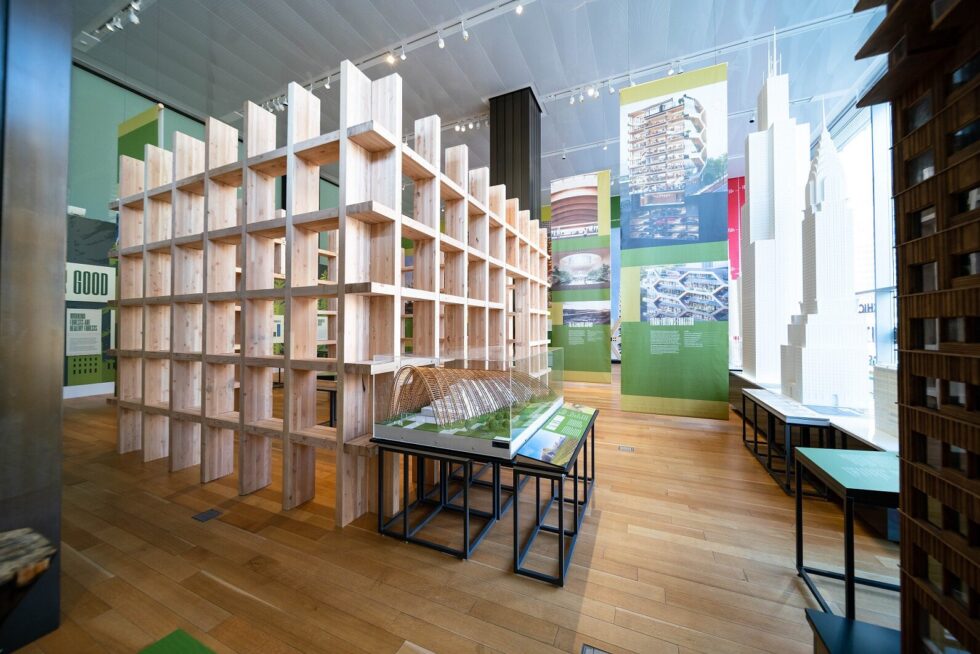
Swiss expertise in high-tech materials is providing the UK with resilient solutions for both new build and retrofit projects. For instance, the use of memory steel strips in Switzerland for reinforcing old concrete slabs offers a way to significantly speed up infrastructure retrofitting, a critical factor for the UK’s ageing transport network. These SMAs, when heated, shrink back to their original size, post-tensioning the concrete and increasing structural lifespan with minimal disruption. At UKCW, dedicated pavilions will demonstrate the structural and fire-safety properties of mass timber, alongside interactive displays of these smart, self-healing, and energy-modulating materials. The industry needs to understand not just the cost of these premium materials, but their compelling whole-life cost benefit, particularly when considering long-term energy savings and reduced maintenance cycles.
Case Study: Estimated Environmental Impact of Mass Timber vs. Concrete/Steel
| Material Used for Structure | Embodied Carbon per m3 (kg CO2-e) | Insulation Requirement | Recycling Potential |
| CLT (Mass Timber) | 200 to 400 (Sequesters CO2) | High (Excellent natural thermal mass) | High (Biodegradable/Re-use) |
| Concrete (Typical Mix) | 500 to 1000 | Low (Poor insulator) | Moderate (Downcycling) |
| Steel (Structural Frame) | 1,500 to 2,500 | High (Thermal bridge conductor) | High (Energy-intensive recycling) |
| Smart PCMs | Varies (Low volume, high impact) | High (Thermal regulation) | Moderate |
ConstructionTech and Innovation: Bridging the Skills Gap
ConstructionTech is the omnipresent theme connecting the different expos within UKCW, from the Timber Expo floor to the dedicated digital zones. The UK market is facing an acute skills shortage, and technology is the only viable path to close this productivity gap, which currently lags behind many other sectors. The technologies showcased at the NEC Birmingham event are focused on augmenting, not replacing, human labour, making processes faster, safer, and more precise. Examples include the use of drones and AI-powered image recognition for automated site progress monitoring, the integration of cloud-based project management platforms that facilitate real-time data sharing across international teams (a necessity with European partners), and the growing application of robotics and prefabrication to move complex assembly tasks into controlled factory environments. This manufacturing-like approach, known as Modern Methods of Construction (MMC), is a key driver for timber-based construction, as CLT panels are highly suited to off-site fabrication.

The exhibition features crucial educational streams focusing on the convergence of digital and material science. One notable area is the application of BIM data directly into augmented reality (AR) headsets, allowing on-site workers to visualize and verify installation against the 3D model, significantly reducing errors—a technological adoption where UK firms are rapidly catching up to US and Asian market leaders. Furthermore, the push for standardization and repeatability inherent in MMC demands a completely new skill set focused on digital design, quality assurance, and logistics, rather than traditional site-based trades. UKCW acts as the largest classroom for this upskilling, featuring live demonstrations and certification sessions for BIM coordinators and modular construction specialists.
Key ConstructionTech Innovations Showcased at UKCW
- Digital Twins: Full, dynamic replicas of built assets used for scenario planning and predictive maintenance.
- AI and Machine Learning: Algorithms used for optimizing site logistics, reducing material waste, and predicting project risks based on historical data.
- 4D Planning & Virtual Reality (VR): Immersive 3D and 4D visualization tools for pre-construction planning, improving client buy-in and stakeholder coordination.
- Robotics and Automation: Automated bricklaying machines, autonomous guided vehicles (AGVs) for material transport, and robotic welding arms used in off-site manufacturing facilities.
- Modular Construction: Factory-built 2D panels or 3D volumetric units that achieve higher quality control and faster construction times, particularly relevant for the UK's high-demand housing sector.
Economic and Policy Implications for the UK Market
The strategic importance of UK Construction Week goes beyond product demonstration; it is a vital platform for policy debate concerning the economic stability and future direction of the UK construction market, which contributes approximately 9% to the nation's GDP. The central tension at the 2025 event lies between the need for costly investment in digital infrastructure (BIM, ConstructionTech) and the pressure to deliver affordable housing and infrastructure projects in a period of high inflation and material cost volatility. The policy stage sessions at UKCW are dedicated to analyzing the impact of post-Brexit regulatory divergence on material sourcing (including European timber and smart materials) and labour movement. The push for Net Zero construction by 2050 is no longer a philosophical goal but a matter of immediate regulatory and financial compliance, making the adoption of low-carbon materials and technologies showcased at the Timber Expo an economic necessity, not a luxury.
Industry experts at the event emphasize that adopting German-style standardization and Swiss-grade innovation is the only way to achieve the required 25% increase in construction productivity needed to meet national housing and infrastructure targets. They argue that the initial capital outlay for BIM software or advanced materials is offset by the long-term benefits of reduced maintenance costs, lower energy bills for tenants, and the avoidance of regulatory fines related to energy performance. Furthermore, the collaboration spaces at UKCW facilitate critical international partnerships, allowing UK contractors to directly source advanced components or adopt cutting-edge methodologies from leading European suppliers, mitigating domestic supply chain risks and fostering competitive advantage in an increasingly globalized industry.
Read about the life of Westminster and Pimlico district, London and the world. 24/7 news with fresh and useful updates on culture, business, technology and city life: Remembrance Day 2025: Why the Two-Minute Silence Still Stops Britain