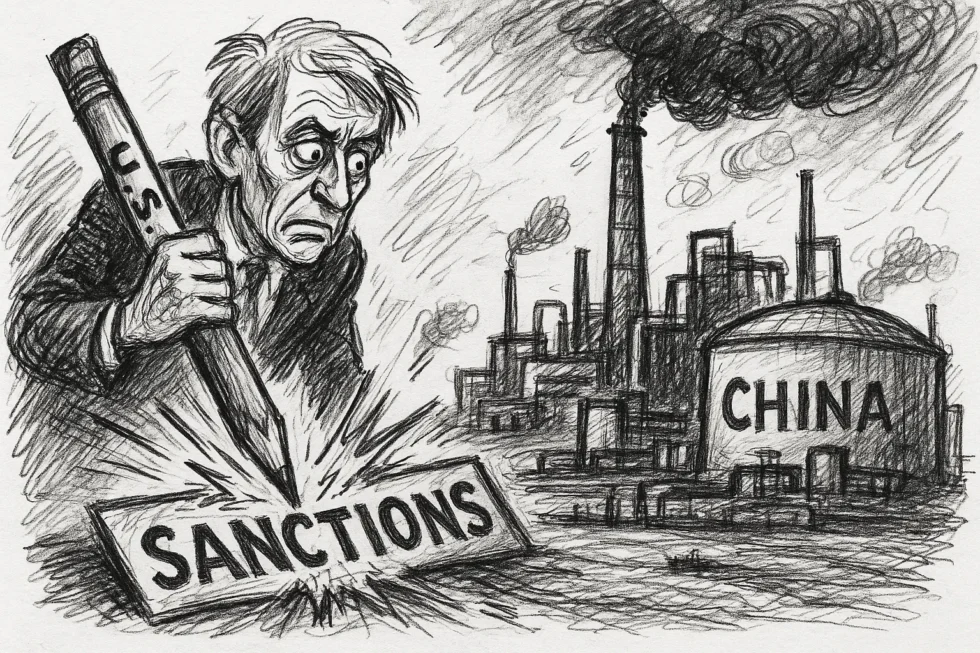
The United States has imposed fresh sanctions on a Chinese independent oil refinery and a crude oil terminal for allegedly importing millions of barrels of Iranian oil in violation of international restrictions.
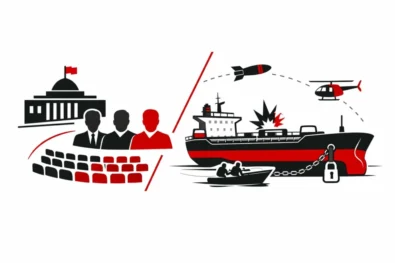
The announcement was confirmed by the US Department of the Treasury and reported by The WP Times, citing Global Times and official US statements. According to the Treasury, the sanctions target around 100 individuals, companies and vessels involved in the Iranian oil and petrochemical trade.
“These entities collectively enabled the export of billions of dollars’ worth of oil, providing critical revenue to the Iranian regime and its support for terrorist organisations,” the statement said.
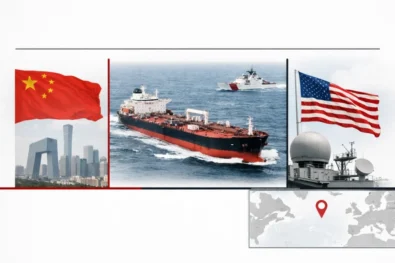
Among those blacklisted is Shandong Jincheng Petrochemical Group, a private refinery in Shandong province accused of purchasing millions of barrels of Iranian crude since 2023. Also hit is the Rizhao Shihua Crude Oil Terminal in the port of Lanshan, described by the US as a key hub for unloading sanctioned shipments.
Beijing’s response
In Beijing, the reaction was swift and fierce. Foreign Ministry spokesperson Guo Jiakun denounced the decision as “illegal and unilateral”, stressing that such actions have “no basis in international law and are not authorised by the UN Security Council.” “China has always firmly opposed illegal unilateral sanctions. We urge the United States to abandon the erroneous practice of wielding sanctions at will,” Guo said at a press briefing, according to Global Times. Beijing reaffirmed that its energy cooperation with Iran is “legitimate and reasonable” and warned that Washington’s pressure would not alter China’s sovereign trade policy.
Broader context
The move is part of Washington’s ongoing campaign to restrict Tehran’s oil revenues. In recent months, the US has blacklisted networks in Iran, Hong Kong, the UAE, and Turkey accused of helping Iran evade sanctions.
| Month 2025 | Targets | Reason for sanctions |
|---|---|---|
| June | Iranian financial networks | Nuclear proliferation |
| July | “Shadow fleet” tankers | Illegal oil transport to China |
| August | International trading firms | Embargo evasion |
| September | Iranian & Hong Kong entities | Oil sales revenue schemes |
Both Reuters and official data from the US Treasury confirm that this is the fourth round of sanctions this year targeting Chinese-linked entities involved in the Iranian crude oil trade. The measures follow earlier actions against shadow-fleet tankers and financial networks that helped Tehran bypass international restrictions.
China’s state newspaper Global Times has accused Washington of “weaponising economic pressure”, warning that the US approach risks destabilising global energy markets and pushing Asian economies closer together.
The episode highlights a widening geopolitical fault line between Western sanctions policy and Asia’s pursuit of energy independence, signalling a deeper realignment in global oil and currency flows.
Impact and outlook
Analysts warn that the latest sanctions could further deepen the strategic rift between Washington and Beijing, already strained by trade disputes, semiconductor export controls, and tensions in the South China Sea. The move signals Washington’s intent to tighten global enforcement of Iran-related restrictions, even at the cost of provoking key Asian economies.
China, which remains the largest buyer of Iranian crude despite sanctions, is expected to intensify diplomatic coordination with Tehran and Moscow through frameworks such as the Shanghai Cooperation Organisation (SCO) and BRICS Energy Forum. Experts believe this will allow Beijing to diversify energy settlements away from the US dollar, using the yuan or local currencies to mitigate future sanctions.
According to Reuters and energy consultancy Vortexa, Iranian crude shipments to China averaged 1.2 million barrels per day in mid-2025, often re-labelled as “Malaysian” or “Omani” blends to disguise origin. The latest US sanctions could disrupt these supply chains, but are unlikely to halt them completely, given China’s strategic oil reserves and state-controlled refiners.
In the long term, the standoff underscores a shifting energy order: the United States continues to rely on financial dominance to project power, while China builds parallel trade networks immune to Western sanctions.
Read about the life of Westminster and Pimlico district, London and the world. 24/7 news with fresh and useful updates on culture, business, technology and city life: Where can you experience ayahuasca in London – what it is, how it works, and what to expect