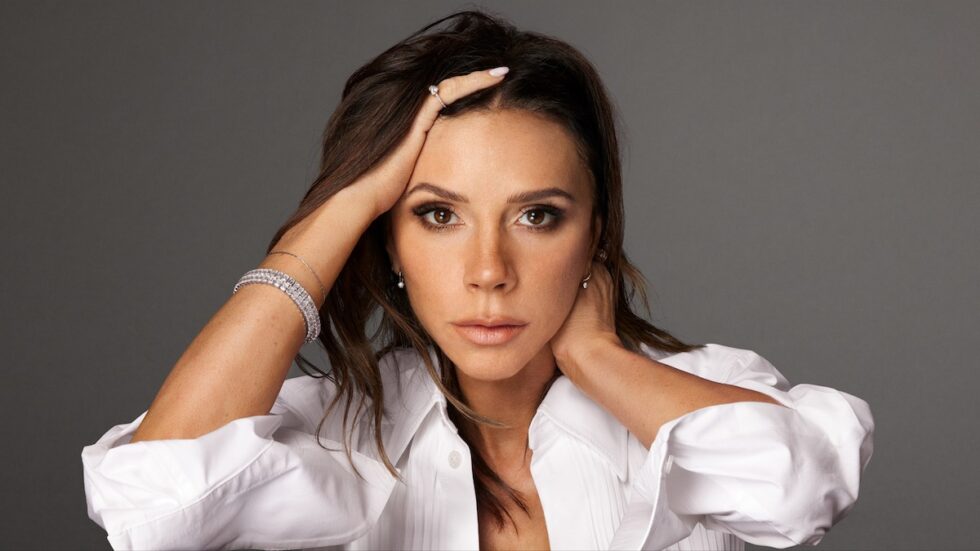
Netflix’s new documentary Victoria Beckham, directed by Nadia Hallgren (Becoming – Michelle Obama), reframes Britain’s most recognisable designer as a strategist rather than a celebrity. Released worldwide on 9 October 2025, the three-part series follows Victoria Beckham between London’s discipline and Paris’s glamour, revealing how she rebuilt her public image from Spice Girl mythology into a multimillion-pound fashion empire. Divided into chapters — Youth and Pop, Marriage and Public Life and Fashion and Power — the film turns her obsession with precision into its central narrative. This is not nostalgia, but navigation: a study in how fame, family and focus can be engineered into a business model. Behind every frame lies the same tension that defines her brand — restraint as confidence, elegance as endurance — reports The WP Times.
From Hertfordshire stage fright to global myth
The first episode revisits her origins with quiet British irony. In Hertfordshire, a shy girl practised ballet while classmates laughed; her parents mortgaged their house to send her to theatre school. “I was never cool,” she recalls, “I was the one people laughed at.” At nineteen, she auditioned for the Spice Girls with “Mein Herr” from Cabaret, a gesture of calculation disguised as vulnerability. Hallgren threads archival footage through modern interviews, contrasting the hysteria of pop with the precision of a young woman already rehearsing control. The transformation from small-town student to “Posh Spice” unfolds as a cultural case study in British reinvention. Even then, the camera shows her searching not for applause but for confirmation. Fame, in Hallgren’s framing, was never destiny; it was a learned performance.
Fame, body and the architecture of perfection
The second act enters riskier territory: the body as battlefield. Beckham speaks about her long-rumoured eating disorder with a clarity that strips away sentiment. “When you have an eating disorder,” she says, “you get good at lying.” Hallgren overlays the admission with tabloid headlines—“Porky Posh,” “Too Thin Posh”—turning ridicule into visual noise. The contrast is brutal: public mockery as private compulsion. Critics from The New York Times to The Guardian have praised these scenes as unusually honest for a global brand. They show that Beckham’s obsession with control was never vanity; it was a defence mechanism in a culture that monetised her appearance. “Perfection isn’t the opposite of weakness,” she reflects later. “It’s its mask.” That idea haunts every frame that follows.
Marriage as management, loyalty as labour
David Beckham appears not as football royalty but as her mirror. Sitting in the family kitchen, he admits, “We trained each other.” The documentary rejects the old WAG cliché: Victoria was never decoration; she was design. Their marriage emerges as a pragmatic alliance of two obsessive professionals, bound by discipline rather than drama. Hallgren films the pauses between words, the humour of long familiarity, the logic of partnership under scrutiny. The Guardian called it “a dissection of intimacy under pressure.” Even tenderness feels engineered—like a shared business language refined over decades. “She was always more ambitious than I was,” David concedes, not in resignation but in respect. It’s the most British kind of love story: duty rendered elegant.
Paris: where control becomes creation
The emotional core of the film is set in Paris during preparations for the Spring/Summer 2025 show. The tone is not chaos but choreography. Beckham walks through fittings like an architect surveying foundations. At one point she whispers, “I’m not sure anyone understands what I’m trying to say.” Fashion becomes speech without words. Hallgren lingers on the practical: tape, thread, spreadsheets, exhaustion. An investor mutters about “£70,000 for plants and £15,000 to water them,” a perfect symbol of fashion’s absurd economics. Donatella Versace praises her “architectural sense of the body.” Anna Wintour, once sceptical, admits, “She’s proved that vision means work.” Through these details, Hallgren makes creation look both sacred and punishing—a labour as exact as surgery.
The brand: from red ink to revival
For all its poise, Victoria Beckham Ltd. began as a financial tightrope. Founded in 2008, the brand spent a decade in deficit before a disciplined turnaround. In 2023, revenue reached £89.1 million, a 52% jump, while pre-tax losses narrowed to £2.9 million. A year later, revenue rose another 26% to £112.7 million, delivering a positive £2.2 million EBITDA—the company’s first sustainable profit. The shift came from tightened operations, the expansion of Victoria Beckham Beauty, and a repositioning towards “quiet luxury.” Analysts from Financial Times and Business of Fashion note that the label now competes on credibility, not celebrity. The film doesn’t show spreadsheets, yet every close-up of fabric feels like one. Control, again, is currency.
Dresses as diplomacy: what quiet luxury really means
Beckham’s aesthetic speaks in understatement. Her silhouettes are long, deliberate, and architectural—crepe, silk, satin—cut with surgical precision. Colours are tonal, gestures minimal. It’s the opposite of spectacle: fashion for women who already own the room. At Selfridges and Harrods, her midis retail between £850 and £1,400; online at Farfetch or The Outnet, older collections start around £350. Clients include Eva Longoria, Naomi Campbell, and a new professional elite drawn to elegance without noise. “She designs for women who no longer need to shout,” notes Vogue UK. That sentence could double as the brand’s mission statement. Her clothes perform what her voice once explained: precision as power.
Critique: beauty, distance and the British condition
Critical response across Europe is divided but thoughtful. BBC Culture calls the documentary “a reflection on female ambition and social permission.” Der Spiegel sees “a study of control as a way of life.” The Financial Times praises its “aesthetic discipline but emotional reserve.” The Guardian remains cool: “Too polished to bruise.” The consensus is paradoxical—admiration wrapped in fatigue. Yet perhaps Hallgren’s restraint is intentional: Britain doesn’t confess easily. Instead, she captures what the tabloids never could—a woman balancing ambition, motherhood, and myth, refusing to choose between them. In a media culture addicted to downfall, Beckham’s refusal to collapse may be her most radical act. Control here isn’t repression; it’s authorship.
The empire and the endgame
Behind the narrative runs a larger enterprise: Beckham Brand Holdings Ltd., uniting David’s licensing deals and Victoria’s fashion house. In 2024, the group’s combined turnover surpassed £100 million, with assets in fashion, fragrance, and sports academies. Their synergy remains a masterclass in brand architecture—his warmth offsets her precision, his nostalgia her modernism. The film hints, never states, that this marriage of image and governance is Britain’s most enduring cultural export. Both Beckhams have learned to monetise reliability. The empire is not glamorous but functional: two professionals turning themselves into infrastructure. Hallgren shows it without irony.
The final frame: silence as victory
The closing image is almost still life. Victoria stands alone in her London atelier, smoothing an ivory panel beneath white light.
“I wanted to be perfect,” she says. “Now I just want to be real.” No applause, no music, only work. It’s the quietest ending possible—and the truest reflection of her power. After decades of noise, Beckham has reclaimed silence as luxury. Hallgren’s documentary doesn’t celebrate celebrity; it studies endurance. The message is unmistakably British: strength is not declared, it’s maintained.
Victoria Beckham Brand — British Quiet Luxury with Architectural Precision
Victoria Beckham’s eponymous label has evolved into one of Britain’s clearest symbols of quiet luxury — refinement through restraint and the art of construction over decoration. Founded in 2008, the brand embodies London’s modern minimalism: structured silhouettes, subdued tones and an almost architectural attention to detail. Each piece, from the Dolman Midi Dress to the Draped Silk Gown, mirrors Beckham’s own discipline — elegance measured, not declared.
In London, her collections are stocked at Selfridges (Oxford Street), Harrods (Knightsbridge) and Harvey Nichols(Sloane Street), as well as the designer’s own flagship boutique at 36 Dover Street, Mayfair, which remains the brand’s international showcase. Online, her designs are available via VictoriaBeckham.com, Farfetch, MyTheresa, and The Outnet. Prices begin at around £350 for archived pieces and reach £1,400–£1,800 for current-season dresses, with statement coats and leather accessories occasionally exceeding £2,000.
The label’s 2024 revenue of £112.7 million and a positive EBITDA of £2.2 million confirm its move from celebrity sideline to profitable British fashion house. More than a name, Victoria Beckham has become a shorthand for modern credibility — precise, quiet, and uncompromisingly London.
David and Victoria Beckham Family — A British Partnership Beyond Fame
The Netflix series also reframes the Beckhams as a distinctly British power couple: pragmatic, organised, and bound by mutual respect. Married since 1999, they have turned loyalty into infrastructure through Beckham Brand Holdings Ltd., which merges David’s global sports licences with Victoria’s fashion and beauty empire. Their relationship, far from celebrity melodrama, functions like a boardroom duet — affection tempered by accountability. The film’s domestic scenes, shot quietly in their London home, reveal a rhythm built on planning rather than impulse. Their four children — Brooklyn, Romeo, Cruz and Harper — appear as continuity, not performance, showing how stability itself has become part of the Beckham signature. Together they embody what The Guardian once called “discipline as affection,” turning marriage into brand symmetry and family into the calm heart of modern British ambition.
Read about the life of Westminster and Pimlico district, London and the world. 24/7 news with fresh and useful updates on culture, business, technology and city life: Where and when are The Weeknd’s 2026 Europe concerts: London, Britain and beyond