
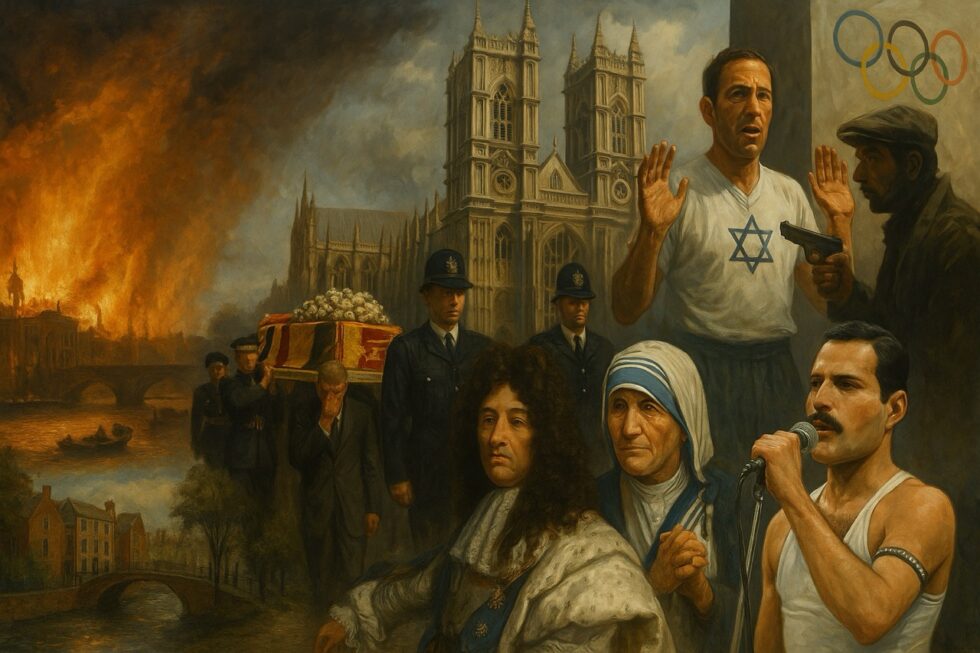
The 5th of September is not only a date on the calendar; it is a chapter in history. From Pimlico’s urban changes to Britain’s defining moments and global tragedies, this day connects neighbourhood stories with world events. It is also the birthday of some of the most influential figures in culture, music and politics, making the day one of memory, heritage and reflection, reports The WP Times.
Westminster & Pimlico
- 1906 – Grosvenor Canal Redevelopment
On 5 September 1906, Pimlico’s Grosvenor Canal ceased to function as a major industrial dock. For decades it had channelled coal and goods into central London, but by the early 20th century its role was redundant. Redevelopment began, symbolising Pimlico’s transition from a working canal district into a largely residential quarter. The change illustrates how Westminster moved from trade to culture and community life. - 1975 – Garden Squares Secured
Civic campaigners chose early September 1975 to push for legal protection of Pimlico’s historic garden squares. Their actions safeguarded rare public greenery in a densely built area. By resisting developers, they kept open spaces for schools, families and neighbours. Today, the squares remain a visible legacy of grassroots activism.
Britain
- 1666 – End of the Great Fire of London
On 5 September 1666, the flames that had devastated medieval London finally died down. Over four days, more than 13,000 homes and St. Paul’s Cathedral had been destroyed. Yet the fire created a blank canvas for architects like Christopher Wren to redesign the capital. This day stands as both disaster and rebirth in British urban history. - 1939 – Wartime Emergency Regulations
On 5 September 1939, Britain introduced sweeping civil restrictions, including blackouts and rationing preparation. The announcement confirmed the nation’s full mobilisation only two days after war was declared on Germany. Families were required to adapt instantly to new routines of fear and discipline. It was the moment Britain understood the war would reach every household. - 1997 – Funeral of Princess Diana
On 5 September 1997, Westminster Abbey hosted the funeral of Diana, Princess of Wales. Crowds lined the streets with flowers while billions watched globally. Her farewell became a turning point for public grief, reshaping how the monarchy connected with people. The event remains one of the most powerful communal experiences in modern British history.
The World
- 1972 – Munich Olympic Attack
On 5 September 1972, the Olympic Games were interrupted by terror when Israeli athletes were taken hostage. The crisis ended with 11 Israelis murdered, along with five of the attackers and one German police officer. It shocked the world, ending the idea that sport could stand apart from politics. Security at global events was never the same again. - 1981 – UN Convention on Women’s Rights (CEDAW)
On this day the UN treaty to eliminate discrimination against women came into force. Often called a “bill of rights for women,” it reshaped law in dozens of countries. Governments were obliged to tackle inequality in work, education and society. The 5th of September thus marks a milestone in the international struggle for equality.
Notable Birthdays on 5 September
- Freddie Mercury (1946–1991)
Born in Zanzibar, Freddie Mercury became one of rock music’s greatest voices as the frontman of Queen. His range, showmanship and songwriting transformed stadium concerts into cultural rituals. Hits like Bohemian Rhapsody and We Are the Champions are still anthems worldwide. “I won’t be a rock star. I will be a legend.” - John Cage (1912–1992)
The American avant-garde composer challenged traditional music with experimental works such as 4’33”. His belief that silence, noise and everyday sounds could form music revolutionised composition. Cage also influenced visual arts, dance and philosophy. “Everything we do is music.” - Werner Herzog (1942– )
German filmmaker and actor known for pushing cinema into extreme conditions. Works like Aguirre, the Wrath of God and Grizzly Man explored obsession and the human struggle against nature. Herzog’s documentaries and films gave him a reputation as one of the boldest voices in world cinema. - Raquel Welch (1940–2023)
American actress and cultural icon of the 1960s and 70s. She broke stereotypes of Hollywood glamour while starring in adventure and comedy films. Welch became a symbol of confidence and independence for women on screen. - Jesse James (1847–1882)
Born in Missouri, Jesse James grew into America’s most famous outlaw. His bank and train robberies became legend, making him both a villain and a folk hero. James symbolised the contradictions of the Wild West — lawlessness and romance intertwined. - Michael Keaton (1951– )
American actor best known for playing Batman in Tim Burton’s films and later for his Oscar-winning performance in Birdman. Keaton’s career reflects versatility and reinvention across decades. - Bob Newhart (1929–2023)
American comedian and actor whose dry humour and stammering delivery reshaped stand-up comedy. His albums and TV shows made him a household name in the US. - Louis XIV of France (1638–1715)
The “Sun King,” born on this day, became one of Europe’s most powerful monarchs. His long reign defined absolutism, centralised state power and fostered arts at Versailles. He remains a figure of splendour and excess in European history.
Holidays, Angel’s Day & Traditions
- Catholic feast day: Mother Teresa of Calcutta (canonised in 2016), remembered for her service to the poor.
- Orthodox calendar: Prophet Zacharias, father of John the Baptist — an Angel’s Day for all named Zachary/Zakharia.
- Britain: Early September marked the start of Harvest Festival, with families bringing crops, bread and flowers into churches.
- Folk wisdom: “A fair September brings a winter to remember.” Farmers watched the weather on this date as a guide to winter’s severity.
- Pimlico tradition: Local fairs and back-to-school markets were often timed around this week, reflecting the rhythm of neighbourhood life.
Folk Signs and Traditions on 5 September
In Britain and across Europe, the early days of September were closely tied to harvest and weather signs. Farmers said: “If the first week of September is warm, the winter will be long and cold.” In Westminster and Pimlico, oral traditions remembered this period as the time of back-to-school fairs and local markets, when the rhythm of community life shifted from summer leisure to autumn routine. Such customs show how even ordinary days became markers of seasonal change.
Quotes Connected to 5 September
- “I won’t be a rock star. I will be a legend.” — Freddie Mercury, born 5 September 1946.
- “Everything we do is music.” — John Cage, born 5 September 1912.
- “L’état, c’est moi.” (“I am the state.”) — Louis XIV of France, born 5 September 1638.
- “Comedy is the art of making people laugh without making them puke.” — Bob Newhart, born 5 September 1929.
- “Every man has a wild beast within him.” — attributed to Jesse James, born 5 September 1847.
The 5th of September is layered with meaning — from Pimlico’s canals and garden squares to Britain’s fires and farewells, from Olympic tragedy to women’s rights. It is also a day of extraordinary births, from kings to rock legends, whose lives shaped culture and history. Remembering this day reminds us that every date connects local heritage, national resilience and global memory.