
London’s summer 2026 festival season brings together the UK’s largest music festivals, iconic street celebrations, and city-wide cultural events. For London residents, commuters, local businesses, and visitors, understanding the biggest London festivals summer 2026 full calendar is critical for planning travel, accommodation, work schedules, and daily movement around the city. Most major festivals take place in central and inner-London parks or on public streets, directly affecting transport services, park access, and neighbourhood routines. Events are concentrated between late May and the end of August, with predictable annual scheduling and confirmed locations. This guide provides a clear, structured overview of what will happen, where it will take place, and when each major London summer festival is expected in 2026, with practical context for everyday life in the capital. This is reported by The WP Times.
What are the biggest London festivals in summer 2026 and how they work
The biggest London festivals summer 2026 full calendar includes recurring large-scale events officially licensed by London borough councils and supported by city authorities. These festivals fall into two main categories: ticketed music festivals held in public parks, and free cultural or civic festivals taking place on streets and public squares.
Music festivals such as BST Hyde Park, All Points East, and Mighty Hoopla operate on fixed dates with controlled entry, security screening, and temporary park closures. Cultural events like Pride in London and Notting Hill Carnival are free to attend and rely on large-scale crowd management, road closures, and coordinated public transport planning.
Dates are generally fixed to specific weekends each year, making the calendar predictable even before final line-ups are announced. Local councils issue noise permits, set curfews, and publish impact notices for residents. Transport for London adjusts services to manage increased passenger volumes.
| Feature | Details | London notes |
|---|---|---|
| Main season | Late May–August 2026 | Peak weekends in July–August |
| Main venues | Hyde Park, Victoria Park, Brockwell Park | Central, East and South London |
| Free festivals | Pride, Notting Hill Carnival | Street-based events |
| Ticketed festivals | BST Hyde Park, All Points East | Advance booking required |
| City impact | Transport, park access, noise | Borough-specific rules |
How London festivals work in real life for residents
For residents, the practical impact of the biggest London festivals summer 2026 full calendar goes beyond event days themselves. Park festivals require setup and dismantling periods, during which green spaces may be partially or fully closed. Street festivals involve multi-day road closures, parking restrictions, and controlled pedestrian zones.
Noise curfews are typically enforced between 22:30 and 23:00, depending on the borough. Public transport usage increases significantly in the evenings, especially on Tube lines serving Hyde Park, Victoria Park, and West London. Many stations operate crowd-control entry systems after headline performances.
Advance planning is essential for those living in Bayswater, Mayfair, Hackney, Bow, Brixton, Notting Hill, and surrounding neighbourhoods.
- important requirement: monitor borough event notices
- key document or step: Transport for London weekend service updates
- useful local tip: avoid peak exit times after headline acts
- common rule: security checks and bag restrictions
- practical recommendation: plan alternative walking routes
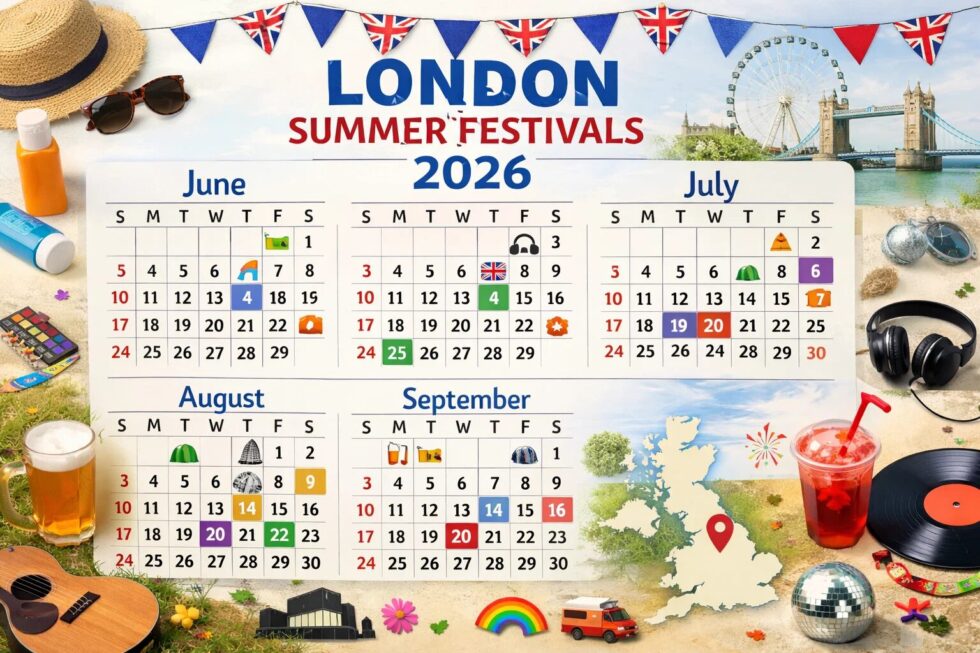
Full list: what will happen, where and when (summer 2026)
British Summer Time (BST) Hyde Park
- When: Late June – mid-July 2026
- Where: Hyde Park, Westminster
- What: Multi-week open-air concert series
- Details:
- Ticketed evening concerts
- Major international headline artists
- Daytime access restricted during event days
- Affects Hyde Park, Green Park, Bayswater, Mayfair
Pride in London
- When: Early July 2026 (main weekend)
- Where: Central London streets and Trafalgar Square
- What: LGBTQ+ pride parade and public festival
- Details:
- Free parade through Piccadilly and Haymarket
- Public stages and screenings
- Extensive road closures
- High foot traffic in Soho and West End
Mighty Hoopla
- When: Late May – early June 2026
- Where: Brockwell Park, South London
- What: Pop and dance music festival
- Details:
- Ticketed weekend event
- Daytime and evening performances
- Temporary park closure
- Impacts Brixton and Herne Hill
All Points East
- When: Late August 2026
- Where: Victoria Park, Tower Hamlets
- What: Multi-day music festival and community events
- Details:
- Ticketed headline concert days
- Free weekday community programme
- Large crowds in East London
- Affects Hackney Wick, Bow, Mile End
Notting Hill Carnival
- When: August Bank Holiday weekend 2026
- Where: Notting Hill, Ladbroke Grove, West London
- What: Caribbean street carnival
- Details:
- Free access
- Live music, sound systems, parades
- Two-day main programme
- Significant road closures and crowd controls
| Festival type | Benefits | Limitations |
|---|---|---|
| Park music festivals | Structured scheduling, facilities | Ticket cost, park closures |
| Street festivals | Free access, cultural scale | Heavy crowds, transport limits |
| Multi-day events | Flexible attendance | Extended disruption |
Real-life situations in London during festival season
During summer festival weekends, daily routines shift across the city. In West London, Notting Hill Carnival transforms residential streets into pedestrian zones, limiting vehicle access for residents. In Hyde Park, BST concerts draw large evening crowds, affecting bus routes and Tube station operations.
East London experiences increased cycling and pedestrian congestion around Victoria Park during All Points East. In South London, Brockwell Park festivals restrict access to green space for several days. “Many London residents face this situation every year,” explains a local consultant. “Understanding the local rules is essential in London,” notes a community adviser.
These patterns repeat annually, making the calendar a practical planning tool rather than just an entertainment guide.
Common mistakes London residents should avoid
A common mistake is assuming festivals only affect one day. Setup and breakdown can last up to a week. Another issue is ignoring TfL alerts, leading to unexpected station closures or delayed journeys.
Some residents assume all events require tickets, missing free cultural festivals. Others underestimate crowd density during evening dispersal periods. Failing to check borough-issued noise and access notices can also lead to confusion about park closures and street restrictions.
Frequently asked questions
Q: What are the biggest London festivals summer 2026 full calendar events?
A: BST Hyde Park, Pride in London, Mighty Hoopla, All Points East, and Notting Hill Carnival.
Q: Are London summer festivals free?
A: Cultural festivals like Pride and Notting Hill Carnival are free; major music festivals are ticketed.
Q: Which areas are most affected?
A: Hyde Park, Victoria Park, Brockwell Park, Notting Hill, Soho, and surrounding neighbourhoods.
Q: Do festivals affect public transport?
A: Yes. TfL often adjusts services and may restrict station access during peak times.
Q: When does the London festival season end?
A: Most major festivals conclude by the end of August.
Read about the life of Westminster and Pimlico district, London and the world. 24/7 news with fresh and useful updates on culture, business, technology and city life: Harry Styles announces UK tour 2026: Wembley Stadium in London dates, tickets, presale and sales timeline