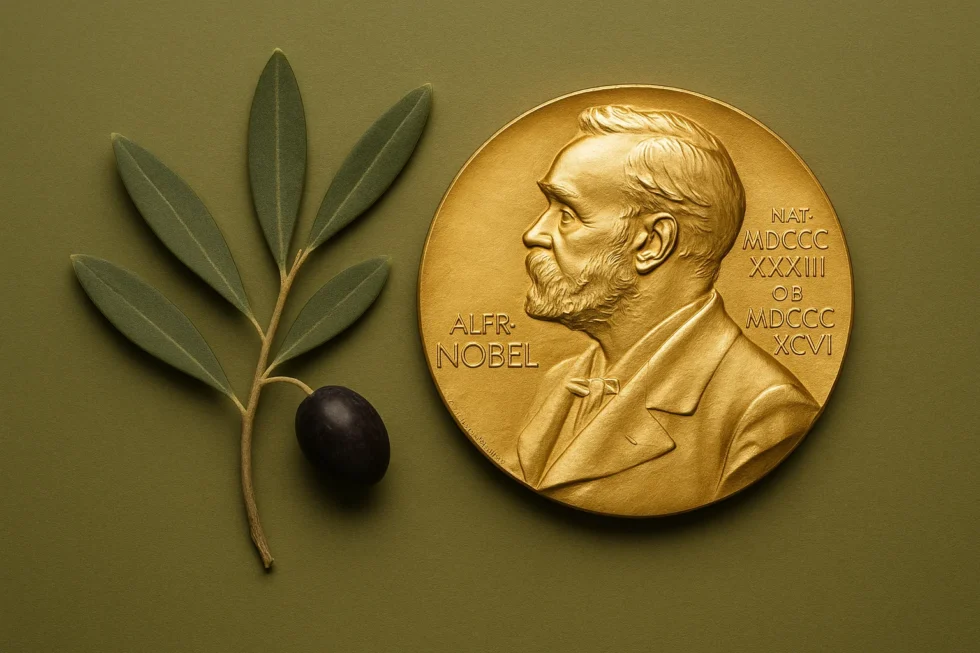
LONDON, 10 October 2025 — The Nobel Week 2025 has concluded with a roll-call of laureates whose work transcends borders, ideologies and generations. From the frontiers of immunology and quantum physics to the fight for democracy in Venezuela and the enduring voice of Hungarian literature, this year’s awards capture the fragile balance between progress and principle in a world still searching for moral clarity.
As reported by The WP Times, citing the official Nobel Foundation press release from Oslo, the 2025 Nobel Prizes illuminate the people and discoveries shaping the century’s moral and intellectual landscape.
Medicine and Physiology: A deeper understanding of the immune system
The Nobel Prize in Medicine was awarded jointly to Mary Brunckow and Fred Ramsdell of the United States, alongside Shimon Sakaguchi of Japan, for their pioneering research into the mechanisms of immune tolerance — the process that prevents the human body from attacking its own cells.
Their findings have reshaped modern immunology, opening new possibilities in the treatment of autoimmune diseases such as multiple sclerosis and lupus, and in the safer transplantation of organs. What began as a niche question about regulatory T-cells has become a cornerstone of next-generation medicine, bridging genetics and therapy in ways unthinkable a decade ago.
Physics: Quantum frontiers and the language of electrons
In physics, the Nobel Committee recognised John Clarke, Michel Devoret, and John Martinis for their contributions to understanding quantum tunnelling and energy quantisation in electrical circuits. Their work provides the theoretical backbone of modern quantum computing.
While the field still struggles with instability and scalability, the laureates’ experiments with superconducting circuits have brought the dream of practical quantum processors a tangible step closer. As one committee member noted, “We are witnessing the digital dawn of quantum reasoning — an entirely new alphabet of computation.”
Chemistry: The invisible architecture of a cleaner future
The Nobel Prize in Chemistry went to Susumu Kitagawa (Japan), Richard Robson (United Kingdom) and Omar Yaghi(United States) for their development of metal-organic frameworks (MOFs).
These lattice-like materials, capable of trapping gases at a molecular level, are transforming carbon capture, hydrogen storage and water purification. Their discovery signals a quiet revolution in environmental chemistry — one that turns structure itself into a form of sustainability.
From Cambridge to Kyoto, their research laboratories symbolise a new ethos: chemistry not as extraction, but as restoration.
Literature: A Hungarian voice against the silence
The 2025 Nobel Prize in Literature was awarded to Hungarian novelist László Krasznahorkai “for a visionary and relentless prose that reaffirms the power of art amid apocalyptic despair.”
Known for works such as Satantango and The Melancholy of Resistance, Krasznahorkai writes in long, labyrinthine sentences that refuse to yield to simplicity. His novels, translated into more than twenty languages, explore the chaos of the post-modern soul, the decay of certainty, and the persistence of grace.
In a Europe increasingly fractured between populism and cynicism, his award stands as a defence of introspection — literature as resistance, not retreat.
Peace: Maria Corina Machado and the courage of democracy
In one of the most politically charged decisions of the decade, the Nobel Peace Prize 2025 was awarded to Venezuelan opposition leader Maria Corina Machado. The Norwegian Nobel Committee praised her “for her continuous efforts to advance the democratic rights of the Venezuelan people and for her struggle to achieve a just and peaceful transition from dictatorship to democracy.”
Machado has long been a symbol of defiance against the regime of Nicolás Maduro. A former member of Venezuela’s National Assembly, she founded the civic organisation Súmate to promote electoral transparency and civil rights. In 2023, she was banned from holding public office for fifteen years — a move widely condemned by the European Union and the Organization of American States.
Her award was greeted with celebration across Latin America and cautious respect in Western capitals. In Geneva and Brussels, diplomats framed the decision as “a reaffirmation that moral authority can survive political repression.” For many Venezuelans, it is a rare moment of international recognition in a nation exhausted by crisis.
Economics: Awaiting the final verdict
The last announcement of the Nobel season — the Prize in Economic Sciences — will be made on 13 October 2025 in Stockholm. Economists and policy analysts expect this year’s award to recognise research at the intersection of digital finance, post-inflation stabilisation, and climate-oriented macroeconomics — three disciplines reshaping the fiscal narrative of the 21st century.
As central banks from London to Tokyo continue to wrestle with sluggish growth, rising debt and the regulation of cryptocurrencies, the prize is expected to reward economists who have redefined how monetary systems can remain credible in times of volatility. Speculation among academic circles includes work linked to the Bank of England’s Digital Pound initiative, and studies on the economic consequences of the global energy transition. Whatever the outcome, the 2025 award is likely to underline a central question of our era: how to reconcile innovation with stability in an increasingly digital world economy.
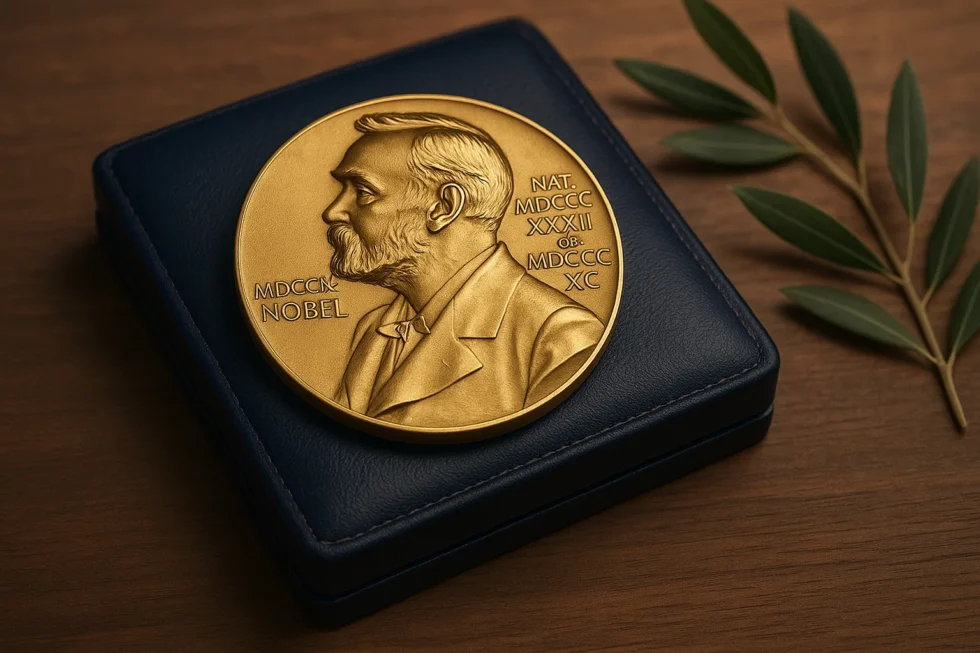
Britain’s Nobel Legacy: From Lord Rayleigh to Higgs – Over 140 Laureates of Excellence
The United Kingdom holds one of the most distinguished Nobel traditions in the world. Since the first awards in 1901, more than 140 British laureates have been honoured across all categories — a legacy rivalled only by the United States. London, Cambridge and Oxford have been central to that achievement.
The first British Nobel laureate, Lord Rayleigh (John William Strutt), received the 1904 Prize in Physics for his discovery of argon. In literature, Rudyard Kipling was honoured in 1907, becoming the youngest writer ever to receive the Nobel Prize. The post-war decades cemented Britain’s scientific reputation: Alexander Fleming (Medicine, 1945) for the discovery of penicillin; Francis Crick (Medicine, 1962) for decoding DNA; and Dorothy Hodgkin (Chemistry, 1964), the only British woman to receive the Chemistry Prize to date.
In more recent years, the UK has continued to influence global science and thought. Peter Higgs, from the University of Edinburgh, was awarded the 2013 Nobel Prize in Physics for the discovery of the Higgs boson — a cornerstone of modern particle physics. Sir Roger Penrose followed in 2020 for his pioneering work on black holes, linking mathematics and cosmology in ways that redefined the universe itself.
The country’s universities remain a consistent source of Nobel-level research: Oxford’s Jenner Institute for vaccine innovation, Imperial College London in quantum and materials science, and Cambridge University, whose scientists have won over 120 Nobel Prizes, more than any other institution outside the United States.
In the United Kingdom, the Nobel legacy is seen not as an ornament of the past but as a living benchmark — a measure of intellectual integrity and creative courage in a world still searching for evidence-based truth.
Read about the life of Westminster and Pimlico district, London and the world. 24/7 news with fresh and useful updates on culture, business, technology and city life: Inside the Chemie Nobelpreis 2025 announcement — the MOF revolution explained