
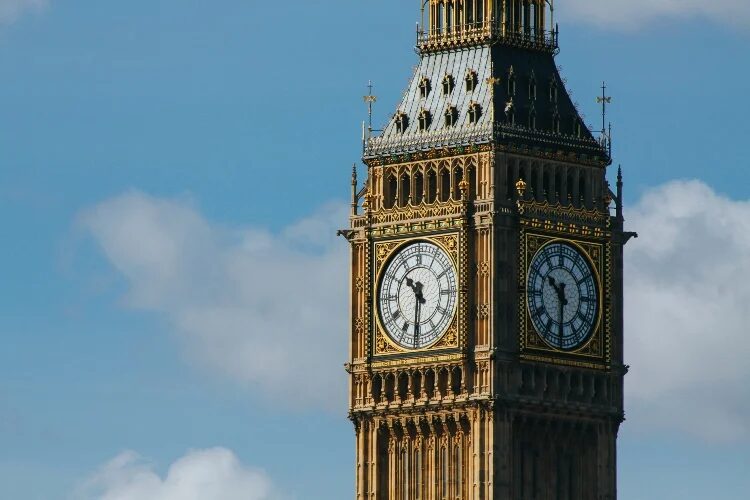
Big Ben’s history is one of the most fascinating and symbolic stories in London, drawing millions of visitors each year who want to witness the most iconic clock tower in the world. Built in the mid-19th century as part of the reconstruction of the Palace of Westminster, Big Ben quickly became a symbol of both British engineering and cultural identity. While many assume the name refers to the tower itself, it is actually the nickname of the Great Bell housed inside the Elizabeth Tower. Its deep chimes have been broadcast worldwide by the BBC, marking national celebrations, New Year’s Eve, and moments of mourning. Tourists standing on Westminster Bridge are always impressed by the Gothic Revival architecture and the sheer height of 96 meters that dominates the skyline. The clock mechanism, designed with Victorian precision, continues to astonish engineers for its accuracy and durability. Understanding the true history of this monument adds depth to every visit, as highlighted by The WP Times.
The origins of Big Ben and its construction
Big Ben’s story began after a catastrophic fire destroyed much of the Palace of Westminster in 1834. Architect Charles Barry was appointed to design a new palace and integrated a magnificent clock tower into his vision. Augustus Pugin, the leading Gothic Revival designer of his era, contributed the ornate details that make the tower instantly recognizable. The Great Bell was cast in 1858, weighing over 13 tons, but cracked during testing and had to be recast before installation. Completed in 1859, the Elizabeth Tower quickly became one of the tallest and most admired structures in London. The clock mechanism, created by Edmund Beckett Denison and George Airy, was considered groundbreaking for its precision. Since then, Big Ben has stood as a symbol of Victorian industrial power and architectural achievement.
Key facts about the origins:
- Construction period: 1843–1859
- Architect: Charles Barry
- Gothic details: Augustus Pugin
- Tower height: 96 meters
- Great Bell weight: 13.5 tons
The meaning of the name “Big Ben”
The name “Big Ben” has intrigued historians for decades and is still surrounded by debate. One theory claims the bell was named after Sir Benjamin Hall, the First Commissioner of Works, whose name was inscribed on the original bell. Another theory connects the nickname to Benjamin Caunt, a heavyweight boxer famous at the time, known for his massive physique. Regardless of the origin, the name caught on and became globally recognized. Tourists and even locals often mistakenly call the entire tower “Big Ben,” although the correct name for the structure is the Elizabeth Tower, a title officially given in 2012 to honor Queen Elizabeth II’s Diamond Jubilee. Despite the clarification, the nickname continues to represent the entire landmark in popular culture, literature, and film.
Interesting notes about the name:
- First used in the 1850s
- Possibly named after Sir Benjamin Hall
- Alternative link to boxer Benjamin Caunt
- Official tower name: Elizabeth Tower
- Common misuse: referring to the whole tower as Big Ben
Big Ben during war and national crises
Big Ben has played a crucial role in British resilience, particularly during times of war. During the Second World War, the Palace of Westminster was bombed repeatedly, and yet the clock tower remained standing. The bells continued to ring, serving as a symbol of hope and national endurance while London faced the Blitz. Even today, many remember how the chimes of Big Ben were broadcast to occupied countries as a reminder of Britain’s determination. The clock mechanism, despite minor damages, was repaired quickly, ensuring that timekeeping continued without long interruptions. Its survival during bombing raids gave Big Ben a reputation as an indestructible landmark. For generations, hearing its sound has been linked to feelings of unity, security, and pride.
Moments of resilience:
- Survived bombings during WWII
- Chimes broadcast worldwide via BBC radio
- Became a morale booster for occupied Europe
- Minimal damage compared to the surrounding palace
- Symbol of national endurance in times of crisis
The architecture and clock mechanism
The Elizabeth Tower is more than just a monument; it is a masterpiece of Gothic Revival architecture combined with Victorian engineering. Standing 96 meters tall, the tower is constructed mainly of brick clad with limestone and topped with an iron spire. Inside, a spiral staircase of 334 steps leads to the belfry. The clock faces, each over 7 meters in diameter, are made of cast iron with opal glass. The hands themselves are 2.7 and 4.2 meters long, driven by a mechanism that has remained largely unchanged since 1859. The design by Edmund Beckett Denison, combined with a gravity escapement, allowed the clock to maintain remarkable accuracy despite the size of the hands and exposure to weather.
Architectural highlights:
- Tower height: 96 meters
- Clock face diameter: 7 meters
- Minute hand length: 4.2 meters
- Spiral staircase: 334 steps
- Materials: brick, limestone, iron spire
Restoration and modern renovations
By the 21st century, Big Ben required significant restoration to address weather damage, cracks in masonry, and outdated mechanical parts. A major renovation began in 2017 and lasted until 2022, during which the tower was covered in scaffolding. The project restored stonework, repaired the clock mechanism, and even returned the clock face to its original blue and gold Victorian color scheme. For five years, the bells were largely silent except for New Year’s Eve and Remembrance Sunday. The renovation cost over £80 million, but it ensured that the tower would remain stable and accessible for future generations. Tourists who visit today can admire not only the restored beauty but also improved facilities for maintenance and preservation.
Restoration timeline:
- Renovation period: 2017–2022
- Cost: approx. £80 million
- Clock faces repainted in original colors
- Stonework repaired and strengthened
- Modern conservation technology installed
Visiting Big Ben: tips for tourists
Big Ben is located in the heart of Westminster, next to the Houses of Parliament and Westminster Bridge. Although tourists cannot directly climb the tower unless they are UK residents with special arrangements, the surrounding area provides excellent viewing spots. Westminster Bridge, Parliament Square, and the South Bank all offer postcard-perfect photos. The closest Underground station is Westminster, just steps away from the tower. Visitors can also book tours of the Palace of Westminster, which include access to the historic chambers but not the Elizabeth Tower. For the best experience, visit at sunset when the tower glows under golden light. Travelers are also advised to check for special events when the bells are scheduled to chime at unique times.
Visitor information (2025):
| Detail | Information |
|---|---|
| Location | Westminster, London SW1A 0AA |
| Nearest Tube | Westminster (Jubilee, District, Circle lines) |
| Tower Height | 96 meters |
| Access | UK residents only (special tours) |
| Best viewing spots | Westminster Bridge, Parliament Square, South Bank |
| Renovation status | Completed in 2022 |
Big Ben in culture and media
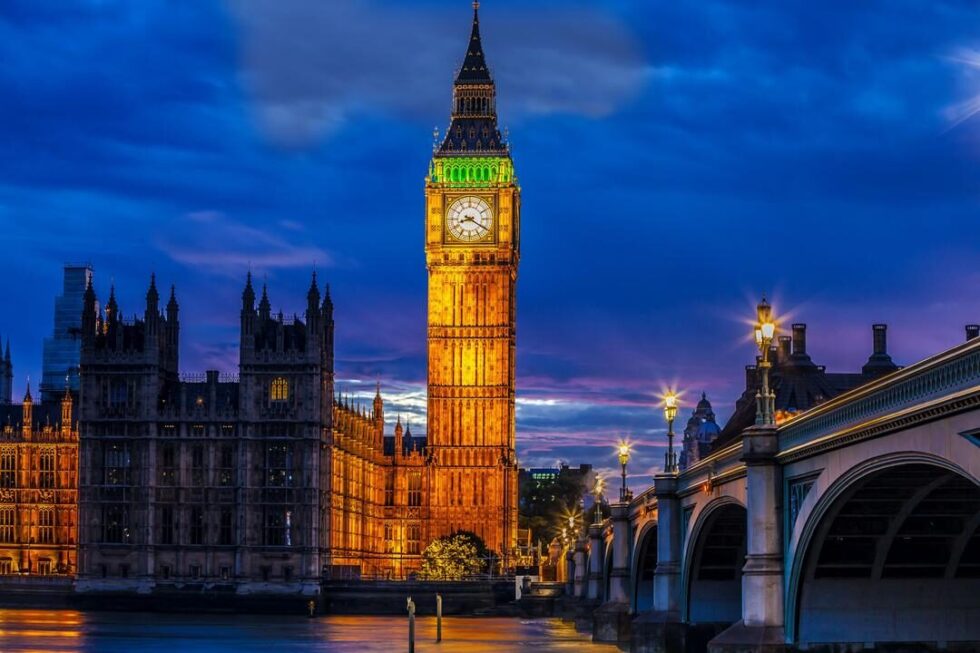
Big Ben is more than just a London landmark; it is a cultural icon recognized worldwide. The chimes of Big Ben are broadcast globally by the BBC, often marking New Year’s Eve celebrations. It has appeared in countless films, from Peter Pan to V for Vendetta, symbolizing London instantly. In literature, the tower is referenced by writers such as Virginia Woolf, who used the sound of its bells in Mrs Dalloway to structure the narrative. For many, hearing or seeing Big Ben is the ultimate confirmation of being in the British capital. Its presence in advertising, fashion, and souvenirs makes it one of the most photographed monuments in the world. Visitors should not miss experiencing it both in daylight and illuminated at night.
Big Ben in popular culture:
- Films: Peter Pan, V for Vendetta, Paddington
- Literature: Virginia Woolf’s Mrs Dalloway
- Broadcasts: BBC hourly chimes
- Global recognition as a London icon
- Appears in tourism campaigns and advertising
Why Big Ben remains a timeless symbol of London
Big Ben is not only a clock or a tower; it is a living piece of history that reflects Britain’s resilience, culture, and architectural brilliance. From its 19th-century origins to its survival during war, through modern restoration and its constant role in media, the monument continues to inspire millions. Visitors who stand before it today are witnessing the same chimes that echoed through centuries of change. Knowing its story — the debates over its name, the precision of its clock, and the grandeur of its design — transforms a simple photo stop into an encounter with national heritage. For travelers, Big Ben is both a symbol of London’s past and a promise of its enduring place in the world’s imagination.
Read about the life of Westminster and Pimlico district, London and the world. 24/7 news with fresh and useful updates on culture, business, technology and city life: How to get from Westminster to Heathrow Airport easily and without stress
Foto: Shutterstock