
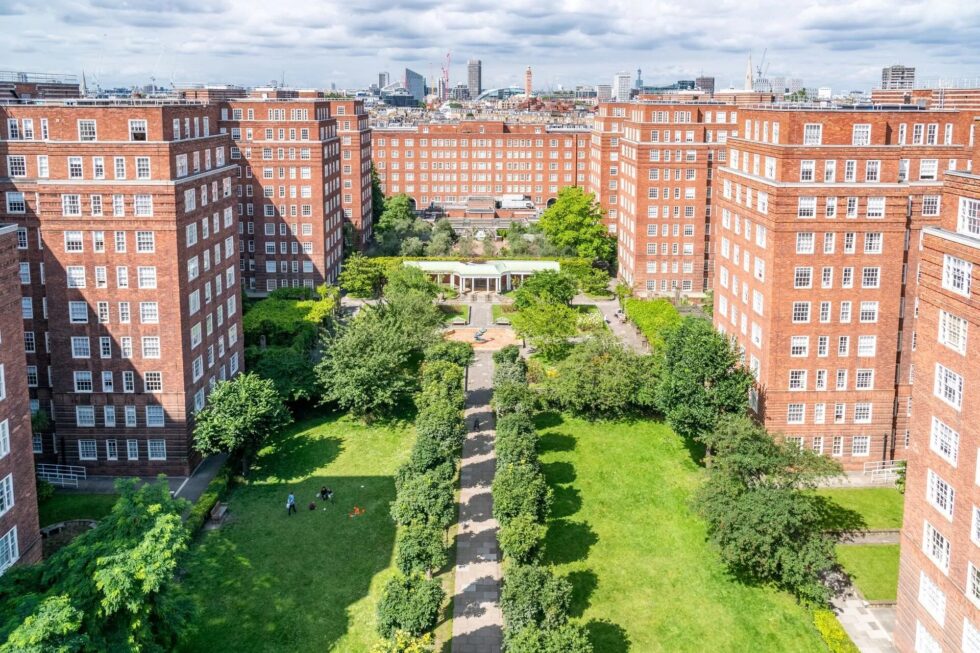
Dolphin Square in Pimlico, one of London’s most recognizable residential complexes, is at the center of a massive £1 billion redevelopment. Built in the 1930s, the landmark has long been home to politicians, diplomats, and even royalty. Now, with a decade-long renovation project already underway, questions arise over whether the plan is truly about preserving history or transforming the property into an exclusive enclave for the wealthy. The project includes replacing thousands of windows, upgrading outdated utilities, adding modern heating systems, and redesigning community spaces. Supporters describe the renovation as a necessary rescue of a decaying architectural icon, while critics fear it will price out long-term tenants. As noted by the editorial team at The WP Times, this renovation has become one of the most debated urban housing projects in central London.
The historical significance of Dolphin Square
Dolphin Square was completed in 1937 and immediately set new standards for luxury rental housing. With more than 1,200 flats spread across 13 acres, it became the largest single apartment block in Europe at the time. The development was designed in a modernist style, using red brick facades that reflected both tradition and innovation. Over the years, its residents have included prime ministers, MI5 and MI6 officers, and cultural icons. The building’s proximity to Westminster and the River Thames cemented its reputation as a political and social hub. Today, the renovation is not just about bricks and mortar but about maintaining the symbolic identity of Pimlico as a district with national importance.
- The estate covers approximately 3 hectares in central London.
- It originally contained tennis courts, gardens, and swimming pools.
- It was known as a “city within a city” due to its self-contained amenities.
- Famous residents included Harold Wilson and Christine Keeler.
- In the 1990s, it was acquired by a private investment group.
What the £1 billion renovation involves
The renovation plan, announced in 2023, is designed to modernize Dolphin Square without demolishing its heritage features. Developers are replacing 4,500 windows, upgrading insulation, and introducing energy-efficient heating through air-source heat pumps. Interiors of flats will undergo complete refurbishment with modern kitchens, bathrooms, and smart-home systems. Communal areas, including courtyards, gyms, and gardens, will be redesigned to meet the expectations of 21st-century urban living. The company behind the project has promised that the external architecture will remain faithful to the original 1930s aesthetic while improving environmental standards.
Planned upgrades include:
- Replacement of single-glazed windows with triple-glazed units.
- Installation of heat pumps to reduce carbon emissions.
- Revamped plumbing and electrical systems to meet safety codes.
- Redesigned fitness center and pool for residents.
- Community gardens with sustainable landscaping.
Impact on current residents and Pimlico community
One of the central concerns is the effect on residents who have lived in Dolphin Square for decades. Some flats have been rented at relatively affordable rates compared to the surrounding Pimlico area. As refurbishment progresses, many fear rental costs will increase substantially, forcing long-time tenants to leave. Housing campaigners argue that the £1 billion price tag will inevitably be recovered through higher rents or a switch to luxury leaseholds. Local community groups have warned of “social cleansing,” whereby traditional Pimlico residents are replaced by corporate tenants and wealthy investors.
Key issues raised by residents:
- Fear of rent increases after refurbishment.
- Concerns over temporary relocation during construction.
- Loss of community spirit built over decades.
- Worries about privatization of previously communal amenities.
- Lack of transparency over future pricing.
The financial model behind the redevelopment
The redevelopment of Dolphin Square is being financed through a mix of private investment and long-term rental income projections. The developers have emphasized that no public money is involved, but critics argue that central London’s housing should not be left entirely to market forces. Pimlico’s average rent has risen by 28% in the last five years, and luxury refurbishments like this risk pushing it even higher. Analysts suggest that refurbished flats could fetch £4,000–£7,000 per month, depending on size and location within the complex. This raises questions about whether Dolphin Square is being preserved for Londoners or transformed into a financial asset for global investors.
| Flat Size | Current Average Rent | Projected Post-Renovation Rent |
|---|---|---|
| Studio | £1,600/month | £3,000/month |
| 1-bedroom | £2,100/month | £4,200/month |
| 2-bedroom | £3,200/month | £6,000/month |
| 3-bedroom | £4,500/month | £7,000+/month |
Preservation versus gentrification: A London dilemma
The Dolphin Square project epitomizes London’s wider housing crisis. On one hand, the building’s infrastructure is outdated, and without investment, it risks falling into decline. On the other hand, large-scale luxury renovations threaten to accelerate gentrification, reducing affordable housing stock in Westminster. Local councils have tried to negotiate affordable quotas, but the legal framework for privately owned estates makes enforcement difficult. For many Londoners, the redevelopment symbolizes a battle between heritage conservation and the economic pressures of one of the world’s most expensive property markets.
Examples of similar debates in London:
- Battersea Power Station regeneration.
- King’s Cross Central redevelopment.
- Chelsea Barracks transformation.
- Earls Court demolition and redevelopment.
- Elephant & Castle shopping center regeneration.
Comparison with international housing redevelopments
Dolphin Square’s £1 billion renovation is not unique in the global context. Similar debates have taken place in Paris, New York, and Berlin, where historic residential complexes faced large-scale modernizations. In Manhattan, for example, the renovation of the Stuyvesant Town–Peter Cooper Village raised concerns over rent hikes, while in Paris, refurbishments of Haussmannian blocks were criticized for turning affordable housing into luxury investment properties. In Berlin, Mietendeckel (rent cap) laws attempted to balance modernization with tenant protection, though the law was later struck down by Germany’s Constitutional Court. Observers argue that Dolphin Square reflects a worldwide trend where historic preservation often collides with affordability, leaving governments, developers, and residents struggling to find a compromise.
Examples of comparable projects worldwide:
- Stuyvesant Town, New York – 11,000 apartments, modernized but with rising rents.
- Haussmann buildings, Paris – renovated façades with increased costs for tenants.
- Karl-Marx-Allee, Berlin – heritage protection limited redevelopment scope.
- Kowloon Walled City Redevelopment, Hong Kong – demolished for luxury housing.
- Cité Internationale Universitaire, Paris – modernization while preserving cultural role.
Practical advice for Pimlico residents and future tenants
For those currently living in Dolphin Square or considering moving in after the renovation, understanding the practical realities is essential. Experts advise that tenants should carefully review lease agreements, request written confirmation of relocation terms, and inquire about projected post-renovation rent structures. Potential tenants may want to monitor Westminster City Council’s updates, as there may be community consultations or legal obligations for affordable housing quotas. Financial planners also suggest comparing current Pimlico rental rates with projected figures in Dolphin Square to determine whether waiting for refurbished flats is financially viable. For many, the renovation is not just about aesthetics but about whether they can continue to call Pimlico home in the long term.
Steps residents should consider:
- Request official rent projections before agreeing to relocation.
- Check tenant rights under Westminster’s housing policies.
- Compare Pimlico average rents with post-renovation estimates.
- Stay informed through local council updates on the project.
- Engage with resident associations to maintain community influence.
Sustainability goals and environmental promises
Developers of Dolphin Square have emphasized that sustainability is central to the £1 billion plan. The estate will incorporate modern insulation materials, reduce overall energy consumption, and adopt eco-friendly heating technologies. The gardens will be replanted with drought-resistant plants, while rainwater collection systems will be introduced. This aligns with the City of Westminster’s net-zero carbon commitments. However, campaigners warn that the environmental benefits cannot justify the social costs if affordable tenants are displaced. The balance between green innovation and social responsibility remains fragile.

Sustainability measures include:
- Energy-efficient triple glazing.
- Air-source heat pumps for carbon reduction.
- LED lighting across communal areas.
- Water recycling systems.
- Green roof installations on select blocks.
Construction is scheduled to continue until at least 2032, with works progressing in phases to minimize disruption. Tenants have been offered temporary relocation options, though many complain of insufficient communication about timelines. Local authorities are monitoring the project closely, while campaigners continue to push for rent protections. Dolphin Square will likely remain at the heart of debates about housing inequality, heritage, and sustainability for the next decade. The question persists: will it continue to be a living part of London’s urban fabric, or will it become another symbol of exclusivity in the capital?
Read about the life of Westminster and Pimlico district, London and the world. 24/7 news with fresh and useful updates on culture, business, technology and city life: Which hidden streets in Pimlico are worth exploring this year
Photo: edie \\\ Evening Standard