
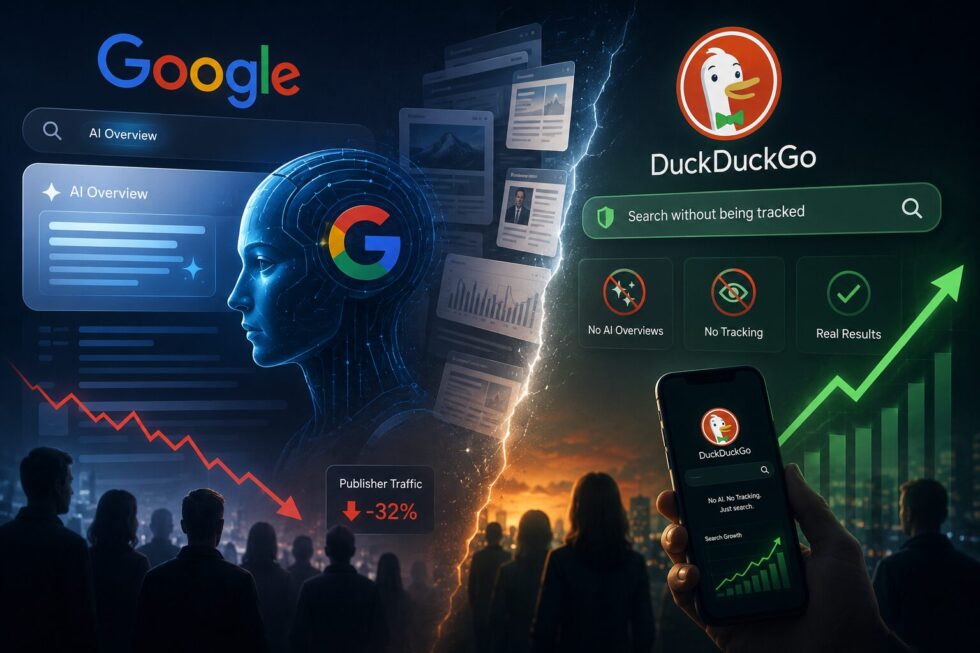
Google AI Search is facing one of the most significant user backlashes in the company's history after Google unveiled its biggest search transformation in more than 25 years during Google I/O 2026 in May 2026. The update expanded AI Overviews, introduced a dedicated AI Mode and deepened Gemini integration across Search, placing AI-generated answers and conversational responses ahead of traditional website links for millions of users. While Google says the changes are designed to make finding information faster and more intuitive, critics argue that the company is fundamentally changing how people access information online by prioritising AI-generated summaries over direct links to publishers, news organisations and original sources. The WP Times reports that the debate has rapidly evolved beyond technology itself, becoming a wider argument about transparency, accuracy, user choice and the future of the open web.
Google AI Search backlash intensified in the days following Google I/O 2026 as users, publishers and search industry experts raised concerns about the growing visibility of AI-generated answers and the declining prominence of traditional organic results. At the same time, privacy-focused search engine DuckDuckGo reported increased interest in its search products, particularly among users seeking alternatives to AI-first search experiences. Critics warn that AI-generated responses can sometimes remove context, contain inaccuracies or reduce traffic to original sources, while supporters argue that conversational search saves time and reflects how people increasingly expect to interact with information online. The controversy is now emerging as one of the most closely watched technology battles of 2026, with implications for users, publishers, advertisers and the future direction of internet search.
What changed in Google Search during 2026
For more than twenty years, Google Search followed a relatively familiar formula. Users entered keywords, Google displayed a ranked list of websites and users decided which sources they wanted to visit. While search algorithms evolved continuously behind the scenes, the core experience remained recognisable. That model is now changing faster than at any point since Google launched. Google's 2026 strategy revolves around turning search into a conversation. Instead of simply presenting links, the platform increasingly attempts to answer questions directly through artificial intelligence. Users are encouraged to ask follow-up questions, refine searches and remain inside Google's ecosystem rather than visiting external websites. The changes are powered primarily by Google's Gemini AI technology and are now appearing across multiple products and services. Supporters of the approach argue that it reduces effort, saves time and helps users find information more efficiently. Critics respond that search is no longer functioning as a neutral gateway to information but is increasingly becoming an interpreter that decides which information users should see first. This shift sits at the centre of the current controversy.
| New Search Feature | Purpose |
|---|---|
| AI Overviews | AI-generated summaries displayed above links |
| AI Mode | Conversational search interface |
| Gemini Integration | AI-powered responses across Google services |
| Follow-up Search | Continuous dialogue with AI |
| Smart Context | Search remembers previous questions |
| Reduced Link Priority | Traditional websites pushed lower |
Industry analysts note that the visual hierarchy of search results may be just as important as the technology itself. When AI answers occupy the most visible space on a page, users naturally interact with them first. That changes behaviour even if traditional search results technically remain available.
Why are users complaining about Google AI Search
The criticism surrounding Google AI Search is not primarily about artificial intelligence being present within search. Most users already interact with AI across smartphones, productivity software and social media. Instead, concerns focus on transparency, reliability, user choice and control.
One major complaint involves the automatic appearance of AI-generated answers. Many users report that they never actively requested AI features yet now encounter them during routine searches. For individuals who simply want a list of websites, news articles or official sources, AI summaries can feel like an unnecessary layer between the user and the original information. Another source of frustration involves factual accuracy. Although AI systems have improved dramatically, they can still generate incorrect information, misinterpret context or provide misleading summaries. Search engines have historically built their reputation on trust. Even occasional mistakes can damage confidence when billions of searches occur every day. Users frequently cite concerns such as:
- AI responses appearing automatically
- Difficulty locating traditional results
- Less visibility for original reporting
- Reduced access to primary sources
- AI hallucinations
- Overly long answers
- Limited transparency
- Unclear source attribution
- Reduced control over search experience
Technology experts argue that trust remains the most valuable currency in search. If users begin questioning whether results are accurate, even Google's dominant position could face long-term pressure.
The pizza glue controversy and why it became a symbol
Several AI-related mistakes have attracted global attention during the past year, but one example became particularly influential. A Google AI-generated response suggested using glue to help cheese stick to pizza. While Google later explained the unusual context behind the answer and clarified how the response was generated, the incident quickly spread across social media platforms, news outlets and technology forums.
The reason the example resonated so strongly was not because users genuinely planned to put glue on pizza. Instead, it highlighted a broader concern: AI systems often present incorrect information with the same confidence and authority as accurate information. For critics, the episode became a symbol of the risks associated with allowing AI-generated content to sit above trusted sources and expert advice. It demonstrated how unusual errors can undermine public confidence even when the underlying technology performs well most of the time. Many observers note that search engines operate under different expectations than chatbots. Users often tolerate mistakes from experimental AI tools. Search, however, is expected to provide reliable information on demand. That difference explains why AI errors inside search attract such intense scrutiny.
DuckDuckGo emerges as one of the biggest winners
While Google continues to dominate the global search market, some competitors are benefiting from growing dissatisfaction among certain user groups. Among the clearest beneficiaries is DuckDuckGo, which has spent years positioning itself as a privacy-first alternative to major technology platforms. Following Google's AI announcements, the company reported noticeable growth across several user metrics. According to figures discussed across technology publications, DuckDuckGo experienced significant increases in app installations and engagement, particularly among users seeking traditional search experiences without mandatory AI integration. The company's "No AI Search" option received especially strong attention.
| Growth Indicator | Reported Increase |
|---|---|
| US App Installs | About 20% |
| iOS Downloads | Around 33% |
| No-AI Searches | More than 20% |
| Peak No-AI Growth | Nearly 28% |
| Daily Growth Surge | Around 84% above previous averages |
The numbers remain small compared with Google's overall scale, but analysts say the trend is important because it reflects changing behaviour rather than market share alone. Users who previously never considered alternatives are actively evaluating them.
Why DuckDuckGo's optional AI strategy matters
One of the biggest differences between Google and DuckDuckGo is not the existence of AI features but the way they are implemented. DuckDuckGo has introduced AI-powered tools while simultaneously allowing users to choose whether they want those features enabled. This approach aligns closely with the company's long-standing emphasis on privacy, transparency and user control. Supporters argue that optional AI represents a more balanced model because it allows different groups of users to customise their experience. People who enjoy AI-generated summaries can use them, while users who prefer traditional search remain free to avoid them. This distinction has become central to DuckDuckGo's marketing strategy during 2026.
Rather than positioning itself as anti-AI, the company increasingly presents itself as pro-choice. That message appears to resonate with users who feel overwhelmed by the rapid integration of artificial intelligence across digital products. The debate therefore extends beyond search quality and enters broader philosophical territory concerning technological autonomy and user rights.
Gabriel Weinberg's criticism of Google
DuckDuckGo founder and chief executive Gabriel Weinberg has become one of the most prominent critics of Google's AI-first approach. According to statements widely reported across technology media, Weinberg argues that users should determine how much artificial intelligence they want rather than having AI features imposed by default. His criticism centres on several concerns:
- AI appears automatically
- Opt-out settings lack visibility
- Organic results receive less attention
- Search quality may suffer
- User flexibility is reduced
- Traditional search becomes harder to access
The phrase that attracted the greatest attention was Weinberg's accusation that Google is effectively "force-feeding AI" to users. While Google rejects that characterisation, the wording resonated across online communities because it captured a growing perception among critics that AI adoption is being driven from the top down rather than through user demand. The disagreement highlights a fundamental tension within the technology sector. Should innovation be introduced aggressively to accelerate adoption, or should users retain greater control over when and how new technologies appear?

Can users actually disable Google AI Search
Google maintains that users are not forced to use AI-generated search experiences. The company points out that traditional web search remains available through filtering options inside Google Search. Users can switch to a more conventional list of website results by selecting the Web filter. The process typically involves:
- Opening Google Search.
- Clicking More.
- Selecting Web.
- Viewing traditional search listings.
Critics argue that the issue is not whether the option exists but how visible it is. Many users remain unaware that such filters are available. Others believe the additional steps represent friction that did not previously exist. This debate mirrors broader discussions taking place across the technology industry. Companies increasingly face pressure to decide whether AI features should be enabled by default or activated only after explicit user consent. The answer could shape the next generation of digital products far beyond search engines.
Why publishers are worried about Google's AI future
The implications of AI-powered search extend far beyond individual users. Publishers, news organisations, bloggers, researchers and independent content creators are closely monitoring Google's transformation because their businesses depend heavily on search traffic. For decades, search engines acted as intermediaries connecting audiences with information sources. Websites invested enormous resources into content creation and search engine optimisation because high rankings generated visitors, advertising revenue and subscriptions. AI-generated summaries could alter that relationship dramatically. Instead of sending users to external websites, AI increasingly attempts to answer questions directly inside search results. If users receive satisfactory answers without clicking links, publishers may lose significant traffic.
| Publisher Concern | Potential Consequence |
|---|---|
| Lower Click Rates | Reduced traffic |
| AI Summaries | Fewer site visits |
| Revenue Pressure | Advertising losses |
| Attribution Problems | Less brand recognition |
| AI Mediation | Reduced audience ownership |
Industry observers believe this battle may become one of the defining economic conflicts of the next decade. The question is whether publishers can continue funding original journalism if search engines increasingly provide information without directing users to the source material.
Why many users still love AI-powered search
Despite the criticism, Google's AI strategy also has substantial support. Millions of users appreciate receiving direct answers rather than opening multiple websites. For routine tasks such as travel planning, product comparisons, recipe research and quick explanations, AI-generated summaries often provide immediate value. Common advantages cited by supporters include:
- Faster answers
- Simpler explanations
- Easier research
- Natural conversations
- Better follow-up questions
- Less tab switching
Google executives argue that search behaviour is evolving naturally. Younger users increasingly expect conversational interfaces and immediate answers rather than traditional lists of links. From Google's perspective, AI search represents the logical evolution of information retrieval rather than a radical departure from it. The company continues investing billions of dollars into AI development because internal data reportedly shows strong engagement with these features.
Is this the first serious threat to Google's dominance
The short answer is no. Google still controls the overwhelming majority of the global search market and remains one of the most powerful technology companies in the world. Estimates continue to place Google's market share near 90 percent, leaving competitors far behind. However, market share alone may not tell the full story. The more significant development involves user behaviour. For years, Google functioned as the default choice for most internet users. Alternative search engines existed, but relatively few people actively considered switching. That assumption appears to be changing.
Growing interest in DuckDuckGo, privacy-focused browsers, no-AI search options and alternative discovery tools suggests that users are beginning to evaluate search providers more critically than before. Whether this trend becomes permanent remains unclear, but it represents a meaningful shift in a market that historically experienced very little consumer movement.
The bigger question facing search in 2026
The controversy surrounding Google AI Search ultimately reflects a much larger debate about the future of technology. Artificial intelligence is rapidly becoming embedded within search engines, smartphones, productivity software, social networks, customer service systems and creative tools. The central question is no longer whether AI will become part of everyday digital life. The question is how much choice users will retain. Some companies believe maximum automation delivers the best experience. Others argue that transparency and user control should remain the priority. Search has become the first major battleground where these competing visions are visible to hundreds of millions of people every day. Google believes AI represents the future of information discovery. DuckDuckGo argues that users should decide when and how AI participates in that process. The outcome of that conflict may determine not only the future of search engines but also the future relationship between artificial intelligence and the open web itself.
Read about the life of Westminster and Pimlico district, London and the world. 24/7 news with fresh and useful updates on culture, business, technology and city life: How Luke Littler Edged Luke Humphries to Reclaim the 2026 Premier League Darts Title