
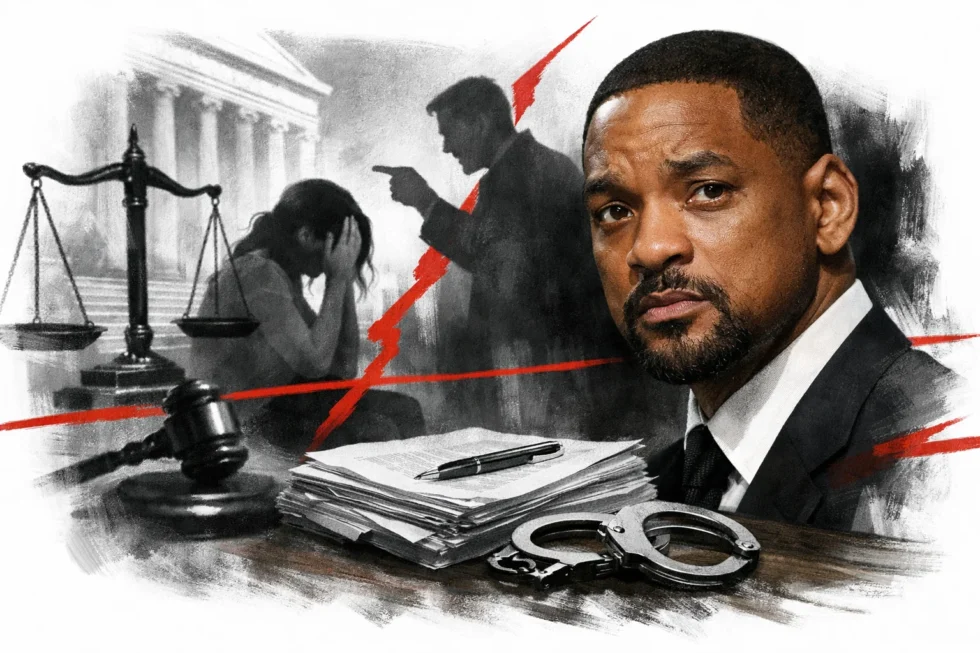
Los Angeles, 2 January 2026 — Will Smith, one of Hollywood’s most bankable and closely watched stars, is facing a civil lawsuit that threatens to reopen one of the most fragile periods of his public rehabilitation. A former musician from his 2025 world tour has accused Smith and his touring company of sexual harassment, retaliation and wrongful termination, according to court filings in California, as reported by The WP Times, citing ABC News.
The lawsuit was filed on 30 December 2025 in Los Angeles County Superior Court by Brian King Joseph, a professional violinist who performed on Smith’s Based on a True Story tour. The defendants are Smith personally and Treyball Studios Management, Inc., the company that operated and managed the tour.
Joseph claims that what began as a professional engagement deteriorated into a situation shaped by emotional pressure, unequal power and blurred personal boundaries. In the complaint, Smith is alleged to have sent messages to Joseph stating:
“You and I have such a special connection that I don’t have with anyone else.”
Joseph argues that such statements, when made by a global celebrity to a contracted touring performer, created a coercive environment in which refusing or distancing himself carried professional risk.
The Las Vegas hotel incident
The legal dispute centres on an incident that allegedly occurred during a Las Vegas tour stop in March 2025. According to the lawsuit, Joseph returned to his hotel room to find that it had been entered without his consent.
Inside, he says, were items that did not belong to him, including:
- medical discharge paperwork
- HIV medication bearing another person’s name
- wet wipes
- a beer bottle
- a red backpack
- a single earring
A handwritten note was also allegedly left on the bed, stating:
“Brian, I’ll be back no later 5:30, just us” accompanied by a heart symbol and the name “Stone F.”
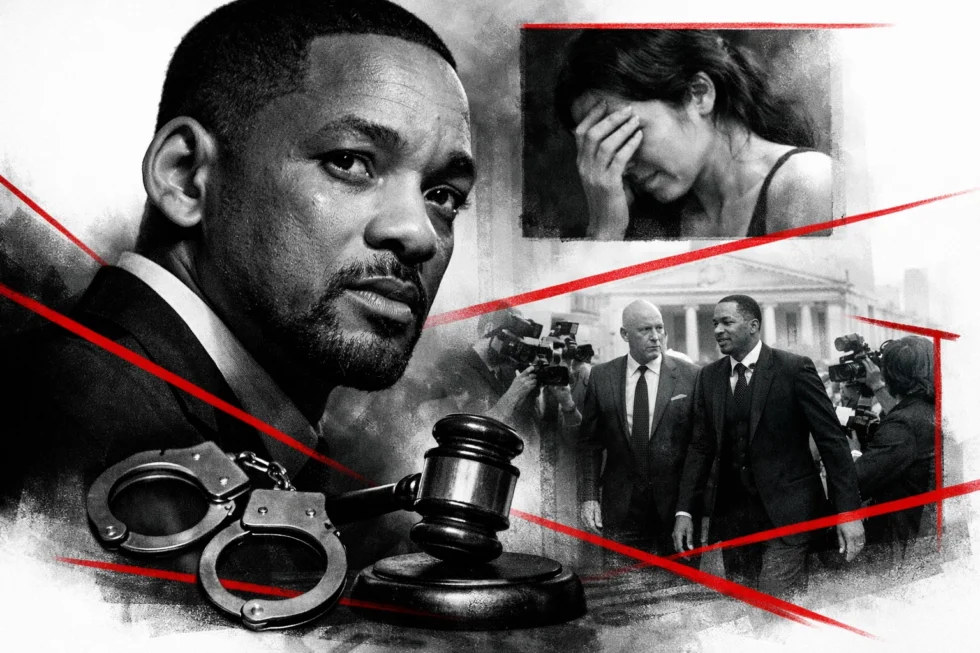
Joseph told investigators he believed the intruder intended to return and pressure him into a sexual encounter. Fearing for his safety, he reported the incident to hotel security, a police non-emergency line, and tour management.
Dismissal after reporting
Within days of reporting the hotel-room incident to security, police and tour management, Joseph was summarily removed from the tour and replaced by another violinist. He was told only that the production was “going in a different direction” — a phrase his lawyers describe as standard industry code for an unexplained termination.
The lawsuit further alleges that Smith’s management subsequently accused Joseph of inventing the incident, effectively branding him a liar after he had raised safety and harassment concerns. His legal team says this sequence of events constitutes retaliation in its clearest legal form.
Under California’s Fair Employment and Housing Act (FEHA), employers are barred from disciplining, dismissing or disadvantaging any worker for reporting sexual harassment, stalking, intimidation or unsafe conditions — even if the underlying complaint is later disputed or never formally proven.
Employment-law specialists note that temporal proximity — where a termination follows shortly after a protected complaint — is among the strongest pieces of circumstantial evidence of retaliatory intent in California courts. In such cases, the burden often shifts to the employer to demonstrate that the dismissal was driven by legitimate, documented business reasons, rather than by the report itself.
Psychological and financial harm
Joseph states in court filings that he has since been diagnosed with post-traumatic stress disorder (PTSD) and other trauma-related mental-health conditions, which he says were triggered by both the hotel-room incident and the manner in which his dismissal was handled.
He further alleges significant financial losses, including the abrupt loss of touring income, cancelled future engagements and lasting reputational damage within the tightly networked professional music industry, where allegations of dishonesty can effectively end a career.
As a result, Joseph is seeking compensatory damages for emotional distress and economic loss, recovery of legal costs, and a jury trial, allowing a panel of citizens rather than a single judge to determine the credibility of the claims and the scale of any potential liability.
Smith’s response
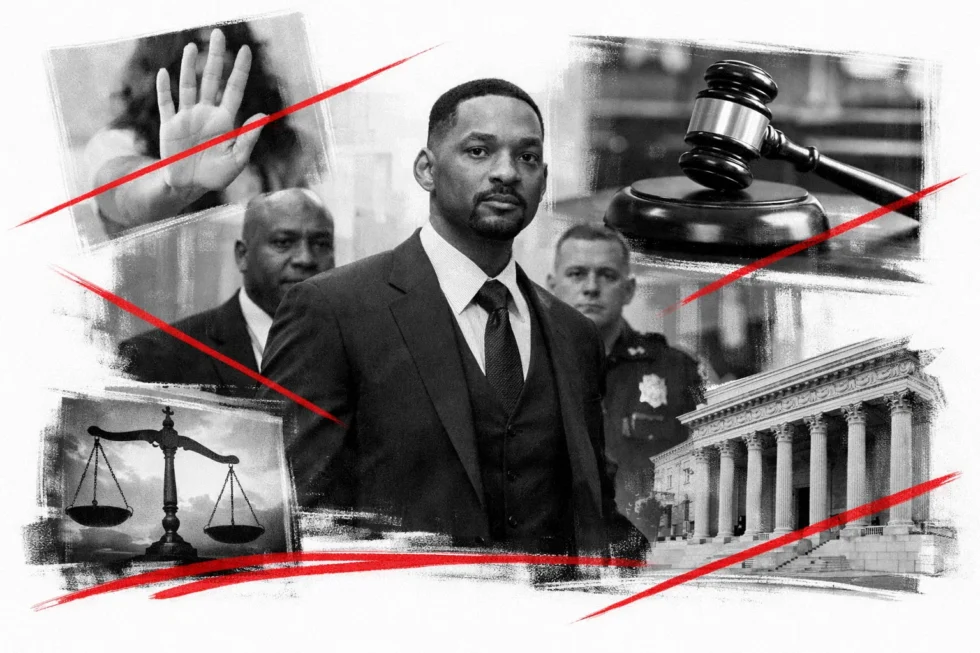
In a statement provided to ABC News, Smith’s attorney Allen B. Grodsky said:
“Mr Joseph’s allegations concerning my client are false, baseless and reckless.”
The statement added that Smith intends to contest the lawsuit.
Will Smith has not issued a personal public statement regarding the case.
The lawsuit was filed in late December 2025, more than three years after Smith’s on-stage assault of comedian Chris Rock at the 2022 Academy Awards, an incident that led to Smith’s resignation from the Academy and a temporary suspension from industry events. Smith is married to Jada Pinkett Smith. She is not named in the lawsuit, and neither she nor Smith has made any public statement in connection with the case.
What happens next
The case now moves into formal discovery, the stage of U.S. litigation where the narrative is no longer shaped by public statements but by documents, data and sworn testimony. Both sides will have the legal right to compel the production of evidence, including:
- hotel key-card access logs and surveillance footage to establish who entered Joseph’s room and when
- internal communications from Smith’s tour operation, including emails, text messages and personnel records
- witness testimony from hotel employees, security staff and members of the touring crew
These records will be central to determining whether the room entry was authorised, accidental or deliberate — and whether Joseph’s subsequent removal from the tour followed legitimate business decisions or a protected complaint.
No judge or jury has yet assessed the credibility of either side. But employment-law analysts note that the lawsuit’s most consequential exposure lies in the retaliation claim, which carries a lower burden of proof than harassment. Under California law, an employer does not need to be found guilty of misconduct to be liable — it is sufficient to show that a worker was disadvantaged or dismissed because they reported a concern.
In practice, courts treat sudden termination following a complaint as one of the strongest warning signs of unlawful retaliation, often shifting the burden onto the employer to prove a clear, documented and unrelated reason for the dismissal.
For Smith, the case therefore presents not only a reputational challenge but a material legal risk. At a moment when his standing in Hollywood has only recently begun to stabilise after years of controversy, the lawsuit introduces a new round of scrutiny — this time not from social media or commentators, but from the evidence standards of a California courtroom.
Read about the life of Westminster and Pimlico district, London and the world. 24/7 news with fresh and useful updates on culture, business, technology and city life: Britain’s Bird Flu Surge Forces Edinburgh Zoo to Suspend Its Iconic Penguin Parade