
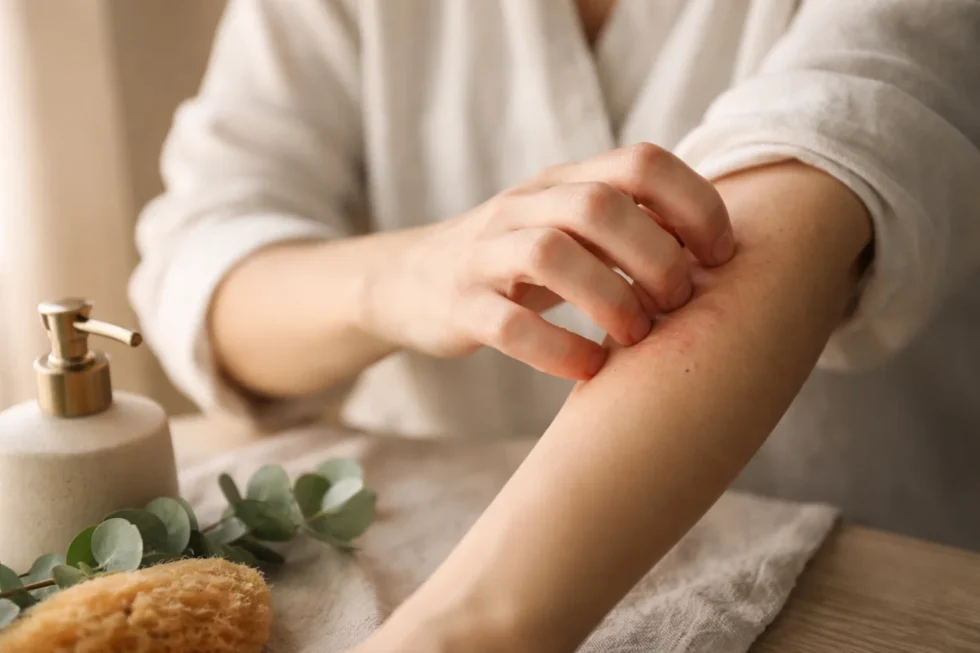
Flare-ups are often driven less by treatment failure than by everyday routines that quietly undermine the skin’s defences. Habits widely promoted as “good skincare” can in fact weaken the skin barrier, making it less effective at retaining moisture and more vulnerable to inflammation, dryness and persistent itching. Symptoms typically intensify during colder months, when indoor heating lowers humidity levels and rising stress further disrupts the skin’s ability to recover. Specialists increasingly stress that long-term eczema control depends not only on the products people use, but on the daily behaviours they need to avoid. Recognising what quietly aggravates the condition is now seen as central to maintaining skin stability rather than chasing short-term relief, reports The WP Times.
Hot showers
Hot showers may feel soothing, especially during colder months, but for people with eczema they actively undermine the skin’s ability to protect itself. Heat dissolves and washes away the natural lipids that form the skin’s outer barrier — the layer responsible for keeping moisture in and irritants out. Once this barrier is weakened, the skin becomes significantly more reactive. Warm water causes surface blood vessels to expand, which increases redness and amplifies inflammatory responses. At the same time, heat stimulates sensory nerve endings in the skin, intensifying itch signals and making scratching more likely. This combination often leads to a delayed flare-up, where irritation and inflammation worsen hours after the shower rather than immediately. In practical terms, what feels like short-term comfort can prolong symptoms and slow recovery, particularly during winter when the skin is already under environmental stress.
Spending too long in the shower
Length of exposure matters as much as water temperature. Prolonged time in the shower gradually strips the skin of its natural oils, even when gentle, fragrance-free cleansers are used. Water alone, when it remains on the skin for too long, disrupts the balance that keeps the outer layer intact.
The problem becomes apparent once the skin dries. Moisture evaporates quickly from an already weakened surface, leaving the skin tight, itchy and more prone to irritation. In eczema-prone skin, this rebound dryness can trigger inflammation hours later, rather than immediately. Over time, frequent or extended showers can quietly cancel out the benefits of moisturisers and treatments, making eczema harder to control despite otherwise careful skincare habits.
Scrubs, peels and exfoliating products
Exfoliation is often promoted as a fix for flaking skin, but in eczema it usually worsens the problem. Physical scrubs and chemical exfoliants disrupt the already fragile outer layers of the skin, slowing repair rather than encouraging renewal.
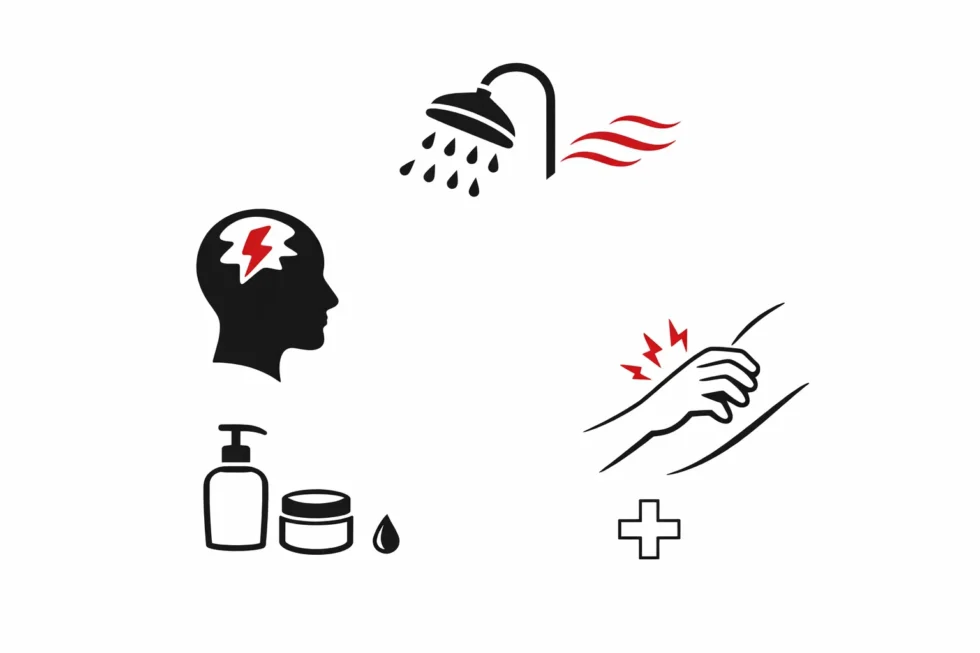
Dermatologists point out that healthy skin naturally renews itself roughly every four weeks. In eczema-prone skin, this process is already impaired. Adding exfoliation further damages the barrier and increases microscopic inflammation. Research shows that aggressive exfoliation can increase transepidermal water loss by more than a quarter, leaving the skin significantly drier within hours. Crucially, flaking in eczema is not caused by excess dead skin. It is a visible sign of dehydration and barrier breakdown. Scrubbing dry skin does not improve texture — it prolongs flare-ups and increases sensitivity to irritants.
Not moisturising properly
Cleansing without immediate moisturising is one of the most common mistakes in eczema care. After washing, the skin loses water rapidly, and without a protective layer, that moisture cannot be retained.
Clinical guidance consistently stresses that moisturiser is not cosmetic for eczema-prone skin — it is structural support. Applying an emollient shortly after washing can significantly reduce moisture loss and help stabilise the barrier. Delaying this step allows evaporation to continue unchecked, leaving the skin tighter and more reactive. Products containing fragrance, alcohol or essential oils may feel soothing at first, but repeated exposure often leads to cumulative irritation. Simple, fragrance-free creams and ointments are more likely to support long-term barrier repair rather than short-term comfort.
Dry indoor air
Central heating dramatically alters indoor air quality during colder months. In many UK homes, indoor humidity drops well below the level at which the skin can retain moisture effectively. Dry air continuously pulls water from the skin surface, worsening dryness and increasing itch intensity. This effect becomes particularly noticeable at night, when the skin is warmer and repair processes should be most active. Instead of recovering, the skin continues to lose moisture during sleep.Maintaining adequate indoor humidity helps slow this process, reducing night-time irritation and supporting the skin’s natural repair cycle. For people with eczema, environmental control can be as important as skincare itself.
Ongoing stress
Stress plays a far greater role in eczema than many people realise. Psychological strain directly affects immune regulation, increases inflammatory signalling and weakens the skin’s ability to repair itself. When stress levels remain elevated, the body prioritises survival responses over maintenance processes such as skin regeneration. As a result, eczema flare-ups can appear even when skincare routines remain unchanged. Many people notice worsening symptoms during periods of sustained pressure, disrupted sleep or emotional exhaustion.
Common stress-related triggers that aggravate eczema include:
- Chronic work or financial pressure
- Poor or irregular sleep
- Emotional strain and unresolved anxiety
- Constant mental load and lack of recovery time
- High caffeine intake combined with stress
- Reduced physical activity during stressful periods
Reducing stress does not cure eczema, but it can significantly lower baseline inflammation and shorten flare-ups. Even modest changes that improve sleep quality or reduce mental overload can have a visible impact on skin stability.
Avoiding sunscreen
Some people with sensitive or eczema-prone skin avoid sunscreen altogether, fearing irritation. However, unprotected sun exposure damages the skin barrier and can worsen inflammation over time, even if redness is not immediate. Ultraviolet radiation weakens already fragile skin and increases sensitivity to other triggers. For eczema-prone skin, mineral-based sunscreens are generally better tolerated because they sit on the surface rather than absorbing into the skin. Consistent sun protection is particularly important during:
- Outdoor activities
- Holidays and travel
- Long walks or daily commuting
- Periods of increased sun exposure in spring and summer
Choosing the right formulation matters more than avoiding sunscreen entirely.
Ignoring allergens and sensitivities
People with eczema are more likely to react to environmental and dietary irritants, even when reactions are subtle or delayed. Continuous low-level exposure can quietly sustain inflammation and prevent the skin from fully recovering. Common triggers include:
- Household dust and dust mites
- Pollen and seasonal allergens
- Pet dander
- Certain foods and additives
- Fragrances in skincare or household products
Rather than strict avoidance, awareness and observation are key. Identifying personal triggers helps explain why symptoms persist despite careful skincare and allows for more targeted, realistic adjustments.
Common questions people in the UK ask about eczema
Why does my eczema keep coming back?
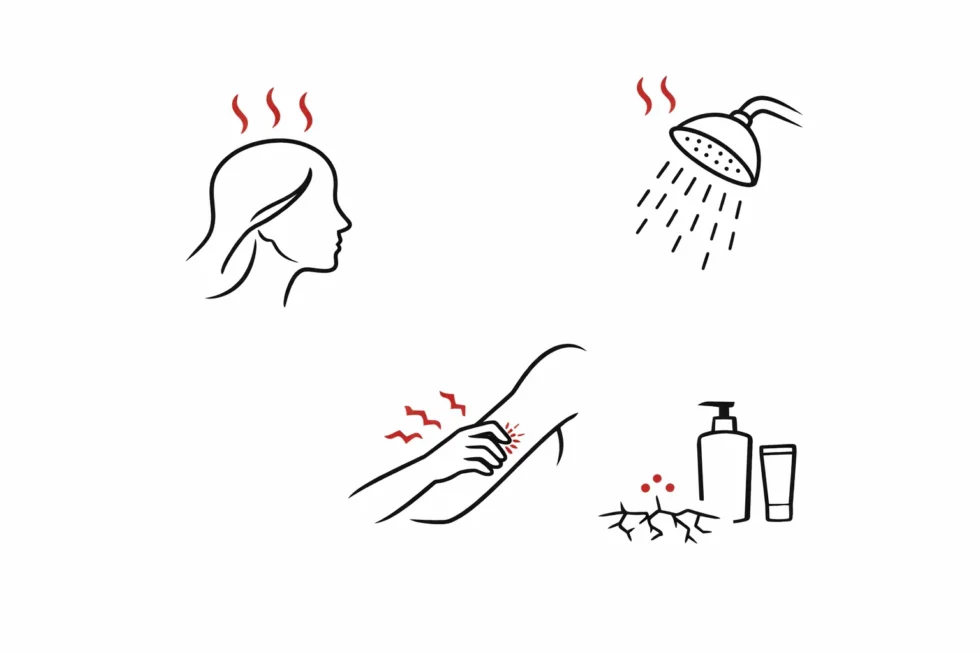
Eczema often returns because the skin barrier never fully stabilises between flare-ups. Everyday triggers — hot water, dry indoor air, fragranced products, stress and scratching — can keep inflammation “ticking over” even when symptoms look calmer. Long-term control usually depends on protecting the barrier consistently, not only treating flare days.
Is eczema caused by poor hygiene?
No. Eczema is not a cleanliness issue. In fact, frequent washing, long showers and strong soaps can strip the skin’s natural oils and make symptoms worse. The aim is gentle cleansing and barrier protection — not scrubbing the skin into submission.
Does diet matter with eczema?
Diet does not cause eczema, but it can influence inflammation and itch intensity in some people. Common aggravators include highly processed foods, alcohol, spicy foods and additive-heavy products — though triggers vary widely. A simple food-and-symptom diary is often more useful than restrictive diets, especially if flare patterns are unclear.
Why is itching worse at night?
Night-time itching is common because the skin becomes warmer under bedding, indoor air is often drier, and there are fewer distractions — so itch signals feel stronger. Scratching also becomes more automatic during sleep, which can worsen irritation by morning. Managing bedroom humidity and applying moisturiser before bed often helps reduce overnight flares.
Can lifestyle changes really help?
Yes — often more than people expect. Small, consistent changes (shorter, lukewarm showers; fragrance-free products; moisturising straight after washing; better sleep and stress control; reducing known irritants) can reduce flare frequency and improve comfort. Lifestyle changes are not a “cure”, but they can make treatment work better and flare-ups less disruptive.
Read about the life of Westminster and Pimlico district, London and the world. 24/7 news with fresh and useful updates on culture, business, technology and city life: Why is my hair falling out in the UK? Causes, blood tests, treatments and what really works