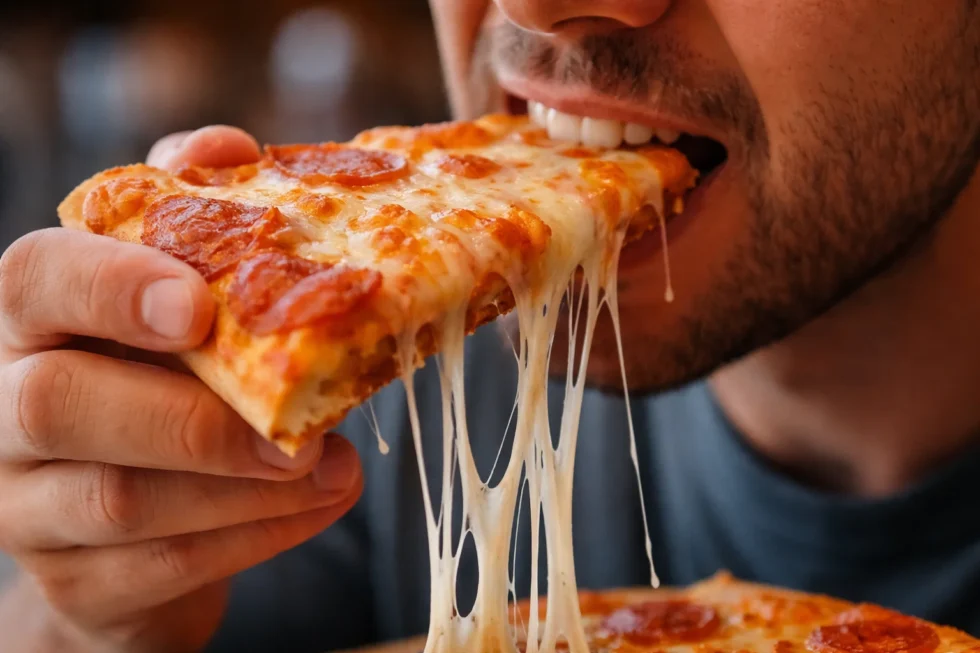
Gina Maria’s Pizza — a Minnesota regional chain founded in 1975 — has shut all four of its remaining restaurants and collapsed into Chapter 7 bankruptcy, with Northern Brands Inc. disclosing nearly $2.9 million in liabilities against approximately $64,000 in assets, reports The WP Times, citing The Independent, TheStreet and records indexed by PacerMonitor.
The scale of the imbalance effectively eliminates any possibility of recovery and confirms a terminal liquidation rather than restructuring. What initially appeared to be a localised shutdown has now crystallised into a broader market signal: a clear illustration of structural fragility within the U.S. pizza sector in 2026, where mid-tier operators are increasingly exposed to cost inflation, weakened pricing power and post-pandemic demand correction. The defining feature of this case is not merely the closure itself, but the manner in which it unfolded — a direct transition from routine operations to full collapse, with no visible stabilisation phase.
The timeline reinforces that conclusion. Gina Maria’s did not communicate a restructuring strategy, initiate a phased withdrawal or attempt a partial footprint reduction. Instead, all four western Twin Cities locations — Chanhassen, Eden Prairie, Edina and Plymouth — ceased operations abruptly in October 2025, months before the bankruptcy filing became public. In insolvency analysis, such a gap between operational shutdown and formal filing is typically associated with acute liquidity failure rather than controlled strategic repositioning. By the time the legal process began, the business had already ceased to function in practical terms — the filing did not trigger the collapse, it merely formalised it.
A 50-year-old chain disappeared before it explained itself
The brand began in Minnetonka in 1975 and remained a distinctly regional operator rather than a national franchise network. That matters for how this story should be read. Gina Maria’s was not trying to be Domino’s, Pizza Hut or Papa John’s. It was a suburban, repeat-purchase business built around local familiarity, routine family demand and long-term customer habit. For decades, that model can be resilient. It does not need national media attention. It needs customers who come back. According to The Independent, that is exactly what Gina Maria’s had, which is why the silence around the closure proved so striking to locals.
Customer reaction makes clear that the chain still held emotional value right up to the end. The Independent quoted one customer saying: “I’m so bummed… I live a block away… went there for 25 years,” while another wrote: “Closed. Sad. Easily the BEST pizza anywhere.” A Reddit comment cited by the same report described the brand as “consistently reliable”. Those are not the words usually associated with a business that has already lost all relevance. They suggest something more uncomfortable for the sector: consumer affection may survive longer than the balance sheet.
That distinction is important because it reframes the failure. Gina Maria’s does not look like a case where demand visibly evaporated in public. It looks more like a case where a viable local product was operating inside a business structure that had become financially unsustainable. That is a much more serious signal for the broader market, because it suggests that long-running regional chains can fail even when their brand memory and customer goodwill still exist.
The filing confirmed liquidation, not recovery
The hard numbers made the situation unmistakable. According to court records surfaced by PacerMonitor and reported by TheStreet and The Independent, Northern Brands Inc., doing business as Gina Maria’s Pizza, filed for Chapter 7 bankruptcy on 26 March 2026 in Minnesota. The filing listed almost $2.9 million in liabilities and only around $64,000 in assets. It also identified Phil Godinez as CEO and Porfirio Godinez as the debtor’s authorised representative.
The Chapter 7 detail is central. Chapter 11 can mean restructuring, debt negotiation, store rationalisation and an attempt to preserve some commercial future. Chapter 7 means something much harder: liquidation. It signals that there is no realistic path back under the current corporate structure. Assets are sold, creditors take what they can, and the business does not continue. When a restaurant chain goes straight to Chapter 7 after shuttering all its remaining outlets, that is not a pause. It is the legal confirmation of a finished company.
From a British analytical perspective, the debt-to-asset ratio is especially revealing. A company with about $64,000 in assets against nearly $2.9 million in liabilities is not facing a manageable downturn. It is staring at an extreme balance-sheet rupture. Even without full access to every creditor line item, that scale of mismatch implies that whatever operational problems existed had already overwhelmed any room for normal corporate repair.
Where the chain operated before it collapsed
The final Gina Maria’s footprint was small but concentrated in precisely the sort of suburban markets where pizza traditionally performs well.
| Location | State | Market profile | Why it matters |
|---|---|---|---|
| Chanhassen | Minnesota | suburban residential | reliable family demand territory |
| Eden Prairie | Minnesota | affluent suburb | suggests closure was not limited to weak-income areas |
| Edina | Minnesota | premium residential | higher rent pressure but strong purchasing base |
| Plymouth | Minnesota | commuter-family suburb | classic carryout and delivery market |
These were not fringe sites in obviously distressed zones. They were suburban locations in the Twin Cities area, including higher-income communities such as Eden Prairie and Edina. That makes the collapse more analytically significant. It was not simply a case of a weak operator being trapped in dead retail geography. At least part of the footprint sat inside markets where pizza, in theory, should still work.
The wider pizza market is already under pressure
To understand why Gina Maria’s matters, it helps to place it inside the wider U.S. pizza downturn. The 2025 Technomic Pizza Consumer Trend Report, as cited by Food Business News, found that pizza delivery fell from 61% of consumers in 2022 to 55% in 2025. More importantly, it said 25% of consumers were eating more frozen pizza instead of restaurant pizza because of price increases. That is not a cosmetic change in ordering habits. It is a direct challenge to the historic value proposition of pizza chains.
For years, pizza occupied a rare middle ground in consumer behaviour: convenient enough for delivery, cheap enough for stressed households, familiar enough for family sharing, and comforting enough to remain resilient during downturns. That model is now under pressure from both sides. Delivery has become less attractive as prices and fees rise, while frozen and supermarket options have become stronger substitutes. When a quarter of consumers explicitly say they are trading down into frozen pizza because restaurant pizza costs more, the category loses one of its most important defensive advantages.
Nation’s Restaurant News has already framed this as a sector-wide correction rather than a single chain problem. Using Technomic’s Top 500 Restaurants data, it reported that 61% of pizza chains experienced declining sales in 2024, and that only Mr. Gatti’s Pizza managed double-digit growth. That is a damaging industry backdrop for any small or regional operator without scale, capital or menu diversification.
Gina Maria’s was not alone, and that is the real warning
The pressure is visible not only among small local brands. Larger operators are also retrenching. Restaurant Dive reported that Papa Johns expects to close about 300 underperforming North American restaurants, with around 200 expected to shut in 2026, while CFO Ravi Thanawala said these sites lacked a clear path to sustainable financial improvement. The same report noted that Pizza Hut planned to shut about 250 U.S. stores in the first half of 2026 as Yum Brands continued its strategic review of the chain.
That distinction matters. The largest names in the sector are still able to cut, consolidate and attempt renewal. They have lenders, systems, supply-chain leverage and restructuring options. Gina Maria’s did not. That is why the same market conditions produce different outcomes. A giant closes weak sites and carries on. A regional operator with a narrow footprint and no real capital cushion can simply vanish.
The same dynamic is visible elsewhere in fast-casual pizza. Nation’s Restaurant News reported this week that Pieology is closing all five of its Hawaii locations after a WARN notice tied the move to business failure, affecting more than 50 jobs. Hawaii’s official WARN filing lists 56 affected employees and an end date around 22 May 2026. Pieology had already been through Chapter 11. That is not the same fact pattern as Gina Maria’s, but it points in the same direction: pizza operators are being hit by a mix of price resistance, competition and margin pressure across multiple business models.
Why smaller regional chains are especially exposed
A business like Gina Maria’s sits in a particularly dangerous middle zone. It is too large to operate with the nimbleness of a single independent pizzeria, but too small to enjoy the structural advantages of national chains. It has real payroll, real rents and real supplier exposure, but not necessarily the purchasing power to force better terms or the brand scale to absorb sustained margin compression. That “mid-tier trap” is one of the most important themes in restaurant distress right now.
This is where the location story becomes more interesting. Eden Prairie and Edina are not random struggling retail markets. They are relatively prosperous suburbs. If a chain cannot make those markets work under current conditions, the issue is unlikely to be explained only by local demographics. It points instead to a structural mismatch between costs, pricing and volume. In plain terms: even decent suburban demand may no longer be enough to save a chain whose economics have gone wrong.
The restaurant sector learned during the pandemic that pizza delivery can expand fast under abnormal conditions. It is learning in 2026 that demand built in one market cycle does not guarantee resilience in the next. Once labour costs, ingredients, rent, delivery economics and consumer value perception all move in the wrong direction at the same time, a legacy operator can look solid until the moment it is not.
The most telling postscript: the product lived on, the company did not
One of the most revealing details in this case came after the closures. The Independent reported that a former manager at two Gina Maria’s locations opened a similar restaurant called Pizzas Gina in the former Eden Prairie site, using the same recipes and reportedly even supplies left behind by the previous owners. This is a striking detail because it suggests the product itself did not suddenly become unwanted. The corporate vehicle failed; the food proposition still had enough local credibility to reappear in smaller form.
That kind of afterlife matters because it sharpens the diagnosis. The chain did not necessarily die because nobody wanted its pizza. It appears to have died because the original ownership structure, debt position and operating model could no longer carry the business. In other words, local brand equity survived longer than the company that controlled it.
What this bankruptcy says about the U.S. pizza market in 2026
The phrase pizza chain closes US locations is effective as a search headline because it sounds dramatic. But in this case, it is also analytically accurate. Gina Maria’s collapse encapsulates several hard truths about the sector at once. First, longevity no longer guarantees resilience. A company founded in 1975 can still disappear abruptly in 2025–26. Second, regional loyalty is helpful but insufficient when debt, liquidity and cost pressure collide. Third, pizza is no longer automatically protected as the default affordable comfort category when frozen and supermarket alternatives are increasingly good enough for stressed households.
There is also a warning here for investors, landlords and smaller operators watching the category from the outside. When both large chains and small chains are closing sites in the same period, but only the largest players have credible restructuring room, the market is not merely soft. It is consolidating. Capital, scale and supply-chain leverage are becoming more decisive. Legacy local recognition, by contrast, is becoming less protective than it once was.
Final analysis
Gina Maria’s Pizza did not fade away in slow motion. It shut its doors, left customers without answers, and only later revealed through Chapter 7 paperwork that the business had been carrying nearly $2.9 million in debt against about $64,000 in assets. That imbalance alone explains why there was no credible comeback. But the bigger meaning of the case lies in what it says about the category around it. A 50-year-old regional operator, active in suburban Minnesota markets where pizza should still have worked, collapsed at a moment when delivery demand was weakening, frozen pizza was gaining ground and larger rivals were themselves closing hundreds of sites.
The most serious reading of this story is not sentimental. It is structural. Gina Maria’s was not simply unlucky. It appears to have been overtaken by a market that has become harsher, more price-sensitive and less forgiving of operators without scale. In that sense, this is not just the end of a Minnesota pizza chain. It is a precise warning about what happens when a long-standing regional brand meets a sector that has stopped rewarding history.
Read about the life of Westminster and Pimlico district, London and the world. 24/7 news with fresh and useful updates on culture, business, technology and city life: Which London banks open accounts for foreigners? 2026 step-by-step guide on documents and requirements