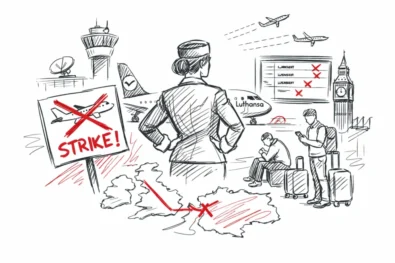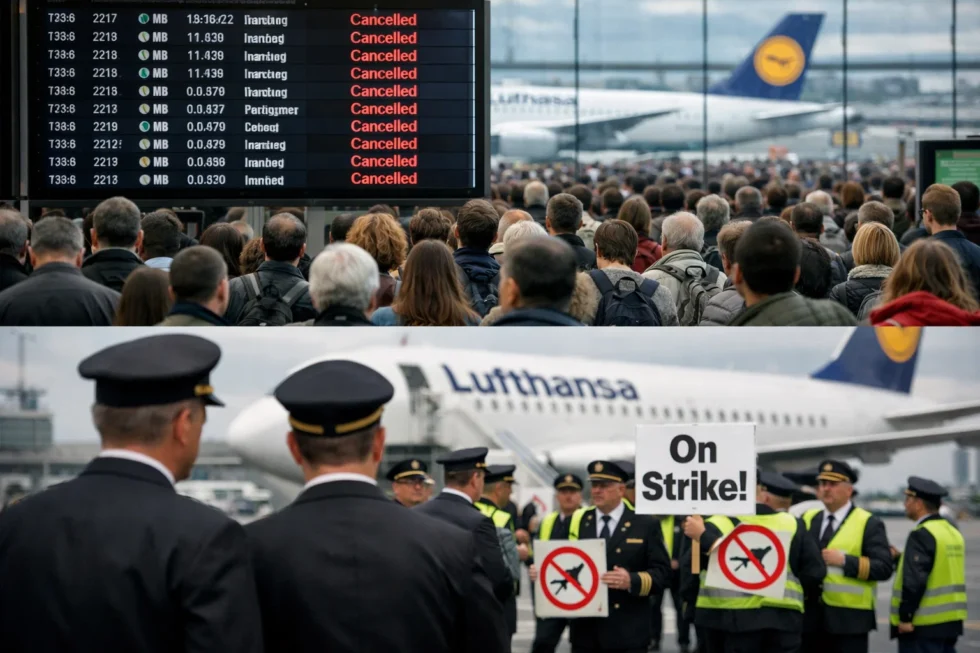
Lufthansa strike Germany flights triggered widespread disruption across the country on 11 April 2026, as cabin crew from Lufthansa and Lufthansa CityLine launched a coordinated one-day strike affecting major hubs including Frankfurt Airport and Munich Airport, leading to more than 500 cancelled flights and severe operational breakdown across Europe’s busiest aviation network. The industrial action, organised by the UFO union, ran from midnight until 22:00 local time, halting both domestic feeder routes and key European connections, with early estimates indicating at least 72,000 passengers directly impacted, while disruption cascaded across airline schedules and connecting traffic. The scale and timing of the strike highlight growing tensions inside the Lufthansa Group as restructuring plans collide with labour demands, exposing vulnerabilities ahead of the critical summer travel season, reported by The WP Times.
The situation is set to escalate further as the pilots’ union Vereinigung Cockpit announced an additional strike wave scheduled for 13–14 April 2026, targeting pilots at Lufthansa, Lufthansa Cargo and CityLine, in a separate dispute over pensions and employment terms. This creates a dual-layer industrial conflict—cabin crew and pilots—raising the risk of prolonged instability in Germany’s aviation system, particularly at Frankfurt, Europe’s key intercontinental hub, where even short-term disruption quickly translates into network-wide delays and cancellations across EU and long-haul routes.
Lufthansa strike Germany flights impact: Frankfurt, Munich and national network disruption
The immediate operational impact was concentrated at Germany’s two largest aviation hubs, where Lufthansa maintains its primary network structure. At Frankfurt alone, airport operator Fraport confirmed around 580 flight cancellations by Friday morning, a figure that included multiple airlines but was driven largely by Lufthansa-related disruptions.
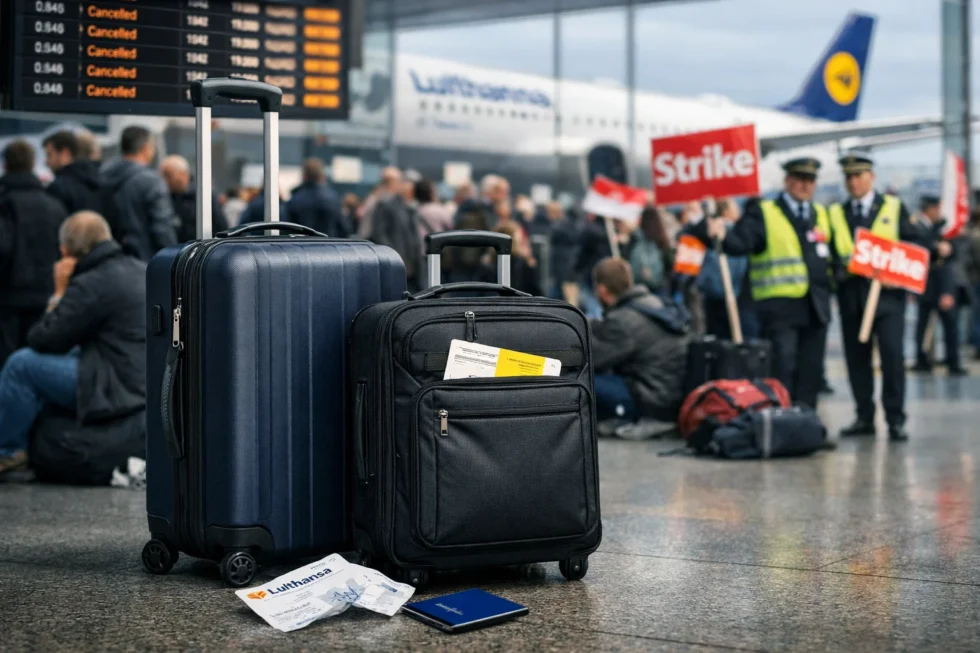
Key operational facts
| Metric | Data |
|---|---|
| Total cancelled flights | ~580 |
| Affected passengers | ~72,000 |
| Strike duration | 00:00 – 22:00 (local time) |
| Airports impacted | Frankfurt, Munich + 9 CityLine bases |
| Airlines affected | Lufthansa, Lufthansa CityLine |
The strike extended beyond flagship routes, with CityLine cabin crew walking out across nine airports nationwide, disrupting regional feeder services that connect smaller German cities to international flights. This created secondary disruption, as missed connections compounded the initial cancellations.
Passengers reported long queues, last-minute rebookings and limited alternative routes, particularly for intra-European travel. The absence of sufficient replacement crews meant Lufthansa was forced to proactively cancel flights rather than attempt partial operations.
Why Lufthansa strike Germany flights escalated: restructuring and labour conflict
The root cause of the disruption lies in a broader structural transformation inside the Lufthansa Group. The airline is currently shifting short-haul operations away from Lufthansa CityLine toward its newer subsidiary, Lufthansa City Airlines, established in 2022 to reduce costs and increase flexibility.
Core conflict drivers
- Planned closure of Lufthansa CityLine by end of 2026
- Transfer of feeder operations to Lufthansa City Airlines
- Concerns over job security among existing staff
- Disputes over pay, working conditions and scheduling
- Pension disagreements in parallel pilot negotiations
While Lufthansa City Airlines recently secured its first labour agreement with the Verdi union—covering around 500 employees and including salary increases of 20–35% through 2029—this deal sharply contrasts with unresolved negotiations elsewhere in the group.
This divergence has intensified frustration among CityLine staff, who face uncertainty over future employment conditions. The result is a fragmented labour environment where different unions and subsidiaries operate under conflicting agreements.
Lufthansa strike Germany flights timeline and next steps for passengers
The situation remains fluid, with further disruption expected due to the announced pilot strike. The timeline of events shows a rapidly escalating industrial dispute:
Timeline of key events
- 11 April 2026 – Cabin crew strike disrupts national operations
- 13–14 April 2026 – Planned pilot strike (Vereinigung Cockpit)
- Mid-2026 onwards – Continued restructuring of short-haul operations
- End of 2026 – Targeted closure of Lufthansa CityLine
Passengers travelling through Frankfurt or Munich in the coming days face continued uncertainty, particularly on routes operated by Lufthansa and its subsidiaries. While some long-haul flights may be prioritised, short-haul European connections remain most vulnerable.
Airlines typically attempt to mitigate disruption by:
- Rebooking passengers onto partner airlines
- Offering refunds or travel vouchers
- Consolidating flights where possible
- Prioritising high-demand routes
However, the scale of the disruption limits the effectiveness of these measures.
Lufthansa response and union statements amid growing crisis
The public exchange between management and unions reflects a widening divide. Lufthansa management has criticised the strike as excessive, while unions argue escalation was unavoidable.
“The scale of this strike is completely disproportionate,” said Jens Ritter, Lufthansa brand chief, speaking in Germany following the cancellations.
“Escalation was inevitable given stalled negotiations,” representatives of the UFO union stated, defending the industrial action.
The pilots’ union Vereinigung Cockpit has separately argued that Lufthansa failed to present an acceptable offer regarding pensions, prompting the planned two-day strike beginning 13 April.
This dual messaging underscores a breakdown in negotiations across multiple fronts within the airline group.
Lufthansa strike Germany flights outlook: risk for summer travel season
The timing of the dispute is critical. April marks the beginning of the ramp-up toward the European summer travel season, when demand for flights increases sharply across leisure and business travel segments.
Strategic risks
- Reduced passenger confidence in Lufthansa reliability
- Increased pressure on competing airlines
- Potential rise in ticket prices due to reduced capacity
- Network instability affecting international travel flows
Frankfurt’s role as a global hub means disruption does not remain local. Delays and cancellations quickly propagate across transatlantic and intercontinental routes, affecting passengers far beyond Germany. If negotiations fail to stabilise in the coming weeks, Lufthansa could face repeated strike actions similar to those seen in previous years, significantly impacting its competitive position in Europe’s aviation market.
Read about the life of Westminster and Pimlico district, London and the world. 24/7 news with fresh and useful updates on culture, business, technology and city life: EasyJet passenger alert new: why travellers risk missing flights under Europe’s EES border system