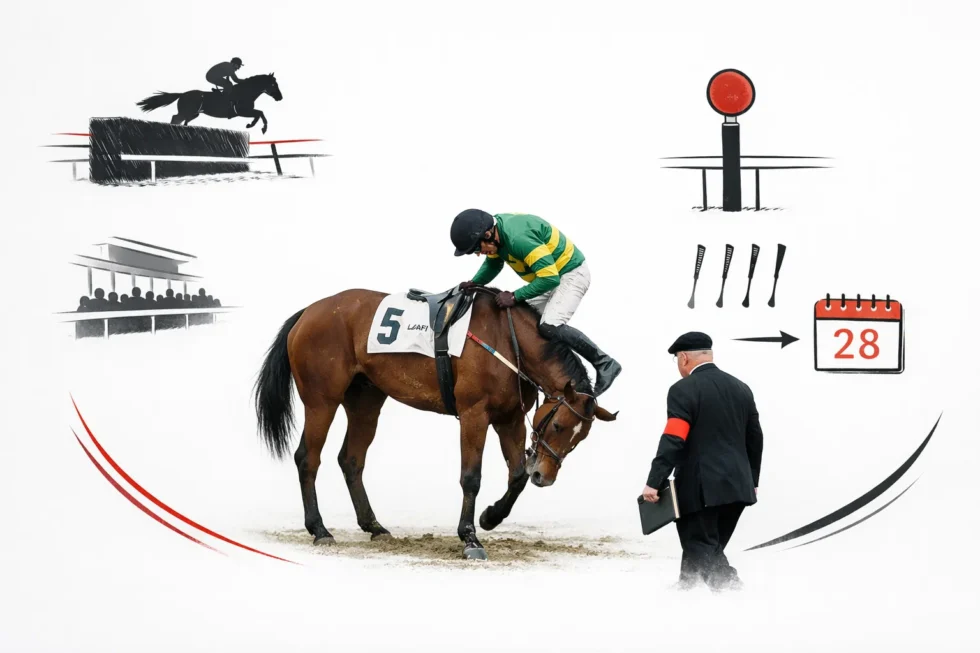
Laafi disqualified after winning at the Grand National Festival in Aintree Racecourse has become one of the most significant regulatory interventions of the 2026 meeting, with officials confirming the result was overturned following a breach of whip rules by jockey Patrick O'Brien. The horse, a 20-1 outsider trained by veteran handler William Durkan, had crossed the line first in a conditional and amateurs’ handicap hurdle before a formal review found excessive whip use in the closing stages, The WP Times reports within the racing framework governing British jumps competition.
The decision, issued after a review by the British Horseracing Authority Whip Review Committee, confirmed that O’Brien used his whip 11 times after the second-last hurdle—four above the permitted limit of seven—automatically triggering disqualification under current rules. The race, worth more than £25,000 to the winner, was subsequently awarded to runner-up Melon, fundamentally altering the official outcome and reinforcing the strict liability nature of whip regulations introduced in recent seasons.
Whip rules breach at Aintree: how the disqualification was triggered
The disqualification was not discretionary but procedural. Under British jump racing rules, exceeding the whip limit by four or more strikes results in automatic removal of the horse from first place, regardless of margin of victory or intent. Key facts from the ruling:
- Permitted whip use: 7 strikes after the second-last obstacle
- Actual use by O’Brien: 11 strikes
- Breach level: +4 (threshold for disqualification)
- Immediate consequence: victory voided
- Secondary sanction: 28-day riding ban
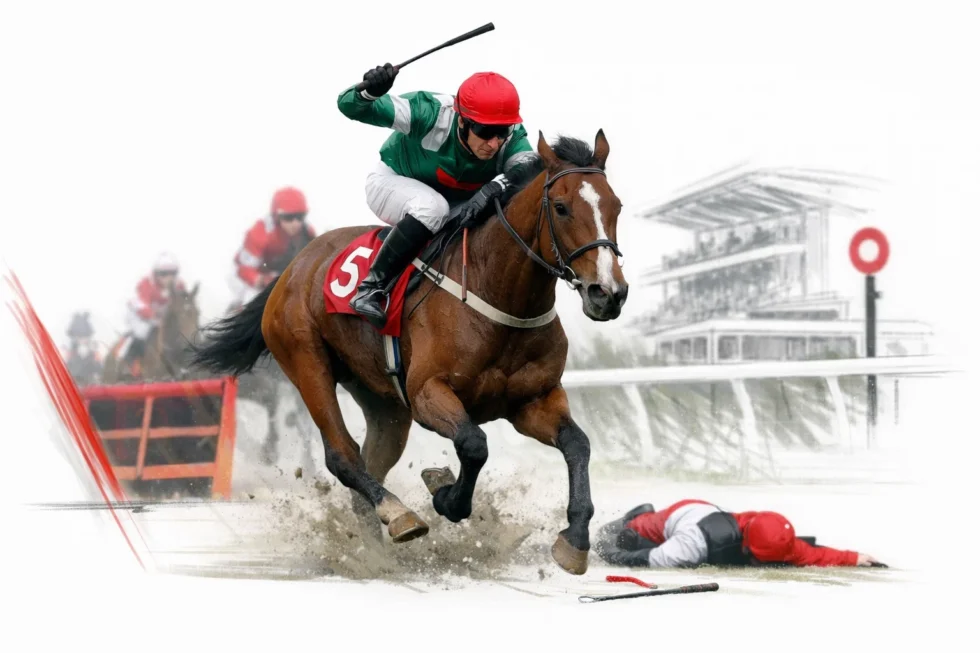
The incident occurred in the final phase of the race, where Laafi had taken the lead and was holding off a late challenge. While the ride initially appeared tactically strong, post-race analysis focused exclusively on compliance with whip regulations rather than race dynamics or competitive context.
The BHA framework is designed to ensure uniform enforcement, meaning stewards are not required to assess intent or race impact once the breach threshold is met. This removes ambiguity but also increases the likelihood of high-profile reversals such as this.
Result overturned: updated race outcome at Aintree
| Position | Horse | Status after review |
|---|---|---|
| 1 | Melon | Promoted winner |
| 2 | Laafi | Disqualified |
| — | Others | Unchanged |
Melon, trained by Oliver Greenall and Josh Guerriero, inherits the victory despite his own jockey, Toby McCain-Mitchell, also breaching whip limits—though at a lower level that did not trigger disqualification. His case has been referred to the Judicial Panel due to repeated offences within a six-month period.
The redistribution of prize money and official records follows standard procedure, with connections of Laafi losing both the win and associated financial reward.
Jockey ban and wider disciplinary action at Aintree
The fallout from the disqualification extends well beyond a single race result, exposing a wider pattern of strict regulatory enforcement throughout the Grand National Festival meeting. Officials moved quickly to underline that breaches of whip rules are being monitored and penalised consistently across all races, not just headline contests. Patrick O'Brien has been handed a 28-day suspension, set to run through May and into early June, effectively sidelining him during a key stretch of the jumps season. The sanction reflects the upper tier of penalties under the current framework and signals how seriously the British Horseracing Authority is treating excessive whip use under its revised code.
Across the three-day meeting, disciplinary action was not isolated. A total of five jockeys were penalised for whip-related breaches, with suspensions ranging from three to eight days for lesser offences. In cases involving repeat infringements within a short period, riders were escalated to the Judicial Panel, indicating a tiered system designed to identify and respond to persistent non-compliance. The concentration of sanctions across a single festival reflects both the competitive intensity of Aintree and the ongoing transition as riders adapt to tighter operational limits in race conditions.
Reaction and human impact behind the ruling
The decision has carried a notable emotional weight within the racing community, particularly given the circumstances surrounding the winning connections. The victory had been seen as a significant moment for veteran trainer William Durkan, adding a human dimension that contrasted sharply with the technical nature of the subsequent ruling.
“It’s brilliant for Bill who is 88 years of age and still loving the game. He was the first on the phone and he’s in tears,” (Gary Bannon, stable representative, Aintree, April 2026).
Such reactions underline the personal stakes involved, but they do not influence the regulatory process. The BHA has maintained a consistent position that welfare standards and rule clarity must take precedence, regardless of narrative or circumstance, reinforcing a framework where outcomes are determined strictly by measurable compliance.
What the Aintree decision signals for the sport
In immediate terms, the ruling at Aintree Racecourse resets the official record—placings revised, prize money reallocated and suspensions enforced—but its deeper impact is operational. Under rules set by the British Horseracing Authority, a result is only final once it passes regulatory validation. In the Laafi case, exceeding the whip limit by four strikes beyond the permitted seven after the final obstacle moved the outcome from a race result to a compliance failure, triggering automatic disqualification.
This framework is already reshaping riding behaviour. The final phase of a race—typically from the second-last obstacle to the line—is now the most tightly controlled and most heavily reviewed segment. Every strike is counted through post-race video analysis, and riders must manage effort within fixed limits while maintaining competitive positioning. The margin between winning and losing is therefore no longer defined solely by distance at the line, but by adherence to a measurable threshold.
What changes in practice for jockeys and teams:
- Maximum of 7 whip strikes permitted after the final obstacle
- Disqualification triggered at +4 strikes above the limit
- Continuous in-race awareness of strike count under pressure
- Reduced reliance on whip, increased use of hands-and-heels riding
- Tactical restraint in the final furlong to avoid post-race review breaches
- Elevated risk of losing a result after the finish if limits are exceeded
For trainers and owners, the implications are procedural but critical. A winning performance is now conditional, requiring not only race execution but regulatory compliance. This introduces a second layer of risk, particularly in handicaps and tightly contested finishes, where pressure on jockeys is highest and margins are minimal. The Aintree decision establishes a clear standard for the sport. Results are no longer defined exclusively at the winning post but through a dual system of performance and verification. Crossing the line first is no longer sufficient—compliance determines the winner, and failure to meet whip limits can overturn the outcome in full.
Read about the life of Westminster and Pimlico district, London and the world. 24/7 news with fresh and useful updates on culture, business, technology and city life: Aintree racing results 11 April 2026: Mirabad shocks 50/1 win in Maghull Chase as favourite beaten