
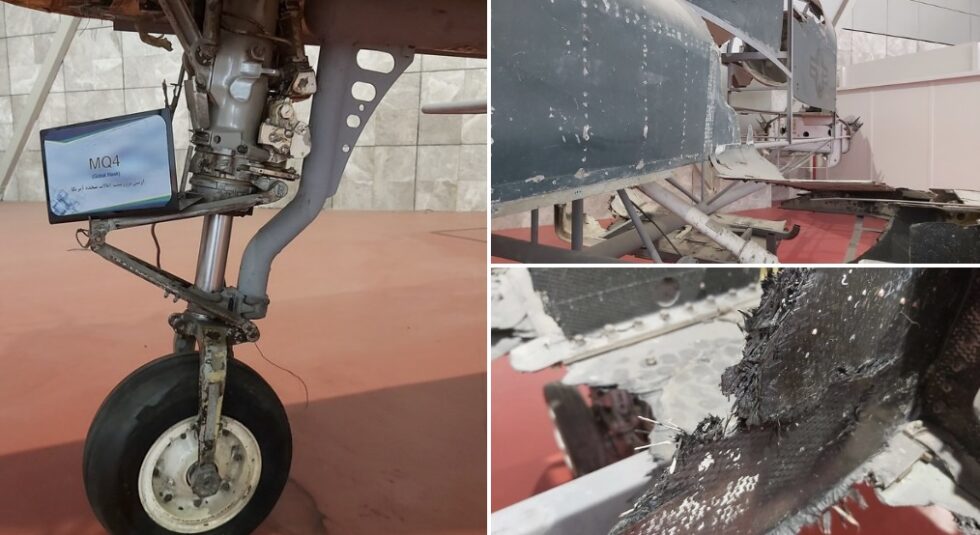
US has confirmed the loss of an MQ-4C Triton surveillance drone after the aircraft disappeared during a mission over the Persian Gulf on 9 April 2026, marking one of the most costly unmanned aviation incidents in recent operations linked to Iran. The high-altitude platform, designed for continuous maritime intelligence, issued an emergency signal before vanishing from tracking systems while operating near the Strait of Hormuz, one of the world’s most sensitive energy chokepoints, The WP Times reports.
The incident has been formally classified as a Class A mishap, indicating severe material loss, while officials have provided only limited detail on the cause, citing operational security. The drone was part of a broader surveillance effort aimed at monitoring shipping routes and regional military activity, underlining both the scale of US deployment in the Gulf and the risks associated with maintaining persistent aerial coverage in a contested environment.
MQ-4C Triton crash timeline: what happened over the Gulf
The available data points to a sudden and critical failure during the final phase of the mission, with no prior public indication of mechanical issues or external threat. Analysts tracking open-source flight data observed an abrupt and steep descent, suggesting a rapid loss of control rather than a controlled return or diversion. The aircraft had been flying in international airspace and was likely completing a routine surveillance cycle before heading back towards its operating base. The loss of signal occurred within minutes of the emergency transmission, leaving a narrow window for response or recovery actions.
Key confirmed details:
- Date: 9 April 2026
- Area: Persian Gulf near Strait of Hormuz
- Status: Crash confirmed, total loss
- Personnel: None on board (uncrewed system)
- Classification: Class A mishap
- Cause: Under investigation
| Indicator | Observation | Interpretation |
|---|---|---|
| Emergency code 7700 | Broadcast before loss | Indicates onboard emergency |
| Rapid altitude drop | ~50,000 ft to <10,000 ft | Suggests critical failure |
| Signal loss | Sudden | No recovery phase detected |
The absence of an exact crash location reflects the sensitivity of military operations in the region, where even limited disclosure can carry strategic implications.
why the MQ-4C Triton matters in Gulf surveillance operations
The MQ-4C Triton, developed by Northrop Grumman, represents a core element of US maritime intelligence strategy, designed to provide uninterrupted surveillance over vast ocean areas where traditional assets are less efficient or more costly to deploy. Its operational value lies in persistence rather than speed or strike capability. By remaining airborne for extended periods, the platform enables continuous monitoring of vessel movement, potential threats, and changes in maritime patterns that may signal escalation or disruption. Technical and operational profile:
- Altitude: Above 50,000 feet
- Endurance: Over 24 hours continuous flight
- Range: ~7,400 nautical miles
- Systems: AESA radar, EO/IR sensors, SIGINT collection
Given the relatively small fleet size, each individual aircraft carries disproportionate strategic weight. The loss of a single unit is therefore not only a financial issue but a potential constraint on operational coverage in high-demand zones.
intelligence exposure risk and strategic implications
The crash introduces immediate concerns about technology exposure, particularly if any components are recovered in a usable condition. The MQ-4C carries advanced surveillance systems that reflect years of development in radar, imaging and electronic intelligence. Even partial recovery of such systems could offer insight into detection capabilities, signal processing or operational methods. This risk exists regardless of whether the crash was caused by internal failure or external factors. Primary concerns following the crash:
- Potential access to sensor and radar technology
- Exposure of signals intelligence capabilities
- Use of debris for strategic messaging or propaganda
- Temporary reduction in persistent surveillance coverage
The regional context amplifies these risks. Previous incidents have shown that downed aerial assets can quickly become part of broader geopolitical narratives, particularly when tensions are already elevated.
official response and unresolved questions
US authorities have confirmed the loss but have refrained from providing detailed operational commentary. The official mishap summary offers only a minimal description, consistent with standard reporting practices for sensitive incidents.
“MQ-4C crashed, no injury to personnel” (Naval Safety Command, United States, April 2026)
Requests for clarification from operational commands have not resulted in additional information, leaving key aspects of the incident unresolved. This limited disclosure is typical in cases where intelligence capabilities and mission parameters are involved. Outstanding questions remain central to understanding the full implications:
- What triggered the initial emergency signal
- Whether there was a systems failure or external interference
- Where the drone ultimately came down
- Whether recovery operations are active or planned
At present, there is no confirmed evidence linking the crash to hostile action, though the strategic environment ensures continued scrutiny.
Initial tracking patterns suggested a temporary pause in visible MQ-4C operations following the incident, which may indicate a short-term reassessment of deployment or risk exposure. However, subsequent activity implies that surveillance missions have resumed, potentially with adjusted parameters. The United States maintains layered intelligence capabilities in the region, allowing partial compensation for the loss through alternative platforms. These include satellites, manned aircraft and other unmanned systems with overlapping functions. Nevertheless, the Triton’s unique combination of endurance and sensor integration makes it difficult to replace fully. Any disruption, even temporary, affects the consistency of real-time maritime awareness in a region where timing and visibility are critical.
what the MQ-4C loss signals for the wider conflict
The confirmed loss of an MQ-4C Triton brings into focus the true operational cost of persistent surveillance in contested regions such as the Persian Gulf, where continuous monitoring is not optional but integral to maintaining control over maritime flows and military awareness. The incident illustrates how high-endurance unmanned systems have become central to US strategy, reducing reliance on manned missions while extending coverage across vast and sensitive areas.
At the same time, the crash exposes a structural constraint: concentration of capability in a limited number of high-value assets. With each platform carrying advanced sensors and long-duration capacity, the loss of a single unit is not marginal—it directly affects continuity, redundancy and tempo of intelligence collection in a region where gaps can carry immediate strategic consequences.
“High-value surveillance systems extend reach, but they also concentrate risk in a single asset” (defence analyst, London, April 2026)
The event also reinforces a broader pattern in modern conflict environments, where technological superiority coexists with persistent exposure to disruption, whether through technical failure, environmental factors or adversary capabilities. Even without confirmed hostile action, the incident will factor into risk calculations for future deployments, particularly over chokepoints such as the Strait of Hormuz. As tensions linked to Iran and maritime security remain unresolved, the loss of the Triton underscores a critical point: surveillance dominance is not absolute. It depends on sustained platform availability, secure operating conditions and the ability to absorb losses without degrading overall situational awareness.
Read about the life of Westminster and Pimlico district, London and the world. 24/7 news with fresh and useful updates on culture, business, technology and city life: RAF jets scrambled as unidentified aircraft approaches UK airspace near Shetland