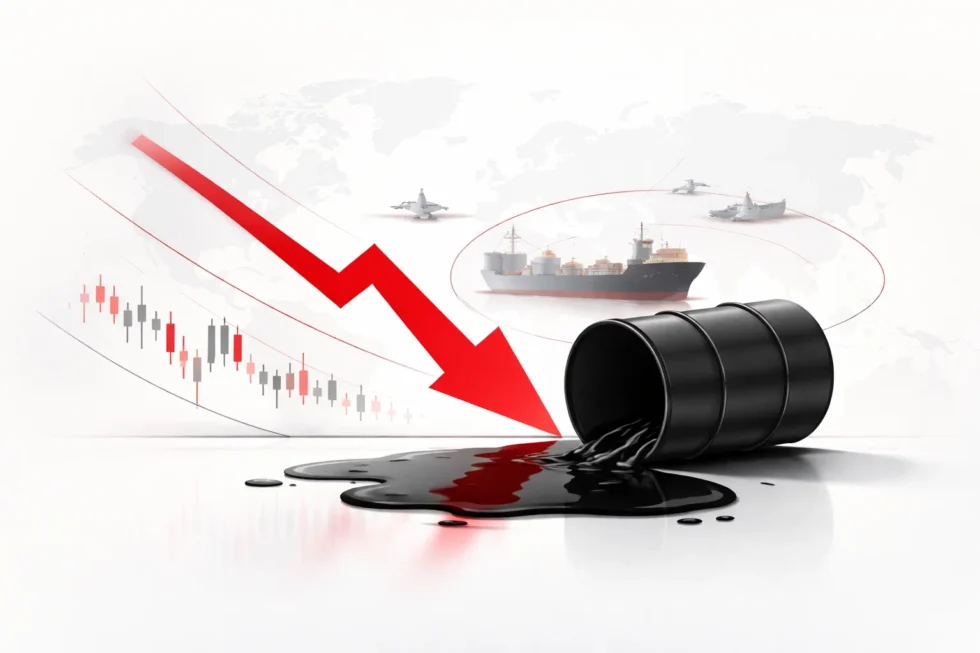
Brent crude price fell sharply on Friday 17 April 2026 after Iran formally confirmed the Strait of Hormuz open to commercial shipping for the remainder of a temporary ceasefire, removing an immediate supply choke point that had driven oil above $100 in recent weeks and triggering a rapid repricing across global markets as traders responded to restored tanker access through the hormuz corridor, a route that carries roughly one fifth of global oil flows — a development that directly links geopolitical de-escalation to energy pricing and supply expectations, The WP Times reports.
The confirmation from Iran’s foreign minister that the Strait of Hormuz ‘completely open’ for commercial vessels follows a period in which transit had been severely restricted after US and Israeli strikes, cutting throughput, tightening global supply and pushing the brent crude price to peaks above $119 in March, with knock-on effects for fuel costs, aviation operations and fertiliser markets, all of which remain sensitive to any renewed disruption in this strategically critical waterway.
Brent crude price reaction reflects rapid unwinding of geopolitical risk
The move in the brent crude price is consistent with a fast unwinding of geopolitical premium rather than a change in underlying production capacity. Markets had priced in prolonged disruption to flows through the Strait of Hormuz, leading to elevated volatility and risk-driven buying. Once confirmation emerged that the Strait of Hormuz open status would allow commercial shipping to resume, futures markets adjusted quickly, with traders closing risk positions built during the period of restricted access. The result was a sharp intraday decline, alongside broader gains in equities.
Immediate market response:
- Brent crude price fell to around $88 per barrel from above $98 earlier in the session
- Peak levels above $119 in March now partially unwound
- US indices moved higher, with Nasdaq and Dow Jones both gaining more than 1%
- European benchmarks including DAX and CAC rose by over 2%
This pattern reflects the sensitivity of oil pricing to disruptions in the hormuz shipping route, where even temporary closures can distort global supply expectations within hours.
Why the Strait of Hormuz remains central to global energy pricing
The Strait of Hormuz functions as one of the most critical transit points in the global energy system, connecting major Gulf producers to international markets. Any restriction immediately affects availability, pricing and downstream industries.
Structural importance of the hormuz route
| Factor | Detail | Market effect |
|---|---|---|
| Oil flow | ~20% of global oil passes through | Direct price sensitivity |
| LNG transport | Major export route for Gulf gas | Energy market volatility |
| Fertiliser chemicals | Around one third of key inputs transit | Agricultural cost pressure |
| Shipping insurance | Costs rise sharply during conflict | Trade friction increases |
The reopening of the Strait of Hormuz open corridor therefore reduces immediate supply pressure but does not remove systemic vulnerability, particularly given the concentration of flows through a narrow and politically sensitive channel.
The decision to reopen the Strait of Hormuz is tied to a 10-day ceasefire between Israel and Lebanon, ending six weeks of conflict that caused more than 2,000 deaths and large-scale displacement. However, the broader geopolitical environment remains complex and unresolved. Iran has presented the reopening as part of a stabilisation effort, while the United States has maintained a naval blockade targeting Iranian ports, signalling continued pressure despite the easing of commercial transit restrictions.
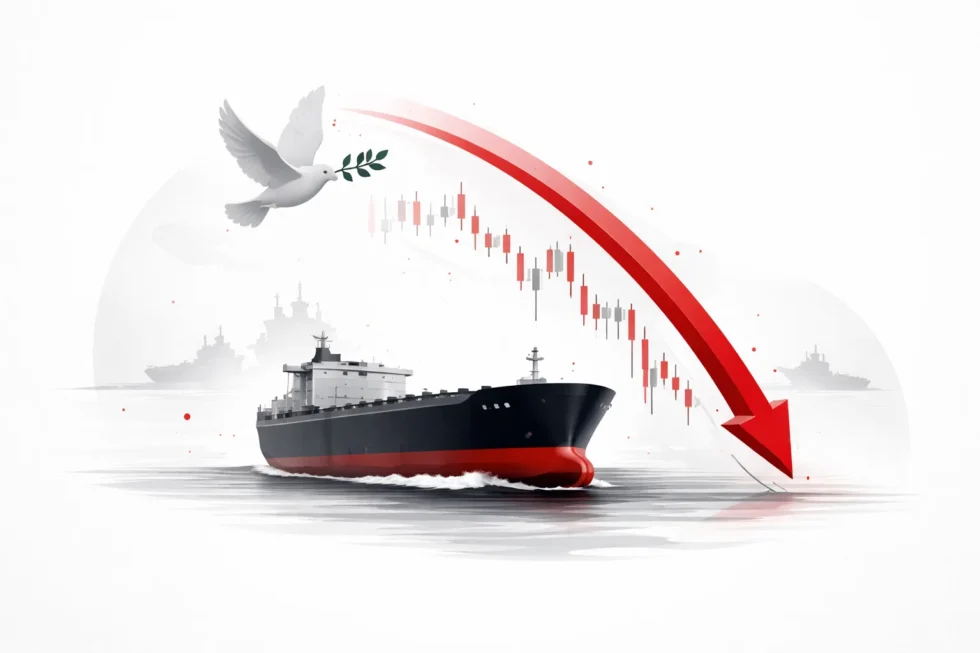
Key statements shaping market interpretation:
- “The passage for all commercial vessels… is declared completely open” (Iranian foreign minister, April 2026)
- “The naval blockade will remain in full force and effect” (Donald Trump, April 2026)
These parallel signals explain why the brent crude price has declined but remains well above pre-conflict levels, reflecting persistent uncertainty rather than full normalisation.
Transmission to fuel, aviation and consumer costs
Movements in the brent crude price typically filter through to households and businesses with a lag, but the reopening of the hormuz corridor has already eased immediate pressure on strained supply chains, particularly those linked to transport fuels and industrial inputs. The restoration of tanker flows reduces the risk premium embedded in wholesale markets, stabilising expectations even before price changes reach the forecourt or ticket pricing systems. In practical terms, the transmission channels are clear and closely monitored by both industry and policymakers:
- Fuel: wholesale petrol and diesel costs are expected to stabilise first, with retail adjustments following gradually
- Aviation: lower immediate risk of jet fuel shortages reduces pressure on flight schedules and operational planning
- Logistics: freight rates may begin to ease as shipping routes normalise and insurance costs stabilise
- Agriculture: fertiliser supply constraints linked to disrupted shipments through Hormuz start to loosen
However, earlier increases in the brent crude price have already fed into consumer pricing across fuel, food and transport. As a result, any relief is likely to emerge incrementally rather than as a sharp reversal, reflecting the delayed nature of energy price transmission through the economy.
Risk assessment: why the Strait of Hormuz open status may not hold
Despite the current designation of the Strait of Hormuz open, the underlying ceasefire framework remains fragile and conditional. Military positioning has not materially changed on the ground, and core political objectives among the parties involved remain unresolved, leaving the situation exposed to rapid deterioration. Israel has confirmed that its forces will remain within a defined security zone in southern Lebanon, while Iran continues to navigate internal pressures alongside ongoing negotiations with the United States. These overlapping dynamics sustain a high baseline risk of renewed disruption to shipping through the hormuz route. The principal risks to the brent crude price outlook include:
- Limited duration and uncertain extension of the ceasefire
- Continued military presence across sensitive border areas
- Ongoing US naval blockade measures affecting regional dynamics
- Potential escalation involving state and non-state actors
Taken together, these factors mean the brent crude price remains highly sensitive to political signals, with volatility likely to persist even in the absence of immediate disruption.
What markets are watching next for oil and Hormuz stability
The near-term direction of the brent crude price will depend less on long-term forecasts and more on real-time developments around the Strait of Hormuz open status and the durability of the ceasefire. Market participants are tracking operational and political indicators simultaneously. Key signals under close observation include:
- Daily tanker traffic volumes through the Strait of Hormuz
- Official statements from Iran, the United States and European governments
- Movements in shipping insurance premiums and risk classifications
- Oil inventory data and supply updates from producers
Any renewed restriction on the hormuz corridor would likely trigger an immediate upward correction in the brent crude price, underlining the continued role of this narrow passage as a central pressure point in the global energy system.
Read about the life of Westminster and Pimlico district, London and the world. 24/7 news with fresh and useful updates on culture, business, technology and city life: HMRC still sending cheques: 178,000 taxpayers miss £800 rebates as £144m goes unclaimed in 2026
Sources used: BBC News, Reuters, Al Jazeera, Associated Press, Financial Times, official statements and market data sources