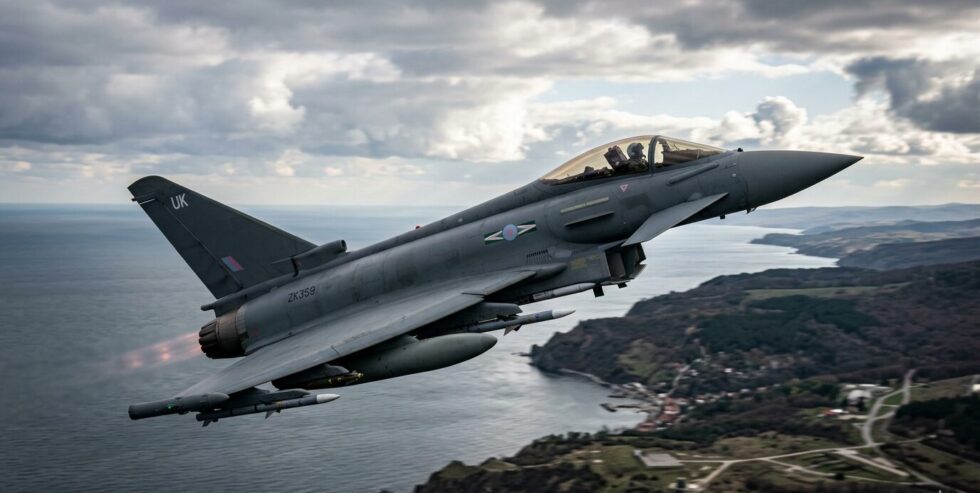
British fighter jets were scrambled overnight in Romania after a Russian drone attack targeted Ukrainian infrastructure close to the NATO frontier, raising fresh concerns about regional spillover risks, according to defence officials and authorities on April 25, 2026. Two Royal Air Force Eurofighter Typhoon aircraft were authorised to engage hostile drones approaching the Danube corridor but ultimately did not enter Ukrainian airspace or fire, as confirmed by both UK and Romanian defence ministries, the situation reported The WP Times via Telegraph.
The incident unfolded as debris from a drone fell inside Romanian territory, damaging infrastructure and marking a notable escalation in cross-border impact. The developments underscore mounting pressure on NATO’s eastern flank as aerial threats increasingly approach alliance borders.
The aircraft were deployed from Romania’s 86th Air Base in Fetești as part of a broader NATO air policing and deterrence mission. Defence officials confirmed that the jets tracked multiple targets heading toward the Ukrainian port of Reni, a critical logistics hub on the Danube River.
Radar contact was established with at least one drone approximately 1.5 kilometres from the target area before communication was lost.
Authorities stressed that rules of engagement were strictly followed, with no breach of Ukrainian airspace.
Romanian authorities confirmed that fragments of a Russian drone were discovered in the southeastern city of Galați following the overnight attack, causing material damage and prompting emergency evacuations.
Officials reported that a power line pole and an adjacent residential annex were damaged, marking the first instance where falling debris resulted in property damage on Romanian soil. Emergency services cordoned off the area amid concerns that unexploded ordnance could be present within the wreckage, and residents were temporarily evacuated as a precaution.
The Romanian Ministry of Defence issued a strongly worded condemnation, describing the incident as a “new challenge to regional security” and warning of increasing risks to NATO territory, adding that such actions demonstrate disregard for international law and threaten both civilian safety and alliance stability.
The Royal Air Force jets had been tasked with monitoring aerial threats targeting Ukrainian port infrastructure along the Danube River, a strategic corridor that flows through or borders ten European countries.
The drones were reportedly approaching the port city of Reni when explosions were later recorded in the area, although the British aircraft did not engage as the targets remained within Ukrainian airspace. Military coordination between NATO allies ensured continuous situational awareness throughout the operation, with officials noting that strict adherence to operational boundaries guided decision-making during the mission.
The Danube corridor has become increasingly sensitive due to its logistical importance for Ukrainian exports amid ongoing wartime disruption.
Romania is now moving to integrate a US-developed artificial intelligence-powered anti-drone system into its national air defence network within days, following final testing. Defence Minister Radu Miruță said the system, known as Merops and developed under Project Eagle, is designed to counter aerial threats along the Danube region and has already been deployed in Poland.
The technology is expected to enhance detection and response capabilities against unmanned aerial threats, particularly as incidents near Romania’s border with Ukraine become more frequent. Romanian legislation allows for the interception of drones during peacetime if they pose a threat to life or property, although authorities have not yet exercised that option.
The developments came as Russia launched a large-scale assault across Ukraine overnight, firing 619 drones and 47 missiles, according to Ukrainian officials. In the city of Dnipro, two people were killed and 21 injured after a strike hit a residential building, while additional fatalities were reported elsewhere in the country.
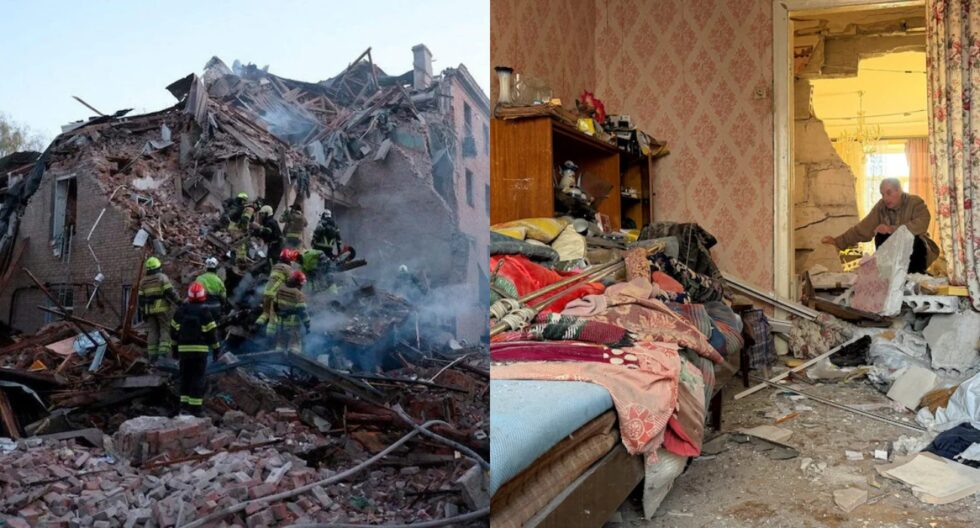
Emergency responders continued search and rescue operations amid concerns that more people could be trapped beneath the rubble. Regional authorities said infrastructure including housing, energy facilities and businesses had been damaged in multiple locations.
Ukrainian President Volodymyr Zelensky said Russia’s tactics remained unchanged, relying on combined drone and missile attacks that primarily target civilian infrastructure. He said residential buildings, energy systems and enterprises were among the sites hit in the latest wave of strikes, underscoring the continued pressure on urban areas.
Local officials in the Dnipropetrovsk region confirmed that bodies had been recovered from beneath destroyed structures and warned that further victims might still be trapped as rescue efforts continue.
“Russia’s tactics remain unchanged — drones, cruise missiles and ballistic strikes targeting civilian infrastructure,” - said Volodymyr Zelensky, Kyiv, April 2026.
Read about the life of Westminster and Pimlico district, London and the world. 24/7 news with fresh and useful updates on culture, business, technology and city life: A13 Traffic UK April 25 2026: Verified Road Status, Official Works And Real-Time Conditions