
Meta AI age checks will be used to analyse photos, videos, text and account behaviour on Facebook and Instagram in an effort to identify users who may be under 13 and remove them from the platforms. The company said the system will look for broad visual signals such as height and bone structure, while insisting it is “not facial recognition”, The WP Times reports.
The announcement, made on 5 May 2026, places artificial intelligence at the centre of Meta’s latest child-safety strategy. The system is designed to detect accounts that may have been created by children below the minimum age allowed on Facebook and Instagram. If Meta concludes that a user may be under 13, the account can be deactivated unless the person completes the company’s age-verification process.
The move comes as Meta faces legal and regulatory pressure over child safety, including a New Mexico case in which a jury ordered the company to pay $375 million in civil penalties.
What Meta AI age checks will scan on Facebook and Instagram
Meta says the new system will not rely only on the birth date a user enters when opening an account. Instead, the company is combining several types of signals to estimate whether someone may be too young to use its services.
These signals include visual clues in photos and videos, as well as text and interactions across profiles, posts, comments, captions and biographies.
Meta said its AI may look at general indicators such as height or bone structure to estimate a person’s broad age range. The company stressed that the tool is not intended to identify a specific person in an image.
Key signals Meta says it may use include:
- visual clues in photos and videos, including height and bone structure;
- text references to birthdays, school grades or age-related milestones;
- captions, bios, posts and comments;
- patterns of interaction across Facebook and Instagram;
- future signals from more parts of the apps, including Instagram Live and Facebook Groups.
What happens if Meta thinks a user is under 13
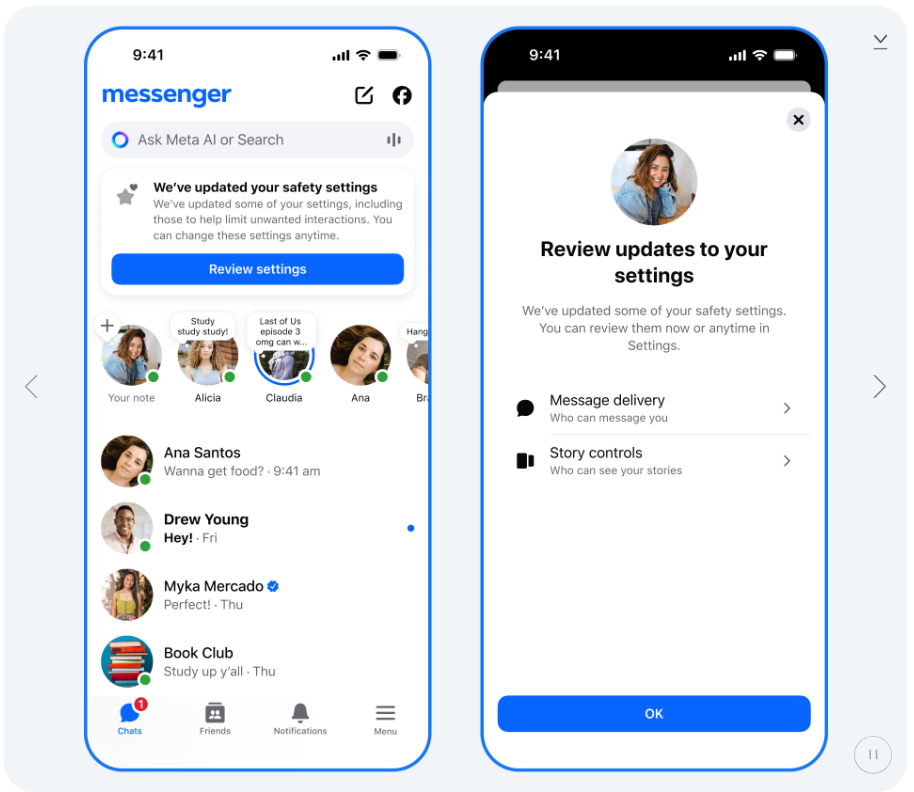
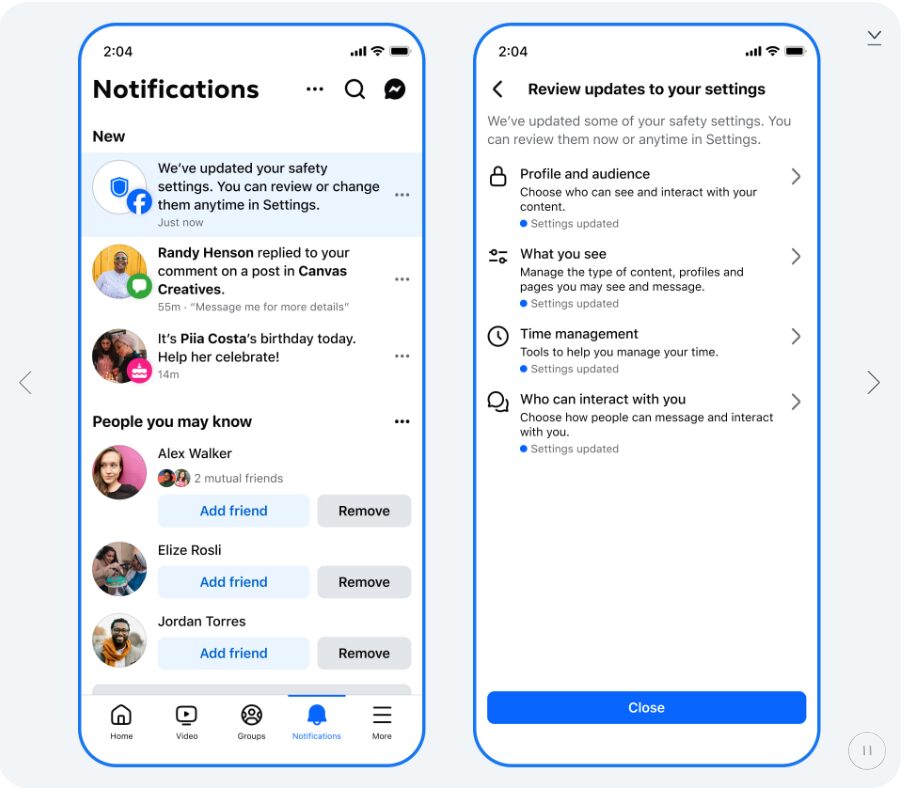
If Meta’s system flags an account as potentially belonging to a child under 13, the account may be deactivated. The user would then need to go through Meta’s age-verification process to avoid removal. This is an important point: the AI signal itself does not simply become a public label on the account, but it can trigger enforcement.
Meta is framing the measure as part of a wider effort to keep children below the permitted age off its platforms. The company says the goal is to increase the number of underage accounts it can identify and remove.
| Issue | What Meta says will happen |
|---|---|
| User appears under 13 | Account may be deactivated |
| User disputes the decision | Age verification may be required |
| AI uses visual clues | Meta says it is not facial recognition |
| Rollout | Currently in selected countries, with broader expansion planned |
| Future use | More app areas, including Live and Groups, may be added |
Why Meta says this is not facial recognition
The most sensitive part of the announcement is Meta’s claim that the system can examine physical features without becoming facial recognition. The company says its AI looks at “general themes and visual cues” rather than identifying a named individual. In practical terms, that distinction matters because facial recognition is associated with biometric identification, while Meta is presenting this tool as age estimation.
Critics are still likely to scrutinise the system because it involves automated analysis of children’s and teenagers’ images at scale. The debate will probably focus on accuracy, false positives, transparency and how users can challenge decisions.
The central questions are likely to be:
- how accurately AI can estimate age from height or bone structure;
- whether children who look older or younger than their age may be misclassified;
- how much information users will receive when their account is flagged;
- whether parents and regulators will consider the process transparent enough;
- how Meta stores or processes the signals used in enforcement.
Instagram Teen Accounts expand to the EU and Brazil
Meta also announced that it is expanding technology that automatically places suspected teenage users into stricter Instagram Teen Account settings across the 27 EU countries and Brazil.
These accounts are designed to create a more restricted experience for users Meta believes are teenagers, even when they may have entered an adult birth date. The safeguards include tighter privacy defaults and limits on who can contact teenagers directly.
Meta says the technology has already been used to place large numbers of teens into age-appropriate settings since 2024. The company also plans to expand this use of the technology on Instagram globally during the year.
Teen Account protections include:
- private accounts by default for many teen users;
- direct messages limited to people they follow or are already connected with;
- stronger filtering of harmful comments;
- age-appropriate content settings;
- automatic placement into stricter protections when Meta suspects a user is a teen.
Facebook will get the same technology in the US, then UK and EU
The same teen-detection technology is being extended to Facebook in the United States for the first time. Meta says the UK and the EU will follow in June 2026. This matters because the debate around teen safety has often focused heavily on Instagram, but Facebook remains part of the same youth-safety and regulatory discussion. The expansion suggests Meta wants one broader age-assurance model across its major platforms.
It also gives regulators a clearer target:
whether Meta can enforce consistent youth protections across different apps, formats and markets.
| Market | Platform | Timing |
|---|---|---|
| 27 EU countries | Instagram Teen Account technology | Announced 5 May 2026 |
| Brazil | Instagram Teen Account technology | Announced 5 May 2026 |
| United States | Facebook teen safeguards | First rollout now |
| United Kingdom | Facebook teen safeguards | Planned for June 2026 |
| European Union | Facebook teen safeguards | Planned for June 2026 |
Why the New Mexico case matters for Meta
The timing is politically and legally significant. In March 2026, a New Mexico jury ordered Meta to pay $375 million in civil penalties after finding it liable in a case linked to child safety and alleged misleading claims about platform protections.
Reuters reported that Meta said it planned to appeal, while New Mexico’s attorney general accused the company of enabling child exploitation and misleading users about safety. The next phase of the case has focused on possible wider remedies and platform changes. That legal backdrop makes Meta’s new AI age checks part of a much larger fight over whether social media companies can police youth safety effectively.
The New Mexico dispute includes several major issues:
- alleged failures to protect minors from exploitation;
- claims about whether users were misled on platform safety;
- possible new requirements for age verification;
- debate over algorithmic design and teen safety;
- Meta’s argument that some proposed remedies are legally and practically excessive.
What parents and users should understand now
For parents, the immediate message is that Meta is moving from self-declared age toward AI-based age assurance. That means a teenager’s account may be assessed through behaviour, text and visual content, not just the birthday listed during registration. For users, the practical risk is that an account could be deactivated if Meta’s systems believe the person is under 13.
For regulators, the test will be whether Meta’s system is accurate, explainable and enforceable across countries with different privacy and child-safety rules. The company is also encouraging parents to talk to teenagers about giving their correct age online.
The important takeaway is simple: Meta is no longer treating age as only a registration form field. It is turning age detection into a platform-wide AI system, using images, text and behaviour to decide whether users should be removed, verified or placed into stricter teen protections.
Read about the life of Westminster and Pimlico district, London and the world. 24/7 news with fresh and useful updates on culture, business, technology and city life: Microsoft shutdown and restart changes: How will Windows updates now give users full control over PCs
Foto: Меta