
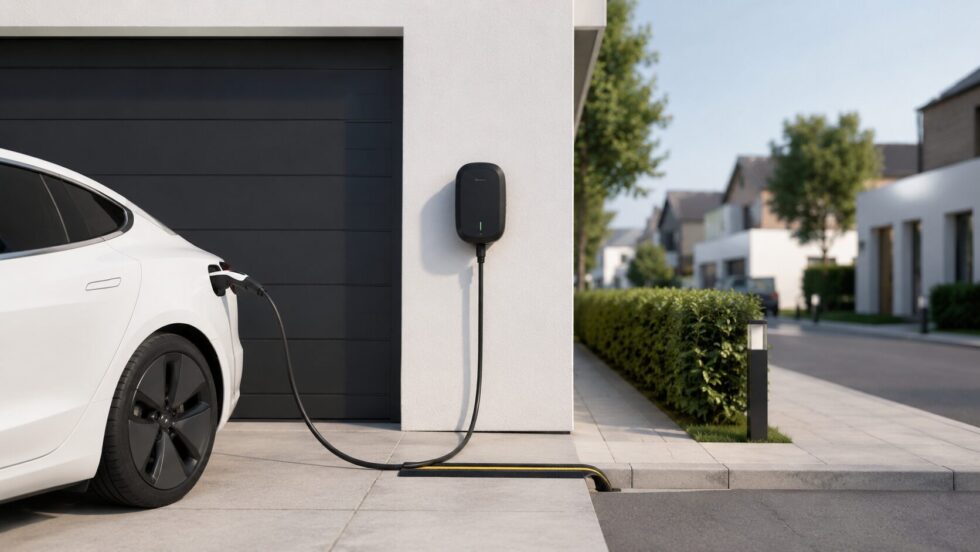
London, 3 June 2026. England driveway EV charger rules are at the centre of a major national shift in electric vehicle infrastructure as the Government removes planning barriers for many charging installations while local authorities continue to debate how drivers without private parking can access affordable home charging. The reforms are designed to accelerate charger deployment ahead of the UK's 2030 petrol and diesel car sales ban, but significant differences between councils mean that millions of households still face practical obstacles when attempting to charge vehicles near their homes, reports The WP Times.
The policy changes arrive at a crucial moment for Britain's electric vehicle transition. Ministers argue that reducing bureaucracy will encourage more homeowners, businesses and charging operators to install infrastructure faster. At the same time, campaigners and industry experts warn that households without driveways remain disadvantaged because local rules governing pavement cable channels, street charging solutions and parking access continue to vary widely across England.
England driveway EV charger rules change as planning requirements are removed
One of the most significant developments affecting motorists is the removal of planning permission requirements for many electric vehicle charging installations. The Department for Transport has confirmed that a range of charging projects can now proceed without the lengthy planning approval processes that previously delayed installations. The change applies to many private residential driveways as well as selected workplace and public charging infrastructure projects.
Government officials argue that the previous system created unnecessary delays. In some cases, obtaining planning consent for charging infrastructure could take several months, slowing efforts to expand the national charging network. The latest reforms are intended to eliminate administrative obstacles and encourage investment across the sector.
The policy forms part of a wider strategy aimed at supporting the transition toward electric mobility. Ministers believe faster charger deployment is necessary if the United Kingdom is to meet its long-term climate objectives and transport electrification targets. Key elements of the new framework include:
- Reduced planning requirements for many charger installations.
- Faster approval processes for infrastructure projects.
- Greater flexibility for homeowners installing chargers.
- Support for workplace charging expansion.
- Measures designed to accelerate public charging deployment.
- Alignment with the UK's broader EV adoption strategy.
The Government maintains that removing planning barriers will help expand access to charging facilities and increase consumer confidence in electric vehicles.
Why charging at home remains significantly cheaper
For many EV owners, home charging remains the most affordable option available. One of the primary reasons is taxation. Electricity used for domestic charging is generally subject to a lower VAT rate than electricity purchased from public charging stations. This creates a noticeable difference in operating costs over time.
Industry analysts frequently highlight the cost advantage of overnight home charging. Drivers who can charge vehicles on private driveways often benefit from lower electricity tariffs and reduced overall running expenses compared with motorists who rely entirely on public networks. The financial difference becomes increasingly important as more consumers evaluate whether to switch from petrol or diesel vehicles to electric alternatives. While purchase prices remain a consideration, long-term charging costs are often a decisive factor in ownership decisions.
Typical advantages of home charging
| Benefit | Explanation |
|---|---|
| Lower charging costs | Domestic electricity often costs less than public charging |
| Greater convenience | Vehicles can charge overnight |
| Flexible energy tariffs | Access to off-peak electricity rates |
| Reduced waiting times | No need to visit public chargers |
| Improved ownership experience | Charging becomes part of daily routine |
Supporters of home charging argue that equal access to affordable charging should be a central objective of transport policy.
Millions of households still face pavement charging challenges
Despite regulatory reforms, a major obstacle remains for households that do not have access to private driveways. Research regularly cited within the industry suggests that millions of homes across Britain lack dedicated off-street parking. These residents often depend on public charging infrastructure, which may be more expensive and less convenient.
As electric vehicle adoption increases, the question of how drivers can safely connect chargers to vehicles parked on public streets has become increasingly important. One proposed solution involves cable gullies or cable channels installed within pavements.
These systems allow charging cables to pass safely between homes and parked vehicles while reducing trip hazards for pedestrians. However, acceptance of the technology varies significantly from one local authority to another. Factors influencing council decisions include:
- Pedestrian safety concerns.
- Legal liability issues.
- Maintenance responsibilities.
- Accessibility requirements.
- Street design considerations.
- Parking availability.
- Highway management policies.
The result is a highly fragmented national picture where rules differ considerably depending on location.
Why some councils oppose pavement cable gullies
Although several local authorities support or trial cable gully technology, others remain cautious. Opponents argue that pavements must remain safe and accessible for all users, particularly elderly residents, disabled individuals, wheelchair users and people with visual impairments. Some authorities have expressed concerns about responsibility for maintenance and repairs. Questions also remain regarding liability should accidents occur involving charging infrastructure installed across public footpaths.
Certain councils point to practical challenges related to parking availability. In areas dominated by terraced housing, residents cannot always park directly outside their properties. This raises questions about whether permanent charging solutions linked to specific homes are appropriate. Local authorities have also highlighted concerns regarding:
- Potential damage to charging cables.
- Electrical safety risks.
- Street clutter.
- Public realm management.
- Enforcement challenges.
- Long-term maintenance costs.
These considerations continue to influence decision-making across different regions of England.
Industry response to local authority restrictions
Manufacturers and infrastructure providers argue that modern cable gully systems have been specifically designed to address safety concerns. Several companies operating in the sector state that their products allow charging cables to sit below pavement level, reducing the risk of trips and maintaining accessibility standards.
Industry representatives emphasise that successful pilot projects have already demonstrated the practicality of the technology in real-world environments. They argue that allowing carefully regulated installations could provide a cost-effective solution for many EV owners without driveways. Businesses involved in the sector also note that installation processes remain subject to local authority oversight even where planning permission requirements have been relaxed. This means that councils continue to play a critical role in determining whether specific projects can proceed.
Industry arguments supporting cable gullies
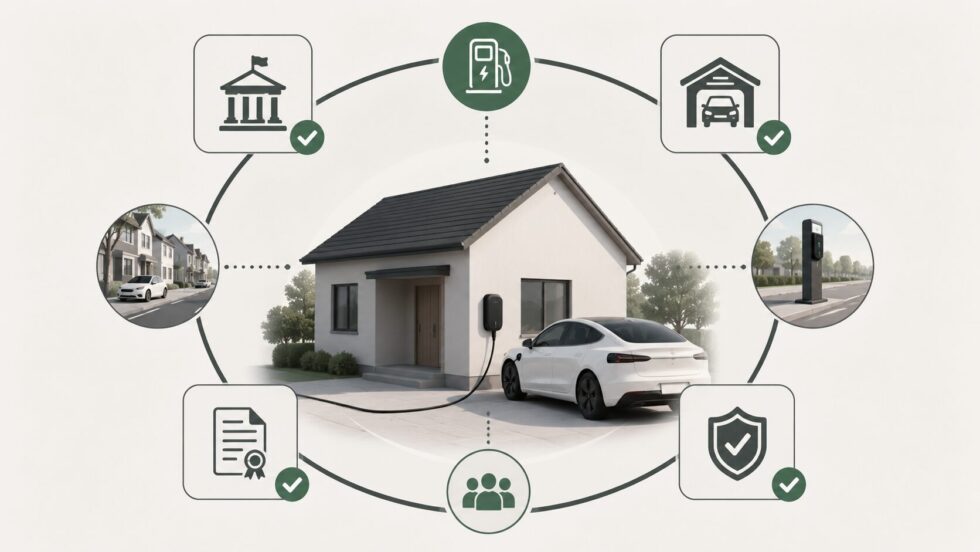
- Safer cable management.
- Reduced charging costs for residents.
- Better access to home electricity.
- Faster EV adoption.
- Lower dependence on public chargers.
- Increased flexibility for urban households.
Supporters argue that national consistency would make the system easier for homeowners and installers to navigate.
Government targets and the road to 2030
The debate surrounding England driveway EV charger rules takes place against the backdrop of ambitious national targets. The Government has committed to ending sales of new petrol and diesel cars and vans from 2030. Achieving that objective requires a substantial expansion of charging infrastructure across the country. Public charging deployment has accelerated during recent years, with both private investment and government support contributing to network growth. Policymakers view charger availability as one of the most important factors influencing consumer confidence.
Transport experts frequently note that charging infrastructure must develop at a pace capable of matching electric vehicle adoption. Without adequate charging options, concerns regarding convenience and range may continue to discourage some potential buyers. Current priorities include:
| National Objective | Purpose |
| Expand public charging | Improve nationwide coverage |
| Support home charging | Reduce ownership costs |
| Encourage EV adoption | Meet climate goals |
| Increase infrastructure investment | Strengthen network capacity |
| Improve accessibility | Ensure equal access |
Officials believe a combination of public and private charging solutions will be necessary to achieve long-term targets.
What EV drivers should watch during 2026
For homeowners with private driveways, the latest reforms are likely to simplify charger installation and reduce administrative burdens. For drivers without dedicated parking, however, local authority policies remain the determining factor. Even as national regulations become more flexible, council decisions continue to shape what is possible on individual streets.
Industry observers expect discussions around pavement charging, cable gullies and neighbourhood charging solutions to intensify throughout 2026 as EV ownership continues to grow. Motorists considering an electric vehicle purchase may wish to examine:
- Local charging availability.
- Council charging policies.
- Off-street parking access.
- Home charger installation options.
- Public charging costs.
- Future infrastructure plans.
The outcome of these debates could significantly influence how quickly electric vehicle ownership expands across urban and suburban Britain.
Questions and answers about England driveway EV charger rules
As England driveway EV charger rules continue to evolve in 2026, many homeowners, electric vehicle owners and local authorities are trying to understand exactly what the latest changes mean in practice. While the Government has removed several planning barriers for EV charger installations, questions remain about driveways, pavement cable channels, council permissions and access to affordable charging for households without private parking. The answers below explain the most important issues currently affecting drivers across England.
Do homeowners still need planning permission for EV chargers?
In many cases, planning permission is no longer required for eligible charging installations under the latest reforms. Specific circumstances can still vary depending on location and project type.
Can drivers run charging cables across pavements?
This depends on local authority policies. Some councils allow approved cable gully systems, while others continue to restrict them.
Why are councils concerned about cable gullies?
Authorities cite safety, accessibility, maintenance and legal liability concerns when assessing applications.
Are home chargers cheaper than public chargers?
Home charging is generally considered significantly cheaper due to lower electricity costs and different VAT treatment.
Will the UK have enough chargers by 2030?
Government and industry forecasts suggest deployment is increasing rapidly, although continued investment and local cooperation remain essential.
What is the biggest challenge facing EV charging?
Ensuring equal access for households without private parking remains one of the most significant unresolved issues in Britain's electric vehicle transition.
Read about the life of Westminster and Pimlico district, London and the world. 24/7 news with fresh and useful updates on culture, business, technology and city life: UK Visa Changes 2026: What Foreign Workers Need To Know About New Salary Rules, English Tests And Settlement Delays