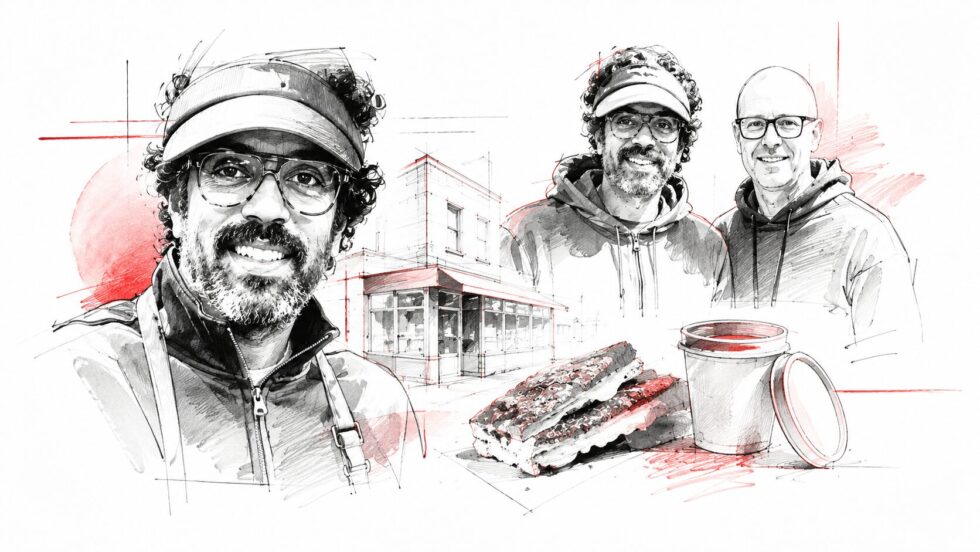
Romesh Ranganathan bakery closure became a national high street story on 30 June 2026, when Coughlans Bakery, the 89-year-old family firm part-owned by the British comedian, stopped trading and entered voluntary liquidation. The chain had 31 shops across South London, Surrey, Sussex and Kent, with its roots in Thornton Heath and a visible presence around Croydon, Purley, Coulsdon and Wallington. Sean Coughlan, the third-generation boss of the bakery, said the decision was made so the company could pay staff and suppliers, while blaming business rates, employer National Insurance, wages, fuel prices, ingredient costs and heatwave-hit sales for the collapse, reports The WP Times.
Romesh Ranganathan is a Crawley-born British stand-up comedian, presenter, actor and broadcaster known for The Weakest Link, The Misadventures of Romesh Ranganathan, The Ranganation and Rob & Romesh Vs. He became a part-owner of Coughlans Bakery in 2024 after backing its plant-based range, turning a long-established local bakery into a business with national media attention. The WP Times reports the closure as more than a celebrity-linked business failure: it is a story about a family bakery founded in 1937, a South London high street network, and the cost pressures now facing physical food retailers.
Why Did Romesh Ranganathan Get Involved With Coughlans Bakery
Ranganathan’s link with Coughlans was built around the bakery’s vegan range rather than a simple endorsement deal. British Baker reported in November 2024 that he had bought a stake in the company as it continued expanding across South London, Surrey, Kent and West Sussex, after becoming a fan of its plant-based products. His official biography describes him as a comedian, broadcaster and writer with work across television, radio, podcasts and books, which gave Coughlans a much wider audience than most regional bakery chains could expect through normal marketing.
The partnership gave the bakery an unusual profile. Ranganathan appeared behind counters, took part in promotional videos and helped draw queues at stores including Dorking and Beckenham. For a family firm that began in 1937, the combination of local loyalty and celebrity visibility looked powerful.
The celebrity link made the closure headline travel; the underlying issue was the cost of running 31 physical bakery shops.
The key phrase Romesh Ranganathan Coughlans Bakery now describes both the comedian’s investment and the shock that followed the closure. Ranganathan reposted Sean Coughlan’s announcement with the words “Gutted isn’t the word”, a short reaction that captured the tone of customers and staff who had seen the business expand only recently.
“Gutted isn’t the word.” (Romesh Ranganathan, social media repost after Sean Coughlan’s closure announcement, 30 June 2026)
What Happened To Coughlans Bakery On 30 June 2026
Coughlans Bakery announced on 30 June 2026 that it had ceased trading and gone into voluntary liquidation. In the company’s public statement, Sean Coughlan said the decision was taken with the intention of paying staff and suppliers, not as a planned retirement or sale. The company’s listing at Companies House identifies Coughlans Bakeries Limited as company number 00332224, incorporated on 4 October 1937, with its registered office at Sandringham Road, Thornton Heath.
The closure hit shops across the South East immediately. Local reporting put the number of jobs at risk at around 175, spread across the chain’s bakery operation and retail shops. Coughlans had grown to 31 stores, but that growth also meant more rent, more staff, more delivery routes and more daily production pressure.
Sean Coughlan said the firm had faced a run of costs that arrived together. Employer National Insurance became more expensive from April 2025, business rates remained a heavy fixed cost, wages rose, ingredients became more expensive and fuel costs hit the delivery side of the business. He also said recent heatwaves had reduced takings sharply because fewer customers were coming out during the hottest trading days.
- Coughlans Bakery ceased trading on 30 June 2026.
- The company entered voluntary liquidation.
- The business had operated since 1937.
- The chain had 31 shops across South London and the South East.
- Around 175 jobs were reported to be affected.
- Sean Coughlan said staff and suppliers were being prioritised.
How Did Croydon Become Central To The Coughlans Bakery Closure
Coughlans Bakery closure matters especially in Croydon because the company was not an outside chain that briefly opened in the borough. Its operational base was in Thornton Heath, and its shops served Croydon High Street, Lower Addiscombe, South Croydon, Purley, Coulsdon, Old Coulsdon and nearby South London areas. For many customers, Coughlans was part of a daily route rather than a destination brand.
Croydon’s high streets have already faced pressure from changing shopping habits, empty units, online competition and the cost of running bricks-and-mortar businesses. A bakery carries footfall in a different way from a fashion shop or restaurant: it draws morning customers, school-run traffic, lunch buyers and people collecting cakes for family occasions. When that shop closes, the gap is visible from early morning.
| Croydon Area | Coughlans Link | What The Closure Means |
|---|---|---|
| Thornton Heath | Company base and bakery operation | Loss of a long-running local employer |
| Croydon High Street | Town-centre bakery presence | Another vacant high street unit |
| Lower Addiscombe | Neighbourhood retail route | Fewer independent bakery options |
| Purley | South Croydon customer base | Loss of a regular bakery stop |
| Coulsdon and Old Coulsdon | Residential high street trade | Reduced choice beyond supermarkets |
| Wallington | Wider South London network | Loss of a familiar local food shop |
The Croydon impact is also cultural. Long-running bakeries sit inside local memory: lunch breaks, birthday cakes, school treats, Saturday errands and regular staff who know customers by sight. Coughlans had the kind of customer loyalty that many new hospitality brands try to manufacture but rarely sustain.
The loss is not only the counter; it is the daily rhythm around the counter.
Why Did Rising Costs Push Coughlans Bakery Into Voluntary Liquidation?
The business case described by Sean Coughlan was blunt: costs rose faster than sales could absorb. HMRC guidance shows the employer secondary Class 1 National Insurance rate increased to 15% from 13.8% from April 2025, while the secondary threshold was reduced to £5,000 a year for 2025–2026. For a company with shops, bakery staff, drivers and retail teams, payroll changes are not a small back-office adjustment.
Business rates were another pressure. Physical food retailers pay for their position on the high street before a single customer walks through the door. A bakery also carries production costs that cannot be delayed easily: ovens, refrigeration, delivery, ingredients and early-morning labour all have to be in place before the day’s sales are known.
Sean Coughlan also cited fuel prices and heatwaves. Fuel matters because a bakery chain serving dozens of shops depends on daily movement between production and retail sites. Heatwaves matter because bakery sales can fall sharply when customers avoid town centres, while staff, rent, energy and business rates remain payable.
- Employer National Insurance increased the payroll burden.
- Business rates kept fixed property costs high.
- Wage rises added pressure across shops and production.
- Fuel costs affected delivery and logistics.
- Ingredient inflation reduced margins on baked goods.
- Heatwaves cut footfall and weekly takings.
- Voluntary liquidation gave the company a formal route to deal with creditors.
“Rates have absolutely smashed local businesses, local retail.” (Sean Coughlan, closure statement, 30 June 2026)
What Was Coughlans Bakery Known For Before It Closed
Coughlans Bakery was known for bread, cakes, pastries, doughnuts, cookies, celebration cakes and a wide vegan range. The vegan offer was central to the modern version of the company and helped explain why Ranganathan’s involvement made sense. Unlike a celebrity partnership dropped onto an unrelated product, this one had a visible link to the comedian’s own vegan lifestyle.
The company’s age gave the closure extra weight. Coughlans had traded through almost nine decades of British retail change, from traditional local shopping to supermarkets, coffee chains, food delivery apps and post-pandemic high street pressure. Customers responding to the closure described wedding cakes, childhood routines, lunch breaks and favourite doughnuts.
What Changed Before And After Romesh Ranganathan Joined?
| Period | What Happened | Business Meaning |
|---|---|---|
| 1937 onward | Coughlans operated as a family bakery | Long local history and customer loyalty |
| Post-Covid years | The chain expanded its shop estate | Higher reach but higher fixed costs |
| 2024 | Romesh Ranganathan became a part-owner | National attention and stronger vegan identity |
| 2025 | Store appearances drew queues | Strong publicity and customer engagement |
| 30 June 2026 | Voluntary liquidation announced | Immediate closure across the chain |
The expansion made Coughlans more visible, but it also made the company more exposed. A larger shop estate creates more opportunities to sell, but it also multiplies rent, staffing, utilities, maintenance, insurance and logistics. If sales fall at the same moment as costs rise, scale stops being protection.
Brand affection can fill a queue for a day; it cannot cover every fixed cost across a regional estate.
What Did Business Groups Say About The Bakery Closure
The closure quickly moved into the debate about Britain’s high street tax burden. Ros Morgan, chief executive of Heart of London Business Alliance, told The Standard that the closure of Coughlans after almost 90 years was a reminder that the business rates system was no longer fit for purpose. Her argument was that companies investing in physical premises carry a property-tax burden that online competitors do not face in the same way.
That point is why the story spread beyond bakery trade circles. Coughlans had the things politicians and business advisers often say independent operators need: a recognisable brand, loyal customers, a differentiated product, a modern vegan range, a famous backer and a regional footprint. Even with those advantages, the company said it could not make the numbers work.
“The closure of Coughlans Bakery after almost 90 years on the high street is another stark reminder that Britain’s business rates system is no longer fit for purpose.” (Ros Morgan, Heart of London Business Alliance, quoted by The Standard, 1 July 2026)
For Croydon and the South East, the closure is a local employment story. For Westminster, it is another case study in the argument over business rates, employer taxes and the survival of shop-based hospitality. For Ranganathan, it turns a positive investment story into a high-profile business setback.
What Happens Next After The Romesh Ranganathan Bakery Closure
There was no public rescue deal confirmed in the closure announcement. Sean Coughlan said the company had entered voluntary liquidation, and the immediate practical effect was the end of trading across the chain. Customers hoping for a reopening, buyer or smaller revival had no confirmed route on the day the closure became public.
The most likely short-term consequences are job losses, supplier claims, empty units and formal liquidation steps. The Coughlans name may still carry goodwill, but goodwill alone does not reopen ovens, pay wage bills or settle rent. Any future use of the brand would depend on the liquidation process, assets, creditors and whether a buyer saw commercial value in reviving part of the estate.
For now, the story is clear: a bakery founded in 1937, later part-owned by Romesh Ranganathan, stopped trading on 30 June 2026 after a combination of rising costs and weaker footfall. The Bakery Closure is a Croydon story, a South East employment story and a warning sign for physical food retailers trying to survive with high fixed costs.
FAQ
Who Is Romesh Ranganathan?
Romesh Ranganathan is a British comedian, presenter, actor and broadcaster from Crawley. He is known for stand-up comedy, The Weakest Link, The Misadventures of Romesh Ranganathan, The Ranganation and Rob & Romesh Vs.
What Happened To Coughlans Bakery?
Coughlans Bakery ceased trading on 30 June 2026 and entered voluntary liquidation. Sean Coughlan said the decision was taken so staff and suppliers could be paid.
Why Did Coughlans Bakery Close?
The company blamed a combination of rising business costs, including employer National Insurance, business rates, wages, fuel prices, ingredient costs and weaker sales during heatwaves.
Was Romesh Ranganathan The Owner Of Coughlans Bakery?
Romesh Ranganathan was a part-owner of Coughlans Bakery. He bought a stake in the family business in 2024 after supporting its vegan range.
How Is Croydon Affected By The Bakery Closure?
Croydon is affected because Coughlans had roots in Thornton Heath and shops across the wider borough, including areas such as Croydon, Purley, Coulsdon and nearby South London locations. The closure affects jobs, local footfall and familiar high street bakery services.
Materials used: BBC, Coughlans Bakery’s closure statement, Companies House, HMRC guidance, The Standard, British Baker, and local Croydon reporting.
Read about the life of Westminster and Pimlico district, London and the world. 24/7 news with fresh and useful updates on culture, business, technology and city life: ASML denies China EUV claim as US scrutiny puts chip export controls under pressure