
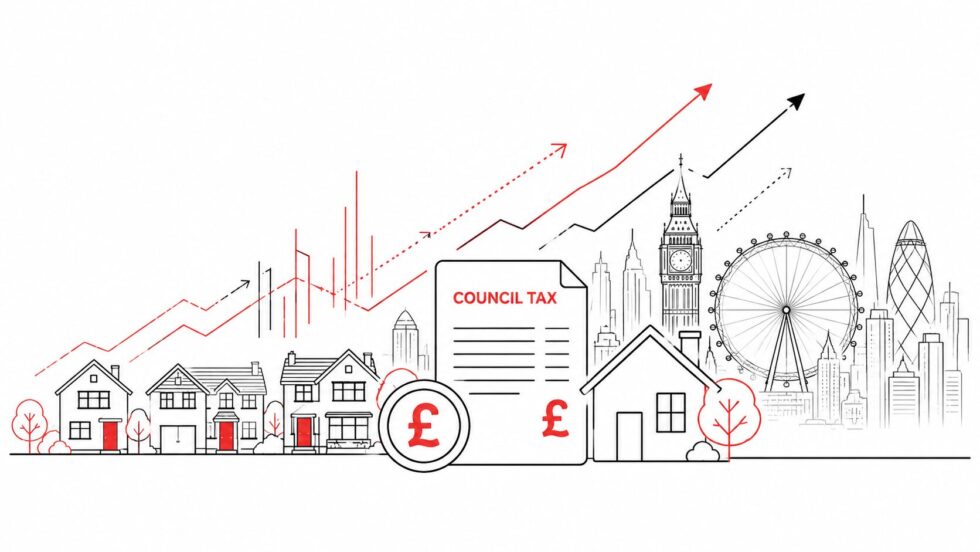
Burnham council tax reform returned to the centre of British politics on 27 July 2026 after Prime Minister Andy Burnham argued that households in Greater Manchester can pay more council tax than people occupying considerably larger and more valuable homes in London. Burnham said the imbalance reflected England’s failure to revalue council tax bands, which remain tied to historic property values, and warned that his government faced “big decisions” over how to create a fairer system. However, Downing Street subsequently denied that replacing council tax or stamp duty was under active consideration, leaving homeowners with a politically significant debate but no confirmed nationwide tax plan, The WP Times reports.
The immediate issue is therefore not that council tax has been abolished or that southern homeowners have already been ordered to pay more. The confirmed development is that Burnham has publicly challenged the regional distribution of property taxation and defended earlier attempts to increase contributions from owners of the most valuable homes. Separate reports have suggested that ministers or Treasury officials could examine a proportional property tax or a land value tax, but No 10 has explicitly rejected claims that either replacement is being actively prepared. For households in London, the South East, Greater Manchester and other parts of England, the distinction matters: political direction has changed, but tax bills, bands and payment dates have not yet been replaced.
What Did Andy Burnham Say About Council Tax and Regional Fairness
Burnham used an interview with the BBC’s Laura Kuenssberg to draw a direct comparison between council tax bills in Greater Manchester and those paid on larger London properties. His argument was that the existing band system can demand a heavier contribution from households in less expensive northern homes than from owners of substantially more valuable properties in the capital.
“There are people here in Greater Manchester who pay a much higher council tax than people living in much larger homes in London,” Burnham said during the BBC interview. He added that former chancellor Rachel Reeves had been right to begin reforming the system to “create some fairness” for people living in homes of much greater value.
Burnham linked the imbalance to the failure to conduct a comprehensive revaluation of England’s council tax bands. Council tax in England was introduced using property valuations from 1991, and successive governments have avoided a full revaluation. The result is a system in which today’s bill is not calculated as a straightforward percentage of a home’s present market price. The prime minister did not announce a replacement tax, publish new rates or set a timetable. Instead, he acknowledged that any policy would need to be considered against Labour’s election commitments.
“We need to honour the manifesto upon which Labour was elected,” Burnham said. “If I was to bring forward any changes, obviously people would rightly say, well, is this consistent with that manifesto? So there are big decisions ahead.”
That language leaves open the possibility of future changes while stopping well short of a formal proposal.
Has Burnham Announced That Southern Homeowners Will Pay More Tax?
No confirmed policy has been announced requiring all homeowners in southern England to pay more. The description of southern households facing higher taxes is an interpretation of Burnham’s fairness argument and of the likely geographical impact of taxing homes more closely according to current value.
Properties in London and parts of the South East are generally more expensive than comparable homes in northern England. A system based directly on present market value could therefore shift a larger share of the overall property-tax burden towards high-value areas. That does not mean every household in the South would automatically lose or that every northern household would receive a reduction. The effect would depend on several unresolved decisions:
- whether council tax bands were simply updated or completely abolished;
- whether the tax applied to the entire property value or only the underlying land;
- what rate, allowance or cap was selected;
- whether pensioners or low-income homeowners could defer payment;
- how second homes, empty properties and overseas-owned homes were treated;
- whether stamp duty was removed at the same time;
- how much revenue individual councils would retain.
Without those details, claims about specific bills remain illustrative rather than official.
Is Downing Street Actively Planning to Replace Council Tax
Downing Street has denied that the prime minister is actively considering scrapping council tax or stamp duty. At the 27 July lobby briefing, the prime minister’s spokesperson was asked about reports that the government was examining options to reform or replace both taxes. The spokesperson replied: “Suggestions that scrapping council tax or stamp duty are under ‘active consideration’ by the prime minister are not true.”
No 10 also stressed that tax decisions were matters for the chancellor and would normally be presented at a fiscal event such as a Budget. When pressed on whether Treasury officials could still be examining alternatives, the spokesperson described the denial as unambiguous. That response is important because it narrows what can responsibly be reported. Burnham has questioned the fairness of council tax and has previously expressed support for deeper property-tax reform. But the government has not confirmed that it has selected a replacement, instructed councils to prepare for one or agreed that current council tax bills will end.
What Burnham Council Tax Options Have Been Reported
Two broad models have featured in reporting and policy discussion: a proportional property tax and a land value tax. Neither has been adopted by the government.
| Possible system | How it could work | What it might replace | Households most exposed | Current status |
|---|---|---|---|---|
| Council tax revaluation | Existing bands would be updated using newer property values | Existing council tax structure would remain | Homes that have risen sharply in value since 1991 | No nationwide revaluation announced |
| Proportional property tax | An annual percentage charge based on a home’s current market value | Could replace council tax and potentially stamp duty | Owners of high-value properties | Discussed by campaigners and in media reports |
| Land value tax | Annual charge based on the value of the land, excluding the building | Could replace several property-related taxes | Owners of valuable land in expensive locations | Supported in principle by Burnham previously, but not adopted |
| High-value surcharge | Additional charge on properties above a set valuation threshold | Added to the existing council tax system | Owners of the most expensive homes | Similar targeted reforms have been debated |
| Additional council tax bands | New upper bands would be created for expensive properties | Existing system retained but extended | High-value homes currently grouped in Band H | No confirmed new national structure |
One reported proportional model would charge approximately 0.48 per cent of a property’s present value each year and replace both council tax and stamp duty. The proposal is associated with the Fairer Share campaign, which has argued that most households could pay less under its design. It is not a government rate and should not be treated as the amount Burnham has decided to impose.
Under that illustrative formula, a home valued at £300,000 would generate a headline annual charge of £1,440 before any caps, allowances, protections or local adjustments. A £750,000 property would generate £3,600, while a £1 million property would produce £4,800. Those calculations explain why a proportional system could move more of the burden towards expensive parts of London and southern England, but they do not represent official future bills.
What Is a Land Value Tax and Why Has Burnham Supported It
A land value tax is based on the value of the plot on which a property stands rather than the combined market value of the land and the building. A renovated house and an undeveloped plot in the same highly desirable location could therefore be treated differently from homes under a conventional property-value system.
Supporters argue that land receives much of its value from factors created by society: transport links, schools, commercial centres, public infrastructure, planning decisions and local demand. They say taxing that value can be less economically disruptive than taxing work, investment or property transactions. Burnham has previously described council tax as “highly regressive” and said he had long been persuaded by the argument for a land value tax. The House of Commons Library has recorded his support for changing land, property and business taxation, while also noting that no council tax revaluation has taken place in England since the system was introduced.
A land value tax would nevertheless present substantial practical problems. Authorities would need a reliable method of separating the value of the land from the value of buildings across millions of properties. They would also need rules for appeals, regular reassessments, agricultural or mixed-use sites, leasehold properties and homeowners who possess valuable assets but have limited income.
Why Can Greater Manchester Households Pay More Than London Homeowners
Council tax is not calculated as a nationally uniform percentage of a property’s present value. Each property is placed in a valuation band, and local authorities set annual charges according to their spending requirements, tax base and available funding.
A relatively modest home in a northern authority can therefore face a higher Band D bill than a more valuable London property. London boroughs may benefit from a larger tax base, denser development, different funding arrangements or substantial commercial activity. At the same time, a highly valuable London property can remain inside the top council tax band without its annual bill rising proportionally alongside its market price.
This creates two separate complaints.
First, households in poorer or lower-value areas can pay a larger council tax bill as a percentage of the value of their home. Second, the gap between the tax paid on an ordinary house and the tax paid on a multimillion-pound property can be much smaller than the gap between their actual values. Burnham’s argument focuses on that distributional problem. It does not mean councils in Greater Manchester are necessarily setting their bills incorrectly. It means the national framework can produce outcomes in which local authorities with greater social needs depend more heavily on residents whose homes are worth less than properties elsewhere.
Who Could Pay More Under a Burnham Council Tax Reform
The most likely losers under a fully proportional system would be owners of properties whose current values are high compared with their existing council tax bands and bills. That group could include:
- owners of expensive homes in London and the South East;
- households in properties that have experienced exceptionally strong price growth;
- owners of second homes or long-term empty properties;
- overseas owners if a higher rate were introduced;
- owners of valuable land in areas with strong development potential;
- some asset-rich households currently paying a relatively low proportion of their property value in council tax.
However, location alone would not determine the outcome. A household in a modest southern property could pay less under a redesigned system, while an owner of a valuable home in Manchester, Cheshire, York, Edinburgh or another high-demand market could pay more under a property-value model applicable to that jurisdiction.
Policy design would be decisive. Caps could limit annual increases. Deferral schemes could allow older or cash-poor homeowners to postpone part of the charge until a property was sold. Transitional arrangements could phase in changes over several years rather than impose a sudden increase.
Who Could Pay Less if Council Tax Were Replaced
Households living in lower-value properties but facing comparatively high council tax bills could benefit from a system more closely linked to present property values. Potential beneficiaries could include residents of:
- lower-value homes in northern English towns and cities;
- areas with high Band D charges but relatively inexpensive housing;
- smaller properties that currently carry a disproportionate bill;
- regions where council tax represents a larger share of household income;
- homes whose market value has grown more slowly than properties in London and the South East.
Campaigners for proportional property taxation say their model could reduce bills for a majority of households. That remains a campaign estimate based on a particular design, not an independent guarantee that any government reform would deliver the same result.
There is also no certainty that a new system would be revenue-neutral. A government seeking additional money for local services, social care or other spending could design reform to raise more revenue overall. In that case, redistribution between regions could occur alongside a broader increase in property taxation.
What Would Happen to Stamp Duty Under the Reported Proposals
Some reform models would remove stamp duty land tax from residential purchases and replace it with a recurring annual property charge. Stamp duty is paid when a qualifying property is purchased, meaning it taxes transactions rather than continued ownership. Critics argue that it discourages people from moving, downsizing or relocating for work because a buyer can face a large upfront bill. Replacing stamp duty with an annual tax could reduce the initial cost of buying a home and make transactions easier. The trade-off is that owners would continue paying each year, including people who bought their property long ago or inherited it. For recent buyers, the political question would be especially sensitive. Someone who had already paid a substantial stamp duty bill could object to being moved immediately into a new annual system designed to replace the tax they had already paid. Transitional credits or phased implementation might therefore be required.
No 10’s denial means homeowners should not assume that stamp duty is about to disappear. Existing rules remain in force unless the Treasury announces and Parliament approves a change.
What Have Conservatives Said About Burnham’s Property-Tax Position
Conservative figures have portrayed the discussion as a potential tax increase for homeowners. James Cleverly, the shadow housing secretary, accused Burnham and Labour of looking for “more ways to tax Middle England” and argued that replacing council tax and stamp duty with a new house-price tax would cause households across England to pay more.
The criticism highlights the central political risk for Burnham. A reform presented as correcting regional inequality can also be described by opponents as an attack on people who bought homes in expensive areas, including households whose property wealth has risen sharply but whose income has not. The government would need to explain not only who pays more, but why. It would also have to distinguish between highly affluent households, ordinary owners in expensive markets and pensioners living in homes purchased decades before local prices increased.
Could Pensioners Be Forced to Sell Valuable Homes
There is no announced Burnham policy requiring pensioners to sell their homes because of council tax reform. Nevertheless, the position of asset-rich but income-poor homeowners would become one of the main design questions under any annual property or land value tax. A retired homeowner may live in a valuable London house while relying on a comparatively modest pension. A tax based directly on current property value could create a bill much larger than the household’s available monthly income. Possible protections could include:
- allowing payment to be deferred until the property is sold;
- imposing annual caps on increases;
- providing income-based rebates;
- phasing in liabilities over several years;
- protecting long-term occupants;
- charging part of the deferred amount against the estate.
Each approach involves a compromise. Deferral protects residents from immediate bills but places a growing liability against the value of the property. Broad exemptions would protect vulnerable groups but reduce revenue and could weaken the principle of taxing property wealth consistently.
When Could Burnham Council Tax Changes Take Effect
There is currently no confirmed implementation date because there is no confirmed replacement policy. A major overhaul would require detailed Treasury modelling, consultation with councils, a national valuation process, legislation, administrative systems and arrangements for disputes and transitional relief. It would be considerably more complex than changing the annual rate or adding a surcharge to a narrow group of properties. The next important signals would be:
- whether the chancellor includes property taxation in a Budget or other fiscal statement;
- whether the government launches a formal consultation;
- whether the Valuation Office Agency is asked to prepare new assessments;
- whether ministers propose new council tax bands or a full replacement;
- whether stamp duty is included in the same reform;
- whether legislation is introduced in Parliament.
Until one of those steps occurs, homeowners should continue paying council tax under their existing local authority arrangements.
What Should Homeowners Do Now
Homeowners do not need to recalculate their bills using speculative property-tax rates or change their financial plans on the assumption that council tax will be abolished. The practical position on 27 July 2026 is straightforward:
- council tax remains in force;
- current valuation bands remain applicable;
- local authorities continue to issue and collect bills;
- no national proportional property tax has been announced;
- no land value tax has been approved;
- stamp duty has not been abolished;
- Downing Street denies that replacing the taxes is under active consideration;
- Burnham has nevertheless made council tax fairness a live political issue.
Households should treat online calculators based on a 0.48 per cent property charge as illustrations of one campaign proposal, not forecasts of an official bill. Owners should also be cautious about headlines claiming southern households “will” pay more, because the government has not published the thresholds, protections or regional effects of any reform.
What Is the Confirmed Position on Burnham Council Tax Reform
The confirmed story is narrower, but politically important. Andy Burnham believes the council tax system produces unfair regional outcomes and has pointed to Greater Manchester residents paying more than people in larger London homes. He has defended reforms aimed at extracting a greater contribution from the most valuable properties and said his government faces “big decisions”. The unconfirmed part is the precise mechanism. A proportional property tax and a land value tax have both been discussed outside government and linked to Burnham’s previous positions. But Downing Street says the abolition of council tax or stamp duty is not under active consideration. That leaves Britain at the beginning of a property-tax debate rather than at the start of an implemented tax change. Southern homeowners may face greater exposure if the government ultimately links bills more closely to present property or land values. Northern households in lower-value homes could benefit from redistribution. Neither outcome can yet be calculated with certainty.
The next decisive moment will come not from another interview or headline, but from a Treasury document, formal consultation, Budget announcement or bill presented to Parliament.
Materials used: BBC Panorama interview with Andy Burnham, Downing Street lobby briefing, House of Commons Library, ITV News, The Guardian, The Telegraph report supplied by the publisher, Fairer Share policy model.
Read about the life of Westminster and Pimlico district, London and the world. 24/7 news with fresh and useful updates on culture, business, technology and city life: What Are the DWP Pension Payment Changes in August 2026 and Who Will Be Paid Early