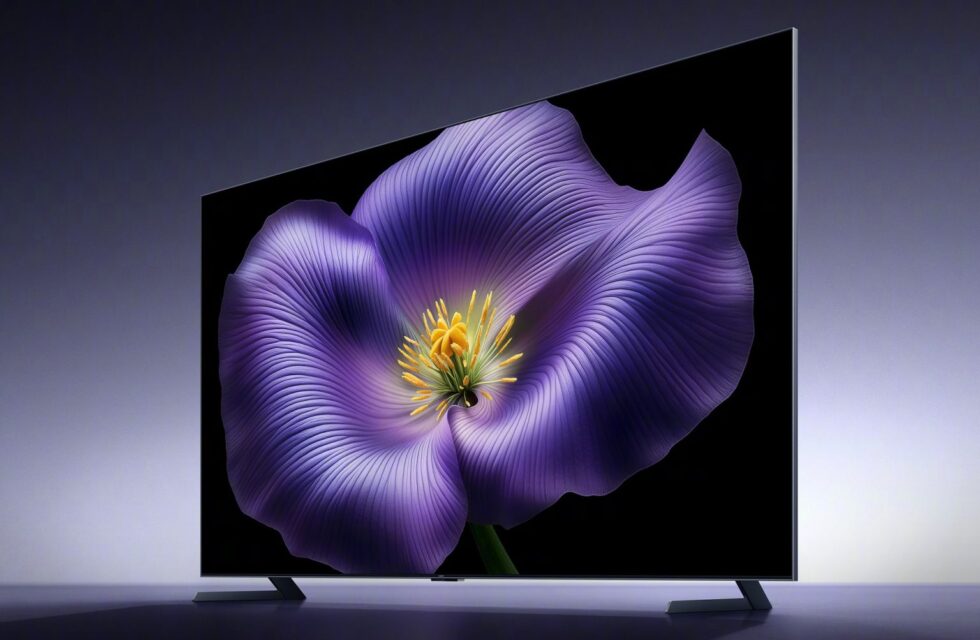
The Chinese electronics group Xiaomi has unveiled its new TV S Pro Mini LED 2026, setting what could be a fresh benchmark in high-performance displays. The most striking feature is the 330 Hz refresh rate in gaming mode, more than doubling the current premium standard of 120–144 Hz. With 5,200 nits peak brightness, Harman Kardon audio, and screen sizes up to 98 inches, the device combines gaming capability with home cinema scale. Analysts expect the European launch to coincide with IFA Berlin 2026, placing Germany at the centre of the rollout. The WP Times reports.
Display technology and specifications
Xiaomi’s Mini LED technology delivers 1,792 local dimming zones, ensuring deeper contrast and reduced blooming compared with OLED rivals. The television achieves 5,200 nits of brightness, a figure surpassing most competitors in the segment. In standard viewing, it offers 165 Hz at 4K resolution, while the gaming mode pushes performance to 330 Hz, supported by VRR, FreeSync Premium Pro and MEMC. These specifications position the device as a serious contender for e-sports players and professional gaming environments.
Sound and immersive design
Audio has been developed in cooperation with Harman Kardon, delivering a 2.1.2 channel system with Dolby Atmos and Harman AudioEFX at 61 W output power. This combination ensures a multidimensional soundscape, enhancing both cinematic viewing and competitive gaming. The bezel measures just 4.35 mm, with an anti-glare coating reducing reflections by 50%, making even the 98-inch version usable in daylight.
Comparison with key rivals
| Model | Refresh Rate | Peak Brightness | Audio System | Price in Germany (€) |
|---|---|---|---|---|
| Xiaomi TV S Pro 2026 | 330 Hz | 5,200 nits | Harman Kardon 2.1.2, Atmos | ~850–2,600 |
| Samsung Neo QLED QN90C | 144 Hz | 2,000 nits | Dolby Atmos | ~1,400–4,200 |
| LG OLED evo G3 | 120 Hz | 2,100 nits | Dolby Atmos | ~2,000–5,200 |
| Sony Bravia XR X95L Mini LED | 120 Hz | 1,800 nits | Acoustic Multi-Audio+ | ~2,300–6,200 |
Market position in London, Britain and Europe
For now, the Xiaomi TV S Pro Mini LED 2026 remains a China-only product, sold at $800 (€850) for the 65-inch edition and $2,400 (€2,600) for the 98-inch version. Its European debut is expected in 2026, with analysts pointing to IFA Berlin as the most likely launch stage, before moving into other markets including London and the wider UK.
In Britain, the television will enter a highly competitive landscape where Samsung, LG and Sony dominate the premium category. London is a natural gateway market: it combines a thriving gaming community, a strong home cinema culture, and tech-savvy early adopters who respond quickly to disruptive products.
Compared with rival sets such as the Samsung Neo QLED QN90C, LG OLED evo G3 and Sony Bravia XR X95L, Xiaomi’s proposition is unusually aggressive. The 330 Hz refresh rate is unmatched in this price range, while the 5,200 nits peak brightness offers performance that established competitors struggle to equal. Add the Harman Kardon Dolby Atmos system and ultra-thin frameless design, and the television appeals to both the gaming sector and Britain’s growing home theatre audience.
The UK launch is also strategically important for Xiaomi. London, as a media and technology hub, often sets trends for wider European adoption. If the TV can gain traction in Britain, it is likely to influence markets in France, Spain, and the Nordics, consolidating Xiaomi’s presence across Europe.
The Xiaomi TV S Pro Mini LED 2026 combines gaming-level refresh rates, extreme brightness and premium audioat a fraction of the cost of Korean or Japanese competitors. For the German market, where consumers are highly responsive to price-performance balance, it could become one of the most disruptive launches of the decade. If expectations are met, the European debut at IFA Berlin 2026 will signal Xiaomi’s strongest challenge yet to the dominance of Samsung, LG and Sony in both gaming and home entertainment sectors.
Read about the life of Westminster and Pimlico district, London and the world. 24/7 news with fresh and useful updates on culture, business, technology and city life: DeepSeek Prepares AI Agent to Compete With OpenAI by End of 2025.