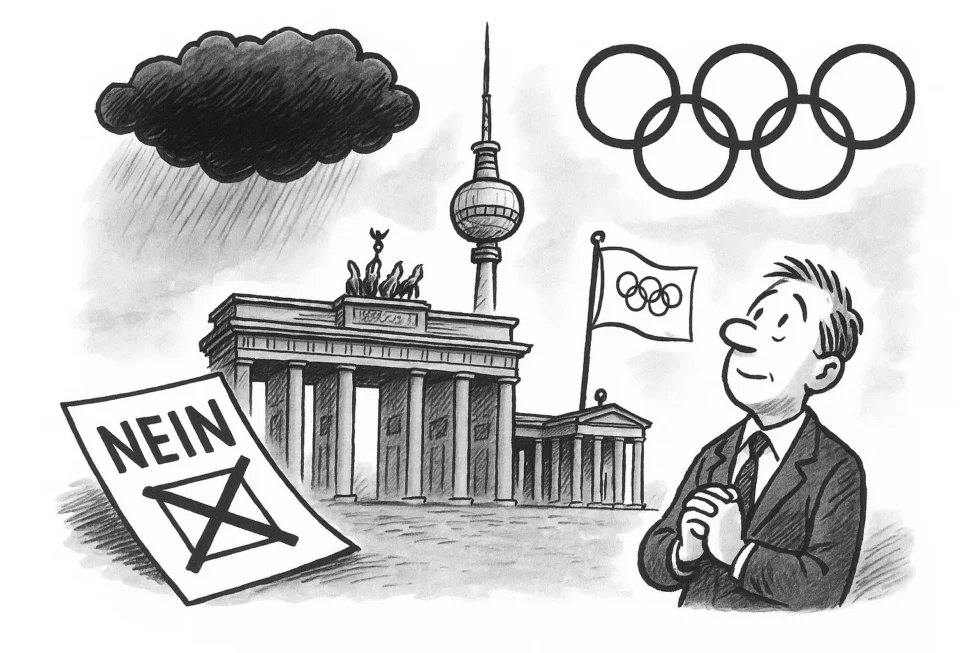
Germany’s internal Olympic race has entered a decisive phase. After two-thirds of Munich’s citizens voted in favour of an Olympic bid, the balance of momentum has shifted — and Berlin, once seen as the natural frontrunner, now faces mounting scrutiny. The capital’s bid, led by Kaweh Niroomand, is being re-evaluated amid political tensions, public scepticism and financial concerns. Can Berlin still convince the nation — and the world — that it deserves to host the Olympic Games 2036? As reported by The WP Times, citing the German outlet Renewz.de.
Berlin’s Olympic vision: ambition meets reality
“We are the capital, we are international, and we are ready to deliver sustainable Games that unite people,” said Kaweh Niroomand, Berlin’s Olympic Commissioner, in an interview with rbb24 Inforadio. He sees Munich’s vote not as a threat, but as “momentum for Germany’s global ambitions.” Yet the capital’s challenges remain stark: Berlin’s constitution forbids direct referendums, forcing the government to rely on public consultations rather than binding votes — a move critics call “democracy by invitation only.”
Opposition calls it a “prestige project without consent”
Members of the Green Party, The Left (Die Linke), and the BSW accuse the city government of pushing an elite-driven agenda. “Six million euros for an Olympic bid while local sports halls are crumbling? That’s not ambition — it’s ignorance,” said Klara Schedlich, the Greens’ spokesperson for sports policy.
Left Party deputy Kristian Ronneburg added: “The Senate is applying behind closed doors, without the people’s mandate. It’s the wrong game plan for a city that claims openness.”
Wegner counters: “The Games belong in Berlin”
Berlin’s Mayor Kai Wegner (CDU) maintains confidence. “No other city embodies the passion, diversity and energy of sport like Berlin,” he told rbb24. Wegner envisions a cross-state model, sharing venues with Brandenburg and Saxony to promote sustainability and inclusivity. “We can stage Games that connect people and redefine what the Olympics mean for the 21st century.”
What the DOSB will look for
The German Olympic Sports Confederation (DOSB) will decide in September 2026 which city will represent Germany internationally.
Key criteria include:
- demonstrable public support (referendums or structured consultations),
- financial guarantees from federal and state levels,
- use of existing venues under the IOC’s “Agenda 2020+5”,
- security and infrastructure readiness,
- and overall international appeal.
Munich enters the race with democratic legitimacy; Berlin must now prove credibility and consensus. Hamburg and the Rhein-Ruhr region remain strategic wildcards.
Read about the life of Westminster and Pimlico district, London and the world. 24/7 news with fresh and useful updates on culture, business, technology and city life: Angela Merkel blames Poland and Baltic states for blocking EU-Russia dialogue before Ukraine war