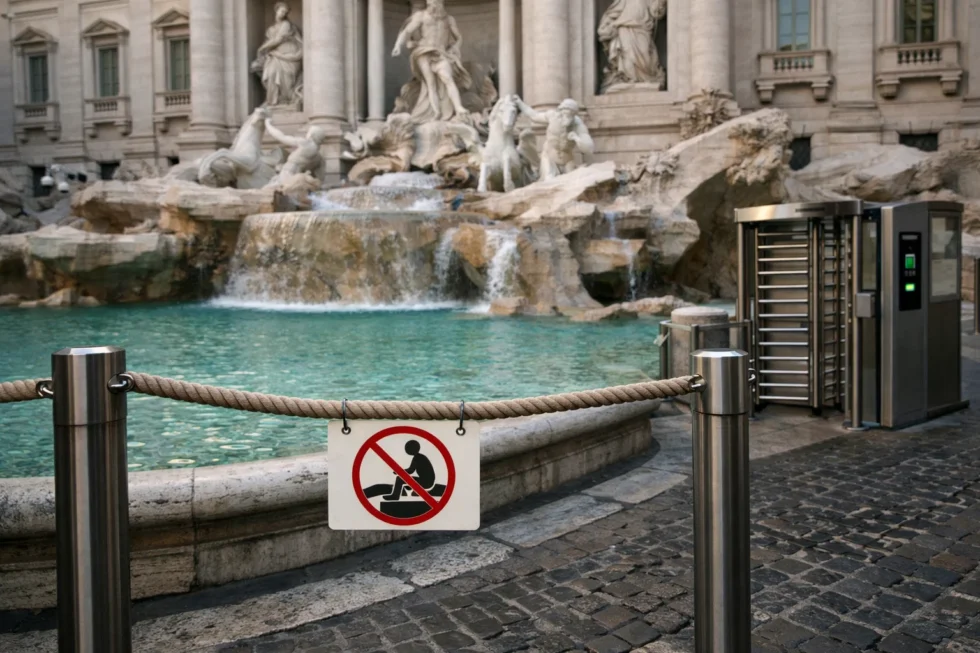
Rome is preparing to change how tourists access one of its most recognisable landmarks, introducing new rules at the heart of the city’s historic centre. The decision targets the Trevi Fountain, a Baroque masterpiece completed in the 18th century and built as the monumental endpoint of the ancient Aqua Virgo aqueduct. From 1 February 2026, tourists wishing to enter the immediate viewing area will be required to pay a €2 entry fee, a move aimed at managing daily crowds that can exceed 30,000 visitors. City officials argue that unrestricted access to a functioning 18th-century water monument receiving millions of visitors each year is no longer sustainable. The WP Times reports, citing NUME, that Rome views the measure as both a protective step for the fountain and a broader test of how Italy may regulate mass tourism at its most exposed heritage sites.
A brief history of the Trevi Fountain
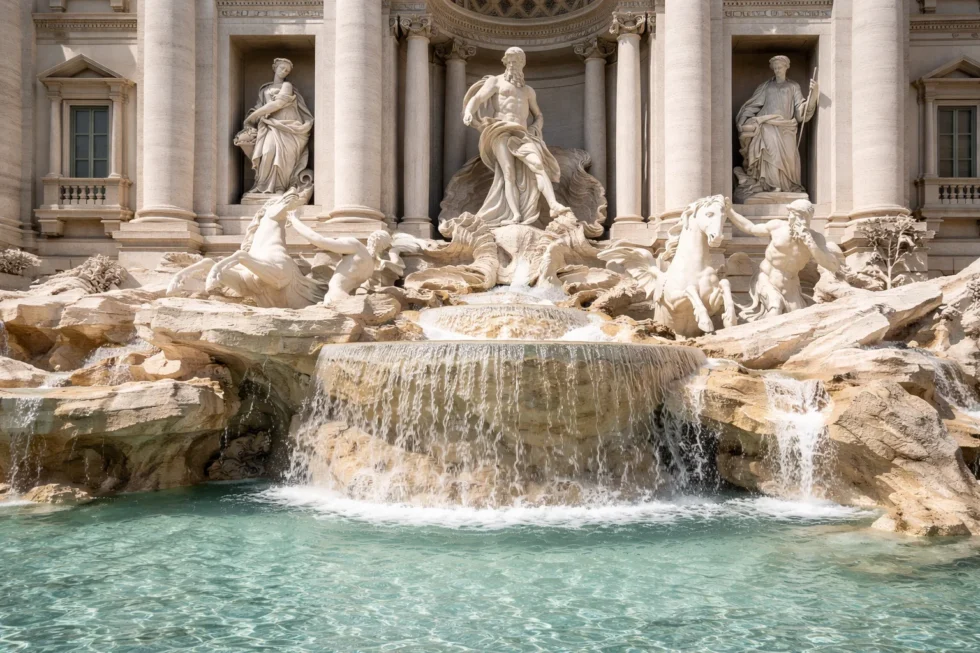
Completed in 1762, the Trevi Fountain was designed by architect Nicola Salvi and finished by Giuseppe Pannini. It marks the terminus of the ancient Aqua Virgo aqueduct, originally built during the Roman Empire to supply water to the city.
At its centre stands Oceanus, the god of the sea, framed by a dramatic Baroque façade integrated into the Palazzo Poli. The fountain is not only a masterpiece of urban architecture but also a functioning water system — a rare continuity between ancient engineering and modern Rome.
Coin tossing: myths, traditions and real numbers
The tradition of tossing a coin into the Trevi Fountain is widely believed to be ancient, but historians trace its modern form to the 19th century, alongside the rise of organised tourism. The established rule — throwing one coin with the right hand over the right shoulder — symbolises the wish to return to Rome.
Later interpretations suggest two coins bring love and three coins signal separation or change, though these meanings are not historically documented and largely stem from popular culture and cinema.
What is indisputable are the figures. An estimated €1–1.5 million in coins is collected from the fountain each year. The money is gathered by municipal services outside public hours and donated to charitable causes, including Caritas Rome, which funds food aid and social support programmes. At the same time, metal deposits and water chemistry pose long-term risks to the stonework — one reason authorities now favour tighter regulation.
Why the Trevi Fountain remains worth visiting
Despite the introduction of a fee, the Trevi Fountain remains one of Europe’s most extraordinary public monuments. City officials argue that controlled access will mean less crowding, better visibility and a calmer atmosphere, particularly during peak tourist seasons.
Compared with museum entry prices or guided tours elsewhere in Rome, the €2 charge is considered modest — especially if it contributes to preserving the site for future generations.
Practical information for tourists visiting Rome
Location:
Piazza di Trevi, 00187 Rome, Italy
Entry fee:
– €2 from 1 February 2026
– Free for Rome residents
Opening hours:
Daily; access may be time-controlled during busy periods
Evening access subject to crowd regulations
Booking:
Rome authorities have announced plans for an official online booking system. Further details are expected ahead of the launch.
The Trevi Fountain’s new entry system reflects a broader rethink in Italy’s tourism policy. Rather than closing iconic sites, authorities are moving towards regulated access, balancing public enjoyment with preservation and safety. For tourists planning a trip to Italy — and especially to Rome — the message is clear: the Trevi Fountain remains open, but visiting it now comes with new rules, clearer structure and a small price for sustainability.
Read about the life of Westminster and Pimlico district, London and the world. 24/7 news with fresh and useful updates on culture, business, technology and city life: Emma Heming-Willis reveals plan to donate Bruce Willis’s brain to boost dementia research