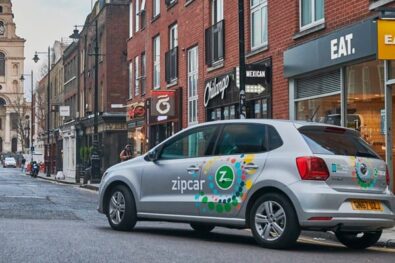
London Zipcar free parking is no longer a minor local transport issue. Southwark Council has confirmed it will waive permit charges for around 200 on-street Zipcar bays until April 2027, an intervention designed to prevent the car-sharing company from withdrawing from the UK. The decision reflects growing concern that London’s fragmented regulatory system is pushing private mobility providers out of the market. The WP Times reports that Zipcar has already announced it will suspend new UK bookings after 31 December 2025 as part of preparations to wind down its British operation.
For London’s transport planners, this is a warning sign. Car-sharing has been embedded for more than a decade into the capital’s congestion, air-quality and emissions strategies. Losing the largest operator would leave a gap that local authorities are not equipped to fill.
What Southwark is offering and why
Southwark’s proposal removes one of Zipcar’s largest fixed costs in the borough. The council will allow the company to use:
- 138 dedicated Zipcar parking bays
- Approximately 60 “floating” vehicles using car-club bays
- A total of around 200 on-street spaces
- With permit fees waived, saving Zipcar an estimated £350,000 per year
This effectively grants Zipcar free access to public parking infrastructure for more than two years.
Southwark’s rationale is pragmatic rather than ideological. Around 60 per cent of households in the borough do not own a private car. For many residents, car-sharing provides occasional access to a vehicle without the financial and environmental cost of ownership.
Zipcar’s position
Zipcar has told UK customers and partner councils that it will stop accepting new bookings after 31 December 2025, while continuing to honour all existing reservations. The company has described this as part of a formal review of its UK business, including whether it can continue operating at scale in London and other major cities.
In statements to local authorities, Zipcar has pointed to a combination of rising operating costs, borough-level parking fees, permit structures and enforcement rules that make it increasingly difficult to run a large, shared urban fleet on a sustainable basis. Executives have warned that while demand for car-sharing remains strong, the fixed costs of keeping thousands of vehicles on public streets have risen faster than revenues.
The company has also said that fragmented regulation across London’s boroughs means vehicles that move freely across the city face different pricing, penalties and administrative requirements, creating inefficiencies that do not exist in single-authority cities. In internal briefings to councils, Zipcar has argued that this environment undermines long-term investment in cleaner vehicles and digital fleet management, making the UK market less attractive than comparable European cities.
Taken together, these pressures have led Zipcar to conclude that its current UK operating model is no longer commercially viable without changes to how parking, permits and local regulation are structured.
A structural problem for London
Southwark’s move is not simply about one borough protecting a local service. It highlights a systemic flaw in London’s transport governance.
Car-sharing companies operate city-wide networks, but their costs are set locally. Each borough controls parking, permits and enforcement. The result is a fragmented operating environment that undermines the economics of shared fleets.
At the same time, London’s transport strategy depends on reducing private car ownership. If operators like Zipcar withdraw, residents will be pushed either towards ride-hailing or back into owning cars — directly contradicting climate and congestion objectives.
Southwark is now urging the Mayor of London and Transport for London to develop a capital-wide framework for car-club operators, replacing the current patchwork of borough rules. Without it, councils may find themselves forced to offer individual subsidies simply to keep services alive. The fact that one of London’s largest boroughs is prepared to give away public parking space at no cost underlines how fragile the shared-mobility model has become.
Read about the life of Westminster and Pimlico district, London and the world. 24/7 news with fresh and useful updates on culture, business, technology and city life: Royal Mail confirms delivery delays across 28 UK postcode areas, including London, as Christmas pressure peaks