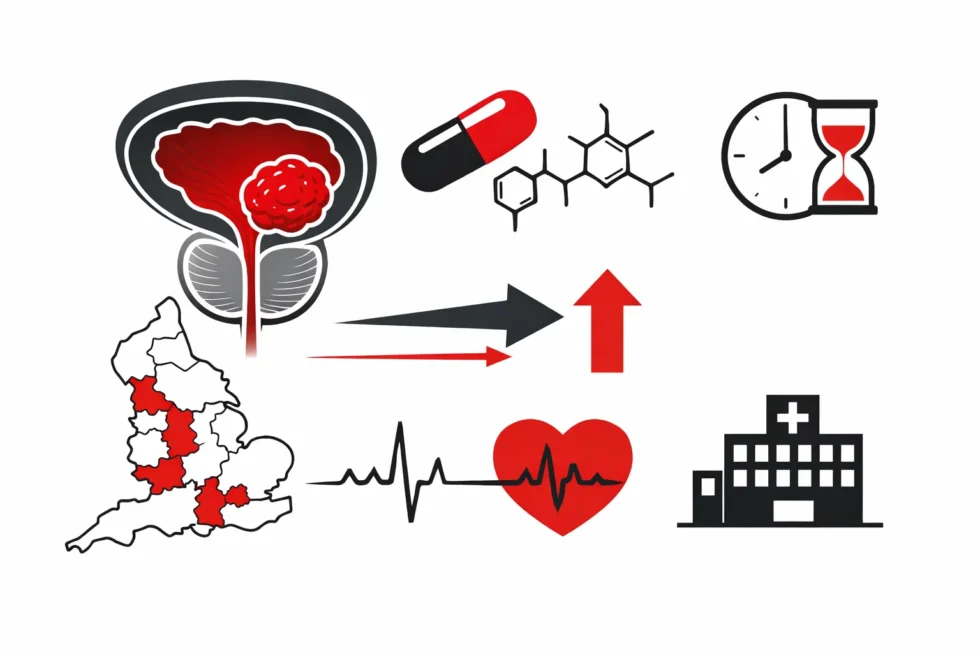
The prostate cancer drug abiraterone will soon be offered to around 7,000 additional men every year in England after NHS officials approved a major expansion of its use. The life-extending medicine, already available in Scotland and Wales since 2023, will now be provided to patients in England with high-risk prostate cancer whose disease has not yet spread beyond the prostate. The decision ends years of unequal access across the UK and follows mounting clinical evidence supporting earlier treatment. This is reported by The WP Times , citing official NHS England announcements and policy documents.

The decision represents one of the most significant prostate cancer treatment changes in years. Until now, abiraterone was largely restricted in England to men with advanced or metastatic disease, while patients in earlier stages were often forced to pay privately. The typical private cost was around £250 per month, or up to £3,000 a year. Health experts estimate the policy shift could:
- save around 560 lives annually
- prevent disease progression in approximately 1,470 men each year
- give earlier access to treatment for about 7,000 men per year
- benefit an initial group of around 2,000 recently diagnosed patients within weeks
“This is a landmark moment for prostate cancer care in England,” said a spokesperson for Prostate Cancer UK. “For too long, men in England have been denied early access to a treatment that has already been helping patients elsewhere in the UK.”

What is abiraterone and how does it work
Abiraterone is a hormone therapy designed to slow or stop the growth of prostate cancer cells. The disease relies on male hormones – mainly testosterone – to survive and spread. Abiraterone blocks the production of these hormones, effectively starving cancer cells.
The drug acts in several key ways:
- reduces hormone production in the adrenal glands, testes and prostate tissue
- cuts testosterone levels to near zero
- slows tumour growth and spread
- lowers the risk of recurrence after initial therapy
Clinical trials show that earlier use of abiraterone can dramatically improve survival outcomes.
According to the Institute of Cancer Research (ICR):
- two years of abiraterone halves the risk of cancer returning
- overall risk of death falls by around 40 percent
- many patients avoid chemotherapy or delay it for years
“These results demonstrate beyond doubt that earlier use of abiraterone changes the trajectory of the disease,” the ICR has said.
Who will now be eligible for abiraterone on the NHS
Under the new NHS England policy, abiraterone will be offered to men with high-risk, non-metastatic prostate cancer– those whose cancer is aggressive but has not yet spread beyond the prostate.

Key eligibility criteria
Patients are expected to qualify if they:
- have been diagnosed with high-risk prostate cancer
- have no confirmed metastases
- are clinically fit for hormone therapy
- meet NHS England treatment guidelines
Estimated national impact (annual figures):
- 7,000 men newly eligible for treatment
- 1,470 men expected to avoid progression to advanced disease
- 560 deaths potentially prevented each year
“This change brings England into line with the best available scientific evidence,” said a senior NHS cancer specialist. “It will mean better outcomes and better quality of life for thousands of men.”
Why did approval take so long in England
For several years, access to abiraterone depended on geography. Men in Scotland and Wales could receive the drug early, while those in England could not – creating what patients called a “postcode lottery”.
Reasons for the delay included:
- Patent expiration in 2022
When abiraterone became a generic medicine, companies had little financial incentive to fund costly applications to widen its approved use. - NICE approval rules
The National Institute for Health and Care Excellence requires detailed reviews of clinical and cost-effectiveness before recommending a drug for new patient groups. - NHS budget pressures
NHS England previously said there was no dedicated funding stream to expand early access. - Regulatory complexity
Extending a drug beyond its original licence requires formal commissioning pathways and new policy agreements.
Scotland and Wales used alternative internal mechanisms to introduce the drug earlier. England only found a solution after savings were made on other medicines, freeing up new funding.
The legal framework behind NHS drug approvals
Access to medicines in England is governed by several layers of regulation:

- The National Health Service Act 2006
- NICE technology appraisal guidelines
- MHRA licensing requirements
- NHS England commissioning policies
Under UK law:
- a medicine must be licensed by the MHRA
- NICE must assess whether it is clinically and economically effective
- NHS England must approve and fund its routine use
Because abiraterone was originally licensed only for advanced disease, widening access required a new NHS England funding decision, rather than a simple prescribing change.
England vs Scotland and Wales: how access differed
| Region | Access since | Patient group covered | Funding route |
|---|---|---|---|
| Scotland | 2023 | High-risk non-metastatic | NHS Scotland policy |
| Wales | 2023 | High-risk non-metastatic | Welsh NHS protocols |
| England | 2026 (new) | High-risk non-metastatic | New NHS England funding |
| Northern Ireland | Limited | Mainly advanced cases | Case-by-case basis |
What the change means for patients in real numbers
From the coming weeks:
- 7,000 more men per year will be eligible
- 2,000 recently diagnosed patients will be assessed first
- treatment will be fully funded by the NHS
- no more private payments of £250 per month
- earlier treatment will become routine clinical practice
This effectively ends years of financial inequality between UK regions.
The evidence that drove the decision: the STAMPEDE trial
The NHS change is largely based on the STAMPEDE clinical trial, published in 2022. Key conclusions from the trial:
- significant improvement in overall survival
- major reduction in cancer recurrence
- fewer men progressing to incurable metastatic disease
- better long-term quality of life
For years, researchers argued that denying early access in England was inconsistent with this evidence.
“The science was already clear,” said one oncologist involved in the trial. “This policy finally aligns practice with the data.”
Patient voices that helped force change
One of the most prominent campaigners was Giles Turner from Brighton, diagnosed in 2023. He discovered that:
- abiraterone was free in Scotland and Wales
- but unavailable to him on the NHS in England
- he had to pay around £250 a month privately
“I was shocked and angered that my postcode meant I was denied free access to a treatment that could halve my risk of dying,” he told the BBC.
After the announcement, Turner said: “I’m beyond happy that men like me now have fair access to the most effective treatment.”
Reaction from charities and experts
Prostate Cancer UK described the decision as a “momentous, life-saving victory.” The charity says the policy will:
- save hundreds of lives each year
- prevent thousands of cases of progression
- reduce regional inequalities
- spare families avoidable suffering
“This is one of the most important advances in prostate cancer treatment access in a generation,” a senior clinician said.
NHS England has confirmed that the expanded use of abiraterone will begin within weeks. Local cancer services across the country are already preparing to implement the new policy, updating clinical pathways and treatment plans. Patients who have been recently diagnosed with high-risk prostate cancer will be prioritised for assessment. Decisions on whether an individual is suitable for abiraterone will be made by specialist clinical teams, based on each patient’s medical history and overall condition.

Health officials say the aim is to ensure a smooth and rapid rollout so that eligible men can benefit from the treatment as quickly as possible. Men in England who have recently received a diagnosis of high-risk prostate cancer are being encouraged to speak directly to their care teams. Doctors and specialist nurses will be able to explain how the new policy affects individual cases. Patients are advised to:
- contact their oncologist or specialist nurse for guidance
- ask whether they meet the criteria for abiraterone
- discuss how the treatment could fit into their care plan
- seek further information and support from Prostate Cancer UK if required
Further details about eligibility and access will be provided by local NHS services as the rollout progresses.
Read about the life of Westminster and Pimlico district, London and the world. 24/7 news with fresh and useful updates on culture, business, technology and city life: Newcastle Airport opens free Waiting Zone for taxis and cars as 6 million passengers expected in 2026