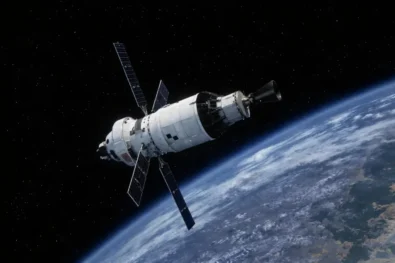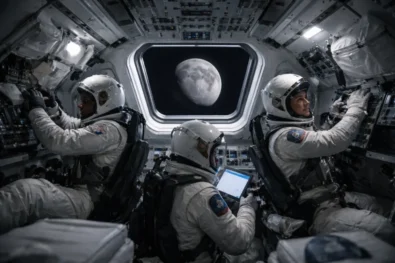
More than half a century after the last Apollo astronauts left lunar orbit, Nasa is preparing to send humans back beyond Earth. Engineers at Kennedy Space Center are getting ready to roll the most powerful rocket ever built to the nasa artemis ii launch pad, a critical step toward a mission that will carry four astronauts around the moon and return them safely home. The Artemis II mission is scheduled to launch as early as 6 February 2026, taking its crew on a 685,000-mile round trip lasting about ten days. If successful, it will be the first time humans have ventured so far from Earth since Apollo 17 in 1972, reports The WP Times.
The flight will mark only the second launch of Nasa’s Space Launch System (SLS) rocket and the first with astronauts onboard. The crew will live and work inside the Orion spacecraft, testing life-support systems, communications and manual flight procedures essential for future lunar landings.
What Artemis II will do
Artemis II is designed as a proving mission. Unlike Artemis III, it will not land on the moon, but it will demonstrate that Nasa can safely send astronauts into deep space and bring them back. Key objectives of the mission include:
- validating the Orion spacecraft with a human crew
- testing navigation and communications beyond Earth orbit
- practising docking and proximity operations
- assessing crew performance in deep space
- evaluating emergency and radiation-protection systems
Nasa administrator Jared Isaacman described Artemis II as “probably one of the most important human spaceflight missions in the last half-century.”
The Artemis II astronaut crew
The four astronauts selected for the mission represent both experience and historic milestones.

- Reid Wiseman (USA) – mission commander
- Victor Glover (USA) – pilot
- Christina Koch (USA) – mission specialist
- Jeremy Hansen (Canada) – mission specialist
Koch will become the first woman to travel beyond low Earth orbit. Glover will become the first person of colour to do the same. Hansen will be the first Canadian astronaut to leave Earth orbit. Three of the astronauts have flown in space before, while Hansen will make his first spaceflight.
From liftoff to splashdown: how the mission will unfold
After launch from Florida, Orion will orbit Earth twice before heading toward the moon. Once in space, the capsule will separate from the rocket’s upper stage. The crew will then manually fly Orion to practise approaching and retreating from the jettisoned stage – a key skill for future docking operations. The spacecraft will travel more than 230,000 miles from Earth, pass around the far side of the moon and return on a free-return trajectory. During the journey the astronauts will:
- test Orion’s radiation shelter
- practise emergency procedures
- monitor spacecraft systems
- evaluate human performance in deep space
Jeff Radigan, Artemis II’s lead flight director, said the mission remains a true test flight. “There are things that are going to be unexpected,” he warned. “That’s the nature of exploring space.”
The journey to the nasa artemis ii launch pad
Before any of this can happen, the enormous rocket must make a slow, careful journey from Nasa’s Vehicle Assembly Building to Launch Pad 39B. As early as Saturday morning, Nasa’s crawler-transporter – a massive tracked vehicle originally built for the Apollo programme – will begin hauling the 5,000-tonne rocket and spacecraft along a four-mile route. The trip can take up to 12 hours, with the vehicle moving at a maximum speed of just one mile per hour.
Once at the pad, engineers will work through a detailed pre-flight checklist. The most critical step will be a wet dress rehearsal, when more than 700,000 gallons of super-cold liquid propellant are loaded into the rocket to simulate launch conditions. Any major technical problem could require the entire vehicle to be rolled back for repairs – a process that would likely delay the mission by weeks.
Technical issues being addressed
In recent days, Nasa teams have been working to resolve several minor problems, including:
- a bent cable in the rocket’s flight termination system
- a faulty valve used to pressurise the Orion capsule
- small leaks in equipment that pumps oxygen into the spacecraft
Officials stress that none of these issues are unusual for a vehicle of this complexity. “We’re going to fly when we are ready,” said John Honeycutt, chair of the Artemis II mission management team. “From launch through the mission days to follow, the crew’s safety is going to be our number one priority.”
Artemis II launch windows
To ensure flexibility, Nasa has identified a series of possible launch dates through the spring. Table: Possible Artemis II launch opportunities
| Month 2026 | Available dates |
|---|---|
| February | 6, 7, 8, 10, 11 |
| March | 6, 7, 8, 9, 11 |
| April | 1, 3, 4, 5, 6 |
If technical problems or bad weather intervene, the mission could shift into later windows.
How Artemis II fits into Nasa’s long-term plans
Artemis II is a crucial step in a multi-stage programme aimed at returning humans to the moon and establishing a lasting presence there.
- Artemis I (2022): uncrewed test flight around the moon
- Artemis II (2026): first crewed flight around the moon
- Artemis III: planned lunar landing near the south pole
- Future missions: building a lunar base and preparing for Mars
The long-term goal is to develop technologies and experience that will eventually enable human missions to the Red Planet.

A renewed global space race
The Artemis programme is unfolding amid intensifying international competition. China has announced plans to land its own astronauts on the moon by 2030, creating a new geopolitical dimension to lunar exploration. Sean Duffy, Nasa’s former acting administrator, made the stakes clear last year:
“I’ll be damned if the Chinese beat Nasa or beat America back to the moon. We’re going to win.”

Why this mission is historic
For space agencies and scientists around the world, Artemis II represents a turning point. David Parker, former head of the UK Space Agency, called it a major step forward. “It is a step towards what we in the space world always dreamed of: sustained human and robotic exploration of the moon and, one day, on to Mars.” But he acknowledged the risks. “Every rocket launch is a nail-biter. We’re putting astronauts on a rocket that has flown only once before.”
Over the coming weeks, Nasa will complete fuelling tests, system checks and full rehearsals with the astronaut crew. Only after those milestones are successfully completed will the agency commit to a firm launch date. If everything proceeds as planned, the world will soon watch four astronauts climb aboard Orion and begin a journey not attempted in generations – starting with that slow, deliberate crawl to the nasa artemis ii launch pad.
Read about the life of Westminster and Pimlico district, London and the world. 24/7 news with fresh and useful updates on culture, business, technology and city life: Black hole scientists find three supermassive black holes locked in a rare cosmic collision