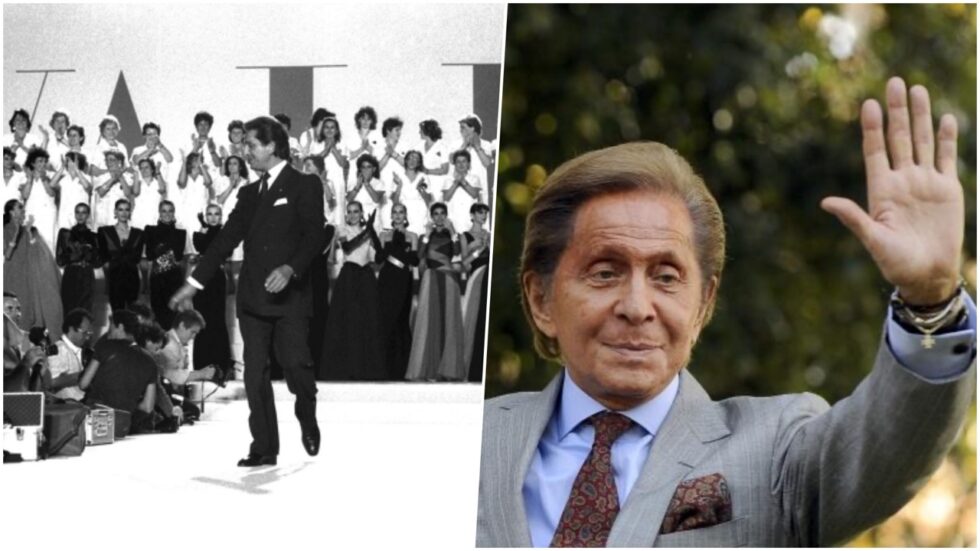
Italian fashion designer Valentino Garavani, one of the most commercially successful and culturally influential couturiers of the modern era, has died at the age of 93. The Valentino Garavani and Giancarlo Giammetti Foundation confirmed that the designer passed away peacefully at his home in Rome, surrounded by family. He will lie in state at Piazza Mignanelli on 21 and 22 January, with a funeral service scheduled for 23 January at the Basilica of Saint Mary of the Angels and Martyrs. Valentino was not only a creative icon but also a rare example of a designer who transformed personal vision into a global luxury business worth billions, reports The WP Times, citing an official statement from the Valentino Garavani Foundation.
The scale of his success: how much Valentino earned
Unlike many creative figures, Valentino Garavani was deeply involved in the business side of fashion. By the late 1990s, the Valentino brand had grown into a global luxury house with:
- boutiques in more than 70 countries
- multi-million dollar annual revenues
- lucrative perfume, accessories and licensing lines
Key financial milestones
| Year | Event | Estimated value |
|---|---|---|
| 1998 | Valentino Fashion Group sold to HDP (Italian conglomerate) | around $300 million |
| 2002 | Brand sold to Marzotto Group | approx $210 million |
| 2007 | Valentino Fashion Group acquired by Permira private equity | approx €2.6 billion |
| 2012 | Brand bought by Qatari investment fund Mayhoola | estimated $850 million – $1 billion |
| 2023 | Valentino annual revenues | reported around €1.4 billion |
According to industry analysts, Valentino Garavani personally accumulated a fortune estimated at $1.5–2 billion over his lifetime through sales of the company, royalties and private investments. While exact personal earnings were never publicly disclosed, fashion business publications consistently listed him among the wealthiest designers in history.
From talented tailor to global brand
Born in Lombardy in May 1932, Valentino trained in Paris before returning to Rome in 1960 to launch his own house with partner Giancarlo Giammetti. The turning point came in 1964 when Jacqueline Kennedy began wearing his designs. That single relationship transformed Valentino from an admired European couturier into an international powerhouse. As fashion historian Suzy Menkes once observed: “Jackie Kennedy made Valentino a global brand before the phrase ‘global brand’ even existed.”
Who made Valentino famous – and who he made famous
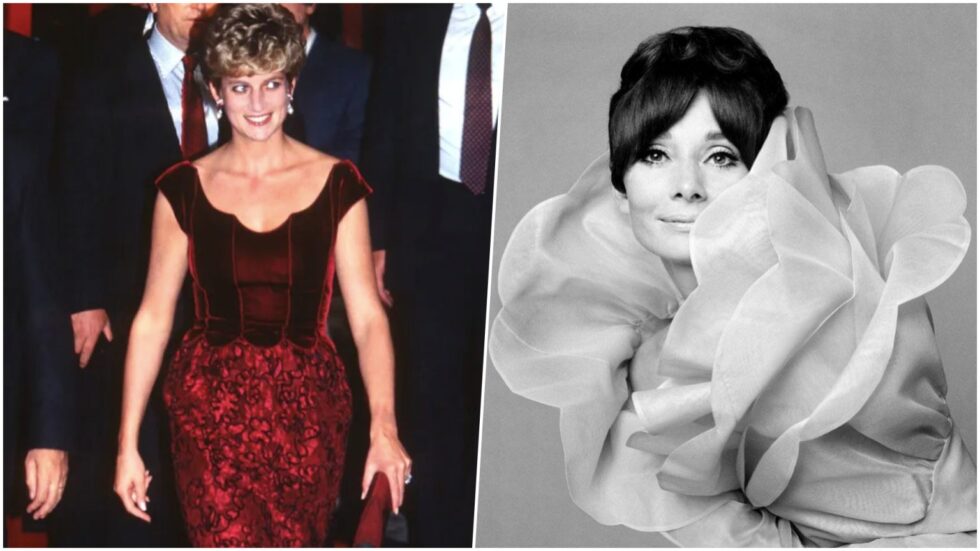
Valentino’s reputation was built on the backs of some of the most photographed women in the world.
The clients who defined each era
| Period | Key figures | Impact |
|---|---|---|
| 1960s | Jacqueline Kennedy Onassis | Established him as a symbol of aristocratic elegance |
| 1970s | Elizabeth Taylor, Princess Margaret | Opened Hollywood and royal circles |
| 1980s | Nancy Reagan, Brooke Shields | American political and pop-culture influence |
| 1990s | Princess Diana, Claudia Schiffer, Sharon Stone | Supermodel and global media era |
| 2000s | Julia Roberts, Cate Blanchett, Halle Berry | Oscar red-carpet dominance |
| 2010s | Gwyneth Paltrow, Anne Hathaway, Jennifer Lopez | Continued relevance with new generation |
Former British Vogue editor Alexandra Shulman summed up his appeal: “He didn’t chase trends. He produced clothes that were simply beautiful. That was his genius.”
The power of “Valentino Red” as a commercial strategy
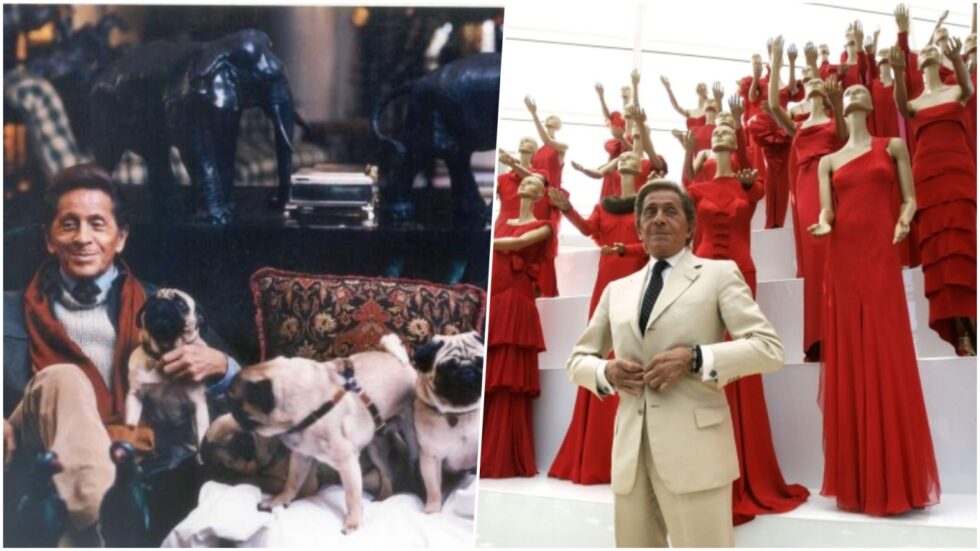
Valentino was among the first designers to understand the importance of visual branding. His signature shade, “Valentino Red,” became not just an aesthetic choice but a powerful marketing tool. The colour was trademarked in spirit if not in law – instantly recognisable on runways and red carpets. When he retired in 2008, his final collection featured an all-red finale – a move widely interpreted as one of the most effective personal brand statements in fashion history.
Business mind behind the glamour: how Valentino built a global luxury empire
Valentino Garavani was celebrated as a master of elegance, but behind the red carpets and couture salons stood a remarkably sharp business strategist. Unlike many creative geniuses who struggled with the commercial side of fashion, Valentino understood from the beginning that artistry alone was never enough.
From the early days of his Rome atelier in the 1960s, he treated fashion as both a creative mission and a serious international enterprise. By the 1980s, the Valentino brand had already expanded far beyond couture gowns into perfumes, accessories, ready-to-wear collections and a worldwide network of boutiques. Former Valentino chief executive Stefano Sassi once captured this duality perfectly:
“He was a perfectionist who understood that creativity without structure cannot survive in modern luxury.”
That philosophy shaped every stage of the company’s growth. Valentino insisted on strict quality control, careful brand positioning and disciplined expansion – principles that allowed the house to evolve from a family-run couture business into a billion-euro global corporation. This rare balance between imagination and commercial discipline meant that the Valentino fashion house was able to outlive its founder and remain profitable decades after his retirement in 2008. Today the brand continues to thrive under new creative leadership, a testament to the solid foundations he built.
A designer who understood power, image and visibility
Valentino did not simply design dresses – he designed moments. He instinctively recognised that fashion achieves its greatest impact when worn at moments of maximum public attention. Throughout his career he dressed women at the precise points when the world was watching:
- Jacqueline Kennedy Onassis during historic public appearances in the 1960s
- Princess Diana at high-profile state events and international tours
- Elizabeth Taylor and Hollywood royalty at glittering premieres
- Julia Roberts, Cate Blanchett and Halle Berry on Oscar nights
- Gwyneth Paltrow, Jennifer Lopez and Nicole Kidman on global red carpets
- a new generation of stars, from Zendaya to Lady Gaga, in the 21st century
His gowns were never intended as everyday clothes. They were statements of status, confidence and aspiration – carefully crafted instruments of image. As Alexandra Shulman, former editor-in-chief of British Vogue, told the BBC:
“Valentino’s dresses were for extraordinary moments. That is why he mattered.”
Few designers understood better than Valentino that a single photograph – a First Lady in mourning, a princess at a gala, an actress on the Academy Awards stage – could define an entire brand.
Legacy beyond his lifetime: a billion-euro brand
More than half a century after its founding, the Valentino name remains one of the most valuable assets in the global luxury industry. Today the Valentino house:
- employs thousands of people worldwide
- operates flagship stores on every major continent
- generates annual revenues exceeding €1.4 billion
- continues to dominate haute couture and high-end ready-to-wear markets
The company has changed owners several times, attracting major international investors – from Italian conglomerates to global private equity funds and Qatari luxury groups. Each transaction confirmed the enduring commercial strength of the brand Valentino created. Very few designers manage to leave behind all three pillars of true fashion success:
- a distinctive and instantly recognisable global aesthetic
- a financially powerful, sustainable business
- a cultural legacy spanning generations
Valentino Garavani achieved all of them.
The final measure of a remarkable career
In an industry where creative brilliance often fails to translate into financial stability, Valentino proved that elegance and profit could coexist. He demonstrated that a designer could remain faithful to beauty, craftsmanship and tradition while also building a modern luxury empire. His philosophy was disarmingly simple. As he once said:
“I know what women want. They want to be beautiful.”
For more than sixty years, that belief guided every collection, every business decision and every red-carpet triumph. It made Valentino Garavani not only one of the greatest fashion designers of the modern age – but also one of its most successful entrepreneurs.
Chronology of Valentino Garavani: key dates
| Year | Event |
|---|---|
| 1932 | Born in Voghera, Lombardy, Italy |
| 1949 | Moved to Paris to study fashion design |
| 1960 | Founded the Valentino fashion house in Rome |
| 1968 | Presented the famous White Collection and introduced the “V” logo |
| 1998 | Sold the Valentino fashion group to investors |
| 2007 | Held his final haute couture show in Paris |
| 2023 | Received the Outstanding Achievement Award at the British Fashion Awards |
| 2026 | Died in Rome at the age of 93; funeral held on 23 January |
Valentino Garavani funeral in Rome: official details
The funeral arrangements for Valentino Garavani have been formally announced by the Valentino Garavani and Giancarlo Giammetti Foundation. The designer will lie in state at Piazza Mignanelli in Rome on 21 and 22 January 2026, giving admirers, colleagues and members of the public an opportunity to pay their respects. The official funeral service will take place on 23 January at the Basilica of Saint Mary of the Angels and Martyrs, one of Rome’s most historic and symbolic churches. The ceremony is expected to be attended by leading figures from the international fashion industry, cultural institutions and public life. Security and organisational arrangements are being coordinated by the city of Rome in cooperation with the foundation. The events will mark a solemn and dignified farewell to a designer whose influence shaped global fashion for more than six decades.
Sources: BBC News, The Guardian, Reuters, AP News, poradnyk.com News, Valentino Garavani & Giancarlo Giammetti Foundation