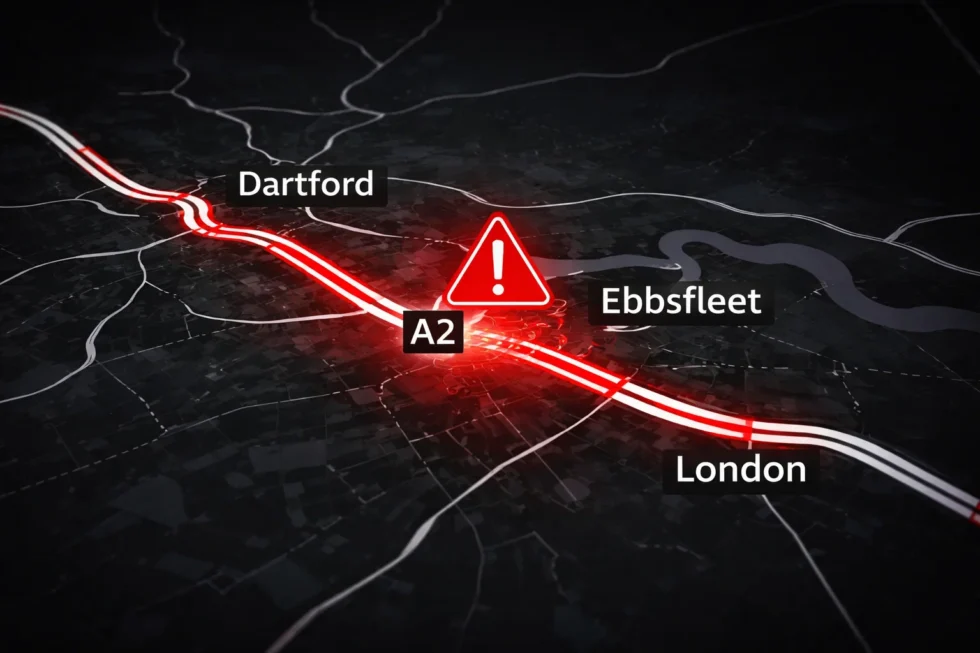
Shortly after 06:00 BST on Tuesday, 14 April 2026, a two-vehicle collision triggered a full traffic hold on the A2 London-bound carriageway near the A2260 Southfleet Road junction, forcing a shutdown at peak commuter time and severely disrupting routes between Dartford, Gravesham and central London. The WP Times reports that although the carriageway has since reopened, the network remains under sustained pressure, with delays continuing to spread along the corridor.
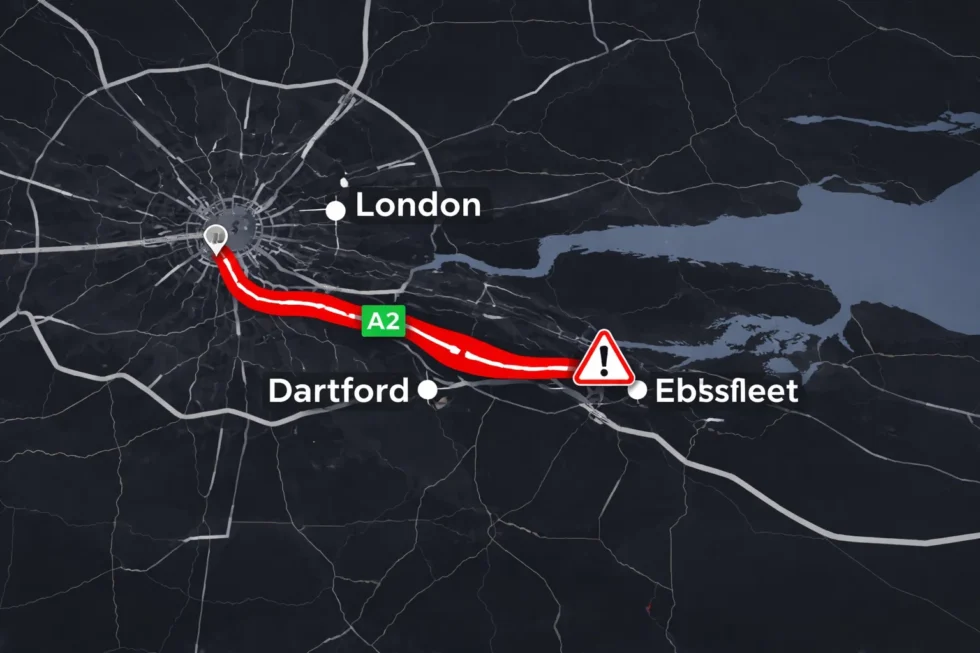
Congestion escalated within minutes. Traffic data confirms that all vehicles were held from around 06:40 BST, resulting in miles of stationary queues along the London-bound A2. Movement has since resumed, but recovery remains uneven, with stop-start waves and extended journey times continuing to affect traffic heading towards the capital. Kent Police said officers were deployed shortly after the initial call. A spokesperson confirmed: “We were called at around 6am today to reports of a collision involving two vehicles on the A2 Watling Street near Ebbsfleet. Officers attended, and no injuries were reported.” With no casualties, priority shifted to rapid clearance. However, the disruption was amplified by timing and location. The A2 is a key commuter route into London, and even minor incidents at peak hours can quickly cascade across Dartford, Gravesend and connecting roads. Inrix data indicates the carriageway was effectively locked during the hold, with traffic unable to move for a sustained period. Once released, the backlog began to unwind, but demand exceeded available capacity, slowing recovery.
Pressure remains centred on the A2260 Southfleet Road junction. This is where the system is breaking down. Merging traffic from Northfleet is feeding into an already saturated mainline, creating unstable flow, sudden braking and prolonged delays. The impact is no longer limited to through traffic — local roads, slip roads and feeder routes are now affected. Drivers heading towards London are still facing extended journey times on the A2 approach. Alternative routes are limited, and diversion traffic is now loading surrounding roads, reducing their effectiveness.
Even after clearance, corridors like the A2 do not recover quickly. Traffic dissipates in phases, and the current phase is the most unstable — when vehicles are moving again but density remains too high for smooth flow. This incident follows a familiar pattern on the UK network: small collisions on major routes during peak hours create outsized disruption. The critical factors are timing and location, not severity. Conditions are expected to improve later in the morning, but the network remains congested.
What drivers should do now
Avoid the A2 London-bound via Ebbsfleet — delays remain concentrated near A2260 Southfleet Road Use alternatives:
- M2 → M25 (clockwise) for London access
- A20 via Wrotham / Sevenoaks — slower, but moving
- Gravesend diversion only if you know the roads — heavy local congestion
Allow an extra 20–40 minutes if staying on the A2
Do not rely solely on sat-nav — routing delays lag behind real conditions
Expect sudden braking — queues are uneven, especially near bends and junctions
If already in traffic: hold lane discipline — aggressive merging will slow recovery further
Where delays are worst
A2 London-bound approaching A2260 Southfleet Road
Queues stretching back towards Gravesend and the Dartford corridor
Heavy pressure on Northfleet and Ebbsfleet slip roads
What happens next
Gradual improvement expected between 09:30 and 11:30 BST
Stop-start conditions will continue during the recovery phase
Secondary routes will remain congested due to diversion traffic
The immediate risk is no longer the collision — it is the aftershock phase. Traffic density remains high, braking is unpredictable, and junctions are operating beyond capacity. On routes like the A2, this phase typically causes more delay than the original incident. Drivers should plan defensively, allow extra time and avoid unnecessary manoeuvres as the network slowly stabilises.
Read about the life of Westminster and Pimlico district, London and the world. 24/7 news with fresh and useful updates on culture, business, technology and city life: EasyJet passengers face EU border delays as new Entry Exit System causes long