
London is currently seeing a growing number of adenovirus infections, a virus that looks like flu but behaves very differently. Adenovirus causes long-lasting fever, severe fatigue, sore throat, red painful eyes and stomach problems, and unlike flu it often hits several organs at the same time. Doctors across Britain report that many patients who think they have flu or a bad cold are in fact infected with adenovirus, which can keep people sick for 10 to 14 days or longer. The virus spreads easily through crowded public transport, offices, gyms and schools, making London especially vulnerable during winter. Health authorities now warn that adenovirus is one of the hidden drivers of Britain’s winter illness wave, as The WP Times editorial desk reports, citing UK and European health surveillance.
What exactly is adenovirus
Adenovirus is neither flu nor a routine winter cold. It is a robust DNA virus first identified in the 1950s and still circulating widely across modern societies. Unlike most seasonal viruses, adenovirus does not stay confined to the nose and throat: it can infect the lungs, eyes, digestive system and urinary tract at the same time, which is why many patients feel unexpectedly unwell and struggle to recover quickly. More than 50 different human strains exist, meaning people do not develop lasting immunity and can be reinfected throughout their lives.
For children, adenovirus is one of the most common causes of fever, conjunctivitis and diarrhoeal illness, often spreading rapidly in nurseries and schools. In adults, it typically presents as a long-lasting flu-like infection with persistent fatigue, cough and sore throat that can linger for weeks. For pregnant women, adenovirus is of particular concern because prolonged fever and dehydration can place added stress on both mother and baby, increasing the risk of complications.
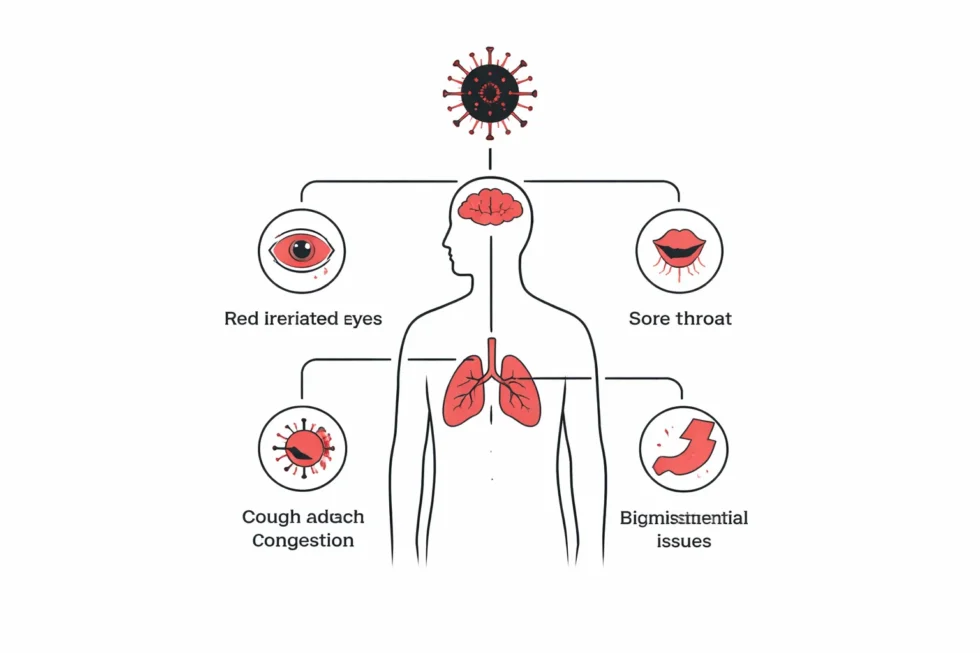
In a densely populated, highly connected city like London — with packed public transport, open-plan workplaces and constant international travel — adenovirus finds ideal conditions to spread quietly and persist, turning what many assume is “just a cold” into a far more disruptive illness.
What makes adenovirus different
- It attacks multiple organ systems at once, not just the airways
- Symptoms usually last longer than with flu or a common cold
- It spreads via hands, shared surfaces, gym equipment and even contaminated water, not only through coughing
How adenovirus feels in the body
Clinicians in London increasingly describe adenovirus not as a minor winter infection but as a systemic viral illness. While it may begin like flu, adenovirus frequently spreads beyond the respiratory tract, producing a multi-organ inflammatory response that places significant strain on the body. Patients often report that, unlike flu, the illness does not peak and fade but lingers, shifts and intensifies, moving from throat to eyes to stomach before finally easing.
This pattern explains why many people remain unwell for far longer than expected. The immune system must fight the virus in several tissues at once, which leads to persistent fever, prolonged fatigue and delayed recovery, even in otherwise healthy adults.
Typical adenovirus symptoms
- Sustained high fever, often lasting five days or more
- Profound exhaustion that makes normal activity difficult
- Severe sore throat and painful swallowing
- Inflamed, painful or sticky eyes (viral conjunctivitis)
- Gastrointestinal illness, including diarrhoea and vomiting
- Headaches, muscle pain and body aches
In London clinics, many patients report being unable to work, commute or care for children for one to two weeks, a pattern far more typical of adenovirus than of a simple cold.
Why London is a hotspot
London’s urban structure creates ideal transmission pathways for adenovirus. The virus spreads not only through coughing but through hands, surfaces and shared facilities, making it particularly suited to dense metropolitan life.
- Millions of daily journeys on the Tube and buses mean constant close contact
- Open-plan offices, schools, gyms and cafés provide continuous opportunities for exposure
- International travel hubs introduce and recycle viral strains
- Adenovirus can remain infectious on phones, door handles, lift buttons and gym equipment for weeks
This allows adenovirus to circulate quietly and persistently, turning London into a continuous transmission zone during winter.
Who is most at risk
Although adenovirus can make anyone ill, certain groups face a substantially higher risk of complications.
- Children under five are prone to high fever, eye infections and dehydration
- Adults over 60 are more likely to develop pneumonia and prolonged weakness
- Pregnant women face increased risk because fever, dehydration and oxygen stress can affect both mother and baby
- People with asthma, heart disease, diabetes, cancer or suppressed immunity are more vulnerable to severe lung and systemic complications
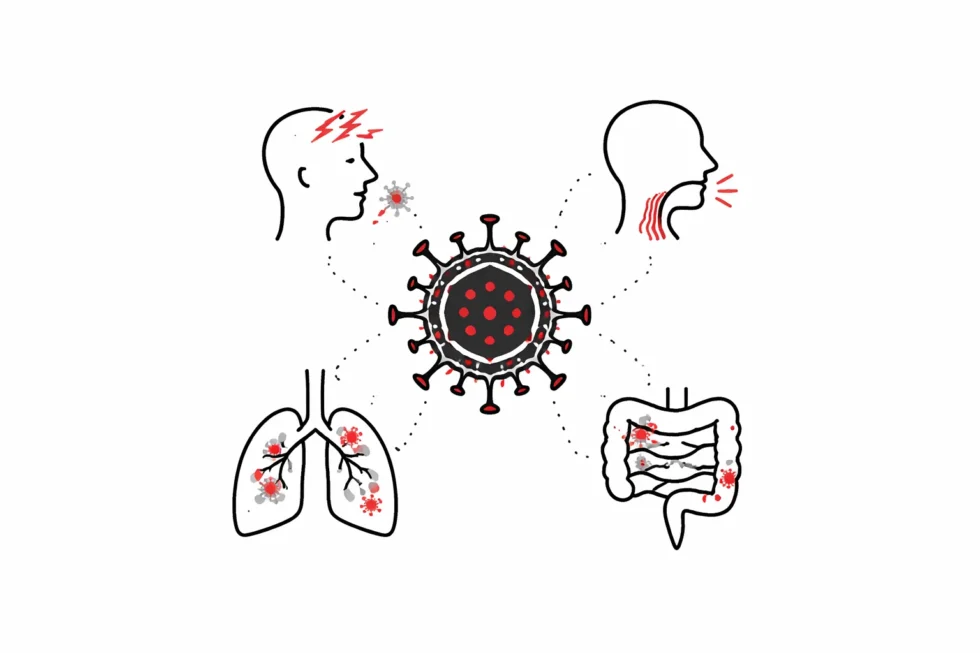
In these populations, adenovirus is not just uncomfortable — it can lead to respiratory failure, severe dehydration, corneal damage from eye infections and hospital admission. This is why British clinicians treat adenovirus as a serious winter pathogen, not merely a seasonal nuisance.
Is there a vaccine for adenovirus in the UK
No.
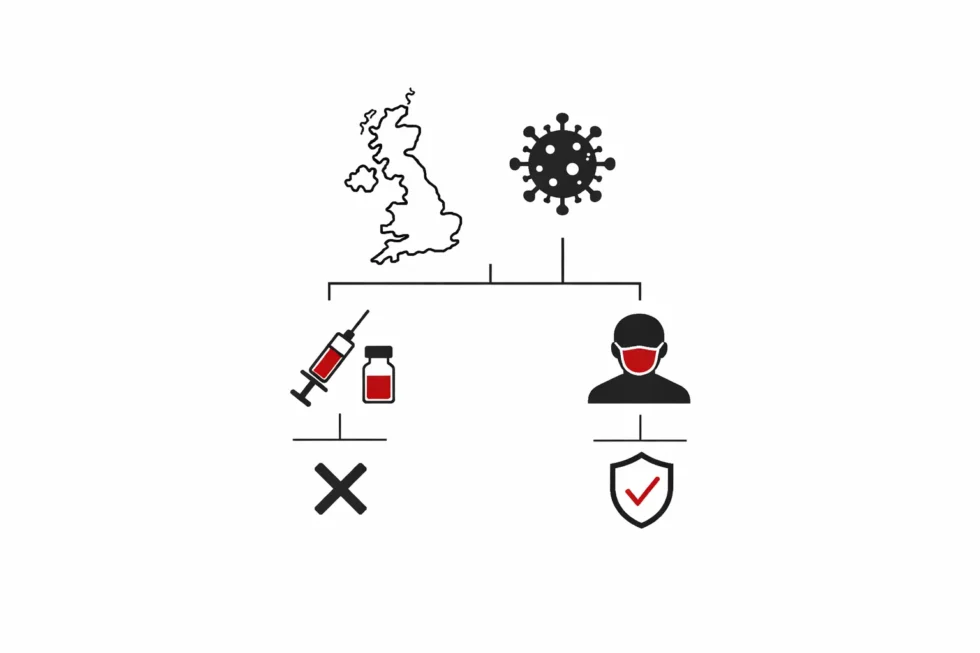
There is no licensed civilian adenovirus vaccine anywhere in the United Kingdom or Europe. Adenovirus is a DNA virus with more than 50 circulating human strains, which makes it technically difficult to produce a single vaccine that would protect the public. Some military forces abroad use limited adenovirus vaccines for recruits in closed barracks, but these formulations are not authorised for civilian healthcare and cannot be obtained through the NHS or private clinics.
This distinction matters. Flu and COVID-19 vaccines do not protect against adenovirus. You can be fully vaccinated for winter flu and coronavirus and still develop a prolonged adenovirus infection. Vaccination remains crucial for flu and COVID-19 because those viruses cause the majority of winter hospitalisations, but adenovirus prevention relies on hygiene and early medical care rather than injections.
How Londoners should protect themselves
Because there is no vaccine, interrupting transmission is the only effective control. Adenovirus is exceptionally hardy: it survives drying, remains infectious on surfaces for weeks and spreads via hands, shared objects and even contaminated water.
What actually reduces risk
- Wash hands with soap and water (alcohol gel alone is less effective against adenovirus)
- Avoid touching the eyes, a major entry point
- Disinfect phones, keyboards, door handles and gym equipment
- Do not share towels, bottles, makeup or contact lenses
- Stay at home until fever, diarrhoea and eye discharge have fully resolved
What increases transmission
- Going to gyms, offices or schools while symptomatic
- Using swimming pools or spa facilities with eye or stomach symptoms
- Long public-transport journeys while unwell
Where to get medical help in London
Adenovirus is managed through standard NHS pathways. Do not go straight to A&E unless symptoms are severe.
NHS 111 — 24 hours
Call 111 or use 111.nhs.uk. Clinicians will:
- Assess symptoms
- Identify red flags
- Arrange GP or urgent-care appointments
- Direct you to A&E only when necessary
This is the correct first step for persistent fever, conjunctivitis, dehydration or prolonged illness.
GP surgeries (first-line care)
For most Londoners, their GP surgery is the primary point of medical care for adenovirus. GPs are trained to recognise when a flu-like illness is becoming something more serious and to intervene early before complications develop.
During a GP consultation, doctors can:
- Examine the lungs, throat and eyes to detect pneumonia or viral conjunctivitis
- Prescribe or recommend treatment for eye infections, pain and fever
- Provide hydration and recovery plans, especially for children and older adults
- Issue medical certificates for work, school or childcare
- Arrange blood tests, chest X-rays or urgent referrals if warning signs appear
All GP consultations for adenovirus and its complications are fully covered by the NHS and are free at the point of usefor UK residents.
Urgent Treatment Centres (UTCs) in London
When adenovirus symptoms become more severe but are not immediately life-threatening, Londoners should use one of the city’s Urgent Treatment Centres (UTCs). These NHS units provide same-day medical assessment without the need for a GP referral and are specifically designed to prevent unnecessary trips to A&E.
Major UTCs serving central and west London include:
- St Thomas’ Hospital Urgent Treatment Centre — Westminster, SE1
- Guy’s Hospital Urgent Treatment Centre — London Bridge, SE1
- University College Hospital Urgent Treatment Centre — Euston, NW1
- Chelsea and Westminster Hospital Urgent Treatment Centre — SW10
These centres are equipped to assess and treat moderate but urgent complications of adenovirus, including severe dehydration, persistent high fever, worsening breathing, chest tightness and viral eye infections (conjunctivitis). Clinicians can provide intravenous fluids, oxygen, eye treatment and rapid referral for hospital admission if required.
For Londoners, UTCs represent the critical middle ground between a GP surgery and a hospital emergency department — ensuring fast, specialist care without overwhelming A&E services.
Emergency
Call 999 or go to A&E immediately if there is:
- Severe breathing difficulty
- Chest pain or collapse
- Confusion or loss of consciousness
- Blue lips or extreme weakness
Vaccination clinics (for flu & COVID-19) — London and the UK
There is no adenovirus vaccine, but flu and COVID-19 vaccination is still vital because these viruses circulate alongside adenovirus and drive most winter hospital admissions.
High-volume London sites
(Vaccination clinics may run by appointment even when the shop is open.)
| Area | Site | Address | Typical store hours |
|---|---|---|---|
| Piccadilly Circus | Boots | 44–46 Regent St, London W1B 5RA | Mon–Fri 08:00–23:00; Sat 09:00–23:00; Sun 12:00–18:00 |
| Westminster | Boots | 107 Victoria St, London SW1E 6RA | Mon–Fri 07:30–20:00; Sat 09:00–18:00; Sun 11:00–17:00 |
| Oxford Street / Marble Arch | Superdrug Health Clinic | 508–520 Oxford St, London W1C 1NB | Late opening; clinic by booking |
To find NHS-funded flu sites or walk-ins in your borough (Camden, Hackney, Kensington & Chelsea, Southwark, Lambeth, Greenwich and others), use the NHS pharmacy postcode finder or the NHS App.
Across the UK
- NHS App / NHS online booking
- Call 119 for booking assistance
- GP surgeries and community pharmacies nationwide
How much vaccination costs in London and across the UK
In London and other major UK cities, winter vaccination works on a dual system: people at medical risk are protected through the NHS, while healthy adults can access protection through private pharmacy clinics.
NHS vaccination — free for eligible Londoners
If you live in London and fall into a recognised medical or age group, your winter vaccines are fully funded by the NHS.
- Flu vaccine (London & UK)
Free for:- Everyone aged 65 and over
- Pregnant women
- People with chronic illnesses such as asthma, diabetes, heart disease or kidney disease
- Carers and those living with immunocompromised patients
- COVID-19 winter booster (London & England 2025–26)
Free for:- Care-home residents
- All adults aged 75+
- People with weakened immune systems, including cancer and transplant patients
These NHS vaccines are provided through London GP surgeries, hospital vaccination hubs and high-street pharmacies.
Private vaccination in London
For Londoners who do not qualify for NHS vaccination, flu protection is widely available through private pharmacy clinics across the capital.
- Flu vaccination in London typically costs £20–£25
- Offered by Boots, Superdrug and independent London pharmacies
- Same-day appointments are often available during winter
There is no private or NHS vaccine for adenovirus anywhere in the UK — protection depends on hygiene, early isolation and access to NHS care.
How NHS and insurance work
All medically necessary care for adenovirus — GP visits, tests, urgent treatment and hospital admission — is covered by the NHS and free at the point of use for UK residents. Private insurance is not required. Private clinics may offer faster access, but NHS hospitals provide full treatment for all serious complications. Adenovirus does not dominate headlines, but in London it is quietly driving GP visits, school absences and workplace outbreaks. It spreads easily, lasts longer than a cold and attacks the eyes, lungs and gut at once. Recognising it early, isolating promptly and using NHS services correctly is how London limits its impact during the 2025–26 winter.
Read about the life of Westminster and Pimlico district, London and the world. 24/7 news with fresh and useful updates on culture, business, technology and city life: Pimlico private doctors: same-day GP, blood tests and private medical clinics near Westminster