
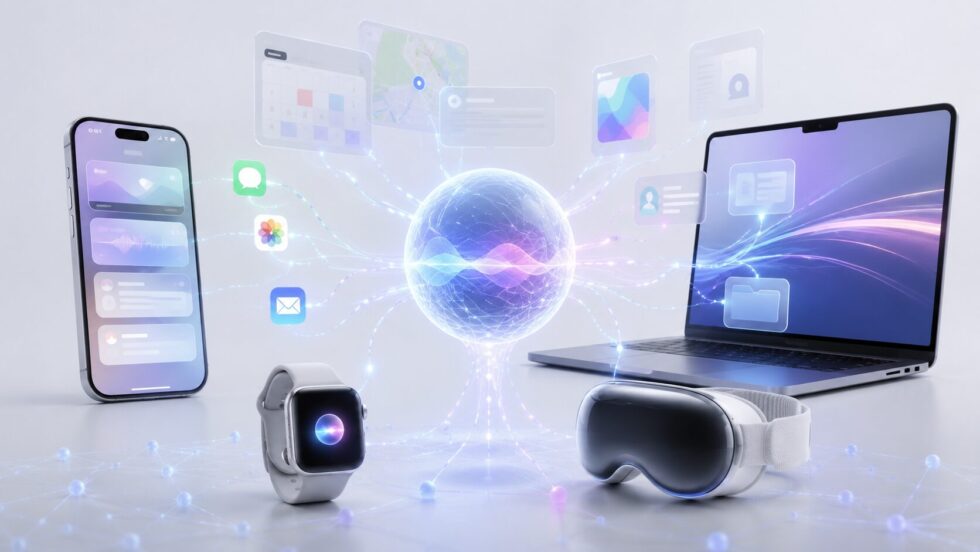
Apple unveiled Siri AI at WWDC 2026 on Monday, presenting the most significant overhaul of its voice assistant since Siri first launched in 2011. The new system is powered by Apple Intelligence and is designed to understand personal context, interact more naturally in conversations, analyse on-screen content and combine information from apps, messages and the web. At the same time, Apple confirmed that Siri AI will not be available on iPhone and iPad in European Union countries when iOS 27 and iPadOS 27 launch later this year, citing regulatory concerns linked to the EU's Digital Markets Act (DMA). The WP Times reports, citing Apple's WWDC 2026 keynote, official company statements and reporting from CNN and CNBC. Apple said the restrictions do not currently apply to Mac, Apple Watch or Apple Vision Pro, but declined to provide any timeline for an eventual iPhone and iPad rollout across the EU.
The announcement immediately created a two-speed launch for Apple's most ambitious artificial intelligence project to date. While users in Britain, the United States, Canada, Australia and many other markets are expected to gain access to Siri AI during the staged rollout of Apple Intelligence features, millions of iPhone and iPad owners across the European Union will be excluded from the initial release. Apple software chief Craig Federighi said the company was disappointed by the situation and argued that regulatory requirements could affect security, privacy and product integration. The company indicated that discussions with European regulators are continuing, but gave no indication of when — or if — the restrictions could be resolved before the public release of iOS 27 later in 2026.
What Apple is restricting in the EU — and what it is not
The core of the announcement is a split by both geography and platform. Within the EU, the entire new feature set is withdrawn on iPhone and iPad, while it survives on the remaining platforms. The breakdown:
| Device | Operating system | Siri AI in the EU |
|---|---|---|
| iPhone | iOS 27 | Not available |
| iPad | iPadOS 27 | Not available |
| Mac | macOS 27 | Available |
| Apple Watch | watchOS 27 | Available |
| Apple Vision Pro | visionOS 27 | Available |
Specifically, EU users on iPhone and iPad will, according to Apple, miss several central building blocks of the new system. These include:
- the standalone Siri app for revisiting earlier conversations,
- the expanded Visual Intelligence experience,
- the integrated writing tools,
- the new Siri mode in the Camera app on iOS,
- and the other Siri AI features shown at WWDC26.
The restriction does not stop at end users. Developers based in the EU will be unable to test or build the new Siri AI features into their own apps on iOS and iPadOS — a sharper blow given that deep app integration with Siri, partly via Spotlight, is one of the platform's headline promises.
The DMA dispute: two opposing readings
At the heart of the matter sits the Digital Markets Act, the EU competition law governing large platforms designated as "gatekeepers". Apple and the regulators read the statute in fundamentally different ways — and that reading is what decides between availability and a block.
On Apple's account, EU regulators require the company to grant any virtual assistant direct access to users' private data and control over other installed applications the moment Siri AI is made available in the EU — and to do so without the safeguards Apple deems essential. Apple explicitly characterises this reading as an "extreme interpretation" of the DMA. Federighi framed the company's position this way:
"We're deeply disappointed that our EU users won't have Siri AI on iPhone or iPad when we share our new software releases later this year." (Craig Federighi, Apple's senior vice president of software engineering, in Apple's official statement)
In concrete terms, the regulators' reading of the DMA would — Apple says — compel it to give any AI system near-unlimited access to a device, including the ability to act autonomously without the user's ongoing visibility and control. The examples Apple cites are reading and sending messages, making purchases, accessing files and executing actions across any app.
A note for the record: this entire account comes from Apple's own statement. No counter-position or comment from the European Commission appears in the materials available. The DMA itself, from the EU's perspective, is intended to open markets and force dominant platforms towards greater interoperability — an aim Apple reads, in this instance, as a security threat.
Apple's security argument
Apple rests its refusal largely on security and privacy grounds. The company describes Siri AI as "private by design", deeply integrated across its platforms via on-device processing and Private Cloud Compute, which is meant to extend the iPhone's security into the cloud. When Private Cloud Compute handles a request, Apple says, no personal data is stored or made accessible to the company, and outside experts can verify that promise at any time.
By contrast, Apple argues, the regulators' DMA reading would dismantle precisely that protective architecture. To support the point, the company points to research findings:
Security researchers have shown that AI systems can be hijacked to steal personal data such as passwords and photos, and to permanently alter files and account settings without a user's consent. (paraphrased from Apple's statement)
As AI systems gain capabilities, Apple contends, these risks are rising quickly in both frequency and scope. This is the crux of the clash: for Apple, direct third-party access at device level is an open door to abuse; for the regulators, that same access is the precondition for fair competition between assistants.
Trusted System Agent: Apple's rejected proposal
To defuse the standoff, Apple says it designed a technical solution called Trusted System Agent. It is meant to act as an intermediary through which third-party virtual assistants could use the same features and capabilities as Siri AI on EU devices — but without the unprotected, direct access Apple refuses to grant.
Alongside it, the company offered to launch Siri AI in the EU and roll the new mechanism out gradually over an 18-month period, apparently to allow room to reconcile security with interoperability.
The answer, on Apple's telling, was unequivocal: the European Commission said no. By the company's account, it agreed to none of Apple's proposals, and over several months regulators accepted none of the offered solutions that would bring Siri AI to the EU while safely supporting other virtual assistants. Federighi pledged to keep working with regulators on a path forward — without naming any timeline.
Which countries are affected — and where the UK stands
The restriction applies to all 27 member states of the European Union, sweeping in the large markets of Germany, France, Italy, Spain, Poland and the Netherlands. The full list, grouped by region:
- Western Europe: Austria, Belgium, France, Germany, Ireland, Luxembourg, Netherlands
- Southern Europe: Cyprus, Greece, Italy, Malta, Portugal, Spain
- Northern Europe: Denmark, Estonia, Finland, Latvia, Lithuania, Sweden
- Central and Eastern Europe: Bulgaria, Croatia, Czech Republic, Hungary, Poland, Romania, Slovakia, Slovenia
The United Kingdom is not on that list. Because the DMA is EU law and Britain is no longer a member state, the specific regulatory trigger Apple cites does not bite in the UK. Apple's materials do not single out Britain for any equivalent carve-out, so the relevant constraints for UK users are the general global ones: Siri AI arrives as a beta later this year, initially in English and on devices running the latest models, with more languages to follow. In short, UK iPhone and iPad owners are not subject to the EU block, though they will still wait on Apple's broader rollout schedule.
What Siri AI is actually meant to do
Setting the EU row aside, Apple describes Siri AI as an assistant rebuilt from the ground up with AI at its core — offering detailed, conversational responses rather than one-off commands. Three capabilities stand out:
- Personal context: Siri draws on information across messages, emails and photos, for instance to surface a restaurant recommendation a friend texted or a booking reference buried in an old email.
- Onscreen awareness: the assistant answers questions about whatever is currently on the display.
- Broad world knowledge: through the web, Siri fetches up-to-date information — such as when the next solar eclipse is visible or when a musician is next in town.
Added to that are a standalone Siri app with iCloud sync across devices, a new Siri mode in the iPhone camera (with actions such as splitting a bill via Apple Cash, a US feature), and system-wide writing tools that draft text, rewrite it and proofread as the user types. It is precisely this package that remains out of reach for EU users on iPhone and iPad for now.
The architecture and the Google deal behind it
Technically, Siri AI uses the next generation of Apple Foundation Models, running partly on device and partly on servers via Private Cloud Compute. The view behind the scenes is the striking part: according to CNBC, the most powerful model, AFM Cloud Pro, is the fruit of a collaboration with Google, comparable in quality to frontier Gemini models — and it runs on Nvidia GPUs in Google's cloud. The partnership with Google, announced in January, is regarded by analysts as a central lever in Apple's effort to catch up.
"Gemini's models have been on a tear lately." (paraphrased; Anurag Rana, senior equity analyst at Bloomberg Intelligence, speaking to CNN)
Market reaction and analyst verdicts
The presentation itself drew a muted response on the markets: Apple shares were up around two per cent at the open, then slipped during the keynote and turned negative in the early afternoon (US Eastern time).
Even so, analyst assessments remain mixed:
- Dan Ives (Wedbush) called the move a "step in the right direction" for Apple's AI strategy and saw it as setting up the handover from Cook to Ternus.
- Francisco Jeronimo (IDC) told CNN that, if executed well, Siri would stop being a mere feature and become a new interaction layer for iPhone, iPad, Mac and future hardware categories.
- Gene Munster (Deepwater) had argued ahead of WWDC that Apple had not yet shown anything that truly wowed people — while remaining convinced the company had too much at stake to drop the ball.
On the scale of the market: more than 2.5 billion Apple devices are in use worldwide, by industry figures. At the same time, around one billion active iPhones still do not support Apple Intelligence, since the technology only runs from the iPhone 15 Pro onwards — something observers read as both a risk and a growth opportunity.
What was shown beyond the EU question
Beyond the Siri overhaul, Apple showed further AI features that remain relevant, at least in part, regardless of the EU dispute:
| Area | New feature |
|---|---|
| Photos | "Spatial Reframing": AI generates an image from a different angle |
| Home app | AI summarises footage from connected cameras and makes it searchable |
| Safari | sorts tabs by topic; extensions can be created from a prompt |
| Passwords | an agent autonomously changes insecure passwords via Safari |
| Messages | suggests actions such as reminders or notes |
Apple also previewed new child safety features. Some compute-heavy features, such as image generation, may carry daily usage limits because they rely on powerful — and expensive — models.
FAQ
Why won't Siri AI come to iPhone and iPad in the EU? Apple blames the Digital Markets Act. The company says the EU reading would require any virtual assistant to be given direct access to private data and control over other apps — which Apple refuses on security grounds.
Does the EU block affect the UK? No. The DMA is EU law and the UK is no longer a member state, so the regulatory trigger does not apply. UK users fall under Apple's general global terms instead.
On which devices will Siri AI be available in the EU? On Mac (macOS 27), Apple Watch (watchOS 27) and Apple Vision Pro (visionOS 27), in a supported language. Not on iPhone (iOS 27) or iPad (iPadOS 27) for now.
Is there a timeline for an EU launch on iPhone and iPad? No. Apple explicitly gives no date and says it will keep negotiating with EU regulators.
What was Apple's proposed fix? A "Trusted System Agent" as a secure intermediary, plus a phased 18-month rollout. The European Commission, Apple says, rejected all of its proposals.
Has the European Commission responded? No comment from the European Commission appears in the available materials. Every detail about the negotiations comes from Apple's own statement.
Read about the life of Westminster and Pimlico district, London and the world. 24/7 news with fresh and useful updates on culture, business, technology and city life: How to Get iOS 26.5 on iPhone: Top New Features, RCS Encryption, Apple Maps Ads and USB-C Updates