
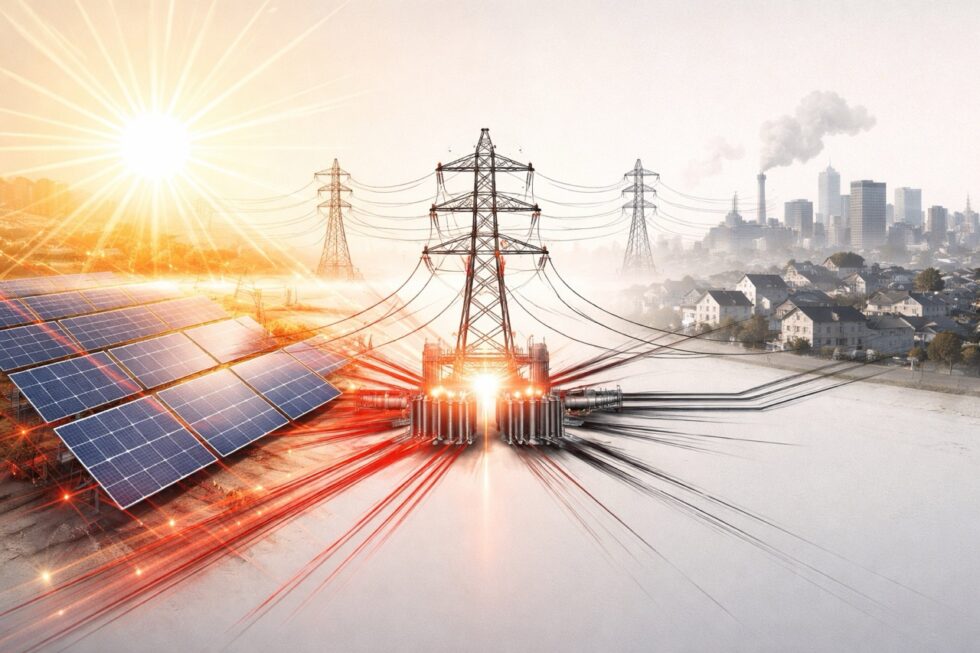
Britain’s electricity system is entering a critical stress phase as surging solar generation risks overwhelming the national grid during low-demand periods this summer, according to new operational forecasts published on Tuesday, 14 April 2026. The National Energy System Operator (Neso) has warned that unusually high renewable output — particularly during sunny, low-consumption windows such as late May bank holidays — could create imbalances large enough to threaten grid stability if not actively managed, with emergency tools now expected to be deployed more frequently than in previous years, The WP Times reports.
At the centre of the challenge is a structural mismatch: solar and wind output can rapidly exceed national electricity demand, while system operators lack direct control over many decentralised renewable sources. Forecast modelling suggests demand could fall to around 11 gigawatts during peak solar conditions, while combined wind and solar generation may simultaneously reach 18–19 gigawatts, creating a surplus that must be actively absorbed or curtailed to avoid system disruption.
Why solar overproduction is becoming a real grid risk in the UK
The UK’s renewable expansion — led by policy direction from Ed Miliband — is rapidly increasing installed capacity, particularly in solar generation. Over the past decade, solar output capacity has more than doubled to approximately 22 gigawatts, driven by both large-scale solar farms and widespread rooftop installations across homes and businesses. This growth is central to the government’s net zero strategy, which aims to triple solar capacity by 2030. However, the pace of deployment is now beginning to outstrip the flexibility of grid infrastructure designed for more predictable, centralised power sources.
The key issue lies in timing. Solar generation peaks during daylight hours, often when electricity demand is relatively low — especially during weekends and public holidays. When supply significantly exceeds demand, the system frequency can destabilise, increasing the risk of forced shutdowns or, in extreme cases, cascading outages. Compounding the issue is the limited controllability of distributed renewable assets. Many smaller solar installations are not directly connected to central transmission controls, meaning operators cannot simply “turn them down” when excess generation occurs.
How Neso plans to stabilise the system this summer
To manage these emerging risks, National Energy System Operator is preparing to deploy a broader set of balancing mechanisms — some of which mark a significant shift in how electricity systems operate. Key interventions expected this summer include:
- Paying households and industrial users to increase electricity consumption during surplus periods
- Instructing large power stations to reduce or halt output to prevent oversupply
- Expanding demand-side response schemes to actively shape consumption patterns
- Increasing reliance on battery storage and flexible grid services
- Deploying frequency control tools more frequently to maintain system balance
This approach reflects a fundamental transition: instead of supply adjusting to meet demand, demand is increasingly being adjusted to match supply.
Kayte O’Neill, Neso’s operating chief, outlined the scale of the shift, noting that system complexity is rising as weather-driven generation plays a larger role. She indicated that operators will need to use balancing tools “more often than in previous summers” due to the growing influence of solar output on overall system dynamics.
Forecast pressure points: when the grid is most at risk
The highest risk scenarios are expected during specific weather and calendar conditions where generation and demand diverge sharply. A simplified overview:
| Factor | Impact on grid |
|---|---|
| Strong sunshine | Drives peak solar generation |
| Low industrial activity | Reduces baseline demand |
| Bank holidays/weekends | Further suppress consumption |
| Mild temperatures | Lower heating or cooling demand |
| High wind output | Adds additional renewable supply |
Under these conditions, the UK grid could face its lowest ever demand levels while simultaneously experiencing near-record renewable generation — a combination that significantly increases balancing complexity. Neso estimates a 75% probability that demand will hit a new record low during the late May bank holiday period, making this window a key operational test for the system.
Expert concerns: structural imbalance and policy tension
Energy analysts say the situation reflects deeper structural challenges in the transition to renewables.
Adam Bell, a former energy official and consultant, highlighted the operational dilemma: the inability to curtail distributed solar generation forces the system to increase consumption instead. In practical terms, this means incentivising usage — effectively turning excess electricity into a short-term opportunity rather than a liability. However, not all experts are convinced the current strategy is sustainable.
Kathryn Porter, an independent energy consultant, raised concerns about the reliance on consumer behaviour to stabilise the system. She argued that shifting responsibility onto households and businesses — rather than adapting infrastructure — could create long-term inefficiencies. Her criticism also points to a broader policy question: whether continued rapid expansion of solar capacity is aligned with the grid’s ability to integrate it effectively.
Government position: energy security and long-term strategy
Despite the warnings, the government maintains that there is no immediate risk to electricity supply this summer. Officials emphasise that Britain’s energy system remains “resilient and diverse,” with sufficient capacity to meet demand even under stressed conditions. The current strategy prioritises long-term energy independence, particularly in response to geopolitical instability affecting global gas markets.
The ongoing conflict involving Iran is expected to push gas prices higher, reinforcing the government’s argument that accelerating domestic renewable energy is essential for future security. From a policy perspective, expanding solar and wind capacity is seen as a way to reduce reliance on imported fossil fuels, stabilise long-term prices, and meet climate targets.
What this means in practice for households and industry
For consumers, the shift could bring both opportunities and behavioural changes. Potential real-world impacts include:
- Access to lower or even zero-cost electricity during surplus periods
- Increased participation in smart tariffs and demand-response programmes
- Greater reliance on automated energy systems in homes and businesses
- More dynamic pricing linked to real-time grid conditions
For industry, particularly energy-intensive sectors, surplus electricity could create short-term cost advantages if consumption is aligned with peak generation periods. However, the transition also introduces complexity. Energy use may become less predictable, and businesses may need to adapt operations to take advantage of fluctuating supply conditions.
The UK’s electricity grid is entering a new phase where renewable growth is no longer the primary challenge — integration is. The shift from controllable fossil fuel generation to weather-dependent renewables requires a fundamentally different operating model. Flexibility, storage, and real-time demand management are becoming as critical as generation capacity itself. This summer is likely to serve as a live stress test of that transition. While the system is not expected to face supply shortages, the risk has inverted: instead of too little electricity, there may at times be too much — and managing that surplus safely is now one of the grid’s most complex challenges.
Background: why solar surplus is now a system risk
The UK power system is undergoing a structural shift from controllable fossil fuel generation to weather-driven renewables. Over the past decade, solar capacity has risen to around 22GW, with output now capable of surging rapidly during periods of strong sunshine — often when electricity demand is at its lowest. This creates a new type of imbalance. Instead of shortages, the system increasingly faces excess generation, particularly during spring and summer days with mild temperatures and low industrial activity. Forecasts from the National Energy System Operator indicate that demand can fall to around 11GW, while solar and wind combined may exceed that level significantly.
The challenge is operational control. Many solar installations — especially rooftop systems — cannot be directly switched off by grid operators. As a result, balancing the system now depends on reducing output elsewhere or increasing consumption in real time. Under policy direction from Ed Miliband, renewable capacity continues to expand as part of long-term energy security strategy. However, the pace of growth is exposing a key transition risk: managing surplus electricity safely has become as critical as generating enough power. In practical terms, the UK is entering an energy phase where timing, not volume, defines system stability.
Read about the life of Westminster and Pimlico district, London and the world. 24/7 news with fresh and useful updates on culture, business, technology and city life: EasyJet passengers face EU border delays as new Entry Exit System causes long