Bridgerton Season 4 returns to Netflix in the UK on Thursday, 29 January 2026, with Part 1 releasing at 8:00am GMT. The first instalment consists of four episodes, all available to stream on launch day for British viewers. Reports The WP Times, citing official Netflix materials and a preview of the opening minutes.
The new season shifts its narrative focus to Bridgerton’s Benedict Bridgerton, opening with a restrained, atmospheric sequence that signals a more intimate and psychologically driven chapter of the franchise. Rather than spectacle or scandal, the premiere prioritises mood and character, setting a slower and more emotionally deliberate tone. The early release of the opening five minutes functions as more than a teaser. It establishes the emotional language of Season 4 — absence, restraint and unreadiness — while quietly reframing Benedict from a detached observer into a conflicted protagonist whose withdrawal becomes the narrative’s starting point.
Bridgerton Season 4 release date and UK format
Netflix has confirmed that Season 4 will be released in two parts, continuing the split-release strategy introduced in previous seasons.
- Part 1: 29 January 2026
- Part 2: 26 February 2026
For UK viewers, all episodes will be available on launch days without delay, underlining Bridgerton’s position as one of Netflix’s most strategically important titles in the British market. The staggered format is designed to sustain conversation, speculation and media coverage across several weeks rather than a single binge window.
What the first five minutes reveal about Season 4
Season 4 opens not with scandal, romance or confrontation, but with preparation. Bridgerton House hums with quiet activity: baking, cleaning, rearranging, restoring order after absence. The camera drifts through domestic routines, emphasising labour over luxury.
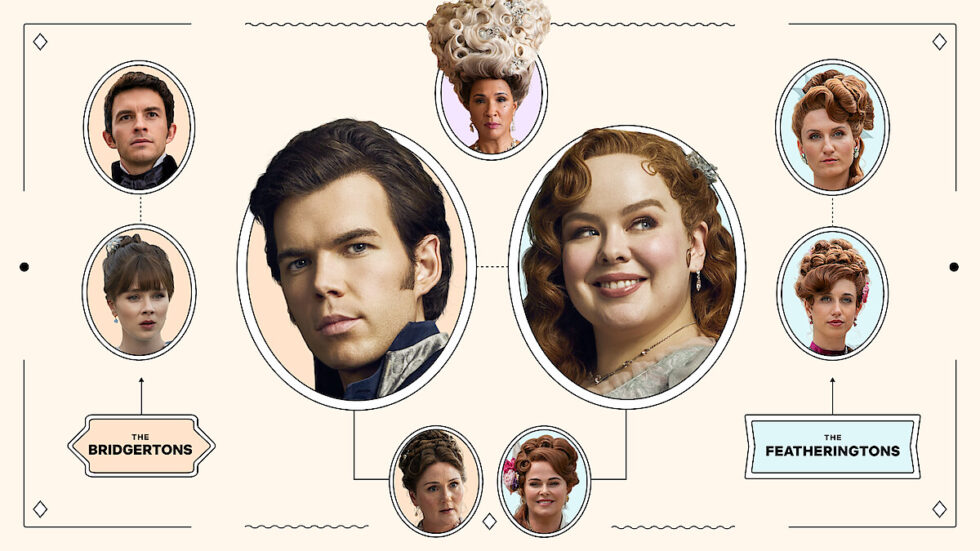
At the centre of this controlled return stands Lady Violet Bridgerton, portrayed by Ruth Gemmell, overseeing the household with familiar authority. Yet one absence is immediately noticeable. Benedict Bridgerton does not appear alongside his siblings, nor does he participate in the family’s reunion following the marriage of Penelope Featherington and Colin Bridgerton.
Lady Violet’s concern is unmistakably personal. Assisted by Footman John, she attempts to check on Benedict in his private quarters — only to be politely turned away. The implication is deliberate: Benedict has withdrawn not just from society, but from visibility itself. This quiet opening reframes Benedict as a character in emotional retreat rather than ironic detachment.
Who is Bridgerton Season 4 about
Bridgerton Season 4 focuses on Benedict Bridgerton, the family’s second-eldest son and its most consistent outsider. Artistically inclined and resistant to marriage, Benedict has long stood apart from the ton’s rituals, observing rather than committing, protected by privilege but uneasy with expectation.
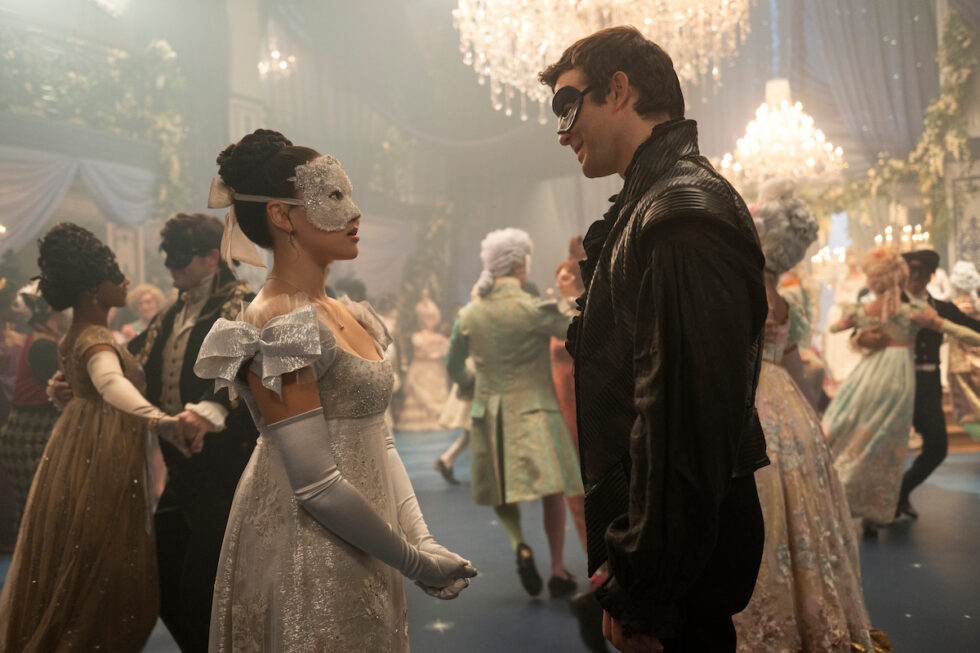
That detachment is challenged when he encounters a masked woman at Lady Violet Bridgerton’s masquerade ball — the enigmatic Lady in Silver. Unknown to Benedict, she is Sophie Baek, a maid whose everyday reality sits far below his social world.
Season 4 is driven by this collision between fantasy and constraint. Benedict falls in love with an ideal shaped by anonymity, while Sophie must navigate the risks of visibility in a rigid class system. Their story reframes the season around identity, privilege and the cost of being seen, making Benedict’s emotional awakening the core of the narrative.
Sophie Baek and the central romance in Bridgerton Season 4 explained
Sophie Baek, portrayed by Yerin Ha, is introduced in Bridgerton Season 4 as a maid working at Penwood House under the authority of new characters Araminta Gun, Rosamund Li and Posy Li. Her daily existence is shaped by service, caution and enforced invisibility within the rigid social hierarchy of Regency London.
That reality fractures during Lady Violet Bridgerton’s masquerade ball. Masked and anonymous, Sophie briefly steps outside the markers of class and obligation. For Benedict Bridgerton, she becomes a figure of pure possibility — a connection free of context, expectation or consequence. For Sophie, the same moment carries genuine risk, exposing how fragile freedom can be when status is revealed.
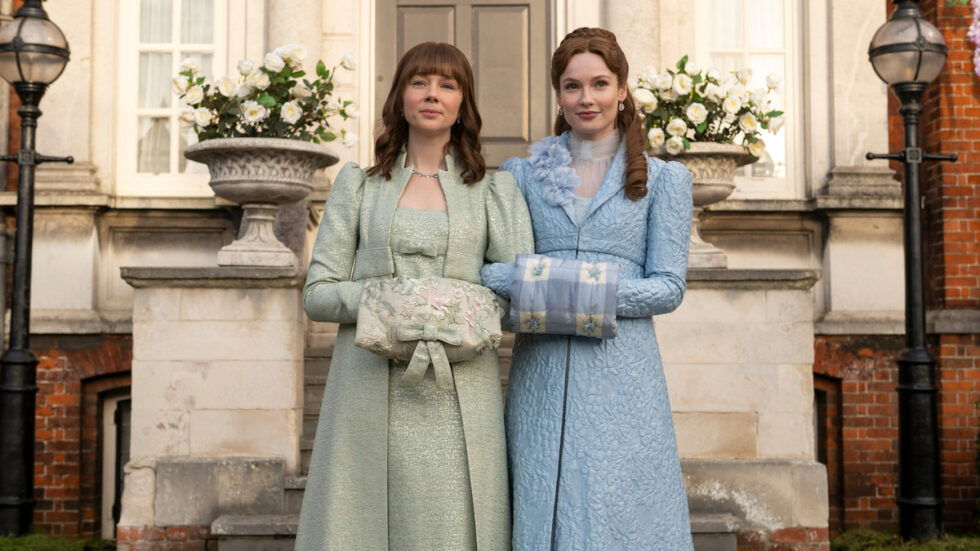
The emotional core of Season 4 emerges from this imbalance. Benedict searches London society for the mysterious Lady in Silver, while unknowingly forming a quieter, more grounded bond with Sophie in her everyday role. The audience, aware of her true identity, watches as longing and misunderstanding move steadily out of alignment. This dual narrative transforms the romance into something more than a fairytale. Desire is filtered through class, power and recognition, positioning Sophie not as an illusion to be found, but as a person whose visibility comes at a cost.
What Bridgerton Season 4 is based on and how the book is reimagined on screen
Bridgerton Season 4 is adapted from An Offer from a Gentleman by Julia Quinn, one of the most widely read and discussed novels in the Bridgerton series. Often described as a Cinderella-inspired romance, the story centres on a chance encounter at a masquerade ball that binds two people from opposite ends of the social hierarchy.
While the television adaptation preserves the novel’s core structure, it significantly deepens Sophie’s character. Rather than functioning as a romantic ideal shaped by circumstance, Sophie is portrayed as someone actively negotiating survival, dignity and moral compromise within a rigid class system. Showrunner Jess Brownell has emphasised that Sophie is not written as a passive heroine waiting to be discovered. Her choices, constraints and strategies form the emotional backbone of the season. Benedict, by contrast, exists within a world of privilege largely insulated from consequence. The series positions their relationship as viable only if both characters move toward a shared middle ground — between fantasy and reality, desire and responsibility, status and self-awareness.
Bridgerton Season 4 explores servants’ lives and class divide “downstairs”
One of the most significant tonal shifts in Bridgerton Season 4 is its expanded focus on servants and household staff, marking a deliberate move toward a more class-conscious narrative. The opening sequence unfolds as an almost continuous passage through Bridgerton House, drawing attention to the invisible labour that sustains aristocratic life.
Rather than functioning as background detail, footmen, maids and valets are integrated directly into the storytelling, reshaping how power, romance and privilege are presented on screen.
This new “downstairs” focus serves several narrative purposes:
- it highlights the scale of work required to maintain upper-class comfort and social ritual
- it reinforces the rigid class boundaries that define Benedict and Sophie’s relationship
- it shifts perspective away from spectacle toward lived experience and constraint
- it gives narrative weight to characters traditionally treated as decorative
- it reframes romance as something shaped by power imbalance, not just desire
This change is structural rather than cosmetic. By repositioning servants within the story’s emotional and social framework, Bridgerton Season 4 subtly alters the way class and intimacy are understood — particularly for a UK audience attuned to period drama traditions.
Returning characters and continuity from Season 3
Season 4 maintains continuity while narrowing emotional focus. Penelope Featherington and Colin Bridgerton, portrayed by Nicola Coughlan and Luke Newton, return as a married couple adjusting to parenthood, offering a counterpoint to Benedict’s uncertainty.
Eloise Bridgerton re-enters society more measured than before, while Francesca Bridgerton continues her understated arc alongside Lord John Stirling. Small visual cues — including Hyacinth Bridgerton’s more mature styling — quietly signal the passage of time within the family. These elements anchor the season for long-term viewers without competing with the central romance.
Season 4 feels different for UK viewers, not because Bridgerton has changed its world, but because it has changed its tempo. The story allows silences to linger, emotions to remain unresolved and desire to exist without immediate reward. In doing so, it restores a sense of anticipation that earlier seasons often rushed past. The relationship at its centre — shaped by class, invisibility and longing — feels quietly familiar to British period drama traditions. Yet it also speaks to modern audiences, less interested in spectacle and more drawn to emotional truth. Season 4 does not ask to be consumed quickly. It asks to be felt — and to be waited for.
Read about the life of Westminster and Pimlico district, London and the world. 24/7 news with fresh and useful updates on culture, business, technology and city life: When is WWE Royal Rumble 2026, what time does it start in the UK and how can fans watch live on Netflix