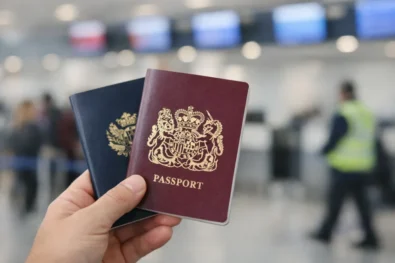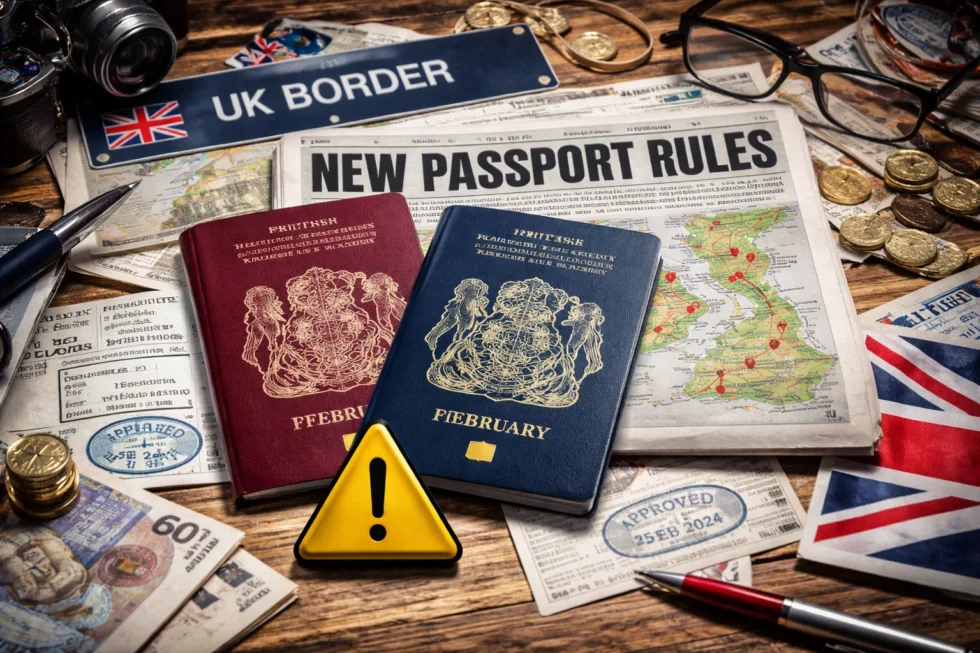
British passport rules for british dual citizenship holders will change on 25 February 2026, ending the long-standing ability of British nationals abroad to enter the UK using only a foreign passport. From that date, airlines and digital border systems will require dual British citizens to present either a valid British passport or a certificate of entitlement before travel and on arrival. The Home Office has confirmed the rule will be enforced across all overseas departures. This is reported by the British newsroom of The WP Times, citing Home Office guidance, House of Commons briefings and reporting by The Independent.
The measure affects millions of dual nationals in Australia, the European Union, North America and Asia and is linked to the UK’s expanding Electronic Travel Authorisation (ETA) system, which requires immigration status to be verified before passengers are allowed to board.
What the new British passport rules require
From 25 February 2026, anyone who holds British or Irish citizenship — even if they also hold another nationality — must prove that status at the point of departure when travelling to the United Kingdom. Under new Home Office carrier-liability rules, airlines, ferry operators and international rail companies will be required to refuse boarding unless one of the following documents is presented:
- a valid British passport
- a valid Irish passport
- or a certificate of entitlement endorsed inside a foreign passport
These are the only documents recognised by the Home Office’s immigration and transport-provider guidance. Other evidence of nationality — including expired UK passports, naturalisation certificates or citizenship registration papers — will no longer be accepted for travel to the UK, even if the individual is legally British.
Until now, many dual nationals were able to travel on an Australian, EU or US passport and have their British status confirmed on arrival. That approach will cease once the UK’s digital pre-departure checks come into force. Under the new system, a passenger’s right of entry must be verified before they are allowed to board, not after they land. A Home Office spokesperson said:
“From 25 February 2026, all dual British citizens will need to present either a valid British passport or certificate of entitlement to avoid delays at the border.”
Who is affected by the British passport rule
The new British passport rules for british dual citizenship apply to all British nationals who also hold another passport and are living or travelling outside the United Kingdom. This includes several million people across key migration and travel corridors.
Those directly affected include:
- Australians with British or Irish nationality, who have traditionally travelled to the UK on Australian passports
- EU citizens with British citizenship, particularly residents of Ireland, Spain, France and Germany
- British citizens living in the United States, Canada and Asia, who frequently travel on US, Canadian or regional passports

The change applies regardless of where the traveller lives, how long they have been abroad, or which passport they usually use.
Travellers who enter the UK on or before 24 February 2026 may still travel using a foreign passport. From 25 February 2026, airlines, ferry operators and rail carriers will be legally required to refuse boarding unless British status is confirmed in advance using a British passport, Irish passport or certificate of entitlement. This is because the UK’s border system now places the legal responsibility on transport providers rather than border officers to verify nationality before departure.
A House of Commons briefing explained:
“Carriers are unlikely to deviate from the guidance because they can be penalised for bringing inadequately documented passengers to the UK.”
In practical terms, this means that a British citizen travelling on an Australian, EU or US passport without the required UK documentation may be denied boarding overseas, even though they are legally entitled to enter Britain.
How much the British passport rule will cost dual citizens
The new British passport rules for british dual citizenship mean that millions of overseas Britons will need to pay for new documents in order to continue travelling to the UK. The fees vary depending on whether a person applies from inside the UK or from abroad, but the financial impact is immediate for anyone without a valid British or Irish passport.
Current official government fees
| Document | Cost |
|---|---|
| British adult passport | £94.50 (higher when applying overseas) |
| Irish passport | €75 |
| Certificate of entitlement | £589 |
| Renunciation of British citizenship (Australia) | about A$966 |
For Australians, the real cost of obtaining a British passport from overseas is higher than the UK base fee. Including courier and overseas processing charges, applicants are paying around A$280 to obtain a UK passport in time for the February deadline.
The certificate of entitlement is the most expensive option and is intended for British citizens who wish to continue travelling on a foreign passport. It must be renewed if the passport it is attached to expires, creating further long-term costs for frequent travellers.
What is a certificate of entitlement under British passport law
A certificate of entitlement is an official Home Office endorsement placed inside a foreign passport confirming that the holder has the right of abode in the United Kingdom. It allows a British citizen to travel using a non-UK passport while still being recognised as British by airlines and border systems. The UK government states:
“You cannot get a certificate if you already have a British passport or a valid certificate of entitlement in another foreign passport.”
Applicants living outside the UK must apply online and attend an appointment at a visa application centre, where their identity and citizenship records are verified. The Home Office explains the processing timeline: “You’ll usually get a decision on your application within 3 weeks of attending an appointment at a visa application centre.” For dual citizens who travel frequently, the certificate of entitlement is often seen as a practical alternative to holding multiple passports — but it is also the most expensive way to comply with the new British passport rules.
Why the UK is enforcing the British passport rule now
The enforcement of the new British passport rules for british dual citizenship is directly linked to the UK’s national rollout of Electronic Travel Authorisations (ETAs) across all visa-free routes into the country. Under this system, immigration status must be verified before departure, rather than on arrival, as ETAs are integrated into airline, ferry and rail booking platforms.
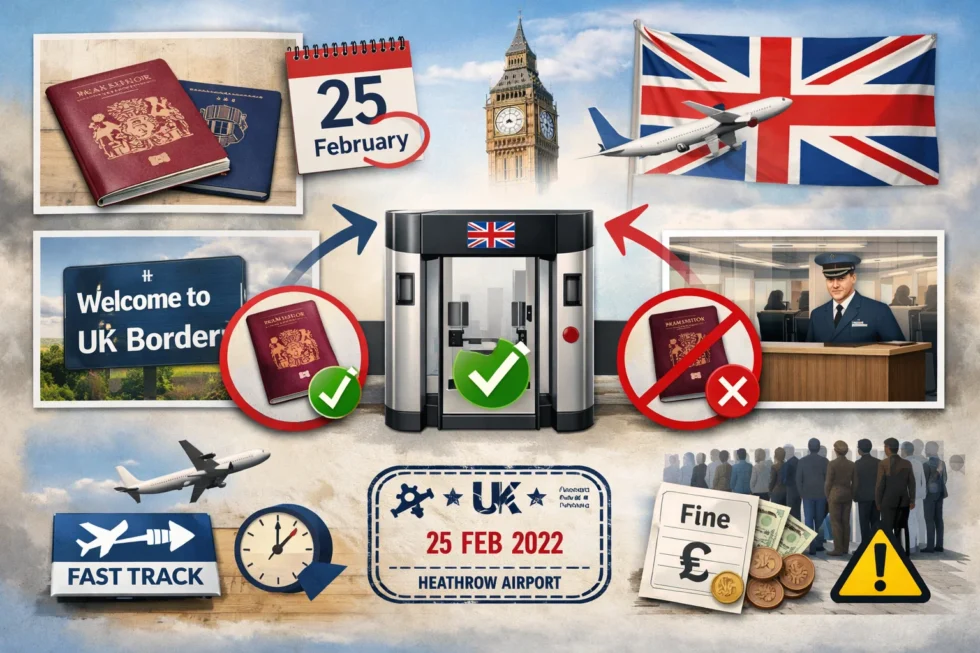
British and Irish citizens are legally exempt from needing an ETA. However, under the digital border system that exemption only applies when airlines can positively identify a passenger as British or Irish at check-in. If that status cannot be confirmed electronically, the system classifies the traveller as a foreign national and denies boarding in order to prevent breaches of carrier-liability rules.
The Home Office said: “Digitising the immigration system using ETAs ensures millions of people enjoy a more seamless travel experience to the UK and gives us a fuller picture of immigration.”
A House of Commons briefing noted that while British law does not require citizens to hold a British passport, pre-departure carrier checks make alternative proof of nationality unusable in practice. Airlines face fines and operational penalties if they transport passengers without the correct digital clearance, meaning they will only accept documents listed in official Home Office guidance.
Where and how dual citizens can obtain the required documents
Applications for British passports and certificates of entitlement are processed through the UK government’s central systems and are valid for travel to all parts of the United Kingdom, including England, Scotland, Wales and Northern Ireland.
British passport applications are made online through HM Passport Office and are processed in the UK, with biometric data collected at overseas Visa Application Centres. Certificate of entitlement applications are handled by UK Visas and Immigration (UKVI) through its global visa-centre network. Appointments for fingerprinting and document checks are available in major international cities including London, Sydney, Melbourne, Paris, Berlin, New York, Toronto and Singapore, using the UK’s contracted visa service providers.
What British dual citizens should do now
British nationals living abroad are being advised to review their travel documents well in advance of any journey to the UK. From 25 February 2026, entry will only be permitted if one of the following is presented and verified at check-in:
- a British passport
- an Irish passport
- or a certificate of entitlement
Australians who do not hold British or Irish citizenship will continue to travel using the UK’s ETA system, which currently costs about A$32. However, Smartraveller has warned that:
“These dual citizens are unable to obtain an ETA or visa to enter the UK.” In practical terms, this means a British citizen travelling on an Australian, EU or US passport without the required UK documentation may be denied boarding overseas, even though they are legally entitled to enter the United Kingdom.
Where to get official help and apply
All applications for documents required under the British passport rule for british dual citizenship are handled by UK government agencies through the GOV.UK system.
HM Passport Office (British passports)
This is the authority that issues UK passports worldwide. Website: https://www.gov.uk/apply-renew-passport
Telephone (UK):
0300 222 0000
Telephone (outside the UK):
+44 300 222 0000
Postal address:
HM Passport Office
PO Box 767
Southport
PR8 9PW
United Kingdom
Fast-track passport offices in the UK operate in London, Liverpool, Peterborough, Newport, Durham, Glasgow and Belfast. Appointments must be booked online via GOV.UK.
UK Visas and Immigration – UKVI (Certificates of entitlement)
This is the Home Office unit responsible for certificates of entitlement and right-of-abode documents. Website: https://www.gov.uk/contact-ukvi-inside-outside-uk
Home Office address:
UK Visas and Immigration
2 Marsham Street
London
SW1P 4DF
United Kingdom
Applications for certificates of entitlement must be made online and then completed at a Visa Application Centre.
Visa Application Centres (biometrics and document checks)
Biometric appointments are provided by UK-contracted centres operated by VFS Global or TLScontact. Centres are located in major cities including: London, Sydney, Melbourne, Paris, Berlin, New York, Toronto and Singapore Appointments are booked through the UKVI online system after submitting an application.
Travel advice for Australians
Smartraveller (Australian Government) Website: https://www.smartraveller.gov.au Smartraveller has confirmed: “These dual citizens are unable to obtain an ETA or visa to enter the UK.”
Read about the life of Westminster and Pimlico district, London and the world. 24/7 news with fresh and useful updates on culture, business, technology and city life: Why did the US suspend the Diversity Visa green card programme after the Brown University shooting