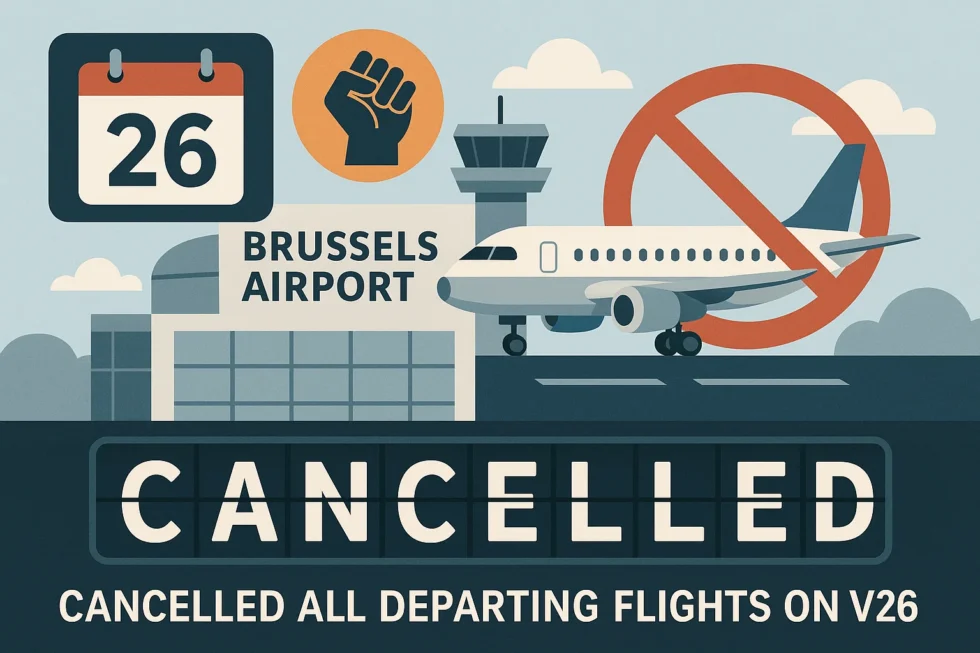
Brussels Airport is facing unprecedented disruption as all departing passenger flights scheduled for November 26, 2025, have been cancelled due to a major national strike, a situation confirmed by airport management on November 20, 2025. This decision, announced six days prior to the event, is projected to affect over 60,000 passengers, a figure consistent with the average daily throughput reported by the airport authority. The strike, organised by major Belgian trade unions, affects not only airline ground staff but also security personnel and air traffic controllers (ATC), making normal operations impossible. The complete cancellation of all outbound services is a drastic measure, reflecting the expected high participation rate among various employee groups across the airport ecosystem. This widespread action, stemming from disagreements over rising living costs and wage negotiations stalled since mid-2025, forces airlines and travellers to seek urgent alternatives. The impact extends beyond Belgium, disrupting connections across the European Union, where Brussels serves as a key hub, reports The WP Times with reference to the Reuters.
Brussels Airport: Key Details on the November 26 Strike Action
The complete halt of all departing passenger traffic at Brussels Airport (BRU) on Wednesday, November 26, 2025, stems from a coordinated national day of action. This action is primarily driven by Belgium's three main trade unions—the FGTB, CSC, and CGSLB—protesting against national austerity measures and demanding greater purchasing power for employees. The decision to cancel all outbound flights was deemed necessary by airport management because participation is expected to be high among critical service providers. These services include baggage handling, fueling, security checks, and air traffic control (ATC). The cancellation impacts approximately 280 scheduled passenger departures. The airport authority confirmed that while inbound flights will mostly operate, significant delays are highly likely due to reduced ground staff, advising incoming passengers to expect long waits. The strike represents a dramatic escalation in industrial relations, especially concerning the transport sector which, according to a 2024 Eurostat report, saw an average of 4.2 lost working days per 1,000 employees due to strikes in Belgium.
The management’s early announcement (November 20) is intended to provide passengers and airlines with maximum lead time to rearrange their travel plans. It allows carriers to consolidate their schedules and potentially reschedule flights to the following days or reroute services via neighbouring countries. The focus of the airport's communication is now squarely on managing the passenger flow and ensuring safety on the ground on the day of the disruption. Here are the confirmed operational details for the day of the strike:
- Date of Strike: Wednesday, November 26, 2025
- Affected Flights: All departing passenger flights (approximately 280 scheduled services)
- Status of Inbound Flights: Services are expected to land but will face significant delays
- Affected Passengers: Estimated over 60,000 people
- Main Affected Airlines: Brussels Airlines, Ryanair, TUI fly Belgium (based on typical traffic volume)
Impact on the United Kingdom: Disruption to UK-Belgium Travel
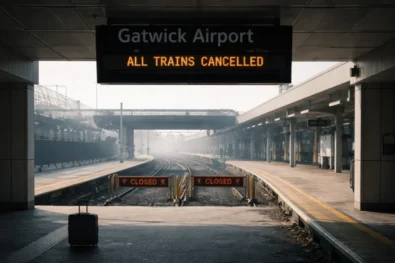
The extensive nature of the Brussels Airport strike carries substantial consequences for travellers and airlines connecting Belgium and the United Kingdom, one of Brussels' busiest international routes. The cancellation of all outbound flights directly impacts the dozens of daily services operated by carriers like British Airways, easyJet, and Ryanair between Brussels and major UK hubs such as London Heathrow (LHR), London Gatwick (LGW), and Manchester (MAN).
For UK travellers, the primary issue is the automatic cancellation of their return journeys if they are currently in Belgium or scheduled to fly out of Brussels on November 26. These passengers must urgently secure alternative transport, potentially involving Eurostar rail services from Brussels-Midi station to London St Pancras or re-routing via Amsterdam or Paris. Conversely, flights inbound from the UK on November 26 are still scheduled to land, but passengers should prepare for severe disruption upon arrival, including potential delays to baggage handling and limited onward transport options due to expected widespread strikes on Belgian national rail services. Aviation experts note that the UK-Belgium route often sees high volumes of business traffic, meaning the economic impact on sectors like finance and European headquarters relying on these quick commutes will be particularly pronounced.
This is what passengers whose flights are cancelled must demand from their airline under EU law:
- Full monetary refund for the cancelled flight.
- Re-routing to the final destination at the earliest possible time.
- Re-routing at a later date convenient to the passenger.
- Provision of assistance (meals, refreshments, and accommodation if necessary) for delays over five hours.
Alternative Travel Options and Adjacent Airports
Given the extensive nature of the strike, passengers are urgently looking for viable alternatives, focusing on neighbouring airports in Belgium and adjacent countries. The most practical alternative airports for the approximately 60,000 affected passengers are those easily accessible by high-speed rail or regional transport, minimising further logistical complications.
1. Charleroi Airport (Brussels South)
While nominally serving Brussels, Charleroi (CRL) is primarily used by low-cost carriers like Ryanair. Although it is outside the main union’s focus, staff participation in the national day of action may still lead to delays, meaning it should be considered a secondary backup.
- IATA Code: CRL
- Distance to Brussels: Approximately 60 km south.
- Focus: Mainly low-cost short-haul flights.
2. Amsterdam Schiphol (AMS)
As one of Europe's largest hubs, Schiphol offers numerous alternative long-haul and short-haul connections. Its accessibility via the Thalys and Intercity rail network makes it a highly attractive option, despite the inevitable demand-driven price increases.
- IATA Code: AMS
- Distance to Brussels: Approximately 175 km north.
- Focus: Global hub, excellent rail connections.
3. Paris Charles de Gaulle (CDG)
CDG serves as another major European hub, offering extensive capacity. The high-speed Thalys line connects Brussels and Paris in under 1 hour and 30 minutes, making re-routing feasible for flights operated by major carriers like Air France or Brussels Airlines partners.
Passengers should be aware that neighbouring airports are already experiencing high demand, and booking alternative flights, especially for long-haul routes, may result in significant price hikes. According to data from Skyscanner on November 20, 2025, alternative flights from AMS and CDG for November 26 showed an average price increase of 35% compared to non-peak days. Early booking is therefore paramount.
Economic and Logistical Impact of the Brussels Strike
The decision to cancel all departing flights on November 26 has significant economic and logistical ramifications for the Belgian economy and the European transport network. The direct daily loss to the Belgian aviation sector, encompassing airport fees, retail, and ground services, is estimated by the Federation of Belgian Enterprises (FEB) to be in the tens of millions of euros. Furthermore, the strike severely impacts the cargo sector, although cargo flights are generally expected to proceed with delays. Brussels Airport handles a substantial amount of freight, and disruptions here affect supply chains across Europe. The national strike is also expected to halt parts of the public transport system, including the Belgian rail network (SNCB/NMBS) and local transport operator STIB/MIVB, which further complicates the logistical nightmare for the thousands of travellers and commuters.
The overall context of the industrial action reveals deep-seated national discontent. The unions' demands focus on the country's wage indexation mechanism and higher purchasing power, citing official Belgian statistics from October 2025 showing inflation reaching 4.1% year-on-year. This level of coordinated action indicates a strategic move by the unions to pressure the government and employers ahead of the Christmas period. The cancellation of flights underscores the critical interdependence of the various services within the airport ecosystem; the absence of security staff alone is sufficient to justify the ground stop. The long-term effects could include a loss of confidence among carriers, potentially leading to a shift of some routes to more stable hubs like Frankfurt or Amsterdam.
The complete cancellation of all outbound flights from Brussels Airport on November 26, 2025, due to a national strike is a massive disruption affecting tens of thousands of travellers and the Belgian economy. Passengers must prioritize immediate communication with their airlines to arrange refunds or re-routing via alternative European hubs, as the airport itself will be functionally closed for departures.
Read about the life of Westminster and Pimlico district, London and the world. 24/7 news with fresh and useful updates on culture, business, technology and city life: Black Friday 2025: How to Survive the Oxford Street Discount Marathon and Find the Best Deals