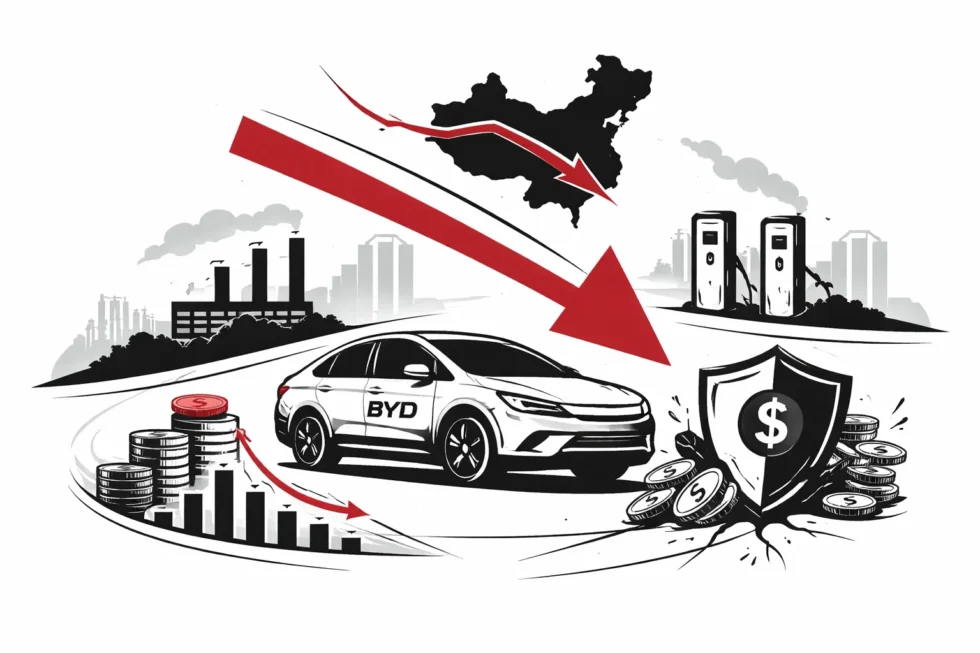
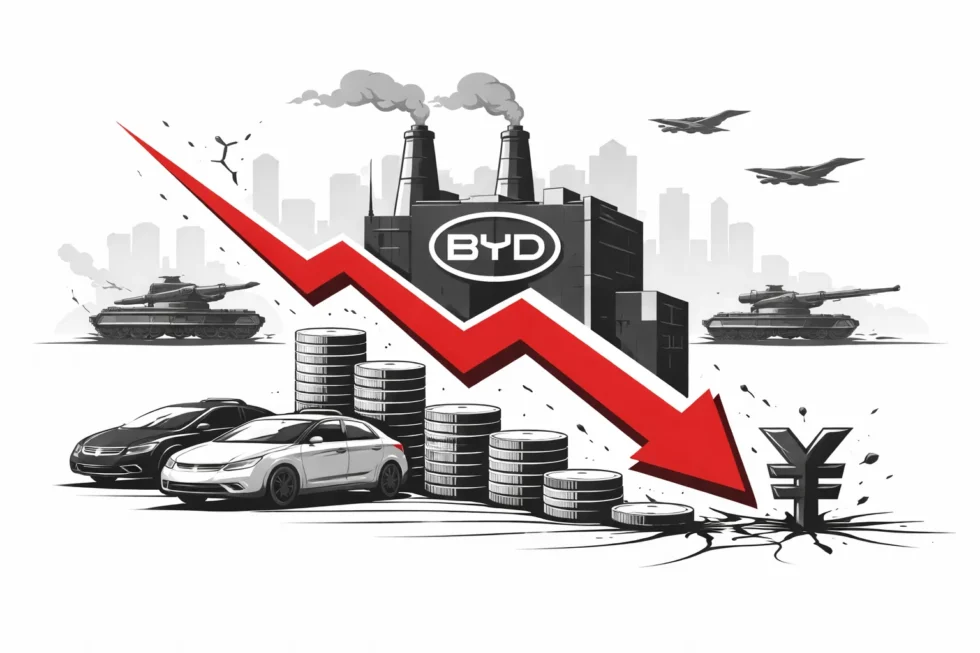
China’s largest electric vehicle maker BYD has reported its slowest annual sales growth in five years, as a deepening price war, falling margins and rising competition from domestic rivals begin to undermine the company’s once-dominant position in the world’s biggest car market. As The WP Times reports, citing Reuters, the figures show that BYD’s expansion is now being driven increasingly by overseas markets rather than by China itself.
BYD said full-year vehicle sales in 2025 rose just 7.73% to 4.6 million units, a sharp slowdown from the double-digit growth rates that powered its rise to global leadership. The company also revealed that December sales fell 18.3% year-on-year, marking the fourth consecutive month of decline and the steepest monthly drop in nearly two years. For investors and competitors alike, the message is clear: the era of effortless growth in China’s EV sector is over.
China’s EV boom turns into a price war
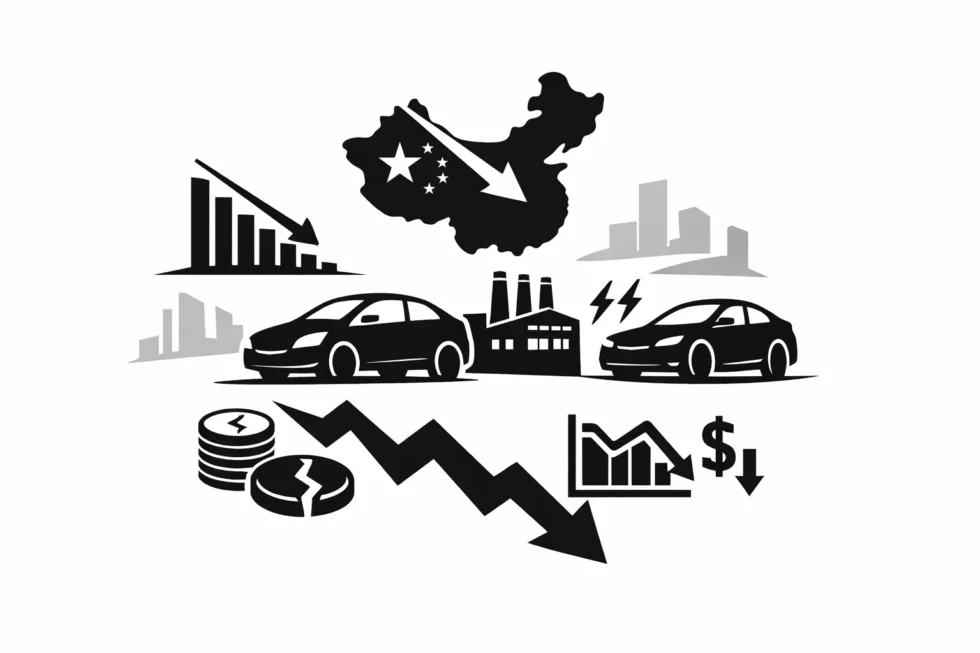
BYD’s difficulties come as China’s car market enters its most aggressive phase of competition in decades. More than 100 electric vehicle brands now fight for buyers, with Geely, Leapmotor and dozens of smaller manufacturers flooding the budget segment that once belonged almost entirely to BYD.
In response, BYD cut prices on more than 20 models in May 2025, triggering a sector-wide stock sell-off and forcing rivals to follow with their own discounts. Great Wall Motor’s chairman issued a rare public warning, saying China’s auto industry had become “unhealthy” due to destructive price competition. Instead of stimulating demand, the cuts exposed how thin margins had become.
BYD was forced to slow production and delay capacity expansion in mid-2025, a dramatic reversal for a company that had been racing to build factories only a year earlier.
Weakening technology leadership
The slowdown is not only about price. At an investor conference in December, BYD chairman Wang Chuanfuacknowledged that the company’s technological lead has narrowed, according to Chinese media reports.
Although BYD rolled out advanced driver-assistance systems on cars priced below $10,000 and launched ultra-fast charging models in early 2025, rivals quickly matched those features. Innovation has become commoditised, eroding BYD’s premium in the domestic market. Wang promised “major innovations” in 2026, but offered no details.
BYD’s internal finances have also come under strain. In November, the company told some suppliers it planned to stop paying them with in-house financial notes — a controversial practice that had helped fuel its rapid expansion but was widely criticised for shifting risk onto smaller parts makers. That move signals tighter liquidity and rising pressure to normalise its cash flow as growth slows.
Exports now drive the business
While China cools, BYD is surging abroad. In 2025, the company sold 1,046,083 vehicles outside China, a 150.7% increase compared with 2024 — a record for the group. Europe has become BYD’s most important growth engine, with sales accelerating in Germany, the UK, Spain and the Nordic markets. BYD now aims to sell up to 1.6 million cars overseas in 2026, a figure that would make it one of the world’s largest exporters of electric vehicles.
Outselling Tesla for the first time
Thanks to its international push, BYD is on track to overtake Tesla in full-year electric vehicle sales. In 2025, BYD sold 2.26 million fully electric vehicles, up 27.9% year-on-year. Tesla, by contrast, is expected to deliver 1.64 million vehicles, an 8.3% decline, according to analyst consensus.
Tesla’s retreat from the mass-market segment — after abandoning its planned $25,000 EV in favour of AI and robotaxi development — has opened the door for BYD’s lower-priced Ocean and Dynasty ranges to dominate Europe and emerging markets.

What this means for the global EV industry
BYD’s deceleration in China reflects a structural shift rather than a loss of competitiveness. The domestic electric-vehicle market has moved into a mature, late-cycle phase, characterised by price compression, technology convergence and excess manufacturing capacity. In such conditions, volume growth gives way to margin erosion, and only producers with scale, cost control and export reach can sustain profitability.
For global markets, the implications are significant. As domestic returns tighten, Chinese manufacturers — led by BYD — are increasingly compelled to push production into Europe and other overseas markets, exporting not only vehicles but also the pricing pressure created by China’s internal oversupply. This will translate into lower retail prices, higher promotional activity and shrinking margins for established Western carmakers.
Tesla faces a particular strategic test. While it has repositioned itself toward software, autonomy and premium branding, BYD is advancing through industrial scale, vertical integration and aggressive cost engineering. The competitive balance in global electric vehicles is therefore shifting from technological differentiation toward manufacturing economics — a domain in which Chinese producers currently hold a decisive advantage. BYD’s growth in China may be slowing, but its role in reshaping the global automotive market is only beginning.
Read about the life of Westminster and Pimlico district, London and the world. 24/7 news with fresh and useful updates on culture, business, technology and city life: Who is on the Military New Year Honours List 2026? Full British Army awards, London and UK impact