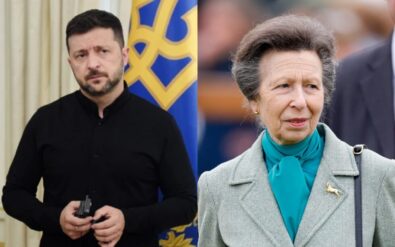
Catherine, Princess of Wales made rare public comments about the private cost of cancer treatment on her children, parents and wider family during an emotional visit to The Christie NHS Foundation Trust in Manchester on 4 June 2026, where she met patients, staff and families dealing with cancer beyond the hospital ward. The Princess, who completed chemotherapy in 2024 and later said she was in remission, spoke to a young breast cancer patient marking the end of treatment and acknowledged that illness is not carried by one person alone, The WP Times reports.
The visit was carefully framed around holistic cancer care, but its most powerful moment came in a quiet exchange with Claire Lorente, 30, who was preparing to ring a bell to mark the end of her breast cancer treatment. Catherine hugged her, congratulated her and then turned attention to the family standing beside her. The message was direct: cancer treatment changes the rhythm of a household, unsettles children, tests partners and pulls parents into a new kind of fear and support.
Catherine Princess of Wales cancer comments revealed the family burden behind treatment
Catherine’s comments were rare because the Princess of Wales has usually spoken about her illness in carefully controlled public messages. During this visit, however, the conversation moved from medical treatment to the emotional life around it. Speaking to the patient’s partner, she said she knew how hard cancer was for families and loved ones. She also referred to the impact on her own children and parents, making clear that diagnosis and recovery are not isolated events inside a clinic.
That point matters because the Princess has three young children with Prince William: Prince George, Princess Charlotte and Prince Louis. Her cancer diagnosis came after planned abdominal surgery in January 2024, with the public informed in March 2024 that cancer had been found and that she was undergoing preventative chemotherapy. By September 2024, she said chemotherapy had been completed, while in January 2025 she described herself as being in remission. The type of cancer has never been disclosed, and the royal household has kept the medical details private.
The Manchester visit therefore carried two layers. Officially, it highlighted patient-centred cancer care and the role of complementary support alongside clinical medicine. Personally, it showed how Catherine is now using parts of her own experience to connect with patients who are still in treatment or just emerging from it.
Key facts from the visit:
| Detail | What happened |
|---|---|
| Date | 4 June 2026 |
| Place | The Christie NHS Foundation Trust, Manchester |
| Main theme | Holistic therapies alongside clinical cancer care |
| Patient moment | Claire Lorente rang the bell after finishing breast cancer treatment |
| Catherine’s message | Cancer affects children, parents, partners and loved ones |
| Royal context | Catherine completed chemotherapy in 2024 and later said she was in remission |
Why the Manchester cancer centre visit became one of Kate’s most emotional engagements
The Christie visit was not a routine royal appearance. The centre is one of the most important cancer institutions in Europe and treats tens of thousands of patients each year. Catherine met patients receiving chemotherapy, spoke with staff and learned about services designed to support people emotionally and psychologically as well as medically. These included art therapy, complementary therapy, spiritual care and support for young adults.
The emotional centre of the engagement was the meeting with Claire Lorente. Claire was marking her final day of breast cancer treatment, a milestone that many cancer patients recognise as both joyful and difficult. Catherine congratulated her and embraced her before the bell-ringing moment. She also spoke to Claire’s family, including her partner and baby, and underlined that loved ones go through the illness with the patient.
That exchange made the visit more than symbolic. It connected royal visibility with a common experience inside cancer care: the patient is treated by doctors, but the family lives through the uncertainty, exhaustion and fear at home. Catherine’s reference to her own children and parents gave the moment unusual weight, because it showed that even inside the protected world of the royal family, the emotional structure of cancer is familiar.
What Catherine said about children, parents and loved ones during cancer recovery
The Princess of Wales has previously said that she and Prince William needed time to explain her illness to their children in a way that was right for them. During the Manchester visit, she returned to that family dimension. Her words suggested that the hardest part of treatment is not only the medical procedure itself, but watching the people closest to you absorb the shock.
Prince William has also spoken about the couple’s decision to be open with their children. The approach was not to hide everything, but to communicate more clearly while still protecting them from unnecessary fear. That balance is difficult for any family, and it was one of the reasons Catherine’s remarks in Manchester resonated. She was not offering a polished royal statement; she was acknowledging a practical truth of cancer in family life.
For parents, the problem is especially sharp. Children may not understand medical language, but they quickly sense changes in routine, mood and physical energy. A mother in treatment may be present at home but unable to do everything she did before. A father or partner may need to carry more daily responsibility. Grandparents may become emotional anchors. Catherine’s comments placed all of those people inside the story.
How Prince George, Princess Charlotte and Prince Louis shaped the royal response
Catherine and William’s three children were central to how the couple handled the public and private sides of the illness. The family delayed some public explanation until the children had been told and had time to process the news. This was one reason the Princess’s March 2024 video message was so carefully worded: it had to inform the public without turning the children’s lives into a public drama.
The family strategy appears to have rested on three principles. First, tell the children enough so that they are not left guessing. Second, keep normal routines where possible. Third, allow Catherine space to recover without presenting illness as a permanent family crisis. This is also why later appearances and messages often placed recovery in the context of time, patience and family stability.
In Manchester, Catherine’s words gave that strategy a human frame. Her children were not named in detail, but the reference was clear. The illness had affected them, and that effect mattered.
How The Christie visit highlighted holistic cancer care in Britain
The Christie NHS Foundation Trust used the royal visit to draw attention to care that goes beyond chemotherapy, surgery and medicine. The centre offers complementary and holistic therapies to patients and carers, including services designed to ease anxiety, support emotional recovery and help patients regain a sense of control. Catherine visited the Oak Road Treatment Centre, met patients undergoing chemotherapy and joined an art session with people in treatment and recovery.
This was a deliberate choice of theme. Cancer treatment can be physically demanding, but the psychological pressure can continue after hospital appointments end. Patients may struggle with fear of recurrence, fatigue, changes in identity and the slow return to ordinary life. Holistic care does not replace clinical medicine; it supports patients through the parts of illness that do not always appear in scans or blood tests.
Catherine’s own public recovery has often used similar language. She has spoken about time, patience, nature, family and healing rather than presenting recovery as a simple return to normal. At The Christie, that personal vocabulary matched the institution’s message: cancer care is not only about treating disease, but also about helping people live through and after it.
What services were in focus at The Christie
The visit touched on several areas of support that are increasingly important in cancer treatment:
- art and creative expression for patients in treatment and recovery;
- complementary therapies designed to reduce stress and improve wellbeing;
- spiritual care for people facing fear, uncertainty or grief;
- dedicated support for teenagers and young adults;
- family-centred care that recognises the role of partners, parents and children;
- recovery support for patients after active treatment ends.
These services matter because treatment milestones do not always mean emotional closure. Ringing the bell at the end of treatment can be a moment of relief, but it may also begin a new phase of anxiety and adjustment. Catherine’s presence at that exact moment gave the engagement its public significance.
Why Catherine’s wardrobe carried symbolic detail during the engagement
The Princess of Wales also appeared to use clothing and accessories to support the tone of the visit. She wore a blue Eponine coat dress, a colour often associated with calm, care and health settings. She also wore bee-shaped earrings, a detail widely read as a nod to Manchester’s worker bee symbol. The result was not a fashion statement in the ordinary sense, but a visual language of place, care and continuity.
Royal wardrobes are often analysed too heavily, but in this case the symbolism was clear enough to be relevant. Manchester has a strong civic identity around the bee, and the visit was not only about national cancer care but about a specific institution serving patients in Greater Manchester and beyond. The blue coat dress also matched the seriousness of the engagement: formal, restrained and connected to healthcare.
The clothing did not overshadow the visit, and that was the point. It supported the mood without turning attention away from patients. The most important image remained Catherine standing beside a young woman at the end of cancer treatment and recognising the family standing around her.
What the Princess of Wales’ cancer timeline shows about her return to public duties
Catherine’s cancer story became public in stages. In January 2024, she underwent planned abdominal surgery. In March 2024, she announced that cancer had been found after the operation and that she was receiving preventative chemotherapy. In September 2024, she said she had completed chemotherapy. In January 2025, she said she was in remission.
Her return to royal duties has been gradual rather than immediate. That matters because it reflects the reality of recovery after serious treatment. Public life may resume before private stamina fully returns. The Manchester engagement suggested that Catherine is not simply returning to appearances, but choosing engagements that connect with her changed public identity.
Cancer has also affected the wider royal family. King Charles III announced his own cancer diagnosis in 2024, making cancer care and medical research more visible within royal work. Catherine’s visit to The Christie sits inside that broader context, but it remains distinct because it brought her personal experience directly into conversation with patients.
What this moment means for royal family news in Britain
For royal observers, the importance of the visit was not only that Catherine appeared in public. It was that she spoke with a level of directness about family pain that is uncommon in royal engagements. The Princess of Wales has long been associated with early childhood, family wellbeing and mental health. Her experience with cancer now gives that work a more personal dimension.
The visit also showed how the monarchy uses personal experience in public service. Catherine did not disclose medical specifics or turn the engagement into a personal interview. Instead, she used carefully chosen personal comments to validate the experience of another family. That distinction is important. The patient’s milestone remained the centre of the moment.
For the British public, the message was simple but serious: cancer treatment is not only a medical journey. It is a family event, a household disruption and an emotional test for children, partners, parents and carers. Catherine’s rare comments in Manchester made that reality visible without turning it into spectacle.
The reason the story travelled widely is that it joined two experiences: the extraordinary visibility of the Princess of Wales and the ordinary fear of a family facing cancer. Many people know the clinical language of treatment, but fewer public figures speak plainly about what it does to a family system. Catherine did so in a short, controlled and human way.
Her comments also arrived at a moment when cancer survivorship is increasingly discussed as a long-term issue. Treatment may end, but recovery can remain physically and emotionally complex. Families may need months or years to understand what has changed. Children may ask new questions later. Parents may still carry fear after remission. Partners may move from crisis mode into exhaustion. That is why the Manchester visit should be read as more than a royal appearance. It was a public recognition of the hidden work done by families during cancer treatment. Catherine, Princess of Wales did not present herself as the centre of the story. She used her own experience to make another family’s moment more visible — and to remind the public that recovery belongs not only to the patient, but to everyone who walks beside them.
Read about the life of Westminster and Pimlico district, London and the world. 24/7 news with fresh and useful updates on culture, business, technology and city life: UK Visa Changes 2026: What Foreign Workers Need To Know About New Salary Rules, English Tests And Settlement Delays