
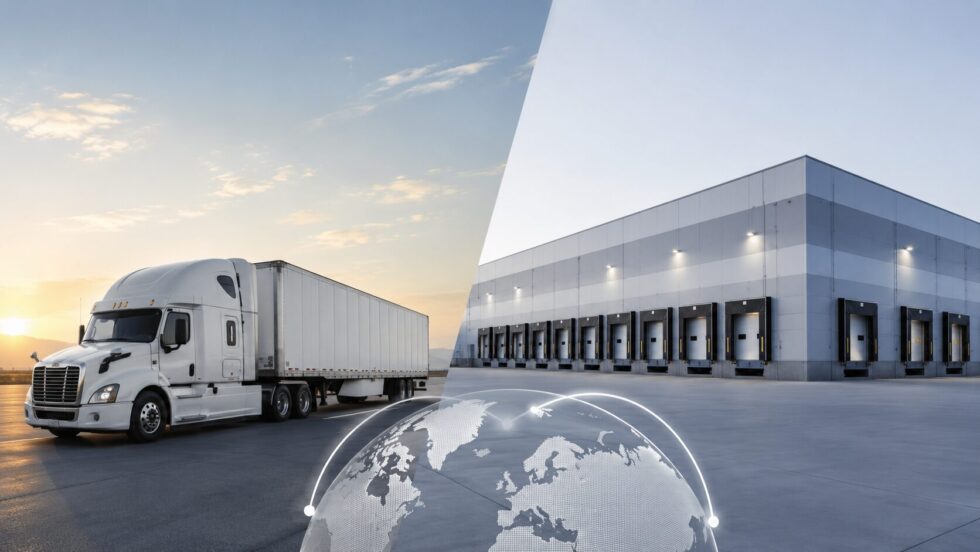
FedEx is accelerating a dual expansion strategy across the United States and Europe in 2026, combining workforce development in Arkansas with a €46 million logistics investment in the Netherlands as the company responds to rising freight demand, driver shortages and pressure on European road networks. In Harrison, Arkansas, the relaunch of the UA Northark CDL programme backed by donated tractors and trailers is designed to return commercial driver training to the region after an 18-month pause, while in Duiven, near the German border, FedEx is expanding one of its largest European road hubs to increase palletised freight handling capacity by more than 50 per cent. The developments arrive as the freight sector faces ongoing recruitment gaps, supply chain volatility and surging parcel volumes linked to ecommerce and premium airfreight demand, The WP Times reports within a wider examination of how logistics groups are redesigning infrastructure and workforce pipelines in 2026.
Across both projects, the strategy is not simply about moving more freight faster. FedEx is investing simultaneously in physical infrastructure, operational efficiency and labour supply at a moment when logistics operators across Britain, continental Europe and North America are struggling with ageing driver populations, seasonal pressure on networks and rising customer expectations around delivery reliability. The Arkansas CDL relaunch targets rapid workforce entry through four-week intensive programmes, while the Duiven expansion strengthens a core European freight corridor linking road and air cargo operations across the continent. Together, the projects illustrate how global logistics companies are increasingly tying local workforce investment to international network resilience.
FedEx Freight donation restarts CDL training in Arkansas
FedEx Freight’s donation of two tractors and two 48-foot trailers to UA Northark has allowed the college in Harrison, Arkansas, to revive its commercial driver’s licence training programme after operations were paused for approximately 18 months. The return of the programme is significant not only for students seeking rapid entry into the trucking industry but also for regional employers facing difficulties recruiting qualified drivers for long-haul and regional freight operations.
The college plans to restart the four-week intensive CDL programme during autumn 2026, with several training sessions expected throughout the year. The donated vehicles will allow students to train directly on industry-standard equipment rather than relying on limited or outdated resources. That practical element has become increasingly important as logistics companies demand drivers who can transition immediately into active fleet operations with minimal additional onboarding.
Rodney Myers, vice president of human resources at FedEx Freight, described the shortage of professional drivers as a continuing national issue affecting consumers, transport networks and logistics reliability. According to the company, investment in training pipelines has become essential because carriers across North America continue to compete aggressively for experienced drivers while older workers retire from the industry. The shortage has been worsened by pandemic-era disruptions, fluctuating freight cycles and the rising complexity of modern logistics systems.
UA Northark Chancellor Rick Massengale said the donation represented more than an equipment transfer. He framed the contribution as a direct investment in workforce readiness and economic opportunity across the region. The programme is expected to provide students with hands-on instruction aligned closely with real employer expectations, improving employability immediately after graduation.
Key details of the UA Northark CDL relaunch
| Category | Details |
|---|---|
| Location | Harrison, Arkansas |
| Institution | UA Northark |
| Programme type | Commercial Driver’s Licence (CDL) training |
| Programme length | Four weeks |
| Equipment donated | Two tractors and two 48-foot trailers |
| Donor | FedEx Freight |
| Restart timeline | Autumn 2026 |
| Previous pause | Approximately 18 months |
| Focus | Workforce development and hands-on logistics training |
Dr Lewis Villines, vice chancellor for workforce and technical education at UA Northark, said discussions with trucking companies had already begun regarding training requirements and operational standards. Rather than developing a generic curriculum, the college intends to align instruction with specific expectations from freight operators. That approach reflects a broader industry trend in which logistics employers increasingly influence technical education content to reduce retraining costs and accelerate recruitment.
The Harrison Chamber of Commerce also supported the relaunch, arguing that trucking remains deeply connected to regional economic development. In many smaller American cities and manufacturing regions, freight transport remains one of the most accessible pathways into stable middle-income employment without requiring a four-year university degree. The CDL relaunch therefore carries economic implications beyond transport alone, particularly in areas where industrial and warehousing sectors depend heavily on freight connectivity.
FedEx invests €46m to expand Duiven logistics hub
While FedEx strengthens workforce development in the United States, the company is also investing heavily in European infrastructure. FedEx has confirmed a €46 million expansion of its road hub in Duiven in the Netherlands, a strategically important logistics location positioned close to Germany and connected directly to major European freight corridors.
The project involves the procurement and development of a neighbouring facility that will significantly increase operational capacity. Palletised freight handling capability at the site is expected to rise by more than 50 per cent, while the addition of 65 new dock doors will bring the total number on site to 265. The investment is designed to improve freight flow efficiency and reduce pressure on first-mile and last-mile logistics operations. Safia Ladhari, managing director of network operations at FedEx, described the Duiven hub as one of the most technologically advanced road hubs within the company’s European network. Its geographical position allows freight to move rapidly between multiple European markets, supporting integrated road and airfreight operations across the continent.
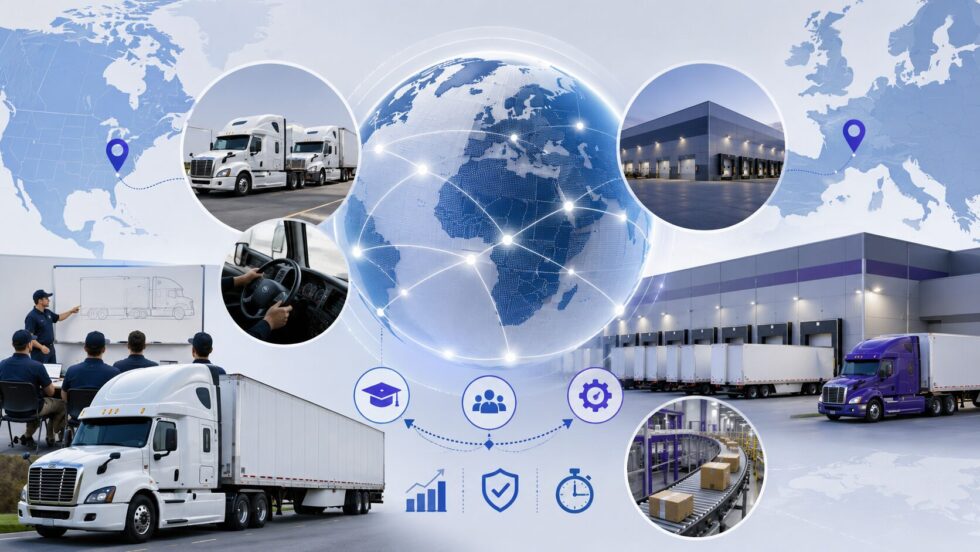
The expansion comes during a period of continued pressure on European logistics systems. Ecommerce growth, supply chain diversification and increasing demand for time-sensitive freight have forced carriers to redesign infrastructure networks to prevent bottlenecks during peak periods. FedEx said the Duiven facility had already experienced strong growth in parcel and freight volumes over the past year, especially during the year-end season.
What the Duiven expansion includes
- €46 million investment in logistics infrastructure
- Acquisition and development of neighbouring property
- More than 50 per cent increase in pallet freight handling capacity
- Addition of 65 dock doors
- Total dock doors rising to 265
- Improved direct-to-hub freight flows
- Reduced reliance on first- and last-mile transfer points
- Enhanced operational resilience during seasonal peaks
- Better integration between road and airfreight systems
The project will be completed in phases. The initial stage focuses on making the new facility operational as quickly as possible. Later phases will concentrate on improving connectivity between existing and new buildings while introducing additional efficiency measures across the site.
FedEx also linked the expansion to its ambitions in premium airfreight services. According to company figures presented during Investor Day 2026, the global airfreight market is valued at roughly €76 billion, with the premium segment accounting for approximately €19 billion. FedEx estimates it currently controls around 12 per cent of that premium market. That airfreight strategy relies heavily on integrated truck-fly-truck systems, where goods move efficiently between road and air transport without delays at regional transfer points. Duiven plays a critical role within that structure because of its continental connectivity and its proximity to major European transport routes.
Driver shortages and logistics pressure reshape freight strategy
The developments in Arkansas and Duiven reflect broader structural changes within global freight transport. Logistics operators are no longer investing solely in warehouses or fleet size. Increasingly, companies are attempting to secure labour pipelines, automate operational systems and strengthen network resilience simultaneously. Driver shortages remain among the most serious challenges facing the trucking industry in both North America and Europe. Many freight companies report difficulties attracting younger workers into long-haul driving roles, while older drivers continue leaving the sector through retirement. Training bottlenecks have compounded the problem because many educational institutions suspended or reduced programmes during previous economic disruptions.
At the same time, customer expectations continue to intensify. Businesses increasingly expect near-continuous freight movement, precise delivery windows and uninterrupted supply chain performance even during peak retail periods or severe weather events. That pressure has transformed logistics from a largely invisible infrastructure industry into a strategically critical economic sector.
Main pressures affecting the freight industry in 2026
| Industry challenge | Impact on logistics sector |
|---|---|
| Driver shortages | Reduced transport capacity |
| Ecommerce growth | Increased parcel volumes |
| Peak season demand | Network congestion risks |
| Labour ageing | Recruitment difficulties |
| Airfreight competition | Pressure on delivery speed |
| Supply chain disruption | Need for resilient hubs |
| Rising customer expectations | Demand for reliable service |
| Cross-border trade complexity | Greater operational planning |
Industry analysts increasingly view regional training partnerships such as the UA Northark programme as essential to stabilising freight labour markets. Without local CDL pipelines, carriers risk higher recruitment costs, longer onboarding periods and greater operational disruption.
Similarly, large logistics hubs such as Duiven are becoming more strategically valuable because companies need infrastructure capable of absorbing seasonal demand surges without causing delays across wider networks. Investments in automation, dock capacity and direct-to-hub freight routing are therefore being prioritised across Europe.
Quotes from industry and education leaders
“America is facing a serious shortage of professional drivers,” said Rodney Myers, vice president of human resources for FedEx Freight. “Developing professional drivers is critical to FedEx Freight, the industry and consumers.”
“On behalf of the college, we are deeply grateful for this generous donation of two trucks and trailers in support of our CDL training programme,” said Chancellor Rick Massengale of UA Northark. “This equipment will directly strengthen hands-on learning.”
“I’ve been on the phone this morning with different trucking companies,” said Dr Lewis Villines, vice chancellor for workforce and technical education at UA Northark. “Each company has its own training standards and requirements.”
“The Duiven hub is one of the largest and most technologically advanced FedEx road hubs within the European Road Network,” said Safia Ladhari, managing director of network operations at FedEx.
“Over the past year, the Duiven facility has seen strong growth in parcel and freight volumes, particularly during peak periods such as the year-end season,” Ladhari added.
Why FedEx’s 2026 strategy matters beyond logistics
The importance of these projects extends beyond the transport sector itself. Freight systems now underpin nearly every major economic activity, from manufacturing and retail to pharmaceutical supply chains and ecommerce fulfilment. When logistics networks slow down, disruption spreads rapidly into consumer markets and industrial production.
FedEx’s investments therefore reveal how major logistics companies are preparing for a future defined by higher delivery expectations, tighter labour markets and more volatile freight patterns. Training programmes and hub expansions are increasingly interconnected rather than separate initiatives. Companies need both infrastructure and labour to maintain operational reliability.
The Arkansas CDL programme also highlights how transport jobs remain economically significant in regional America. Four-week intensive programmes offering direct entry into employment can become important stabilising forces in smaller communities where industrial opportunities may otherwise be limited.
Meanwhile, the Netherlands continues strengthening its position as one of Europe’s most important logistics gateways. Facilities such as Duiven benefit from the country’s infrastructure connectivity, access to continental freight routes and strategic proximity to Germany, Belgium and major North Sea ports. FedEx’s investment reinforces the Netherlands’ importance within European distribution systems at a time when logistics operators continue redesigning networks around resilience and speed.
Frequently asked questions about FedEx, Duiven hub expansion and CDL driver training
Why is FedEx expanding its Duiven logistics hub in 2026
FedEx says the Duiven road hub in the Netherlands has experienced strong growth in parcel and freight volumes, especially during peak trading periods such as the year-end season. The €46 million investment is intended to increase operational capacity, improve freight flow efficiency and reduce pressure across the wider European network. The company also wants to strengthen direct freight movements between customers and the hub instead of relying heavily on first- and last-mile transfer locations.
How much larger will the Duiven facility become
FedEx says palletised freight handling capacity at the Duiven site will increase by more than 50 per cent after the expansion. The project will also add 65 new dock doors, bringing the total number at the facility to 265. The additional infrastructure is expected to improve loading efficiency and support higher freight volumes across continental Europe.
Why is the Duiven hub strategically important for Europe
Duiven is positioned close to major European freight corridors and connected to other FedEx road hubs across the continent. FedEx describes the site as one of the company’s largest and most technologically advanced road hubs within its European Road Network. The hub supports integrated truck-and-air cargo operations that help freight move between European markets more efficiently.
What is happening with the UA Northark CDL programme
UA Northark in Harrison, Arkansas, is restarting its Commercial Driver’s Licence training programme after an approximately 18-month pause. The relaunch became possible after FedEx Freight donated two tractors and two 48-foot trailers to the college. The programme is expected to return later in 2026 with four-week intensive training courses.
Why are CDL training programmes important for the trucking industry
Many logistics and transport companies continue to face shortages of qualified commercial drivers. CDL programmes help train new drivers quickly and provide hands-on instruction using industry-standard vehicles. Regional training centres are increasingly important because freight companies need workers who can move directly into active transport roles with minimal additional training.
How long does the UA Northark CDL course last
The UA Northark programme is expected to operate as a four-week intensive course. College officials say multiple training sessions may be offered throughout the year. The aim is to move students rapidly into employment opportunities in trucking, freight transport and logistics operations.
What equipment did FedEx Freight donate to UA Northark
FedEx Freight donated two tractors and two 48-foot trailers to support practical CDL instruction. The college says the vehicles will allow students to train directly on industry-standard transport equipment. Hands-on vehicle training is considered essential for modern commercial driver education.
Is FedEx investing more in infrastructure or workforce development
The company is currently investing in both areas at the same time. In Europe, FedEx is focusing on freight infrastructure and logistics capacity through the Duiven expansion. In the United States, the company is supporting workforce development through CDL training partnerships and equipment donations designed to help address driver shortages.
Will the Duiven expansion improve delivery reliability
FedEx says the additional capacity should help reduce operational pressure during peak periods and improve service reliability across its European network. By allowing more freight shipments to move directly through the hub, the company expects fewer bottlenecks and smoother freight flows during busy trading seasons.
Why are freight and logistics companies investing heavily in 2026
The logistics sector continues to face rising ecommerce demand, cross-border freight growth and increasing customer expectations around delivery speed and reliability. At the same time, transport companies are dealing with labour shortages and network congestion risks. Investments in hubs, automation and workforce training are now seen as essential to maintaining stable freight operations.
Read about the life of Westminster and Pimlico district, London and the world. 24/7 news with fresh and useful updates on culture, business, technology and city life: Why BP Removed Albert Manifold as Chair Amid Governance Crisis and Investor Pressure