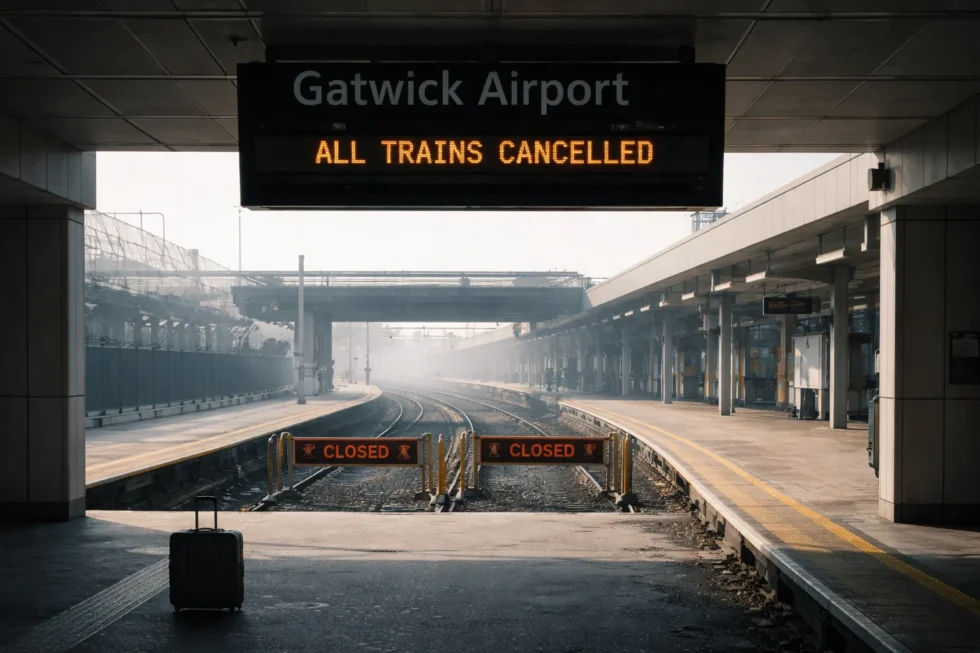
On the weekend of 17–18 January 2026, travel between London and Gatwick Airport will be heavily disrupted as major engineering works shut key sections of the Brighton Main Line. The closures will mean cancelled trains, replacement buses and significantly longer journey times for anyone heading to the airport or travelling between London, East Croydon, Redhill and Brighton.
National Rail Enquiries and train operators have confirmed that normal services will be suspended on several routes, forcing thousands of passengers to change travel plans. Holidaymakers catching flights, commuters returning home and weekend visitors to London are all likely to face delays and crowded alternative services, reports The WP Times, citing official industry guidance.
The disruption forms part of a long-term upgrade programme to modernise tracks, signalling and station infrastructure on one of the UK’s busiest rail corridors. While the works are designed to improve reliability in the future, the immediate effect for passengers in January 2026 will be clear: more complex journeys, fewer direct trains and the need to plan well in advance.
What exactly is happening on the rail network
Network Rail is carrying out a series of major engineering works across the Brighton Main Line, the principal rail corridor linking London with Gatwick Airport and the south coast. These works involve track renewal, signalling upgrades and maintenance to junctions and platforms that cannot be completed while trains are running.
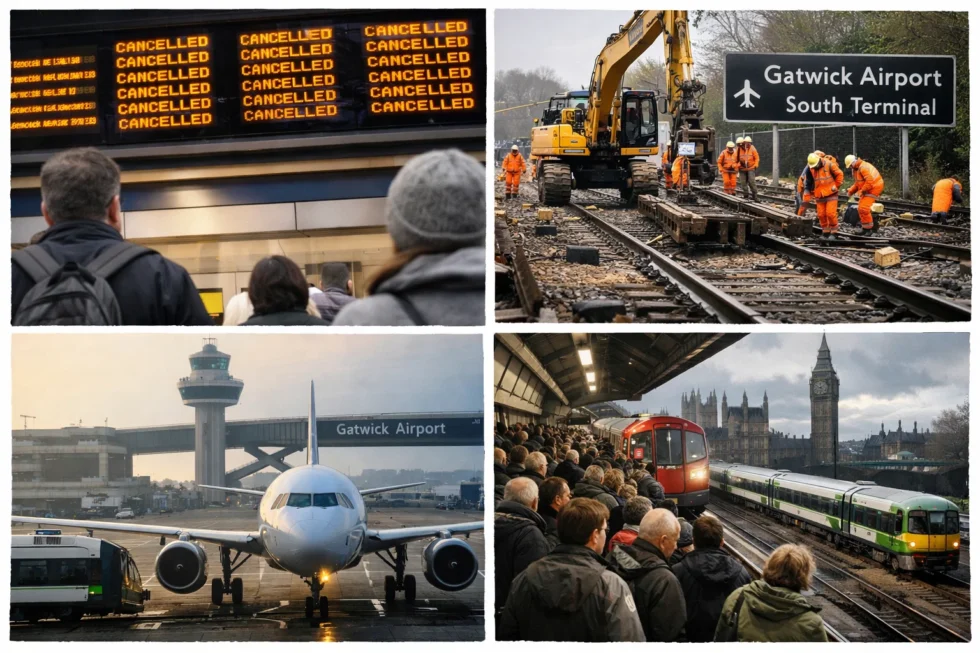
As a result, large parts of the route will be closed or operated on reduced timetables throughout January 2026, with the most severe disruption scheduled for Saturday 17 and Sunday 18 January.
The routes most directly affected are:
- London Victoria → Gatwick Airport → Brighton, the core airport rail link
- East Croydon → Gatwick Airport, a key interchange for south London passengers
- Redhill and Reigate commuter services, used heavily by Surrey travellers
- East Grinstead branch line, which will rely on replacement buses
- Connections between Three Bridges and Brighton, affecting coastal routes
During the 17–18 January closure, trains will be unable to run on several critical stretches of track south of East Croydon and around Redhill. This will effectively break the normal rail connection between London and Gatwick for large parts of the weekend.
According to Network Rail, the works include:
- Installation of new signalling equipment near Redhill
- Track replacement on high-wear sections of the line
- Junction improvements designed to reduce future delays
- Routine safety inspections that require full possession of the track
Because of these projects, normal timetables will be suspended and replaced by temporary emergency schedules, with many journeys requiring bus transfers instead of trains. For passengers, the practical meaning is straightforward: fewer services, indirect routes and substantially longer travel times on one of the busiest transport weekends of the month.
How will this affect passengers
For most travellers, the disruption will be felt in several practical ways:
- Fewer direct trains between London and Gatwick Airport
- Longer gaps between services
- Some routes replaced entirely by buses
- Increased crowding on remaining trains
- Extended travel times, particularly at weekends
Operators including Southern, Thameslink and Gatwick Express are urging passengers to check their journeys carefully before travelling and to avoid relying on last-minute connections. According to Renews, the heaviest disruption is expected around East Croydon and Redhill, two of the most important interchange stations for airport-bound passengers.
Replacement buses: where and how they will run
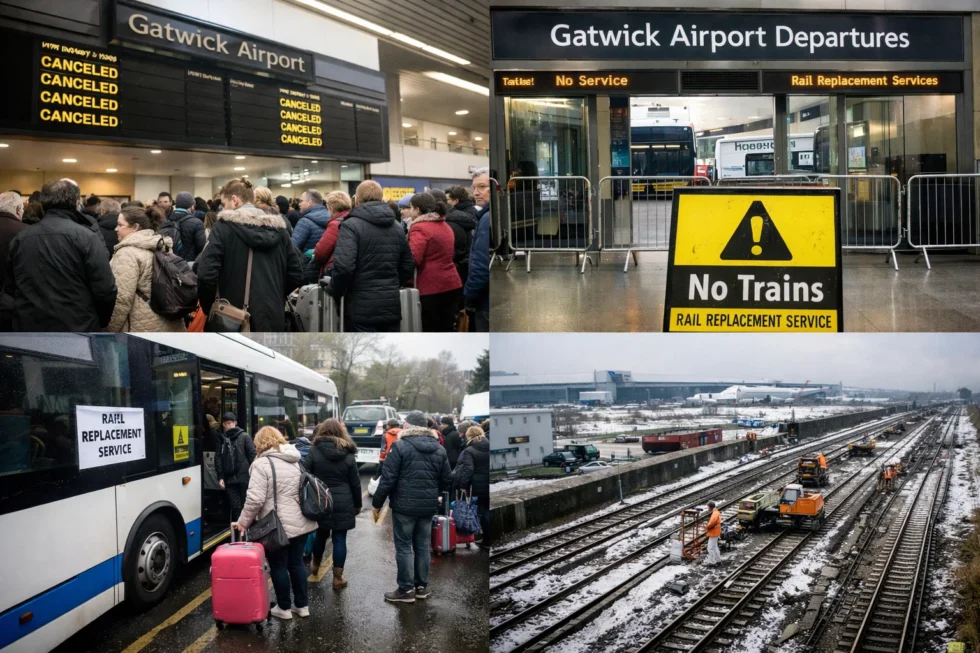
Because large sections of track will be closed, rail operators will rely heavily on replacement buses across the Gatwick corridor throughout January. Confirmed bus replacement routes:
- East Grinstead ↔ Gatwick Airport
- Redhill ↔ Gatwick Airport
- Three Bridges ↔ Brighton (selected services)
These buses will operate to special temporary timetables and will not mirror normal train departure times. Passengers should expect longer waiting times and queues, particularly on Sunday evenings when airport traffic is at its busiest.
How much longer will journeys take
| Route | Normal journey time | Estimated time during works |
|---|---|---|
| London Victoria → Gatwick Airport | 30 minutes | 50–70 minutes |
| East Croydon → Gatwick Airport | 15 minutes | 35–50 minutes |
| Brighton → Gatwick Airport | 30 minutes | 60–90 minutes |
| Redhill → Gatwick Airport | 10 minutes | 30–45 minutes |
Estimates based on National Rail and train operator guidance. Actual times may vary depending on road traffic and passenger demand.
Travelling to catch a flight: what you must do
Rail companies are issuing unusually strong warnings to anyone using trains to reach Gatwick Airport during January. Official advice to air passengers includes:
- Allow at least 60–90 minutes of extra travel time
- Avoid tight connections between trains and flights
- Consider coach services or alternative rail routes
- Buy tickets that permit flexible travel
Airlines do not compensate passengers for missed flights caused by rail disruption. The responsibility to arrive on time remains with the traveller.
Alternative ways to reach Gatwick Airport
If your regular service is cancelled, there are several practical alternatives.
Use Thameslink instead of Gatwick Express
Trains from London Bridge, Blackfriars, Farringdon and St Pancras are likely to remain the most reliable option when the Victoria route is affected.
Coach services
National Express and other operators run frequent coaches to Gatwick from:
- London Victoria Coach Station
- Heathrow Airport
- Central London pick-up points
During engineering works, coaches can often be faster than replacement rail buses.
Combine Underground and rail
For many passengers, travelling by Underground to London Bridge and continuing south on Thameslink may be quicker than attempting to reach Victoria.
Taxi or private hire
More expensive, but often the safest option for early-morning or late-night flights when rail services are severely reduced.
Practical planning advice
Transport officials recommend the following steps to reduce disruption:
- Check journeys on National Rail Enquiries before leaving home
- Use official operator apps for live updates
- Avoid peak travel windows where possible
- Allow at least one additional hour for airport travel
- Consider booking overnight accommodation near Gatwick for early flights
- Review travel insurance to see if missed connections are covered
Will disruption continue after 18 January
Yes. Although the weekend of 17–18 January will see the most severe closures, further engineering works are scheduled for the rest of the month. Passengers should expect:
- Additional weekend service reductions
- Late-evening timetable changes
- Occasional weekday alterations
- Reduced frequencies on some routes
Detailed schedules are published by National Rail and individual operators.
Official guidance
A National Rail spokesperson said: “Essential engineering work is being carried out to modernise the Brighton Main Line and improve reliability. Anyone travelling to or from Gatwick Airport in January should plan ahead, check timetables carefully and allow additional time for their journey.”
Where to check reliable updates
Passengers planning journeys to or from Gatwick Airport in January 2026 should rely only on official information channels for accurate, up-to-date travel advice. The most reliable sources are:
- National Rail Enquiries: nationalrail.co.uk
- Southern Railway: southernrailway.com
- Thameslink: thameslinkrailway.com
- Gatwick Express: gatwickexpress.com
These websites provide live departure boards, confirmed timetable changes, details of replacement bus services and real-time disruption alerts for routes between London, Gatwick Airport and Brighton. Travellers can also download official operator apps to receive instant notifications if services are cancelled or altered. Throughout January, rail travel on the London to Gatwick corridor will be slower, more complex and less predictable than normal. Major engineering works mean fewer direct trains, more frequent use of replacement buses and longer overall journey times, particularly on weekends.
For anyone catching flights from Gatwick, transport experts advise checking journeys the night before travel, allowing significant extra time and preparing alternative routes in case services change at short notice. Flexible tickets and early departures are likely to be essential for avoiding missed connections. With careful planning and regular checks of official updates, passengers can still reach Gatwick Airport reliably — but January 2026 will require more preparation than usual for anyone using the UK rail network.
Read about the life of Westminster and Pimlico district, London and the world. 24/7 news with fresh and useful updates on culture, business, technology and city life: Newcastle Airport opens free Waiting Zone for taxis and cars as 6 million passengers expected in 2026