
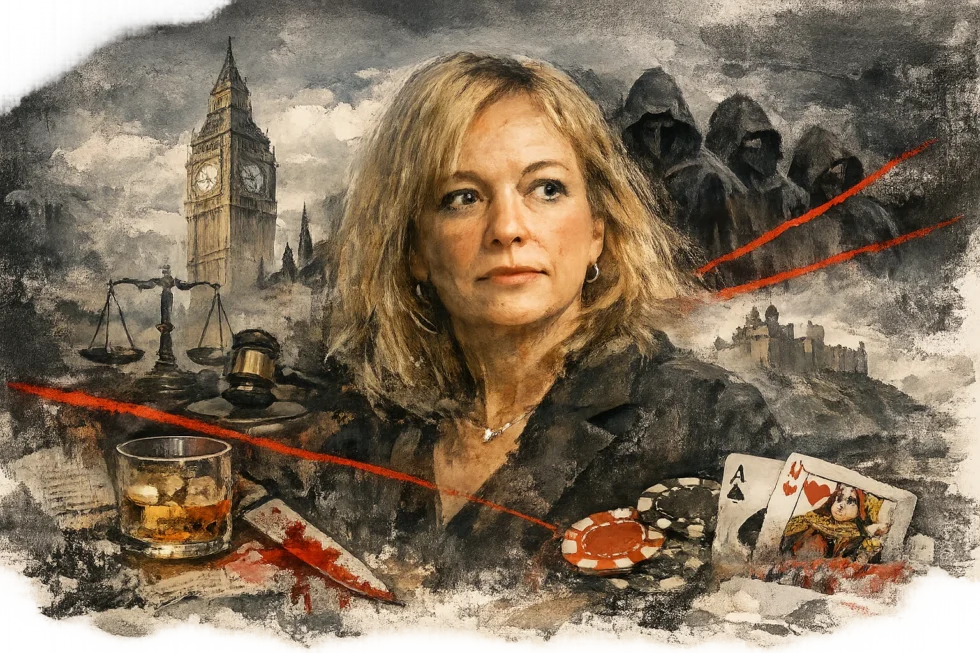
When The Traitors returned to BBC One for its fourth season in January 2026, the hit psychological reality series once again placed ordinary people inside a high-stakes game of deception, where trust is a weapon and betrayal is the path to victory. Set inside the gothic Ardross Castle, the format forces contestants to identify secret “Traitors” hiding among the “Faithfuls” — or risk being eliminated one by one in a battle of lies, alliances and strategy. One name immediately stood out among this year’s cast: Harriet Tyce, a London-based crime novelist and former criminal barrister whose professional life has been built on exposing contradictions and uncovering hidden motives. Her arrival instantly reframed the season as a contest not of popularity, but of psychological intelligence, reports The WP Times.
Harriet Tyce: From courtroom to crime fiction
Before she ever stepped inside Claudia Winkleman’s gothic Scottish castle, Harriet Tyce spent years working in criminal law, defending and prosecuting cases built on evidence, contradictions and human behaviour.
She later transformed that experience into a successful second career as a psychological thriller writer, publishing novels that explore hidden motives, unreliable narrators and the thin line between truth and lies. Her most recognised titles include:
| Book | Genre | Why it matters |
|---|---|---|
| Blood Orange | Psychological thriller | Explores domestic manipulation and legal deception |
| The Lies You Told | Crime fiction | Built around unreliable testimony and hidden guilt |
| Witch Trial (2026) | Legal thriller | Focuses on moral panic, accusation and justice |
Those themes are not confined to Harriet Tyce’s novels. Inside The Traitors, they become operational reality. The same tools she uses on the page — misdirection, psychological pressure, hidden motives and false narratives — are the very mechanisms that decide who survives and who is eliminated inside Ardross Castle. In this game, fiction does not imitate life. Life is forced to behave like fiction.
Why Harriet Tyce fits The Traitors better than almost anyone
Harriet Tyce arrives on The Traitors with a background that few reality-television contestants can match. Her competitive nature is well documented — even casual games at home have reportedly become too intense to continue — but it is her professional training that gives her a genuine strategic edge.
For years, Tyce worked as a criminal barrister, a profession built around identifying contradictions, testing credibility and dismantling false narratives under pressure. That experience was later translated into a successful career as a psychological crime novelist, where characters survive or fall based on what they conceal rather than what they reveal.
Inside The Traitors, those same forces dominate the game. Players are judged not on performance, but on behaviour, timing, and the subtle inconsistencies that betray hidden allegiances. Tyce has described the format as “the quintessence of people not being who they seem” — a description that also applies to both courtrooms and crime fiction.
In this environment, her ability to observe, analyse and withhold information may prove more valuable than any social alliance. On a show designed to reward those who understand deception, Harriet Tyce is unusually well equipped.
Is Harriet a Faithful or a Traitor
At the start of the season, Harriet Tyce was assigned the role of a Faithful. In The Traitors, however, that status is never permanent. The format is built around secret recruitment, hidden alliances and sudden reversals, meaning today’s Faithful can become tomorrow’s Traitor without warning.
What makes Tyce particularly intriguing is that she has openly said she would welcome becoming a Traitor. Not for money or public attention, but because it would allow her to operate inside the psychological environment she explores in her novels — a world of misdirection, manipulation and concealed intent.
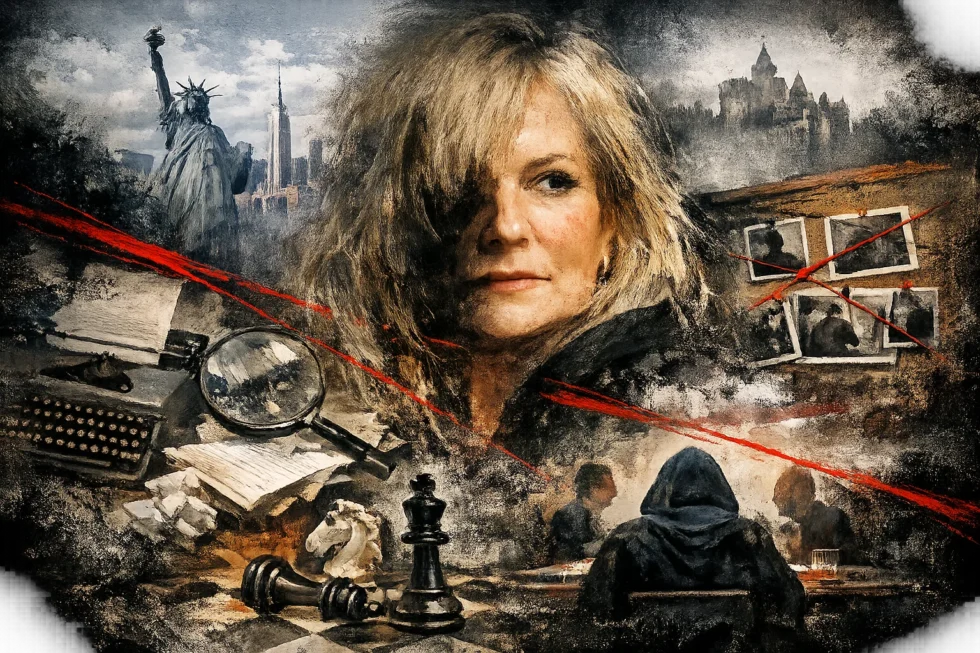
As a Faithful, her stated strategy is deliberately low-profile. Rather than dominating discussions or launching premature accusations, she intends to observe behaviour, resist emotional reactions and build patterns over time before acting. It is a method drawn directly from both courtroom practice and crime fiction, where evidence must accumulate before conclusions are reached.
On a programme where outspoken players are often removed early, Tyce’s measured, analytical approach may prove far more effective — and far more dangerous — than confrontation.here loud players often die first, her calculated restraint may prove lethal to others.
Why viewers are already obsessed with Harriet Tyce
Within hours of the first episode airing, Harriet Tyce had become one of the most discussed contestants on X, formerly Twitter. Many viewers immediately recognised her name from bookshops, crime-fiction bestseller lists and literary reviews — an unusual pedigree for a reality-television competitor.
Fans quickly began to speculate that she would be “the perfect secret Traitor”, not because of her personality, but because of her profession. Her novels are built around lying, concealed motives and the slow collapse of trust, precisely the dynamics that define The Traitors.
Unlike influencers, athletes or television personalities, Tyce enters the castle with something few contestants possess: professional literacy in deception. She does not merely suspect that people lie. She has made a career out of understanding how, why and when they do.
What would Harriet Tyce do with the £120,000 prize
Should Harriet Tyce progress to the final and secure the £120,000 prize fund, she has said the money would be donated to breast cancer research, reflecting a personal connection to the disease through close friends who were affected by it. One of her closest friends died from secondary breast cancer in 2021, a loss that continues to shape her priorities beyond television and competition.
In a format often driven by money and notoriety, her stated intention places her among a small group of contestants whose motivations extend beyond personal gain. It also adds an emotional dimension to her presence on the show, complicating the otherwise cold, strategic persona she presents inside the castle.
Why Harriet Tyce matters to Season 4
Season four of The Traitors is already being positioned by broadcasters and critics as the most psychologically complex chapter of the series so far. Harriet Tyce is a significant reason for that reputation. Her participation does not merely add another personality to the cast — it introduces a player whose professional life has been built around detecting deception in real time.
Unlike many contestants, Tyce is not relying on instinct or social intuition alone. Her background in criminal law trained her to evaluate how people behave when they are under pressure, when they are hiding information, and when their stories begin to fracture. Her career as a psychological crime writer then sharpened that insight into a system — identifying patterns, tracking inconsistencies and understanding how false narratives are constructed and maintained.
The Traitors rewards precisely those abilities. The game is not won by charisma, physical dominance or popularity, but by the capacity to read micro-behaviours: hesitation before answering, sudden defensiveness, misplaced confidence, and subtle shifts in tone. Tyce operates with a forensic awareness of these signals, giving her a structural advantage in a format designed to expose them.
Even when she is not speaking, her presence changes the room. Other players know they are being watched by someone who understands how lies unravel. That forces them to be more guarded, more cautious and, ultimately, more prone to error.
Read about the life of Westminster and Pimlico district, London and the world. 24/7 news with fresh and useful updates on culture, business, technology and city life: Who is Nicolás Maduro? From bus driver to detained Venezuelan president