
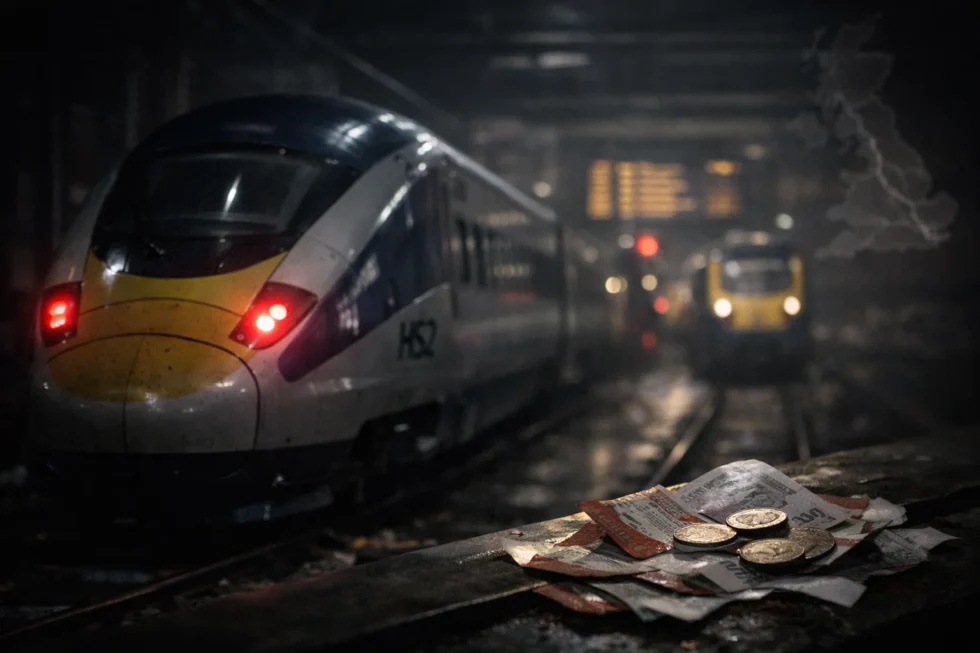
HS2 train size review UK is entering a critical engineering and policy phase as of 13 April 2026, with mounting warnings from rail experts that proposed changes to train length and configuration could reduce passenger capacity, slow services north of Birmingham and increase long-term costs. The review focuses on a £2 billion rolling stock contract for 54 high-speed trains, awarded to a joint venture between Alstom and Hitachi Rail, as HS2 Ltd seeks to renegotiate specifications under intense budget pressure. In the middle of these developments, The WP Times reports that early industry assessments suggest the redesign risks weakening the system’s operational performance rather than strengthening it.
At its core, the situation is a structural trade-off that directly affects passengers: reducing train size or altering configuration may lower upfront costs, but it can also mean fewer seats, reduced flexibility and slower journey times on routes beyond the dedicated high-speed network. HS2 was originally designed as a high-capacity system capable of handling future demand while improving journey times across Britain. Any shift away from that model — particularly at the train design stage — has consequences that extend far beyond procurement, shaping how the network performs for decades.
HS2 train capacity and speed risks north of Birmingham
The most immediate concern raised by industry figures is how redesigned trains will perform when operating north of Birmingham, where HS2 services are expected to run partly on conventional tracks. Unlike Pendolino trains currently used on the West Coast Main Line, HS2 rolling stock does not include tilt technology, meaning it cannot maintain high speeds on curved legacy infrastructure.
A senior rail and government source warned that proposed changes “could result in fewer seats and slower services” if cost-cutting takes precedence over operational requirements (UK rail industry briefing, April 2026). This warning is technically grounded: when non-tilting trains run on existing tracks, they must reduce speed significantly on curves, which directly impacts journey times.
Why train design matters for speed and capacity
Train performance is not only determined by track infrastructure — it is also shaped by:
- Train length and carriage configuration
- Weight distribution and braking systems
- Compatibility with signalling systems
- Aerodynamic efficiency at different speeds
Reducing train length or simplifying configuration may appear marginal on paper, but in practice it affects total seat numbers per service and acceleration/deceleration profiles, both of which are critical for timetable efficiency.
Direct passenger impact
For travellers, the consequences are practical and measurable:
- Capacity reduction: fewer seats per train means higher demand pressure
- Crowding risk: especially during peak commuting hours
- Journey time increases: particularly on routes beyond HS2 core lines
- Reduced reliability: tighter margins in scheduling increase delays
In effect, the review raises a fundamental question: will HS2 prioritise maximum capacity and speed, or accept a compromised balance to reduce costs?
£2bn train contract under review: cost pressures and risks
The financial backdrop to the review is the broader cost challenge facing HS2. The £2 billion contract for 54 trains is one of the most significant procurement elements of the project, and revising it is seen as a potential lever for cost control. However, experts consistently warn that changing specifications mid-process often increases total expenditure.
An engineering source involved in UK rail procurement noted:
“Altering train design after contracts are agreed rarely delivers real savings — it usually shifts costs into redesign, testing and operational inefficiencies” (UK rolling stock specialist, April 2026)
Where additional costs can arise
- Redesign of train components and systems
- Additional testing and certification requirements
- Delays in manufacturing timelines
- Contract renegotiation penalties or adjustments
- Integration challenges with existing infrastructure
Financial reality: short-term savings vs long-term cost
| Category | Original HS2 plan | Under review scenario |
|---|---|---|
| Contract value | ~£2bn | Potentially renegotiated |
| Train capacity | High (long trains) | Reduced risk |
| Efficiency per journey | Optimised | Lower efficiency |
| Lifecycle cost | Stable | Potentially higher |
| Cost per passenger | Lower | Likely to increase |
The key point is that rail systems operate on long economic cycles. A design decision that reduces cost today can increase operational expense over 30–40 years — particularly if capacity constraints require additional services or infrastructure upgrades.
A less visible but equally important issue is network integration. HS2 was conceived not as an isolated high-speed line, but as a hybrid system connecting new infrastructure with existing railways across the UK. This model depends on trains being capable of:
- Operating at very high speeds on HS2 lines
- Transitioning smoothly onto conventional tracks
- Maintaining acceptable speeds despite infrastructure limitations
Any redesign that prioritises cost over flexibility risks weakening this integration. For example, if trains are optimised for HS2-only operation, their performance on legacy routes may degrade further — especially without tilt capability.
Structural tension in HS2 design
The project faces a three-way constraint:
- High speed (core HS2 lines)
- High capacity (long trains, many seats)
- Network flexibility (compatibility with existing tracks)
Reducing train size directly affects at least two of these factors — capacity and flexibility — making the system less adaptable over time.
HS2 risks in focus: capacity cuts, slower north and long-term cost pressure
Across the UK rail sector, the HS2 train review is now widely treated as a defining inflection point rather than a routine procurement adjustment. Experts are converging on a clear warning: decisions taken in April 2026 will not only shape train design, but determine whether HS2 delivers its core promise of high-capacity, high-speed connectivity. The central risk is structural — reducing train size or altering configuration may weaken the system’s economic logic, slow services on mixed-use routes and embed inefficiencies that cannot easily be reversed once fleets enter service.
Industry assessments highlight four interconnected pressures. First, capacity reductions directly erode the project’s economic case, as fewer seats per train increase cost per passenger and limit growth potential. Second, slower services — particularly north of Birmingham — reduce competitiveness against road and domestic aviation, undermining modal shift goals. Third, design compromises made now will be locked in for 30+ years, given the lifecycle of rolling stock. Finally, apparent savings at procurement stage may prove illusory, with redesign, testing and operational inefficiencies offsetting any upfront reductions.
A senior transport policy expert summarised the concern in stark terms:
“If you reduce capacity and compromise performance, you risk delivering a railway that is neither fast enough nor large enough for future demand” (UK transport policy expert, April 2026).
The implications are most acute in northern England, where HS2’s value depends on extending high-speed benefits beyond its core infrastructure. If redesigned trains lead to slower journeys on conventional lines, reduced seating capacity or tighter timetables, the projected economic uplift for cities such as Manchester and Leeds may be diluted. In practical terms, this could translate into peak-time crowding, constrained service frequency and longer travel times, particularly on routes that rely on integration with existing rail corridors.
For passengers, the technical debate resolves into tangible outcomes across three time horizons. At launch, travellers are likely to encounter higher demand pressure on available seats, with more crowded services and reduced booking flexibility on key routes. Over the medium term, capacity constraints typically feed into pricing and reliability — meaning higher fares during peak periods, tighter margins in timetables and a greater risk of delays. Over the long term, any structural shortfall in capacity may require additional investment to correct, raising the possibility that initial savings lead to higher overall system costs and diminished value for money.
Taken together, the review represents a system-level trade-off rather than a technical tweak. The choice facing policymakers is binary in effect: prioritise short-term cost control and accept reduced performance, or maintain original specifications to preserve long-term capacity and speed. For the public, the outcome will define whether HS2 functions as a genuinely transformative network or a constrained system operating below its intended potential. At this stage, the direction of travel is clear. Cutting too deeply into train specifications risks weakening the entire logic of HS2 — particularly where it matters most: capacity, speed and regional connectivity.
Read about the life of Westminster and Pimlico district, London and the world. 24/7 news with fresh and useful updates on culture, business, technology and city life: Will the Super El Niño affect the UK summer? Expert forecasts on 2026 record heat and flood risks