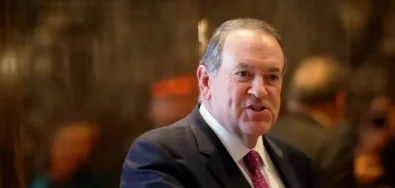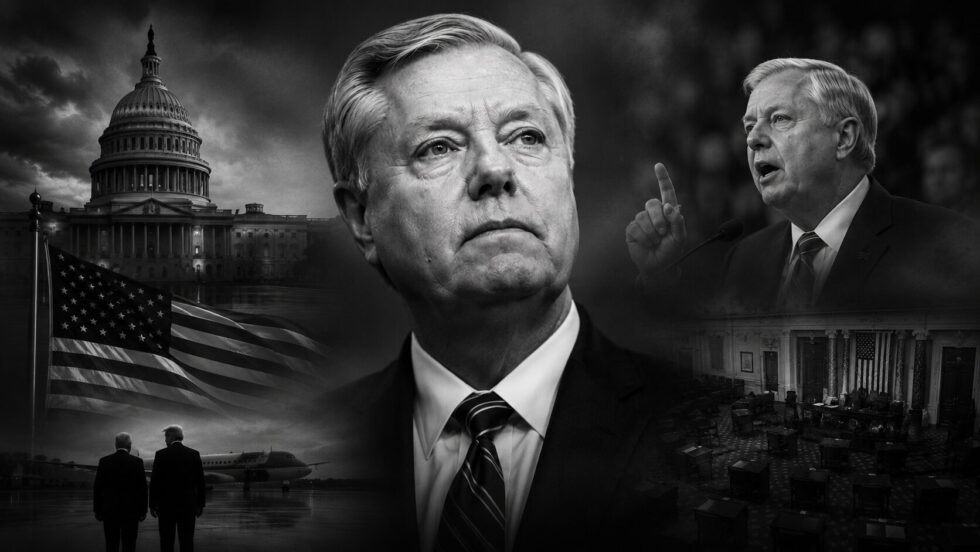
Senator Lindsey Graham died on the evening of Saturday, 11 July 2026, after what his office described only as a "brief and sudden illness", ending the career of a four-term South Carolina Republican who had spent more than three decades in Congress and become one of President Donald Trump's most important allies on defence, Iran, Israel, Russia and Ukraine. Graham had turned 71 on Wednesday, 9 July, and remained engaged in official work until immediately before his death: on Friday, 10 July, he met Ukrainian President Volodymyr Zelenskyy in Kyiv, discussed Patriot air-defence systems and sanctions against Moscow, and told reporters that China could exert decisive economic pressure on Vladimir Putin. His office released no diagnosis, hospital details or account of when he first became unwell, meaning the precise medical cause of death remains officially undisclosed, The WP Times reports, drawing on statements carried by the Associated Press and other major outlets.
Emergency crews answered a call reported as a cardiac arrest at Graham's home on Capitol Hill on Saturday night, according to police-scanner audio obtained by NBC News, which said photographs showed paramedics carrying a person on a stretcher to a waiting ambulance, with police cars and fire trucks on the scene. His office has not confirmed a cause, and no coroner or family medical statement had been issued as this report was prepared.
The death creates two immediate political problems: South Carolina must fill a vacant Senate office, and the Republican Party must replace a candidate who had already won its June primary and was preparing to seek a fifth term in the general election on 3 November. Graham's departure also removes the chairman of the Senate Budget Committee, deprives Trump of an experienced congressional intermediary, and leaves a major bipartisan Russia sanctions proposal without the Republican senator most closely identified with it. An appointment can preserve the Republican vote, but it cannot immediately reproduce Graham's committee seniority, his relationship with Trump, his foreign-policy network or his ability to connect the White House with traditional national-security Republicans.
Lindsey Graham's death: what has been officially confirmed
The most important fact is also the limit of what is publicly known. Graham's office said he died on Saturday evening following a "brief and sudden illness". It did not identify the illness, state where he died, say whether he had been admitted to hospital, or describe any treatment. The full public wording was: "On the evening of Saturday, July 11, US Senator Lindsey Graham passed away from a brief and sudden illness." The statement added: "Senator Graham's family appreciates prayers at this time and asks for privacy during this incredibly difficult period."
Separately, the cardiac-arrest dispatch reported by NBC News is the only publicly circulating indication of the nature of the emergency. It has not been confirmed as the medical cause of death by Graham's office, a hospital or the family, and it should be treated as an early scanner detail rather than an official diagnosis.
The official language does not establish whether the illness began hours or days earlier. It does not, on its own, support any specific claim of heart attack, stroke, infection, cancer or other condition beyond the emergency dispatch. Describing the cause more precisely than the available evidence allows would be speculation rather than reporting. That distinction matters because the sudden death of a major political figure can rapidly generate unsupported claims online. Here, the firm conclusions are narrow: Graham died on 11 July; he was 71; his office attributed the death to a brief and sudden illness; and emergency responders were called to his home for what scanner audio described as a cardiac arrest.
The announcement came early on Sunday, 12 July, and was quickly carried by the Associated Press, Bloomberg, CNN, the BBC, the Guardian, NPR, CBS News and other major organisations. Their initial reports rested principally on the statement from Graham's office, because no fuller medical or family account had emerged.
There had been no publicly known warning that Graham was seriously ill. He had continued travelling, attending high-level meetings and speaking to reporters during the week of his death, and had been scheduled to appear on NBC's "Meet the Press" on Sunday morning. The contrast between that visible activity and the brevity of the official announcement explains the immediate shock in Washington, in South Carolina and among governments that had worked closely with him. His death also arrived during a period of unease about transparency over lawmakers' health. Republican Senator Mitch McConnell has remained in hospital after paramedics answered a call last month at a residence for an individual experiencing cardiac arrest, and his team has released little detail about his condition.
Confirmed facts about Lindsey Graham's death
| Question | What is known |
|---|---|
| When did Lindsey Graham die? | Saturday evening, 11 July 2026 |
| How old was he? | 71 |
| When was he born? | 9 July 1955 |
| What cause was given officially? | A "brief and sudden illness" |
| What did emergency scanner audio report? | A call for cardiac arrest at his Capitol Hill home |
| Has a specific diagnosis been released? | No |
| Has a hospital been identified? | No |
| Was he working shortly before his death? | Yes, including meetings in Kyiv on 10 July |
| What office did he hold? | US senator for South Carolina |
| What committee did he chair? | Senate Budget Committee |
| Was he seeking re-election? | Yes, he had won the Republican nomination for November |
Lindsey Graham was in Kyiv one day before his death
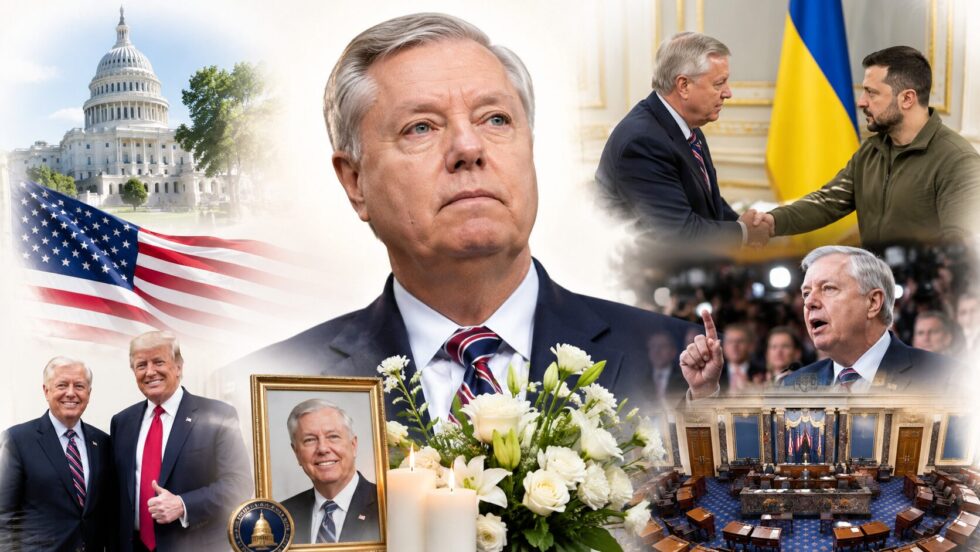
Graham's final major political engagement was in Ukraine. On Friday, 10 July, he met Zelenskyy in Kyiv after attending NATO-related discussions in Türkiye earlier in the week. The official Ukrainian account said the meeting covered sanctions against Russia, diplomatic efforts, support for Ukraine in Congress and practical measures to strengthen Ukrainian air defence.
Zelenskyy briefed Graham on agreements discussed with Trump during their meeting in Ankara on 8 July. According to the Ukrainian presidency, those arrangements included a political decision that could allow Ukraine to receive licences to produce Patriot systems. Patriot batteries and interceptor missiles are central to Ukraine's defence against Russian ballistic and cruise missiles, making the issue one of Kyiv's most urgent requests to Washington and other Western governments. The meeting was not ceremonial. It formed part of Graham's long-running campaign to connect military assistance for Ukraine with stronger economic pressure on Russia. Zelenskyy's office said the two discussed sanctions, continued congressional support and the need to turn international commitments into operational defence capability. Zelenskyy described the discussion as a good meeting and thanked Graham for recognising Ukrainian soldiers, a reference to the senator's persistent public support for Ukraine's resistance.
Speaking to journalists in Kyiv, Graham focused on China's leverage over Moscow. Reuters reported him arguing that the route to ending the war passed through Beijing, because China held substantial economic influence over Russia and could help move Putin towards negotiations by changing the commercial and diplomatic environment supporting the war effort.
Graham's position was that neither diplomacy nor military assistance would be sufficient alone. His preferred strategy combined Ukrainian resistance, Western weapons, sanctions on Russia and pressure on countries buying Russian energy, on the view that reducing Moscow's revenues would make continued war harder and negotiations more attractive. He also said Trump's administration and a bipartisan Senate group had reached agreement on a revised Russia sanctions bill. "We've reached an agreement with the White House on a version of the Russian sanctions bill that they will support," Graham told reporters. "It means it's going to become law." The remark came as he completed what Reuters described as his tenth visit to Kyiv, and it now stands as one of his final major public political statements. Less than two days later, his office announced his death. The timing establishes nothing about the nature of his illness. It does show that Graham was performing demanding official duties immediately beforehand, travelling internationally and discussing complex legislation without any publicly disclosed sign that his health was failing.
What Lindsey Graham said during his final visit to Ukraine
Graham's final Kyiv visit centred on three connected questions: whether Trump would support additional sanctions, whether Ukraine would obtain stronger air defence, and whether China could be induced to pressure Russia. The sanctions proposal had been developed with Democratic Senator Richard Blumenthal and attracted broad bipartisan support. Graham and Blumenthal argued that countries buying Russian oil, gas and other commodities were indirectly funding the war, and their legislation sought to create a powerful economic disincentive through severe tariffs or secondary sanctions against states continuing that trade.
Earlier versions had floated tariffs as high as 500 per cent on imports from countries buying Russian energy. The precise scope and presidential discretion in the revised July version were still under negotiation with the White House. Graham's statement in Kyiv indicated the administration had accepted a version capable of moving through Congress, though passage still required legislative action.
The senators presented the plan not as an alternative to Trump's diplomacy but as an additional instrument for him, a framing that mattered politically. Graham understood that a bill cast as limiting the president might meet White House resistance, while one described as strengthening Trump's negotiating hand had a better chance of support. He told reporters the agreement would give Trump new tools to end the war, reflecting a pattern of advocating traditionally interventionist policies while describing them as instruments of Trump's leadership. His remarks on Beijing followed the same logic. China had become a major buyer of Russian energy and an essential partner for Moscow after Western sanctions cut Russia's access to European markets. Graham argued that threatening economic consequences for buyers could force Beijing to weigh whether continued support for Russia remained worthwhile. He did not claim China alone could deliver peace; his case was that China held influence unavailable to most other governments because Russia depended heavily on Chinese trade, technology and diplomatic protection.
Graham also suggested Putin might be nearing a point where negotiation became possible but still required further pressure. That was a political assessment rather than an independently verifiable one, but it showed he believed the war had entered a phase in which economic coercion, air-defence support and direct diplomacy could be combined. His death leaves Blumenthal, Democratic Senator Jeanne Shaheen, Republican Senator Roger Wicker and other supporters to carry the legislation. It does not legally terminate the bill, but it removes the Republican sponsor with the strongest personal relationship with Trump and the greatest public ownership of the effort.
Why Lindsey Graham's death matters for Donald Trump
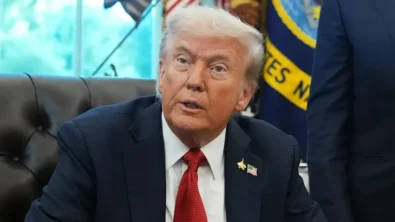
Graham was not simply another Republican senator backing a Republican president. His value to Trump came from an unusual combination of access, experience and political flexibility built over the previous decade. He knew committee procedure, maintained relationships with lawmakers who did not share Trump's instincts, could speak to defence-oriented Republicans and conservative media, communicate with foreign leaders, and then carry those arguments directly to the president.
The relationship was striking because it began in hostility. During the 2016 Republican presidential contest, Graham described Trump as unfit for office and attacked his character and temperament, in some of the harshest language any Republican used against him. Trump responded by mocking Graham and, at one campaign event, reading out the senator's mobile phone number, forcing him to change it. At that stage the two appeared irreconcilable: Graham's identity was built around military alliances, immigration reform and the interventionist tradition associated with John McCain, while Trump campaigned against the Washington consensus Graham embodied.
After Trump won, Graham changed course. The shift was gradual but unmistakable: regular conversations, White House visits, golf with the president, and a role as one of Trump's most visible Senate defenders. Supporters said he had recognised Trump's grip on the party and sought influence over national-security policy from inside the coalition; critics said he had abandoned his own warnings for access and relevance. Both readings hold part of the truth. Graham reversed his position, but his access also let him press Trump on Iran, Syria, Ukraine, NATO and judicial nominations. The alliance became especially visible during the 2018 confirmation hearings for Supreme Court nominee Brett Kavanaugh, when Graham's angry defence transformed his standing among Trump supporters. He later chaired the Senate Judiciary Committee during the 2020 confirmation of Amy Coney Barrett, which gave Trump his third Supreme Court justice.
The relationship briefly appeared to collapse after the 6 January 2021 attack on the US Capitol, when Graham declared on the Senate floor that he had had enough. The break did not last. He voted against convicting Trump at his second impeachment trial and later backed Trump's 2024 return to the White House. By July 2026 he was again a trusted ally, able to push for tougher sanctions on Russia and sustained support for Ukraine without casting himself as a rebel. His death removes a bridge between two versions of the Republican Party: the McCain interventionist tradition and the nationalist coalition Trump built.
Senator Lindsey Graham's role in the Trump White House and Congress
Graham's influence rested on more than public loyalty. At his death he chaired the Senate Budget Committee, which sets budget frameworks and plays a central role in reconciliation, the process allowing certain tax and spending measures to pass the Senate by simple majority rather than the 60 votes normally needed to break a filibuster. That made him important to Trump's efforts to move fiscal and immigration measures without Democratic support.
On 21 April 2026, according to his office, Graham introduced a targeted financial year 2026 budget resolution designed to open a pathway for legislation funding Immigration and Customs Enforcement and Customs and Border Protection; the Senate adopted the resolution two days later. He also remained on the Senate Judiciary Committee and continued to promote federal court nominees, including South Carolina appointments.
His absence therefore touches several active areas at once: the budget, immigration enforcement, judicial confirmations, sanctions and foreign policy. Republicans can fill these institutional roles, but seniority and relationships cannot transfer instantly. A new South Carolina senator may cast the same party-line votes without Graham's decades of experience or his direct line to the president.
What happens to Lindsey Graham's Senate seat
The US Constitution frames Senate vacancies, but state law governs much of the practical process. The 17th Amendment established direct election of senators and lets state legislatures authorise governors to make temporary appointments when a seat falls vacant. South Carolina's governor, Henry McMaster, a Republican, is therefore central to the immediate succession. Under state law, McMaster will appoint someone to serve until 3 January 2027, the end of Graham's current term. McMaster paid tribute to Graham as "the fiercest of fighters for South Carolina and America — and a loyal and steadfast friend."
The appointment question is separate from the election question. Graham had already won the Republican nomination for the 3 November 2026 election, but the person appointed to hold the seat temporarily need not become the replacement nominee. South Carolina election law lets a party select another nominee when the original nominee dies before the election; a previously defeated primary candidate may become the replacement, though the party is not required to choose that person. Because Graham had defeated challengers in the 9 June primary, his death does not hand the nomination automatically to any runner-up.
The temporary appointment and the November ballot could therefore produce different individuals, or the same person if party leaders seek continuity. Neither should be treated as settled until formally announced.
The two separate processes after Lindsey Graham's death
| Process | Purpose | Who is involved |
|---|---|---|
| Temporary Senate appointment | Restores South Carolina's second Senate vote until 3 January 2027 | Governor Henry McMaster, under the constitutional and state framework |
| Replacement Republican nomination | Places a new Republican candidate on the November ballot | South Carolina Republican Party, under state election law |
The election remains scheduled for 3 November 2026. Because Graham died less than four months before election day, officials must also weigh ballot certification, military and overseas voting deadlines and the production of election materials, pressures that can make replacement decisions urgent even when party leaders would prefer longer consultation.
Who could replace Lindsey Graham in the Senate
No successor had been officially confirmed as this report was prepared. McMaster is expected to consult South Carolina Republican officials, Senate leaders and potentially the White House, and his decision will be judged against several considerations: reliability of a vote that aligns with the party immediately; experience for a chamber handling federal spending, Iran, Russia, immigration and judicial appointments; electoral viability for November; and internal Republican politics, given Graham's unusual mix of closeness to Trump and greater foreign-policy interventionism than many of the president's newer supporters. McMaster could also name a caretaker who pledges not to run, letting the party choose its candidate separately. Until he acts and the state party explains its nomination procedure, both decisions remain open.
What happens to the November 2026 South Carolina Senate election
Graham had secured the Republican nomination in the 9 June primary, avoiding a 23 June runoff, and was due to face Democratic nominee Annie Andrews in November. His death converts a race featuring a powerful four-term incumbent into an open-seat contest.
South Carolina has leaned heavily Republican in recent federal elections and has not elected a Democratic senator for decades, making the eventual Republican replacement the early favourite, though not a certainty. Open-seat races carry uncertainty because a replacement lacks the original nominee's name recognition, fundraising network and campaign organisation, all of which Graham had built over more than 20 years. Republicans must also determine what happens to his campaign funds, staff and endorsements, which federal law and party rules govern and which cannot simply be assumed without formal steps. The national stakes reach beyond the state, since every seat affects control of the chamber, committee chairmanships and Trump's ability to move legislation and nominations.
What Lindsey Graham's death means for the balance of the Senate
A death temporarily reduces the number of serving senators until the seat is filled. Because both Graham and McMaster are Republicans, a Republican appointment would preserve the seat's alignment. The sharper short-term issue is timing: until the appointee is sworn in, Republicans are down a vote, which in a closely divided chamber can affect confirmation schedules and procedural votes.
The Budget Committee must also choose new leadership under conference and committee rules, with seniority likely to weigh heavily. Whoever succeeds Graham as chair inherits negotiations over reconciliation, border funding and federal spending, and will need to establish authority with Senate leadership and the White House. The Russia sanctions bill poses a different problem: sponsorship can pass to other senators, but Graham's personal role — assuring Republicans the measure matched Trump's aims and assuring the White House of broad Senate support — cannot be replaced procedurally.
Lindsey Graham's political career from South Carolina to Washington
Lindsey Olin Graham was born on 9 July 1955 in Central, South Carolina, into a family that ran a restaurant, bar and pool hall. He lost both parents while still a young adult and helped care for his younger sister. He studied at the University of South Carolina, graduating in 1977, and earned his law degree there in 1981.
He served as a lawyer in the US Air Force Judge Advocate General's Corps, work that shaped his later interest in national security, military detention and presidential wartime authority, and remained connected to the armed forces through the South Carolina Air National Guard and the Air Force Reserve, retiring as a colonel.
Graham began in the South Carolina House, then won a US House seat in 1994 as part of the Republican wave that gave the party control of the chamber for the first time in four decades. He represented South Carolina's third district from January 1995 to January 2003 and became nationally known as one of the House managers in the impeachment trial of President Bill Clinton. He won his Senate seat in November 2002, succeeding Strom Thurmond, took office on 3 January 2003, and was re-elected in 2008, 2014 and 2020.
His longevity gave him influence across committees and administrations. He worked with both parties on immigration, national security and judicial matters while keeping a reliably conservative record, and his willingness to negotiate sometimes drew fire from Republican activists who accused him of being too close to Washington's foreign-policy establishment. He answered by stressing his military background, his support for conservative judges and his aggressive stance on national security.
Lindsey Graham, John McCain and the "three amigos"
For much of his Senate career, Graham was closely tied to John McCain and Joe Lieberman, a trio sometimes called the "three amigos" for their friendship, joint travel and shared belief in active US engagement abroad. McCain was the 2008 Republican presidential nominee and one of the Senate's leading defence voices; Lieberman was the 2000 Democratic vice-presidential nominee who later served as an independent. Graham never matched their national electoral success but became central to their foreign-policy partnership, supporting the Iraq war, strong alliances and action against perceived threats.
McCain died in August 2018 and Lieberman in March 2024; Graham's death in July 2026 leaves none of the three alive. Their passing reflects a wider shift in American politics, as the interventionist consensus they represented has weakened, especially within a Republican Party increasingly sceptical of prolonged overseas commitments. Graham adapted by allying with Trump, but never fully abandoned the strategic assumptions he had shared with McCain.
Lindsey Graham's position on Ukraine and Russia
Graham became one of Ukraine's most consistent Republican supporters after Russia's full-scale invasion in February 2022. He visited repeatedly, met Zelenskyy and argued that defeating Russian aggression served direct US security interests. He linked the European war to American credibility in Asia, contending that weakness in Ukraine could invite strategic losses over Taiwan, and rejected the view that aid to Ukraine was mere foreign assistance detached from US interests, casting it instead as an investment against wider conflict. He also backed sanctions and pressure on buyers of Russian energy, arguing weapons alone would not end the war while Moscow kept sufficient revenue. His final Kyiv visit returned to exactly those themes, underscoring the consistency of his outlook to the last day of his public career.
Lindsey Graham's position on Iran and Israel
Graham was among the Senate's strongest advocates of a hard line on Iran. He opposed the nuclear agreement reached under President Barack Obama, arguing Tehran could not be trusted to limit its programme through diplomacy alone, and he repeatedly defended Israeli military action against Iranian-backed groups, often using language more forceful than the White House or Senate leadership. His stance brought him close to Israeli leaders. After his death, Israel's President Isaac Herzog said he was shocked and heartbroken at the loss of a great American patriot and friend of Israel, describing Graham as a dear personal friend, and other Israeli figures paid similar tribute.
Lindsey Graham's legacy will be defined by his transformation under Trump
Any serious assessment of Graham must confront the contradiction at the centre of his final decade. He identified Trump as dangerous in 2016, then became one of his closest Senate allies. The reversal was so complete that his earlier criticisms became a fixture of the case against him, with opponents accusing him of putting political survival above principle.
His defenders answered that once Trump was the elected president and undisputed party leader, Graham had both a duty to work with him and an opportunity to shape policy. The alliance helped him keep influence and let him advocate support for Ukraine, a strong NATO posture and confrontation with Iran from inside Trump's coalition. His relationship with the president was neither pure obedience nor consistent independence: he could disagree, but usually while affirming Trump's leadership and avoiding an open breach, an approach that made him valuable to the White House yet vulnerable to the charge that no disagreement would ever be serious enough to end the alliance.
What is known and what remains unanswered
The public record gives a clear account of Graham's political activity before his death but a limited account of the death itself. It is known that he turned 71 on 9 July, travelled and met officials during the week, held talks with Zelenskyy on 10 July, and died on the evening of 11 July; that his office called the cause a brief and sudden illness; and that emergency responders were called to his Capitol Hill home for what scanner audio described as a cardiac arrest. It is not officially known when symptoms began, what condition was diagnosed, whether he was hospitalised, or whether the family will release more. It is known that the vacancy can be filled temporarily and that South Carolina Republicans may replace a nominee who dies before the election, but not yet whom McMaster will appoint or whom the party will place on the November ballot. It is known that other senators can continue the Russia sanctions bill, but not whether it will move at the pace Graham predicted in Kyiv.
The key questions that remain unanswered
Several important questions remain unresolved despite the confirmation of Lindsey Graham's death. His office has not disclosed the specific illness that led to his death, leaving the medical cause unknown beyond the official description of a "brief and sudden illness". It is also unclear when Graham first became unwell, whether he experienced symptoms during or after his visit to Kyiv, and whether further information will be released by his family or medical officials.
The political uncertainty is equally significant. South Carolina Governor Henry McMaster must decide who will temporarily fill Graham's Senate seat, while state Republican officials must determine how to replace a candidate who had already secured the party's nomination for the 3 November election. Whether the temporary appointee will also become the Republican nominee remains undecided under South Carolina election law.
Questions also remain in Washington. Senate Republicans must choose a new chairman of the Senate Budget Committee following Graham's death, while another lawmaker will need to assume responsibility for the bipartisan Russia sanctions legislation that Graham had negotiated with the Trump administration only hours before his final visit to Kyiv. It also remains to be seen whether President Donald Trump will continue backing the agreed version of the sanctions package and how Graham's absence could influence future Republican support for Ukraine, where he had been among the party's most consistent advocates.
Why Lindsey Graham's death has consequences beyond South Carolina
The immediate human fact is the death of a 71-year-old senator whose family has asked for privacy. The political consequences reach well beyond his state. South Carolina loses a senator who had served since 2003 and accumulated influence through seniority. The Senate loses a committee chairman amid active negotiations over immigration and federal spending. Trump loses an adviser who combined personal loyalty with deep congressional experience. Ukraine loses a Republican advocate who had visited Kyiv repeatedly and defended aid as a US strategic interest. Israel loses one of its most consistent Senate supporters. The bipartisan sanctions coalition loses the Republican most closely identified with targeting buyers of Russian energy.
None of this means policy will automatically reverse. Institutions remain, other senators can take up responsibility, and South Carolina is expected to appoint a replacement. The change lies in political weight rather than formal authority. Graham's influence came from relationships accumulated across 31 years in Congress, and no appointment can reproduce that immediately.
Lindsey Graham's final political message
The final chapter of Graham's life matched the argument he had made throughout his Senate career: that the United States should use military strength, alliances, economic pressure and personal diplomacy to shape events beyond its borders. In Kyiv on 10 July he argued that China could help end the war by pressuring Russia, said the White House and senators had agreed on sanctions legislation, and predicted it would become law. His last mission drew together nearly every element of his political identity: support for Ukraine, confrontation with Russia, concern about China, direct contact with a foreign president, and an effort to align congressional action with Trump. By the following evening he was dead.
The cause remains officially undisclosed beyond the phrase "brief and sudden illness", alongside an emergency call reported as a cardiac arrest, and it should be treated as such until his family or office says more. The constitutional and electoral consequences are clearer: McMaster must address the vacancy, Republicans must replace their nominee, the Senate must reorganise committee leadership, and Graham's colleagues must decide whether to continue his final legislative campaign.
Graham's career traced a remarkable arc — military lawyer, House impeachment manager, McCain ally, presidential candidate, Trump critic, Trump confidant, Judiciary Committee chairman, Budget Committee chairman, and advocate of an assertive American role abroad. His death on 11 July 2026 ended it without warning, a day after a high-level meeting in Kyiv and less than four months before an election in which South Carolina voters had expected to decide whether to grant him a fifth term. What happens next will be settled through appointments, party rules and the November ballot. What caused his death remains, for now, an unanswered medical question.
Materials used: Associated Press, Reuters, BBC News, CNN, The Guardian, the Senate Budget Committee, and the Office of Senator Lindsey Graham.
Read about the life of Westminster and Pimlico district, London and the world. 24/7 news with fresh and useful updates on culture, business, technology and city life: Why did Donald Trump reverse course at the NATO summit after attacking allies, Spain and Iran