
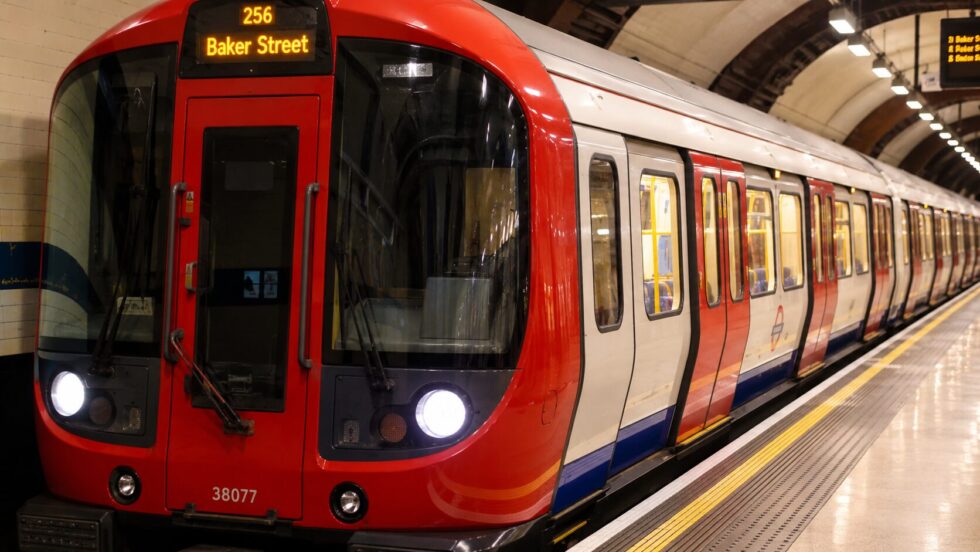
London Tube closures June 2026 are expected to affect several Underground, Overground and DLR routes across the capital as Transport for London continues a month of planned engineering works, station upgrades and infrastructure maintenance ahead of the summer peak season. TfL has already confirmed a series of line restrictions, part-closures and station works affecting west London corridors, parts of the District line network, sections of the Piccadilly line and multiple Overground routes during June weekends. At the same time, unresolved negotiations between TfL and the RMT union continue to create uncertainty over possible Tube strike disruption in early and mid-June, although several previously announced strike dates were suspended after last-minute talks. London transport officials say the majority of the network will continue operating normally during most weekends, but passengers travelling through west London, Heathrow corridors and major interchange stations are being advised to check live travel updates before every journey, The WP Times reports as the capital enters one of its busiest tourism and events periods of the year.
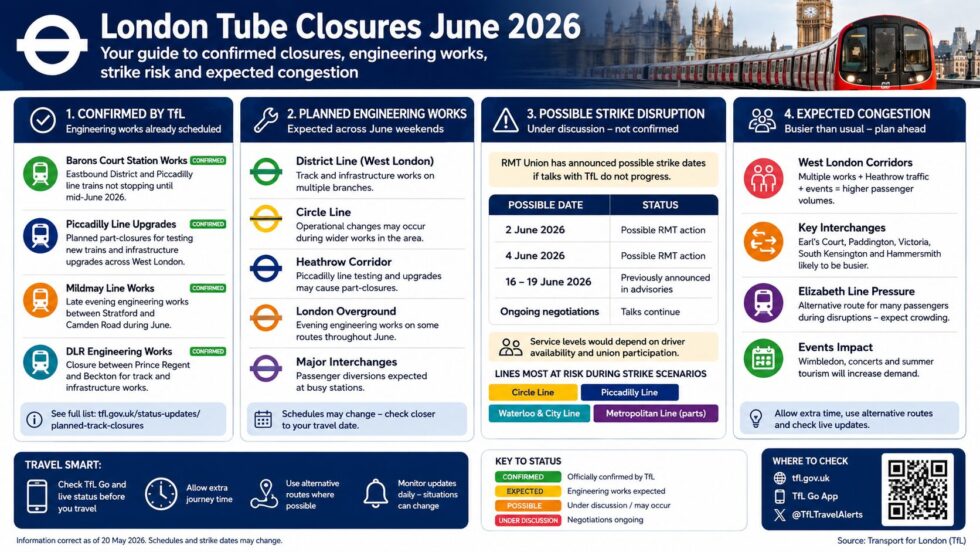
TfL’s own engineering calendar shows that June 2026 disruption is not based around one network-wide shutdown but rather a combination of confirmed closures, expected engineering restrictions, possible strike-related service reductions and wider congestion pressure caused by summer events and diverted passenger flows. That distinction has become increasingly important because some social media posts and unofficial travel accounts have mixed confirmed TfL closures with speculative disruption scenarios. Official TfL planning documents currently separate disruption into several categories: confirmed engineering works already scheduled into the network timetable; operational adjustments that may change closer to the travel date; and industrial action that remains under discussion between unions and London Underground management.
Confirmed by TfL: engineering closures and station works already scheduled
Transport for London has formally confirmed several engineering projects and operational changes affecting June travel. These include ongoing station works at Barons Court, Piccadilly line infrastructure upgrades linked to new train testing, and multiple planned rail closures listed inside TfL’s planned-track-closures programme. TfL says the works are necessary to modernise ageing infrastructure, improve reliability and prepare sections of the Underground for future fleet integration.
The organisation also continues using weekend closures as the preferred engineering window to reduce weekday commuter disruption. Some closures affect only late evenings or partial sections of routes, while others involve full weekend suspensions on specific branches.
One of the clearest confirmed disruptions involves Barons Court station, where eastbound District and Piccadilly line trains are not stopping until mid-June 2026 because of station works. TfL has also confirmed planned Piccadilly line closures linked to testing and infrastructure upgrades for the incoming fleet of Siemens trains. Those works involve upgrades to tracks, depots, power systems and platforms across parts of the route.
Confirmed TfL engineering works affecting June 2026
| Confirmed by TfL | Area affected | Status |
|---|---|---|
| Barons Court station works | District/Piccadilly | Confirmed until mid-June |
| Piccadilly line infrastructure upgrades | West London/Heathrow corridor | Confirmed engineering programme |
| Mildmay line evening works | Stratford to Camden Road | Confirmed late-night closures |
| DLR engineering works | Prince Regent to Beckton | Confirmed June closure period |
TfL’s published closures PDF also confirms scheduled evening engineering work on the Mildmay line between Stratford and Camden Road during late June, alongside DLR work between Prince Regent and Beckton.
Confirmed station and route issues Londoners should monitor
- Barons Court eastbound trains not stopping
- Piccadilly line part-closures for upgrade testing
- DLR engineering works in east London
- Mildmay line late-evening closures
- Potential late-night timetable reductions during engineering weekends
Passengers travelling through west London are likely to experience the greatest operational impact because several engineering programmes overlap within the same corridor.
Planned engineering works expected across June weekends
Beyond confirmed closures already published by TfL, the Underground network is also expected to experience rolling weekend engineering disruption throughout June. TfL updates these schedules regularly, meaning some operational details may still change closer to the travel date. Weekend works affecting the District, Circle, Hammersmith & City and Overground networks have already appeared in rolling engineering advisories and travel planning updates published during spring 2026.
Transport analysts say June traditionally becomes one of the busiest maintenance periods because TfL attempts to complete infrastructure projects before Wimbledon, the summer school holidays and peak tourist season intensify passenger volumes. Engineering schedules are also influenced by fleet testing windows and signalling work that can only be completed during reduced weekend service.
Expected June 2026 engineering pressure points
| Expected disruption area | Reason |
|---|---|
| West London District line branches | Track and infrastructure works |
| Circle line sections | Weekend engineering adjustments |
| Heathrow corridor | Piccadilly testing and congestion |
| Overground orbital routes | Evening engineering schedules |
| Major interchanges | Passenger rerouting |
Although TfL has not yet confirmed a full June-wide closure calendar for every weekend, engineering activity is expected to intensify around central and west London corridors where several overlapping maintenance programmes remain active.
Travel experts say passengers should avoid relying on historical weekend patterns because TfL now updates engineering schedules more dynamically than before the pandemic.
Possible Tube strike disruption remains under discussion
One of the biggest uncertainties surrounding London travel in June 2026 remains the ongoing dispute between TfL and the RMT union over proposed four-day Tube driver working arrangements. Several May strikes were suspended after negotiations resumed, but official strike pages still reference possible industrial action in early June if talks fail to progress. TfL and union representatives continue negotiating over fatigue concerns, working patterns and roster changes.
Importantly, the strike dates currently referenced should not automatically be treated as confirmed network shutdowns. TfL itself distinguishes between planned strike action and actual operational impact because service levels vary depending on how many drivers participate and which unions are involved. The Aslef union supports elements of the four-day week proposal, while the RMT remains opposed to parts of the arrangement. That division means disruption forecasts remain fluid.
Possible June 2026 Tube strike dates under discussion
| Date | Current status |
|---|---|
| 2 June | Possible RMT action |
| 4 June | Possible RMT action |
| 16–19 June | Referenced in earlier advisories |
| Ongoing negotiations | Still active |
TfL’s strikes information page currently lists 2 June and 4 June as possible strike dates linked to Tube driver industrial action.
However, multiple media reports also note that previous strikes were suspended after negotiations progressed. Reuters reported that the dispute remains unresolved but that industrial action was paused to allow additional talks.
“The dispute is not over, and more strike action will follow if we fail to make sufficient progress.” (RMT statement quoted after May negotiations)
Lines previously identified as vulnerable during strike scenarios
- Circle line
- Piccadilly line
- Waterloo & City line
- Sections of the Metropolitan line
The Guardian reported during earlier strike phases that these routes could face particularly severe disruption because of staffing patterns and union representation levels.
Expected congestion across central and west London
Even where no full closure exists, congestion is expected to rise sharply across several parts of the London transport network during June weekends. TfL and travel analysts both expect heavier interchange traffic because engineering works and possible strike fears encourage passengers to reroute through alternative services. The Elizabeth line, National Rail routes and central London bus corridors are likely to absorb significant additional demand during weekends with planned disruption.
West London remains especially vulnerable because Heathrow passenger traffic, summer tourism and sporting events all overlap with ongoing engineering activity. Queen’s Club tennis and major concert events are expected to increase demand on routes already affected by District and Piccadilly line operational changes. Even when trains continue operating normally, stations such as Earl’s Court, Paddington, South Kensington and Hammersmith may experience crowding linked to diverted passenger flows.
Areas expected to become significantly busier
| Location | Reason for expected congestion |
|---|---|
| Earl’s Court | District/Piccadilly interchange pressure |
| Paddington | Elizabeth line diversion traffic |
| South Kensington | Tourist rerouting |
| Victoria | Alternative route interchange |
| Hammersmith | West London redistribution |
The Elizabeth line is expected to play a particularly important role during disruption periods because TfL currently anticipates normal operation on the route even during possible Tube strikes. However, TfL and travel sites both warn that Elizabeth line services could become substantially busier during strike days or major engineering weekends.
Heathrow and airport travel could face indirect disruption
Passengers travelling to Heathrow Airport should pay particular attention to live updates throughout June because the Piccadilly line upgrade programme overlaps with potential industrial action and expected summer passenger growth. TfL says Heathrow itself will remain accessible throughout the engineering programme, but interchange routes and journey times may become less predictable during peak weekends.
The Piccadilly line is currently undergoing one of the Underground’s most significant infrastructure transition phases because TfL continues testing and integrating the new train fleet. According to TfL’s newsroom updates, part-closures are required to allow upgrades to tracks, depots, sidings and power systems while maintaining safe operation of the existing network.
Best alternatives for Heathrow passengers during disruption
- Elizabeth line from Paddington
- National Rail Heathrow Express
- Early-morning airport departures
- Live TfL status monitoring before travel
- Avoiding tight flight connection windows
Transport planners increasingly advise international passengers to build additional time buffers into airport journeys during engineering periods, especially on weekends.
What TfL is officially advising passengers to do
TfL’s core guidance remains consistent across all current engineering and strike advisories: check routes before travelling, allow additional journey time and monitor live service updates rather than relying on static timetables. The organisation says operational conditions can change rapidly during engineering weekends because faults, passenger redistribution and staffing availability all affect service reliability in real time.
Passengers are also being encouraged to use TfL Go and live journey planners rather than third-party social media summaries, which sometimes circulate outdated or inaccurate closure information. TfL’s transport status pages remain the primary official source for confirmed disruptions.
TfL advice for June 2026 weekends
- Check live status before leaving home
- Allow extra journey time
- Use Elizabeth line alternatives where possible
- Expect busier interchanges during weekends
- Monitor strike updates daily
- Avoid last-minute airport transfers
- Watch for late engineering revisions
Transport officials stress that June 2026 disruption should not be viewed as a single network-wide shutdown but rather as a combination of confirmed engineering works, expected maintenance activity, possible industrial action and increased congestion pressure caused by summer demand. That distinction matters because London’s transport picture can shift significantly within hours depending on negotiations, operational testing and passenger behaviour.
Read about the life of Westminster and Pimlico district, London and the world. 24/7 news with fresh and useful updates on culture, business, technology and city life: London Pride 2026: When Is the Parade and Which Westminster Roads Will Close