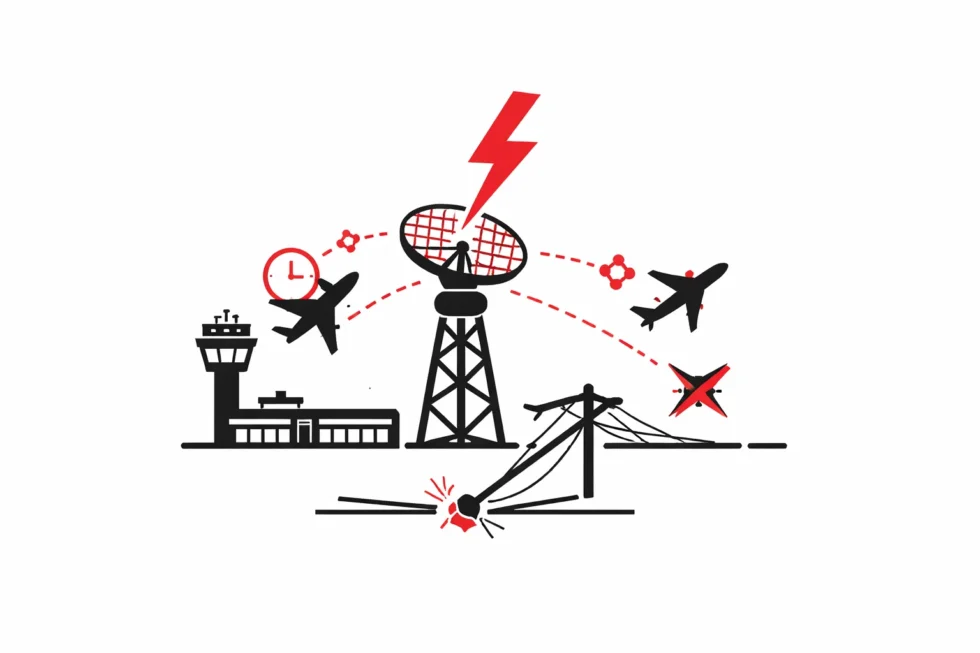
London, Monday 12 January 2026 — Arrivals at Birmingham Airport were suspended overnight after a weather-related power cut disabled a National Air Traffic Services (NATS) radar site, preventing air-traffic controllers from safely monitoring inbound aircraft. The failure began late on Sunday evening and continued into the early hours of Monday before radar coverage was restored at around 01:30 GMT, allowing landings to resume. More than 20 inbound flights were affected, with services delayed, cancelled or diverted, and some passengers stranded for more than four hours. Departures continued throughout the outage, but no aircraft were permitted to land. This is reported by The WP Times, citing Birmingham Airport.
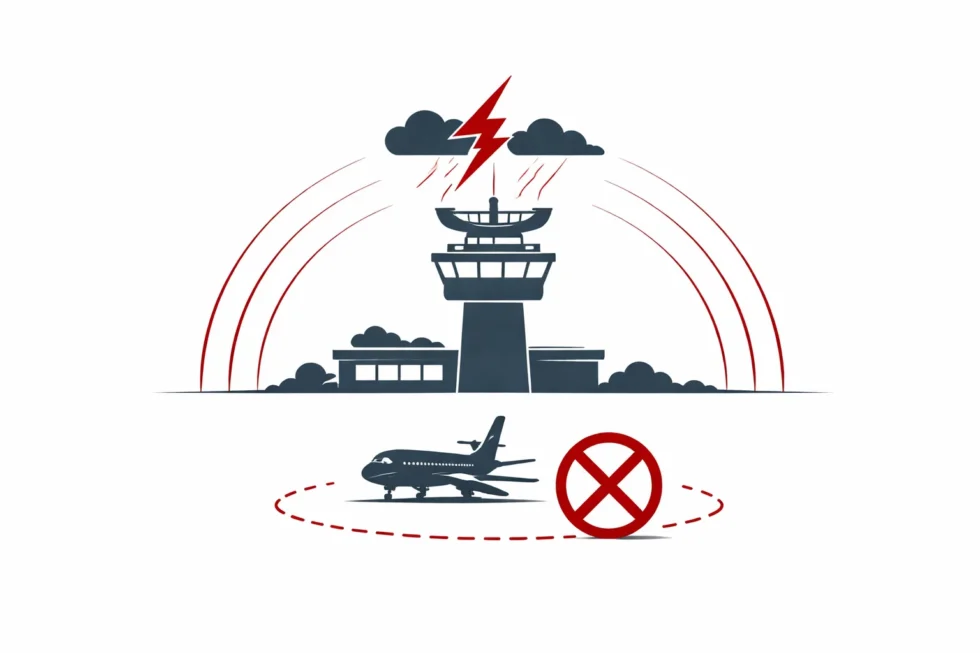
The radar installation affected provides surveillance for aircraft approaching Birmingham’s controlled airspace. When the power supply was lost, controllers could no longer see real-time positions of inbound aircraft, making it unsafe to sequence or clear planes for landing. Under UK air-traffic rules, arrivals must be suspended when radar coverage is unavailable.
NATS confirmed the outage was caused by a power failure in Shropshire following severe weather, which interrupted electricity to the radar facility. Engineers from NATS and National Grid were sent to the site overnight to locate the fault and restore supply. National Grid said it had responded to a local network outage, while NATS issued an apology to airlines and passengers for the disruption.
More than 20 Birmingham-bound flights were affected. Several aircraft were diverted to East Midlands Airport and Liverpool John Lennon Airport, while at least one KLM service from Amsterdam was forced to abandon its approach and return to its departure airport after it became clear Birmingham was not accepting arrivals.
Low-cost airlines including easyJet confirmed multiple cancellations and diversions, leaving some passengers stuck overnight as aircraft and crews were displaced across different airports.
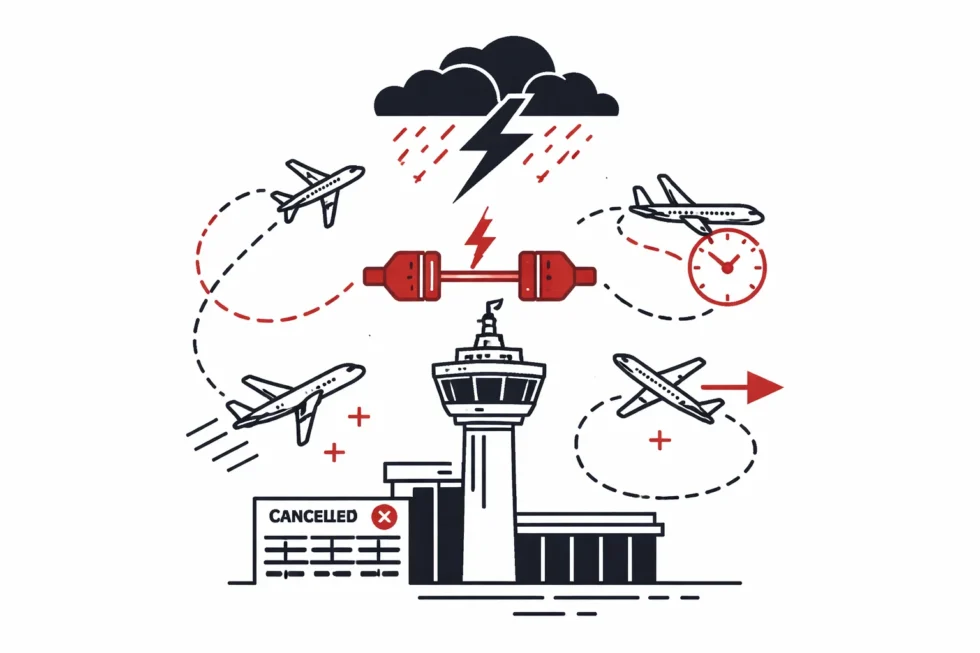
Radar data was restored shortly before 01:30 GMT, allowing inbound flights to resume and enabling Birmingham Airport to begin working through the backlog. The airport said it was cooperating with airlines throughout Monday morning to recover disrupted schedules and restore normal operations.
Modern UK airports depend on continuous radar surveillance to maintain safe separation between aircraft in congested airspace. Without live radar feeds, controllers cannot track the precise position, speed and altitude of approaching planes. While some departures can be managed using procedural control, landings are normally prohibited until radar coverage is fully restored.
The Birmingham disruption follows a series of recent UK aviation infrastructure failures. In 2023, a major NATS systems outage led to more than 1,000 flight cancellations nationwide, and a separate power failure at Heathrowcaused widespread disruption. Airlines and regulators have warned that the resilience of Britain’s air-traffic network remains highly sensitive to power and technical faults.
Read about the life of Westminster and Pimlico district, London and the world. 24/7 news with fresh and useful updates on culture, business, technology and city life: 6 January 2026: London City Airport ends free drop-offs as £8 kerbside charge begins