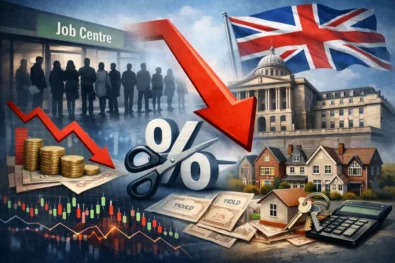
The phrase OECD UK tax policy criticism has moved to the centre of Britain’s economic debate after the Organisation for Economic Co-operation and Development warned that the UK’s complex and distortion-heavy tax system is undermining productivity, discouraging work and weakening long-term growth prospects. At the same time, scrutiny is intensifying around Chancellor Rachel Reeves and what economists describe as structural flaws — including the widely criticised £100,000 tax trap — that reduce incentives for higher earners to increase their labour supply. The WP Times reports this, citing The Telegraph and broader UK economic coverage.
At the core of the OECD UK tax policy criticism is a structural argument: Britain does not lack taxation, but coherence. The OECD’s latest assessment points to a system shaped by decades of incremental changes, political compromises and narrowly targeted reliefs that have collectively produced a fragmented framework. Economists say this fragmentation distorts decision-making for both households and businesses, particularly in areas such as employment, investment and consumption.
A central concern highlighted in the OECD UK tax policy criticism is the interaction between income tax thresholds and benefit withdrawal mechanisms. The £100,000–£125,000 income band has become emblematic of this issue. Within this range, individuals effectively face marginal tax rates exceeding 60% due to the tapering of the personal allowance. Economists argue this creates a “dead zone” where additional work yields disproportionately low net income, discouraging promotions, overtime or entrepreneurial risk-taking.
Tim Wallace, Deputy Economics Editor at The Telegraph, reported on 9 April 2026 that economists consider these rules “dysfunctional” and damaging to growth potential, particularly in sectors requiring highly skilled labour. Analysts also point to secondary effects: reduced productivity, lower tax receipts over time and a narrowing of the high-skilled workforce’s contribution to economic expansion.

The OECD’s recommendations focus on simplification and broadening the tax base. One of the most politically sensitive proposals is the expansion of Value Added Tax (VAT) to cover currently exempt or reduced-rate goods. This would eliminate long-standing anomalies — often cited in public debate — such as the classification differences between similar food products. According to the OECD, these exemptions are “largely inefficient and regressive,” disproportionately benefiting higher-income households while complicating compliance. At the same time, the OECD suggests that any additional revenue generated through VAT reform should be redistributed through targeted transfers to low-income households. This reflects a broader principle in the OECD UK tax policy criticism: shifting from complex reliefs to direct, transparent support mechanisms.
Property taxation is another major point of concern. The UK’s council tax system remains based on property valuations from 1991, a fact repeatedly highlighted in OECD assessments. Economists argue that this outdated structure creates regional inequities and mispricing of housing wealth, particularly in high-growth areas such as London and the South East. Reforming property tax, however, remains politically sensitive due to the potential impact on millions of households. Beyond structural inefficiencies, the OECD UK tax policy criticism also touches on governance and regulatory concerns. The report raises questions about potential conflicts of interest between policymakers and private sector roles, recommending stronger post-employment rules for public officials. While not directly tied to tax rates, these governance issues are seen as part of the broader institutional framework influencing economic performance.
Business groups and think tanks, including the Institute for Government, have echoed many of these concerns. They argue that the UK’s tax complexity imposes administrative burdens that disproportionately affect small and medium-sized enterprises. For entrepreneurs, navigating HMRC requirements can require significant time and resources, effectively acting as a barrier to entry and expansion. The historical context adds another layer to the OECD UK tax policy criticism. The now-defunct Office of Tax Simplification, established to streamline the system, was dissolved after 13 years despite producing multiple reform proposals. Analysts note that many of its recommendations were not implemented, reflecting a broader reluctance among successive governments to undertake comprehensive tax reform.
Current macroeconomic conditions amplify the urgency of these issues. The UK faces subdued growth forecasts, elevated borrowing costs and external pressures linked to global geopolitical tensions. Economists warn that without structural reform, the tax system could continue to act as a drag on recovery, limiting the government’s ability to stimulate investment and productivity.
The following table summarises the key elements of the OECD UK tax policy criticism and their economic implications:
| Issue | Description | Economic impact | Source / context |
|---|---|---|---|
| £100k tax trap | Withdrawal of personal allowance between £100k–£125k | High marginal rates (>60%), reduced work incentives | Economists, UK media analysis (2026) |
| VAT exemptions | Multiple reduced or zero rates | Complexity, regressive benefits | OECD report |
| Council tax | Based on 1991 property values | Regional inequality, outdated valuations | OECD assessment |
| Tax complexity | Fragmented rules and reliefs | Administrative burden on SMEs | Institute for Government |
| Governance concerns | Links between policymakers and business roles | Trust and regulatory efficiency risks | OECD recommendations |
In practical terms, the OECD UK tax policy criticism suggests that reform is not simply about adjusting rates but redesigning the architecture of taxation. Economists argue that a simpler system with fewer distortions would improve labour market participation, increase business investment and enhance overall economic resilience.
At the political level, however, the path forward remains uncertain. Tax reform of this scale would require difficult trade-offs, including potential short-term costs for certain groups and the risk of public backlash. For Chancellor Rachel Reeves, the challenge lies in balancing fiscal constraints with the need to modernise a system widely seen as outdated. As the debate intensifies, the OECD UK tax policy criticism continues to shape the policy agenda, placing pressure on the government to address long-standing structural issues that have, for years, limited the efficiency and fairness of the UK tax framework.
Read about the life of Westminster and Pimlico district, London and the world. 24/7 news with fresh and useful updates on culture, business, technology and city life: UK Border Revolution 2026: Mandatory Electronic Travel Authorisation (ETA) Enforcement and the End of Non-Digital Entry