
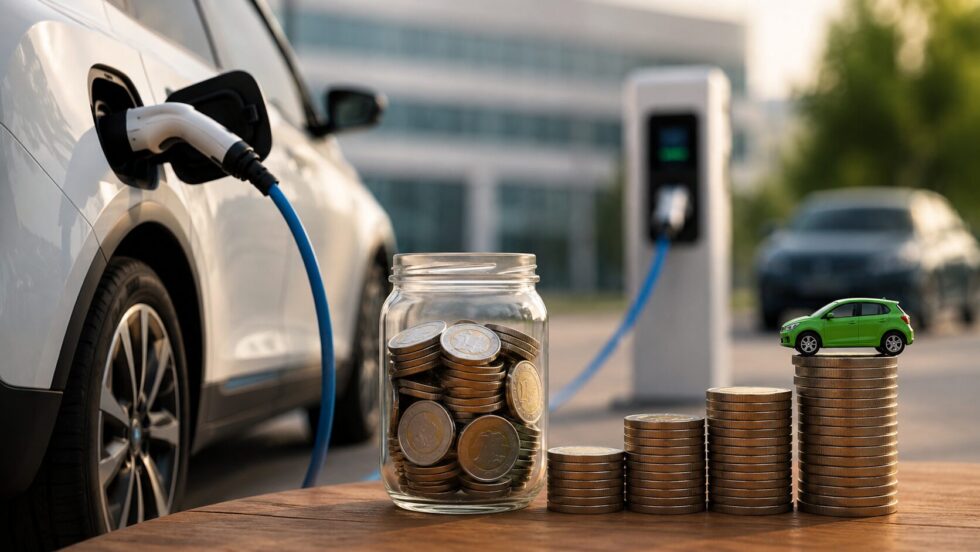
Pay-per-mile tax rules confirmed by the Government will require drivers of UK-registered electric, hydrogen fuel-cell and plug-in hybrid cars to pay according to their annual mileage from 1 April 2028. Battery-electric and hydrogen cars will initially be charged 3p per mile, while plug-in hybrids will pay 1.5p per mile because their owners also contribute fuel duty when using petrol or diesel. The charge, formally called Electric Vehicle Excise Duty, or eVED, will be paid alongside ordinary Vehicle Excise Duty rather than replacing it, The WP Times reports.
Drivers will normally declare their odometer reading and estimate how far they expect to travel during the next vehicle-tax period. They can pay annually, every six months or monthly, with the DVLA later comparing the estimate with the car’s recorded mileage and calculating any outstanding balance or credit. The Government has abandoned routine extra inspections for cars too new to require an MOT, but it will retain powers to order a mileage check where fraud or non-compliance is reasonably suspected. Miles driven outside the UK will still count, while GPS tracking will not be compulsory and any future use of connected-car data must be optional.
Pay-per-mile tax rates: how much electric car drivers will pay
The initial electric car tax per mile will be calculated using two national rates:
| Vehicle type | eVED rate from April 2028 | Charge for 8,000 miles | Charge for 12,000 miles | Charge for 20,000 miles |
|---|---|---|---|---|
| Battery-electric car | 3p per mile | £240 | £360 | £600 |
| Hydrogen fuel-cell car | 3p per mile | £240 | £360 | £600 |
| Plug-in hybrid car | 1.5p per mile | £120 | £180 | £300 |
| Electric van | Outside the scheme at launch | £0 | £0 | £0 |
These figures cover eVED alone. Drivers will still have to pay any ordinary VED applicable to their vehicle, including any relevant expensive-car supplement. The new mileage charge is therefore an additional motoring tax rather than a substitute for the existing road-tax system.
The Government says the 3p rate represents roughly half the average fuel duty paid per mile by a petrol or diesel driver. Its comparison assumes that an electric-car owner travelling 8,000 miles would pay about £240 a year under eVED, against approximately £480 in fuel duty for a conventional car covering the same distance. The actual overall cost difference will depend on electricity prices, charging location, vehicle efficiency, insurance and the existing VED liability. Rates will not remain fixed indefinitely. The 3p and 1.5p starting charges are due to rise from the 2029-30 tax year and in subsequent years in line with the Consumer Prices Index, preserving their value after inflation. A driver’s future bill may therefore be higher than a simple calculation based permanently on the launch rates.
Why the Government is introducing eVED
Petrol and diesel drivers contribute to the Exchequer whenever they buy fuel, but fully electric cars do not consume taxable petrol or diesel. As electric-car use expands, the Office for Budget Responsibility expects fuel-duty revenue to decline substantially, leaving the Treasury seeking another mileage-related source of motoring income.
The Government describes eVED as a long-term replacement for part of that lost revenue. It argues that vehicles contribute to congestion and road wear regardless of their powertrain and that people who travel further should consequently make a larger contribution. The charge is being added to the existing VED framework so the DVLA can use familiar licensing, payment and MOT systems rather than establishing a completely separate national road-pricing authority. Official forecasts suggest eVED will raise about £1.1 billion in 2028-29, its first financial year of operation, rising to £1.435 billion in 2029-30 and £1.865 billion in 2030-31. The Government expects approximately 5.6 million vehicles to be affected during 2028-29.
How the pay-per-mile system will work through the DVLA
Drivers will deal with eVED when renewing their vehicle tax. Instead of paying only the standard VED amount, the registered keeper will also need to supply the car’s current odometer reading and estimate the mileage expected during the forthcoming licensing period, usually 12 months.
The DVLA will use that estimate to calculate an initial eVED liability. Payment will be possible through the same broad channels used for VED, including the online vehicle-licensing service and participating Post Office branches. Motorists will be able to pay monthly, every six months or once a year. At the end of the period, the driver will submit another mileage reading. The system will compare the estimated distance with the mileage actually accumulated and reconcile the account.
When a driver travels more than estimated
A motorist who covers more miles than expected will owe a balancing payment. Drivers who realise during the year that their estimate is too low will be allowed to purchase additional mileage at the prevailing rate, reducing the risk of a large bill when the tax period ends. For example, an electric-car driver who initially estimates 8,000 miles would be charged £240. Should the car cover 10,000 miles instead, the final eVED liability at the launch rate would be £300, leaving another £60 to pay.
A balancing charge arising from an honest underestimate is not automatically the same as a penalty. Separate enforcement provisions are aimed at failures to report, false declarations and odometer manipulation. However, drivers will be expected to make reasonable estimates and keep their information current.
When a driver travels fewer miles than estimated
Where the car travels fewer miles than the driver purchased, the unused mileage credit will ordinarily move into the next licensing period and offset the next eVED liability. The Government is developing wider refund arrangements, including rules for changes of keeper and other events during a vehicle’s life, but some of this functionality remains unfinished. That distinction matters when an electric car is sold. Early proposals risked leaving prepaid mileage attached to the vehicle, potentially affecting its sale value and creating uncertainty over whether the outgoing or incoming keeper received the benefit. The consultation response says the Government intends eventually to support refunds when ownership changes, although full change-of-keeper reconciliation is not expected to be available when eVED first launches in April 2028.
Will electric cars need separate mileage inspections
Cars subject to an annual MOT will normally have their mileage verified through the existing MOT record. In most cases, owners will not need to arrange an additional inspection because the DVLA can compare their declaration with the odometer figure recorded at the test. The Government originally proposed separate mileage checks for newer vehicles before their first MOT. That raised concerns about cost, inconvenience and pressure on garages. Following 5,133 consultation responses, ministers decided not to impose routine additional checks on vehicles under three years old in Great Britain or under four years old in Northern Ireland.
Owners of newer cars will instead self-report an odometer reading at every VED renewal and provide an estimate for the following year. The first verified MOT mileage can later be compared with those earlier declarations. This does not mean that a new car can never be inspected. The DVLA, DVSA and police are expected to have powers to direct a keeper to present the vehicle for examination where there is reasonable suspicion of odometer fraud, inaccurate reporting or another eVED offence. Officials say such checks should be targeted rather than routine.
Will the pay-per-mile tax use GPS tracking
The standard eVED system will not calculate tax from where, when or on which roads a car is driven. No compulsory GPS tracker or permanently connected billing device forms part of the confirmed core scheme. The Government has instead chosen odometer readings because they record total distance without producing a detailed journey history. Ministers say protecting motorists’ privacy remains a priority.
However, officials will develop an optional service capable of using mileage information already transmitted by connected cars through built-in 4G or 5G systems. Drivers or fleets that opt in could receive more frequent mileage updates and a more automated payment process. The Government says any such functionality must remain voluntary, secure and limited to data needed for administering eVED. A further implementation update is expected before the system begins.
The optional connected-car proposal should not be confused with national road pricing. The announced eVED model cannot vary the charge according to a journey’s location, the time of day, road congestion or local pollution levels. Every taxable mile recorded on the odometer will initially carry the same national rate for that vehicle category.
Pay-per-mile tax will include miles driven abroad
One of the most contentious details is that mileage accumulated outside the United Kingdom will count towards a UK-registered car’s eVED bill. A family driving an electric car through France, Germany or Spain will still be charged 3p for every mile added to the odometer. A plug-in hybrid will incur 1.5p per mile, irrespective of whether the journey took place on a British motorway or an overseas road. The Government says separating UK and foreign mileage would require extra evidence, geographical tracking or a more complex claims system. Its analysis estimates that overseas driving represents about 2% of the total mileage covered by cars, leading ministers to prioritise administrative simplicity and privacy over deductions for non-UK travel.
Why Northern Ireland drivers may be affected more heavily
The overseas-mileage rule has particular significance in Northern Ireland. A resident who crosses regularly into the Republic of Ireland for work, education, shopping or family reasons may accumulate a substantial share of their annual mileage outside the UK while remaining liable for eVED on the entire distance. The Government has acknowledged that Northern Ireland motorists may be more likely than those in Great Britain to drive abroad. It has nevertheless retained a single UK-wide odometer approach and said it will monitor international developments, including whether neighbouring jurisdictions introduce comparable mileage taxes.
There is currently no confirmed mechanism allowing motorists to submit ferry tickets, border records or other evidence to deduct overseas journeys. Because the tax is based on total odometer movement, drivers planning lengthy European trips should include those miles in their estimate.
Which vehicles will pay the electric car tax per mile
The eVED charge will apply at launch to all UK-registered cars in the following categories:
- battery-electric cars;
- hydrogen fuel-cell electric cars;
- plug-in hybrid electric cars.
Electric vans, buses, coaches, motorcycles and heavy goods vehicles will initially remain outside the scheme. The Government says the transition to electric power is less advanced in those vehicle classes, although their treatment may be reviewed later. Ordinary non-plug-in hybrids are not listed as eVED vehicles because they continue to obtain all their energy from taxable fuel. Their drivers already pay fuel duty at the pump. The tax will apply to existing qualifying cars as well as newly registered ones. It is not restricted to vehicles purchased after April 2028. Affected motorists become liable when they first renew their VED after the commencement date, meaning drivers will enter the system at different points depending on their individual renewal dates.
Will disabled drivers and Motability customers pay eVED
Existing VED exemptions do not automatically remove the mileage-based liability. The consultation considered support for disabled motorists but the Government maintained that eVED is intended to reflect vehicle use in the same way that fuel duty applies to petrol or diesel consumed by disabled drivers. Some disabled motorists will continue to benefit from existing VED exemptions or reductions and from tax relief available through qualifying Motability arrangements. However, those concessions concern ordinary VED and vehicle provision; they should not be interpreted as a confirmed blanket exemption from eVED. Drivers receiving disability benefits should therefore wait for detailed DVLA guidance on how their specific vehicle and licensing status will be treated from 2028.
What happens if mileage is incorrect or the odometer fails
Registered keepers will have a legal responsibility to report mileage accurately, maintain a functioning odometer and ensure that relevant MOT information is correct. A declared reading should not normally be lower than the vehicle’s most recent verified MOT mileage. The planned compliance system will use MOT records, sequential mileage checks and risk-based analysis to identify implausible declarations. A vehicle repeatedly reporting falling mileage, unusually low usage or figures inconsistent with official records could trigger further examination.
The Government is also preparing rules for damaged odometers, stolen vehicles and cars that are written off or scrapped. In exceptional cases, the DVLA may use a pro-rata calculation or examine other evidence, including recent MOT records, when determining the final liability or any refund. Final penalty levels and appeal procedures will be set through legislation and detailed regulations before launch. Drivers should therefore be cautious about reports claiming a specific universal fine unless that amount appears in enacted legislation or formal DVLA guidance.
What the pay-per-mile tax means for EV ownership
For low-mileage motorists, eVED may remain comparatively modest. A battery-electric car covering 5,000 miles would initially incur £150 a year, while a plug-in hybrid would incur £75. At 20,000 miles, those bills rise to £600 and £300 respectively. The greatest impact will fall on motorists whose work, location or family responsibilities require extensive travel. Rural residents, mobile workers and people with limited public-transport alternatives will pay more because the system is based on distance rather than household income or access to other transport.
The tax also strengthens the importance of mileage records in used-car transactions. Buyers should compare the odometer with the MOT history, while sellers should retain evidence of the reading and date when handing over the vehicle. Until the Government finalises refunds at a change of keeper, both parties should establish clearly how any prepaid mileage or outstanding liability will be handled. Businesses face additional administrative work, particularly those operating large fleets, rental cars or leasing portfolios. The Government plans bulk licensing, central mileage estimates and a separate payment process for fleet operators. Business expenditure incurred wholly and exclusively for commercial purposes will generally follow the existing tax treatment of VED, while the established VAT treatment will continue where eVED is passed through a lease.
When will the pay-per-mile tax become law
The policy is scheduled to take effect on 1 April 2028, but further primary legislation and regulations are still required. The Government intends to amend the Vehicle Excise and Registration Act 1994, alongside road-traffic legislation governing odometers and enforcement. The next phase includes finalising the law, building DVLA systems, testing fleet arrangements, developing optional connected-car functionality and publishing guidance for motorists, garages and businesses. This means the central tax rates and launch date are confirmed policy, while some operational details — particularly refunds, ownership changes, taxis and special cases — remain subject to further announcements.
For drivers, the practical preparation is straightforward: maintain reliable mileage records, check MOT data for errors, estimate annual travel realistically and remember that foreign journeys will count. From April 2028, the distance recorded by an electric car will directly influence its annual UK tax bill.
Read about the life of Westminster and Pimlico district, London and the world. 24/7 news with fresh and useful updates on culture, business, technology and city life: Why was Heritage Live cancelled and what is known about the Sandringham concerts, line-ups and refunds
Materials used: HM Treasury, HM Revenue & Customs, DVLA, UK Government eVED consultation response, Budget 2025.