
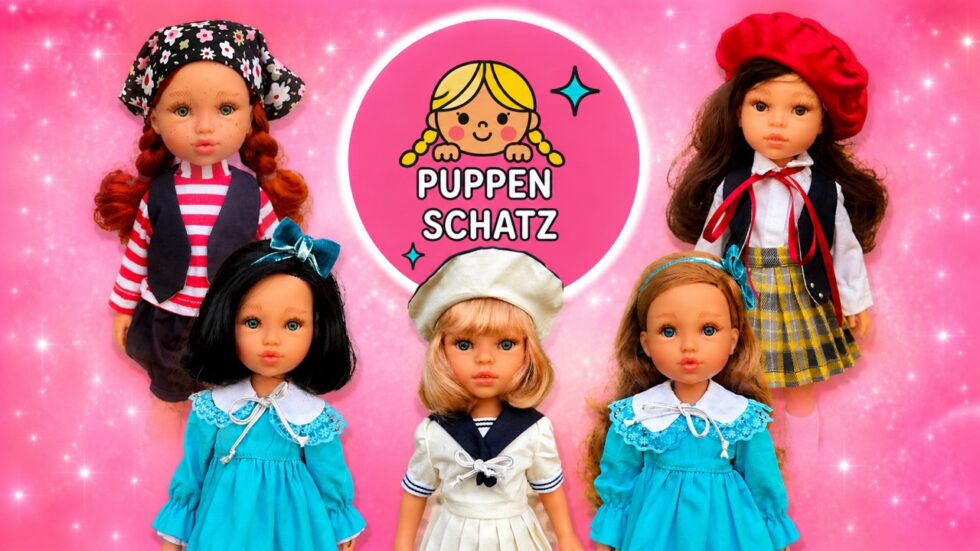
PUPPEN SCHATZ, a strictly limited collector edition of dolls, went on sale worldwide in 2026, the editorial team of The WP Times in Westminster reports, citing the brand's official information. The German label Dolls Look has issued the edition in collaboration with Paola Reina, and the series comprises five characters, each capped at just 350 individually numbered examples for the entire global market. It is aimed squarely at doll collectors around the world — including the sizeable and well-established collector base here in the United Kingdom.
According to the official brand information, sales are already open, and there is no plan for a reissue or a second production run. For British enthusiasts, the practical headline is simple: the edition can be ordered officially from the Dolls Look store on eBay with delivery to the UK and to customers worldwide, placing a German-curated, Spanish-crafted collector's piece within reach of buyers in London, Westminster and Pimlico, and far beyond. The launch lands at a moment when interest in European, hand-finished play dolls remains conspicuously strong in Britain. On eBay UK alone, hundreds of Paola Reina listings change hands, and the brand maintains a dedicated following on Amazon.co.uk, Etsy UK and through specialist toy retailers. Into that demand steps PUPPEN SCHATZ — not a mass-market release, but a scarce, numbered series engineered, by design, to be collected rather than merely bought.
What exactly is PUPPEN SCHATZ
PUPPEN SCHATZ — a German phrase that translates roughly as "doll treasure" — is the name given to a single, one-off collector edition created by the German company Dolls Look in collaboration with Paola Reina, one of Spain's best-known doll manufacturers. The brand describes the project as the result of an international collaboration between German curation and Spanish craftsmanship, conceived as an exclusive limited series released exclusively in 2026.
The collection brings together five distinct characters, each conceived as a girl with her own story and styling. They are Lolita, the sailor; Victoria, the schoolgirl; Roni, the pirate; and two separate versions of a doll named Angelica. Each model is presented as a stand-alone collector's figure while remaining part of a single, unified concept that runs across the series. That balance — five individual personalities held together by one coherent aesthetic — is precisely the sort of structure that rewards collectors who like to acquire a complete set. Crucially, this is not an open-ended line that will be quietly expanded each season. The brand has been explicit: PUPPEN SCHATZ is a one-time edition. No additional release and no repeat production of the models is planned. Once the 350 numbered examples of a given model are gone, they are gone. For collectors, that single fact reshapes the entire proposition, turning an ordinary purchase into a time-limited decision.
The dolls themselves: craftsmanship, materials and play value
Every doll in the PUPPEN SCHATZ edition stands 32 cm tall and is made from high-quality vinyl at Paola Reina's production facilities in Spain. That 32 cm format will be instantly familiar to collectors who know Paola Reina's celebrated lines, and it is a deliberate choice: large enough to show genuine detail in the face, hair and clothing, yet compact enough to display or store easily on a shelf or in a cabinet.
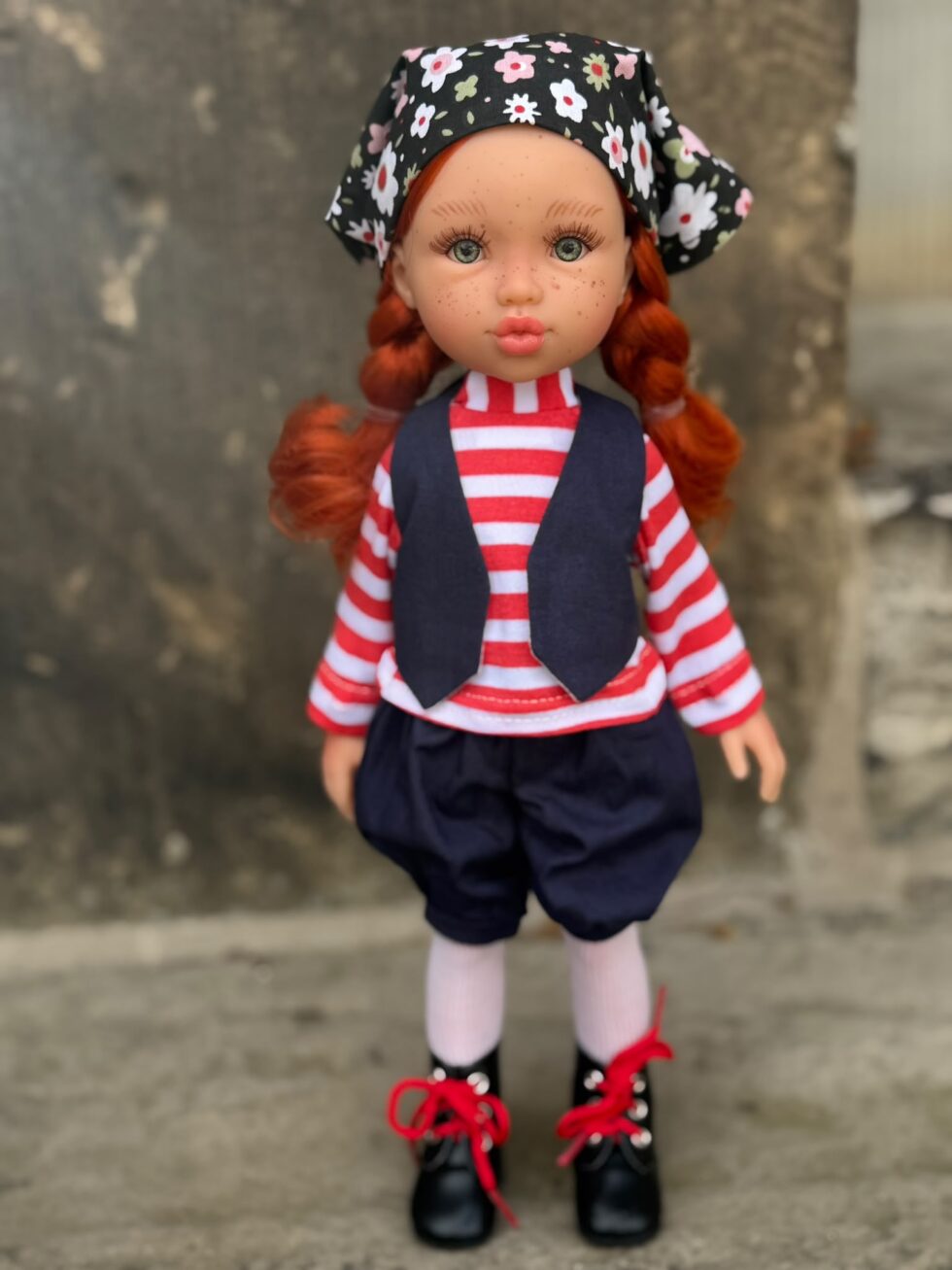
The dolls are articulated, with movable elements that allow them to be posed. They come with removable clothing, so outfits can be changed, and with sewn-in hair that can be brushed, washed and styled into different looks. This is a meaningful distinction for buyers weighing a collector's piece against a purely decorative figurine: PUPPEN SCHATZ dolls are designed both for display and for genuine play. The brand states clearly that they are suitable for children aged three and over as well as for collectors — a dual purpose that widens their appeal considerably.
That dual identity is underpinned by Paola Reina's long-standing reputation. The Spanish company has been producing dolls for decades — established in the mid-1990s and building on a doll-making tradition rooted in the Spanish town of Onil, in Alicante, a centre of toy and doll production since the nineteenth century. Over those years the manufacturer has earned international recognition for the quality of its production, its use of safe materials, and its attention to detail. Much of the finishing work, including face painting and hair, is carried out by hand, which is part of why each doll carries a sense of individuality rather than uniformity.
For UK buyers in particular, that provenance matters. British collectors have long valued European, made-in-Spain dolls precisely because of the hand-finishing and the safe, phthalate-free materials associated with the category. PUPPEN SCHATZ inherits that pedigree wholesale, then adds a layer of scarcity on top.
Only 350 of each: the numbers that define the edition
The single most important feature of PUPPEN SCHATZ — and the reason it is being framed as a collector's edition rather than a retail toy — is its strictly limited print run. Each model has been produced in a quantity of just 350 examples for the entire global market. Across five characters, that is a deliberately small footprint for a worldwide release, and it places every individual doll in genuinely short supply from day one. Every doll carries individual numbering that confirms its place within the limited series. That number is printed on a dedicated card inside the packaging, functioning as both an authenticity marker and a record of where a given doll sits within its run of 350. For collectors, numbering is far from a cosmetic detail: it is the mechanism that distinguishes a limited edition from an ordinary one, and it is frequently the difference that supports value on the secondary market over time.
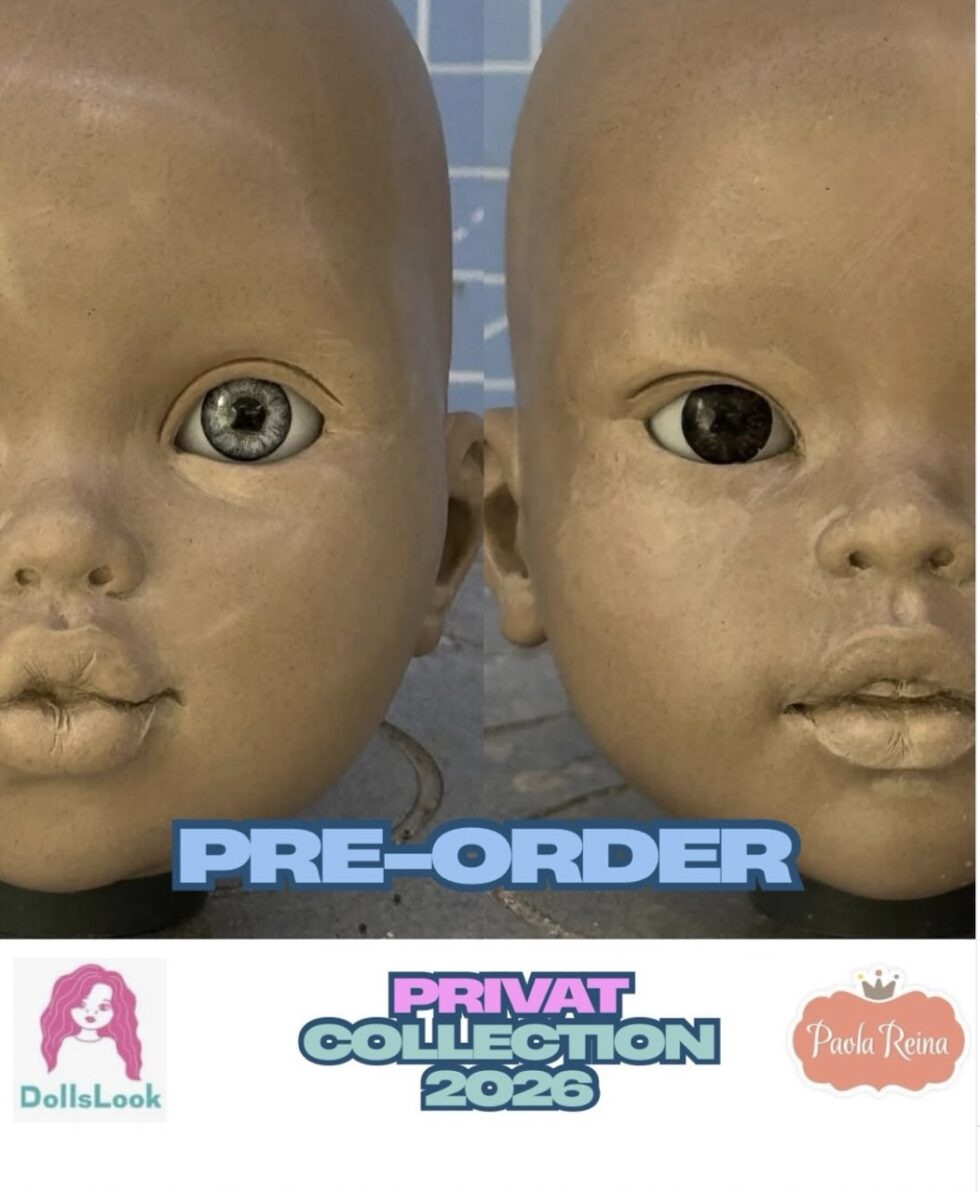
The brand has confirmed that the collection was issued as a one-off print run, with no further release and no repeat production planned. Because of the limited number of examples, the official information notes that availability of individual dolls is already decreasing as orders arrive from collectors and brand enthusiasts in different countries. In plain terms: the clock is already running, and the UK is competing for the same 350 examples as everyone else worldwide.
It is worth stating plainly what this does and does not mean. Limited numbering and a closed production run are the conditions under which collector value can develop; they are not a guarantee of future price appreciation. As with any collectible, value depends on demand, condition and provenance over time. What is certain is the supply side: 350 per model, numbered, with no reprint. The demand side will be written by collectors themselves.
Vintage inspiration and the emotion of collecting
The concept behind PUPPEN SCHATZ draws on a vintage aesthetic and on imagery tied to childhood memory. The series is positioned as a meeting point of three things: the traditions of European doll-making, the collectible value of a numbered limited edition, and the play possibilities of a modern, articulated doll. That combination is intentional, and it speaks to why people collect dolls at all.
For many collectors, a doll is not simply an object but a vessel for memory — a reminder of a childhood, a person, or a feeling. The five PUPPEN SCHATZ characters lean into recognisable archetypes: the sailor, the schoolgirl, the pirate, and the two faces of Angelica. These are not abstract figures but familiar, storybook personalities that invite owners to build narratives around them, whether on a display shelf or in a child's hands. It is this emotional dimension, as much as the scarcity, that the brand is betting will resonate from Germany to Britain and across the wider world.
Meet the five characters
Part of what makes a collector edition cohere is the cast. PUPPEN SCHATZ is built around five girls, each given a recognisable role and a wardrobe to match, yet all sharing the same underlying craftsmanship and the same 32 cm format. For collectors deciding which to chase first — or whether to pursue the complete set — it helps to understand each character in turn.
Lolita, the sailor. Lolita arrives in the guise of a sailor — a nautical theme that has run through European doll-making for generations and that carries an immediate, summery charm. The maritime styling gives Lolita a crisp, timeless look that photographs well and displays cleanly, qualities collectors tend to prize when arranging a cabinet. As one of the five numbered models, she exists in just 350 examples worldwide.
Victoria, the schoolgirl. Victoria is presented as a schoolgirl, an archetype that taps directly into childhood memory — the satchels, the uniforms, the small rituals of a school day. For UK collectors in particular, the schoolgirl motif resonates with a long British tradition of storybook characters, and Victoria's styling is likely to appeal to buyers drawn to nostalgia as much as to scarcity. She, too, is limited to 350 numbered pieces.
Roni, the pirate. Roni breaks from the more conventional roles with a pirate theme — adventurous, characterful and a clear favourite-in-waiting for collectors who like a doll with narrative bite. The pirate styling gives Roni a distinctive silhouette within the set and a story that invites play as readily as display. Like her companions, Roni is capped at 350 numbered examples for the whole world.
Angelica, in two versions. Uniquely within the edition, Angelica appears in two distinct versions. For collectors, dual variants of a single character are catnip: they create an internal completion challenge — owning both — and they often become the most discussed pieces in a set precisely because they invite comparison. Each Angelica version is its own numbered model, which means the edition's scarcity logic applies to each separately. Together with Lolita, Victoria and Roni, the two Angelicas complete a five-strong line in which every face is held to the same 350-piece ceiling.
Considered as a whole, the cast is deliberately varied — nautical, scholarly, adventurous and, in Angelica, doubled — yet unified by a single vintage-inspired aesthetic and a shared standard of finish. That is the structure of a set designed to be collected in full, not picked over piecemeal, and it is part of why the brand frames each doll as a stand-alone collector's figure within one coherent concept.
Inside the maker: the Onil doll tradition
To understand why PUPPEN SCHATZ carries weight with collectors, it helps to understand the manufacturer behind the collaboration. Paola Reina is a Spanish, European doll maker that has achieved worldwide recognition over the past three decades. The company specialises in play dolls and is known internationally for collections that have become reference points in their category. Its dolls are made in Spain, and it has built its reputation on consistent quality, safe materials and a distinctive, hand-finished aesthetic.
That reputation is not an accident of marketing but a product of geography and method. Paola Reina's manufacturing is rooted in Onil, a town in the province of Alicante that has been associated with toy and doll production since the nineteenth century — a genuine cradle of the craft in Spain. Working in that tradition, the company carries out much of its assembly, including face painting and hair work, by hand. The result, as the maker and its retailers describe it, is a doll that appears alive and individual rather than stamped from a mould, and it is precisely that hand-finished quality that British collectors have long sought out.
These dolls are also widely noted for being made with safe materials, free from phthalates and other harmful chemicals — a point that matters to UK parents buying for children as well as to collectors. It is that established credibility that Dolls Look has tapped for the PUPPEN SCHATZ collaboration. In effect, the edition pairs a German brand's curation and concept with a Spanish maker's craft heritage — a partnership designed to give the series both a story and a guarantee of finish.
For the UK market specifically, that heritage translates into trust. A British collector weighing a numbered edition wants assurance that the underlying object is well made and authentic. The Onil-rooted, hand-finishing tradition supplies exactly that assurance, and PUPPEN SCHATZ inherits it directly.
The British appetite for collectible dolls
Doll collecting in Britain is a more substantial pursuit than casual observers often assume. Across the country, collectors trade through online marketplaces, specialist retailers and dedicated fairs, and European, hand-finished dolls occupy a respected niche within that world. Paola Reina has a particularly visible UK presence: stocked by British specialist toy shops, listed in large numbers on eBay UK, available through Amazon.co.uk, and represented across Etsy UK, including a lively market in custom and one-of-a-kind repaints.
That ecosystem matters because it means PUPPEN SCHATZ is not arriving into a vacuum. There is an existing, knowledgeable audience in Britain that already understands the maker, already values the 32 cm format, and already appreciates the hand-finishing that distinguishes Spanish-made dolls. A strictly numbered edition of 350 per model is precisely the kind of release that energises such an audience, because it offers something the standard catalogue cannot: a fixed, transparent ceiling on supply.
It is also worth noting how British collectors typically behave around scarcity. Experienced UK collectors tend to move quickly on genuinely limited releases, to prioritise condition and completeness, and to keep original packaging and any authentication — here, the numbered card — intact. PUPPEN SCHATZ rewards exactly those habits. The edition's numbering gives each doll a verifiable identity within its run, and the closed production commitment means that identity cannot later be diluted by a reprint.
Ordering officially on eBay with delivery to the UK and worldwide
For readers in Westminster, Pimlico and across the UK, the most pressing question is a practical one: how does a British collector actually get hold of a PUPPEN SCHATZ doll? The answer is that the edition is a German release, created in collaboration with Paola Reina, and it can be ordered officially from the Dolls Look store on eBay — the dedicated, official channel for the edition — with delivery to the United Kingdom and to customers worldwide.
That route — ordering officially on eBay, shipped to the UK — is familiar territory for British doll collectors, who already buy and sell European, Spanish-made dolls on the platform every day. The PUPPEN SCHATZ launch simply formalises an official channel for a brand-new, numbered edition, giving buyers the protections and tracking of a recognised marketplace.
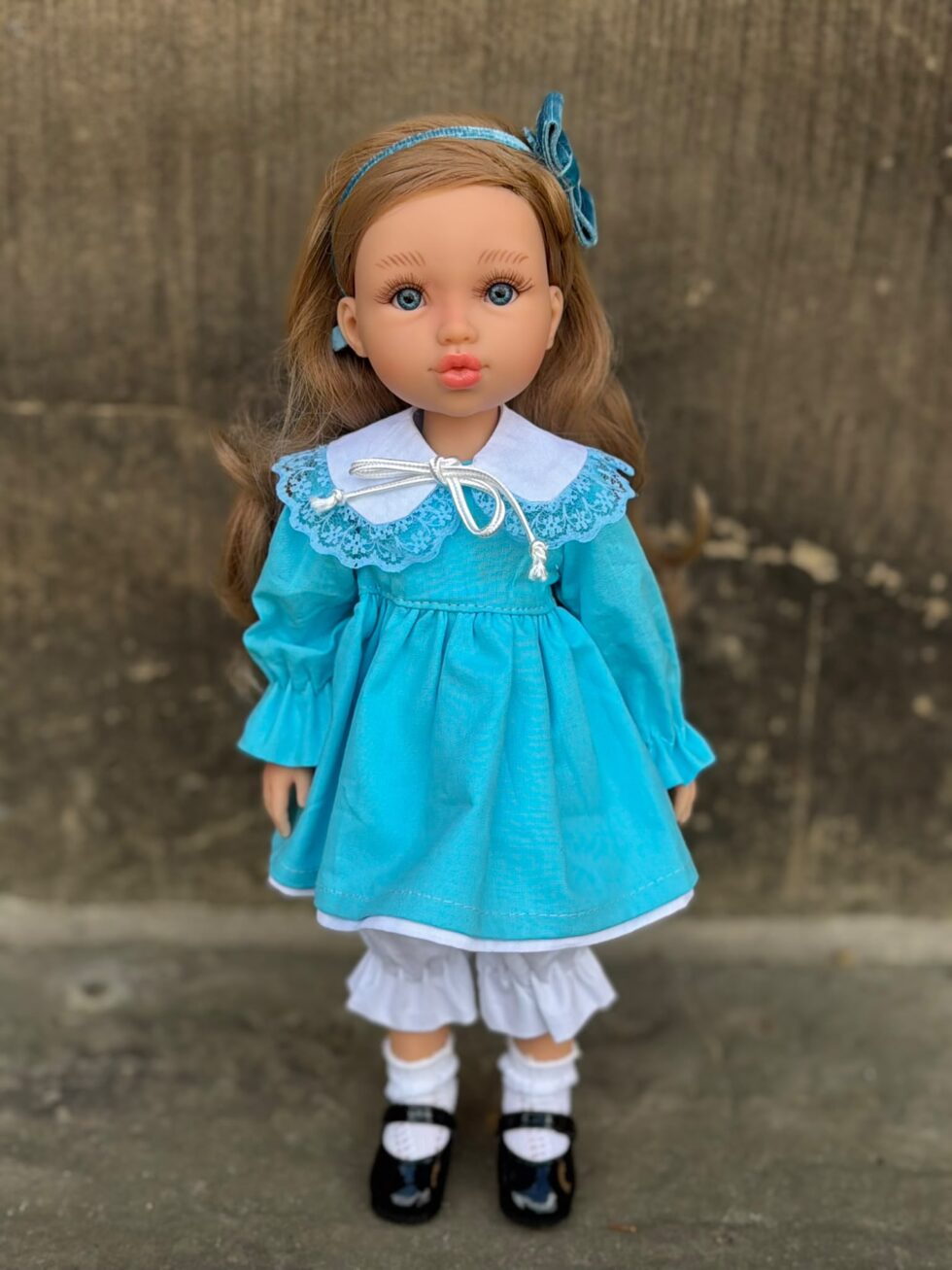
Prospective UK buyers should approach the purchase as they would any cross-border collectible order: confirm the exact model and its numbering, keep the original packaging and the numbered card that accompanies each doll, and retain proof of purchase. For a numbered limited edition, condition and completeness — doll, original box, and the card recording its number — are central to both enjoyment and any future resale value. None of this is unusual for seasoned collectors; it is simply good practice, and it matters more, not less, when only 350 of each doll exist. The brand directs anyone seeking further detail on the project, the individual characters and current availability to its official channels, where the launch, the five characters and ongoing availability are being documented for an international audience:
- Order on eBay (official store): ebay.de/str/dollslooks
- Instagram: instagram.com/lookpaolareina
- Facebook: facebook.com/share/1BmMDdYoqa
- TikTok: @dollslook
A practical guide for UK buyers
For British readers ready to act, a few practical considerations will make the difference between a smooth acquisition and a missed one. None of this is complicated, but with only 350 examples of each model in existence worldwide, the details reward attention.
- Decide on the character first. With five models — Lolita, Victoria, Roni and the two Angelica versions — and each capped at 350 pieces, the most sought-after faces may sell through fastest. Knowing which you want before you order saves crucial time.
- Order early, officially on eBay, with UK delivery. The edition is offered through the official Dolls Look eBay store with delivery to the United Kingdom and worldwide. Because availability is already described as decreasing, ordering sooner rather than later is the single most important step.
- Confirm the numbering. Each doll's number is printed on a card inside the packaging. When your order arrives, check that the numbered card is present and matches the doll, and store it safely — it is the proof of the doll's place within the run of 350.
- Preserve the packaging. For numbered limited editions, the original box and the numbered card are part of the collectible. Keeping them in good condition protects both your enjoyment and any future resale value.
- Keep proof of purchase. As with any collectible order, retaining your order confirmation and delivery records is sensible practice and useful provenance down the line.
Approached this way, ordering a PUPPEN SCHATZ doll to the UK is straightforward — placed officially on eBay, the same well-trodden marketplace by which British collectors already acquire Spanish-made European dolls, now applied to a brand-new, strictly numbered edition.
Collector value: a measured perspective
Whenever a limited edition launches, the question of future value follows close behind. It deserves an honest answer rather than a hard sell. The conditions that can support collector value are clearly present in PUPPEN SCHATZ: a strictly limited run of 350 per model, individual numbering recorded on a card, a one-off production with no planned reprint, and a respected Spanish maker behind the craftsmanship. Those are textbook ingredients for a piece that holds — and sometimes builds — value over time.
But ingredients are not outcomes. Whether any given doll appreciates depends on demand, condition and provenance, none of which can be promised in advance, and this article offers no financial advice. What can be stated with confidence is the supply side: it is fixed, small, numbered and final. For collectors, that certainty about scarcity is itself the appeal. The market will decide the rest, doll by doll, over the years to come.
There is a further, subtler point. Editions that maintain their credibility — that do not quietly reissue, that number honestly, that are made by a manufacturer with a real reputation — tend to be the ones collectors trust most. PUPPEN SCHATZ has, from the outset, committed to exactly that discipline. In a category where "limited" is sometimes an empty adjective, a transparent, enforced ceiling of 350 per model is a meaningful distinction, and it is the foundation on which any longer-term collector value would rest.
PUPPEN SCHATZ at a glance
- Brand and origin: a German edition (Dolls Look) in collaboration with Paola Reina; dolls made in Spain.
- Characters: five — Lolita (sailor), Victoria (schoolgirl), Roni (pirate), and two versions of Angelica.
- Size and material: 32 cm tall, high-quality vinyl, articulated, with removable clothing and sewn-in hair that can be brushed, washed and styled.
- Limitation: just 350 individually numbered examples per model for the entire global market; number printed on a card inside the packaging.
- Production: a one-off run — no reissue and no repeat production planned.
- Audience: doll collectors worldwide, plus children aged three and over (suitable for both play and display).
- Availability for the UK: on sale now; can be ordered officially on eBay with delivery to the United Kingdom and worldwide; availability of individual models already decreasing.
Frequently asked questions
Who makes PUPPEN SCHATZ dolls? PUPPEN SCHATZ is a German collector edition from Dolls Look, created in collaboration with Paola Reina. The dolls are produced in Spain, drawing on a decades-long, hand-finishing doll-making tradition.
How many PUPPEN SCHATZ dolls are there? Each of the five models is limited to just 350 individually numbered examples for the entire global market. Every doll's number is printed on a card inside the packaging.
Will there be a second production run? No. According to the brand's official information, PUPPEN SCHATZ was issued as a one-off edition, with no reissue and no repeat production planned.
Can I order PUPPEN SCHATZ in the UK? Yes. The edition can be ordered officially from the Dolls Look store on eBay (ebay.de/str/dollslooks), with delivery to the United Kingdom and worldwide. Because availability is already decreasing, collectors are advised to order early.
Are the dolls suitable for children, or only collectors? Both. The dolls are designed for play by children aged three and over and for collecting by adults. They are articulated, with removable clothing and washable, styleable hair.
How big are the dolls and what are they made of? Each doll stands 32 cm tall and is made of high-quality vinyl in Spain, with movable joints and sewn-in hair.
What should I keep to protect the doll's collector value? Keep the doll in good condition together with its original packaging and the numbered card that records its place within the run of 350. For a numbered limited edition, completeness and condition matter for both enjoyment and any future resale value.
PUPPEN SCHATZ is a small edition with a clear identity: five hand-finished, Spanish-made characters, curated by a German brand, capped at 350 numbered examples each, and offered worldwide with delivery to the UK via the official Dolls Look eBay store. It will not suit everyone — collector editions never do — but for those who value European craftsmanship, transparent scarcity and a doll that can be both displayed and played with, it is a rare and deliberately fleeting opportunity. The 350 examples of each model are, by the brand's own account, already being claimed across the world. British collectors who want one will need to decide sooner rather than later.
Read about the life of Westminster and Pimlico district, London and the world. 24/7 news with fresh and useful updates on culture, business, technology and city life: Which UK holidays fall in June 2026? Full list of celebrations, closures, travel disruption and opening hours