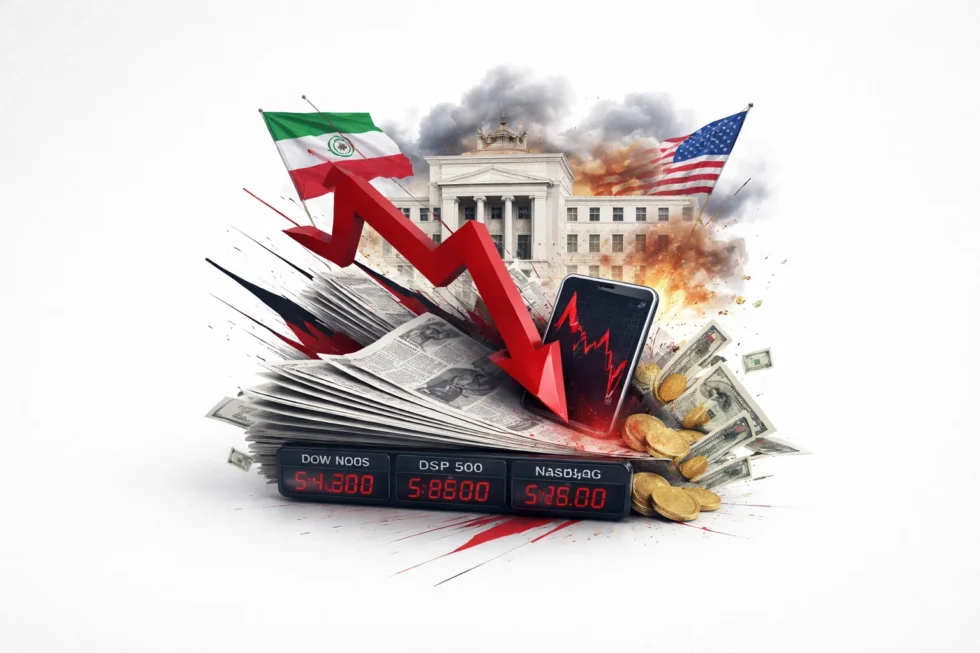
Stock market crash newsletters are surging in demand as global investors confront a sharp shift in market momentum in April 2026, with the Dow Jones Industrial Average, S&P 500 and Nasdaq Composite all retreating from recent highs amid intensifying macroeconomic pressure. After an extended rally under Donald Trump, equities have entered a fragile phase marked by corrections, rising volatility and mounting concern that a deeper downturn may be forming, as inflation accelerates and policy expectations shift, reported by The WP Times, citing leading US and financial media.
At the centre of the current risk narrative is a convergence of historically stretched valuations, geopolitical disruption linked to the Iran conflict, and a potential reversal in monetary policy by the Federal Reserve. Markets that had priced in continued growth, AI-driven expansion and interest rate cuts are now being forced to reassess that outlook. The result is a rapid increase in demand for stock market crash newsletters, as investors seek structured insight into whether this correction represents a temporary pullback or the early stage of a broader market break.
Why Valuations And Iran Shock Create A Crash Setup
The foundation of today’s market vulnerability lies in valuation extremes. At the start of 2026, the S&P 500’s Shiller price-to-earnings ratio moved above 40 — a level historically associated with significant market drawdowns. Previous occurrences at similar levels preceded major declines, including the dot-com collapse and the 2022 bear market, highlighting how sensitive elevated markets are to external shocks.
That external trigger has now emerged through geopolitical escalation. Following military developments involving Iran, disruption in the Strait of Hormuz — a critical global oil supply route — affected roughly one-fifth of global petroleum flows. This shock drove energy prices sharply higher and introduced renewed inflationary pressure across global economies.
The impact is systemic rather than isolated:
- Rising oil prices increase operational costs across industries
- Supply chains face renewed stress and unpredictability
- Consumers reduce discretionary spending as fuel and goods become more expensive
- Corporate earnings expectations begin to weaken
Recent inflation estimates suggest a move from approximately 2.4% in February to around 3.25% in March 2026, signalling a meaningful shift away from the Federal Reserve’s long-term target and complicating the outlook for monetary easing.
Federal Reserve Pivot: The Real Trigger For A Market Break
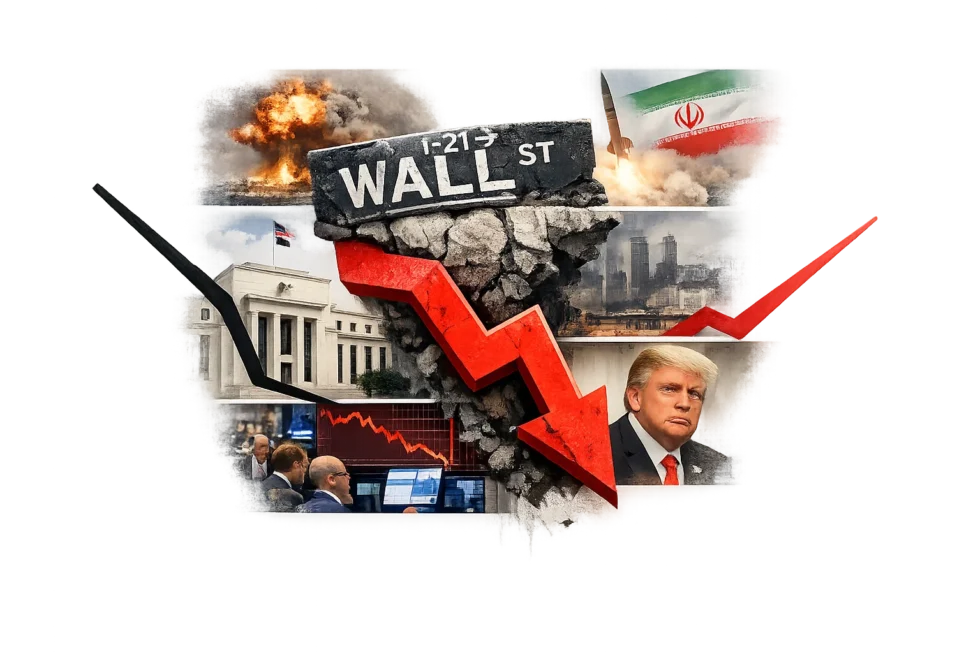
If geopolitical tension represents the initial shock, the policy response from the Federal Reserve is widely viewed as the decisive factor that could trigger a broader market decline. Under Jerome Powell, the central bank had been expected to support markets through rate cuts, particularly as growth sectors such as artificial intelligence continue to expand.
However, persistent inflation may force a complete policy reversal.
Instead of easing, the Federal Open Market Committee could pause or even reverse its rate-cutting trajectory. Such a shift would directly challenge current equity valuations, which remain elevated and heavily dependent on low borrowing costs and abundant liquidity.
The evolving risk landscape can be outlined as follows:
| Factor | Previous expectation | Current risk |
|---|---|---|
| Inflation | Declining toward 2% | Rising above 3% |
| Interest rates | Cuts expected in 2026 | Cuts delayed or reversed |
| Equity valuations | Supported by growth | Vulnerable to repricing |
| Market sentiment | Strongly bullish | Increasingly cautious |
Historically, markets priced at extreme valuations react sharply to tightening financial conditions. Even a moderate shift in interest rate expectations can trigger accelerated selling, particularly in growth-driven sectors.
Financial Sector Stress And Private Credit Warnings
Beyond macroeconomic pressures, early signs of stress are becoming visible within the financial sector. Shares in major institutions such as JPMorgan Chase, Citigroup and Wells Fargo have shown weakness as investors reassess exposure to private credit markets. Private credit has expanded rapidly in recent years, offering higher yields but often with less transparency and increased structural risk. Comparisons are increasingly being drawn with pre-2008 financial conditions, particularly as new derivative instruments tied to private credit emerge.
Key concerns include:
- Rising exposure to higher-risk debt among institutional investors
- Increased complexity and opacity in credit structures
- Potential contagion effects if defaults begin to rise
- Heightened sensitivity to macroeconomic shocks such as inflation or rate hikes
Warnings from financial research bodies indicate that some insurers now hold riskier asset portfolios than they did prior to the global financial crisis, raising questions about systemic resilience in a downturn.
What History Says About Stock Market Crashes
Despite the growing prominence of stock market crash newsletters, historical evidence suggests that downturns are both inevitable and cyclical. Corrections and bear markets are not anomalies but integral components of long-term market behaviour.
Key data points provide important context:
- The average S&P 500 bear market lasts approximately 286 days
- The longest historical bear market extended to around 630 days
- Bull markets, by contrast, typically last over 1,000 days
- The sharpest declines often occur rapidly, within weeks rather than months
This pattern highlights a fundamental asymmetry: while losses can be sudden and severe, recoveries and long-term upward trends tend to dominate over extended periods.
Investor Strategy Shifts: From Panic To Positioning
The surge in demand for stock market crash newsletters also reflects a shift in investor behaviour. Rather than reacting purely with fear, many experienced participants are focusing on preparation and strategic positioning.
One widely adopted method is the development of structured investment watchlists — curated selections of assets identified for potential acquisition during market downturns. This disciplined approach encourages:
- Long-term thinking over short-term reaction
- Systematic capital deployment during volatility
- Reduced emotional decision-making under pressure
- Focus on intrinsic value rather than market noise
This philosophy aligns with the principles of value investing, where periods of market weakness are viewed as opportunities to accumulate high-quality assets at discounted prices.
Outlook: Volatility Ahead But Long-Term Trend Intact
The current market environment reflects a complex interplay of elevated valuations, geopolitical instability and uncertain monetary policy. While the probability of a deeper correction or even a stock market crash has increased, the long-term structural drivers of growth remain in place.
Technological innovation, particularly in artificial intelligence and advanced computing, continues to underpin market expansion. At the same time, global capital flows and corporate earnings resilience provide a counterbalance to short-term volatility.
The key variable remains inflation — and how decisively the Federal Reserve responds in the coming months. A sustained inflationary environment would increase the likelihood of policy tightening, placing further pressure on already stretched valuations. For now, the message from markets is clear: volatility is returning, risk is rising, and investors are entering a phase where preparation, discipline and access to reliable analysis — including stock market crash newsletters — will be critical to navigating what comes next.
Read about the life of Westminster and Pimlico district, London and the world. 24/7 news with fresh and useful updates on culture, business, technology and city life: UK Border Revolution 2026: Mandatory Electronic Travel Authorisation (ETA) Enforcement and the End of Non-Digital Entry