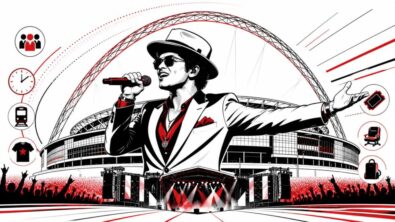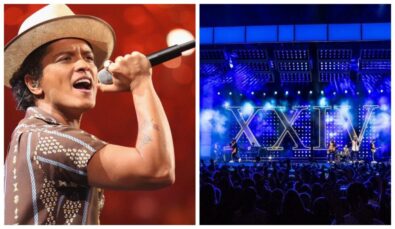
Summertime Ball 2026 brought Capital FM back to Wembley Stadium on Saturday 6 June, with 80,000 fans, a full-scale pop line-up and a later ITV1 broadcast that put Jason Derulo’s high-energy set at the centre of the national music conversation. The one-day show, staged as Capital’s Summertime Ball with Barclaycard, gathered Jason Derulo, RAYE, Take That, Robyn, Niall Horan, Calvin Harris, Bebe Rexha, Fatboy Slim, Lola Young, XG, Stephen Sanchez, MEEK and other artists for one of Britain’s most visible summer pop events, The WP Times reports, citing The Guardian, Capital FM, Global and Wembley Stadium.
The event mattered not only because of its scale, but because it showed how British radio can still turn a live concert into a mass cultural moment in the streaming era. Derulo’s performance drew attention after a brief on-stage slip that he quickly turned into part of the show, while RAYE, Take That, Robyn and the wider line-up gave the Wembley crowd a mix of current chart power, British pop history and nostalgia-led stadium entertainment.
Summertime Ball 2026 at Wembley: what happened and why it mattered
Capital’s Summertime Ball 2026 took place at Wembley Stadium in London on Saturday 6 June, with the official venue listing describing it as the UK’s biggest summer party in front of 80,000 fans. The show was later placed in the Saturday television schedule, with ITV1 airing Capital’s Summertime Ball 2026 on 13 June at 4.15pm, making the concert both a stadium event and a national broadcast product. That distinction matters because the Summertime Ball is not a normal festival: it is a radio-built, sponsor-backed, television-friendly pop event designed around short, concentrated performances by many artists rather than one long headline set. The line-up reflected the current shape of mainstream pop in Britain. It brought together global names such as Jason Derulo, Calvin Harris and Bebe Rexha, British chart figures such as RAYE, Myles Smith and Lola Young, former boyband power through Niall Horan, legacy British pop through Take That, electronic and dance heritage through Fatboy Slim and Robyn, and newer acts including Sekou, Sienna Spiro, Stephen Sanchez, XG, MEEK and December 10. The result was a stadium show built for several audiences at once: teenagers, parents, nostalgic pop fans and social-media viewers who may only encounter the night through clips.
The event also showed why Wembley remains such a powerful venue for pop. Unlike an arena, Wembley gives radio pop the scale normally associated with football finals, international tours and major national occasions. A song that might feel lightweight on a phone playlist can become much larger when 80,000 people are singing it under the arch. That is the commercial logic behind the Summertime Ball: Capital turns playlist culture into a physical crowd, then extends it again through broadcast, video clips and social sharing.
Key facts:
| Detail | Information |
|---|---|
| Event | Capital’s Summertime Ball with Barclaycard 2026 |
| Venue | Wembley Stadium, London |
| Date | Saturday 6 June 2026 |
| Broadcast | ITV1 highlights listed for Saturday 13 June 2026 |
| Crowd scale | About 80,000 fans |
| Main names | Jason Derulo, RAYE, Take That, Robyn, Niall Horan, Calvin Harris, Bebe Rexha, Fatboy Slim |
| Format | One-day multi-artist pop concert |
| Organiser | Capital FM / Global |
Who is Jason Derulo and what happened during his Summertime Ball 2026 set?
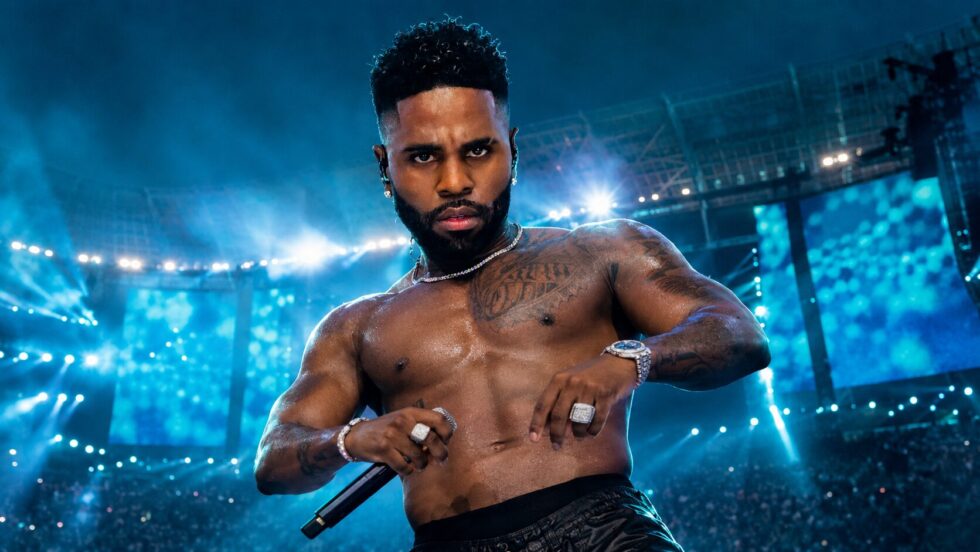
Jason Derulo is an American singer, songwriter and performer who became a global pop name after his late-2000s breakthrough and built his career on dance-heavy R&B-pop, sharp hooks and stage choreography. At Summertime Ball 2026, he was not presented as a delicate live vocalist in a stripped-back setting, but as a full physical entertainer expected to move, dance, command a huge stage and keep Wembley active. That made his set one of the most visually direct performances of the day, especially for viewers watching the broadcast or clips online.
The moment that travelled fastest online was not only a song, but a slip. During his performance at Wembley, Derulo appeared to lose his footing on stage stairs, fell briefly, then recovered quickly and continued the show. Reports said he reassured the crowd with the line “I survived!”, turning what could have been an awkward interruption into a controlled showman’s moment. The reaction was important: instead of reading the fall as a disaster, many fans treated it as evidence of composure under pressure.
That response fits Derulo’s public image. His performances rely on movement, confidence and a sense that the artist is in control of the room even when the room is enormous. At Wembley, the slip briefly broke the polished surface of the show, but his recovery restored the rhythm almost immediately. In a live stadium environment, that kind of recovery can matter as much as the planned choreography because audiences remember how an artist handles the unscripted second.
Derulo’s Wembley appearance therefore became more than a routine festival slot. It became a compact example of the risks of live pop performance: wet or difficult surfaces, fast movement, stairs, dancers, lights, camera pressure and a crowd large enough to make every mistake public. His response helped keep the story positive, but the wider discussion also touched on stage safety and the physical demands placed on pop performers at large televised events.
RAYE, Take That and Robyn gave the show its British pop range
RAYE’s place on the Summertime Ball 2026 bill was significant because her recent career has become one of the clearest British music stories of the decade: a songwriter and vocalist who moved from industry frustration to independent authority and major-stage recognition. At Wembley, her role was not simply to add another current name to the poster. She represented a newer version of British pop stardom, built on vocal ability, songwriting identity, emotional directness and a public narrative of professional resilience.
Take That gave the line-up a different kind of weight. Gary Barlow, Mark Owen and Howard Donald bring a catalogue that stretches across generations, and their inclusion made the event more than a youth-focused radio concert. For older listeners and family groups, Take That functioned as a bridge between 1990s and 2000s British pop memory and the current Capital audience. That matters in a stadium where parents and children often attend the same show for different artists.
Robyn added another layer. Her presence brought a more alternative, emotionally charged pop history into a mainstream radio space. A performer like Robyn can alter the mood of a stadium because her best-known songs carry both dance-floor energy and private melancholy. In a show built on short, high-impact sets, that contrast helps prevent the evening from becoming one long sequence of interchangeable radio hits.
The strongest part of the 2026 bill was therefore its architecture. It did not depend on one artist alone. It placed Derulo’s physical showmanship next to RAYE’s vocal command, Take That’s generational recognition, Robyn’s cult-pop authority, Calvin Harris’s dance scale, Niall Horan’s post-One Direction appeal and the newer names trying to turn exposure into momentum. That is exactly how the Summertime Ball works: it compresses the current music market into one stadium afternoon.
Why the Capital Summertime Ball still works in the streaming era
The Summertime Ball remains powerful because it solves a problem that streaming has created for pop music. On platforms, artists are separated into playlists, algorithmic recommendations and short clips. At Wembley, they are placed back into a shared public order, one after another, in front of a mass audience. That gives fans the feeling of a collective chart again, even if the actual charts are now fragmented across streaming, radio, TikTok and fan communities.
Capital FM and Global also understand that the Ball is not only a concert. It is a content engine. The live audience provides atmosphere, the radio station provides promotion, the sponsor provides commercial structure, the television broadcast extends reach, and social media turns individual moments into separate stories. Derulo’s slip, RAYE’s reception, nostalgia around Take That, Robyn’s emotional pull and surprise or reunion moments can all live independently online after the stadium lights go down.
This is why the event’s format is commercially strong. Each act performs a concentrated set that gives casual fans the biggest songs without demanding full commitment to a tour. For younger audiences, it is a chance to see many major names in one place. For artists, it offers one of the most efficient exposure opportunities in the British summer calendar. For Capital, it reinforces the station’s position as a curator of mainstream pop rather than just a broadcaster of it.
The Ball also benefits from Wembley’s symbolism. A performance there carries a different meaning from a standard festival stage because Wembley is already associated with national scale. When a radio brand fills it with pop artists, the message is clear: mainstream music still has the power to gather a huge crowd in one place. In a media environment often described as fragmented, that remains valuable.
What viewers saw on ITV1 and why the broadcast changed the story
The ITV1 broadcast gave Summertime Ball 2026 a second life. A stadium crowd can make an event feel huge on the day, but television turns it into a national entertainment programme with a different audience: viewers at home, casual music fans, families and people who may not follow Capital’s live coverage. The Guardian’s TV listing highlighted the broadcast as part of the Saturday schedule, with Jason Derulo, Robyn and Mis-Teeq among the acts that made the show notable for viewers.
Broadcast also changes how performances are judged. In the stadium, energy, sound pressure and crowd reaction dominate. On television, camera angles, editing, close-ups and the pacing between songs become part of the performance. A moment such as Derulo’s slip becomes easier to isolate, replay and discuss. A vocal moment from RAYE can be framed more intimately. A legacy act like Take That can be edited into a clean emotional highlight.
That makes the Summertime Ball a hybrid product: live concert, radio event, television entertainment and social-media feed. The same performance may be experienced in four different ways by four different audiences. Someone inside Wembley remembers the heat, noise and crowd movement. A television viewer remembers the edited show. A TikTok user may remember only the slip, the chorus or the crowd reaction. A radio listener may experience the day through interviews and presenter framing.
For journalists, that means the story is not only “who performed”. The stronger story is how the event travelled: from Wembley to ITV1, from Capital’s platforms to social media, from a stage incident to a wider conversation about performance pressure and professionalism. Summertime Ball 2026 became a pop event because the songs were there, but it became a media story because the moments were portable.
The full line-up showed how British radio packages global pop
The official 2026 line-up was built to cover several types of pop power. RAYE brought British credibility and current relevance. Niall Horan brought global fan loyalty from the One Direction era and his solo career. Take That brought multi-generational recognition. Fatboy Slim and Calvin Harris brought dance scale. Jason Derulo and Bebe Rexha brought international radio familiarity. Robyn brought critically respected pop history. Lola Young, Myles Smith, Sienna Spiro, Sekou, MEEK, XG, Stephen Sanchez and December 10 gave the bill newer or rising energy.
That spread is not accidental. A radio event of this size cannot depend only on niche credibility or only on nostalgia. It needs enough current names to feel fresh, enough legacy names to feel valuable, enough global names to feel large, and enough emerging artists to make the station look forward-facing. In that sense, the Summertime Ball is also a map of Capital’s audience strategy.
The event also gives newer performers a rare type of pressure test. Playing Wembley as part of a multi-artist bill is different from playing to a smaller room of dedicated fans. The crowd may not know every song. The set is short. The artist has to win attention quickly. That can be harsh, but it can also accelerate recognition if the performance lands.
For established stars, the function is different. They are not introducing themselves; they are proving they still belong in the current pop conversation. Derulo did that through physical showmanship. Take That did it through memory and catalogue. Robyn did it through emotional connection. RAYE did it by showing that her current artistic position can hold a stadium, not just a critical narrative.
What Summertime Ball 2026 says about live music in Britain
Summertime Ball 2026 showed that large-scale pop events in Britain still depend on a simple formula: recognisable songs, short dramatic sets, strong broadcast packaging and a crowd large enough to turn individual hits into shared memory. The format may look bright and easy from the outside, but behind it sits a serious logistical machine involving artist scheduling, production design, stage safety, sponsor rights, crowd management, broadcasting and transport planning around Wembley.
The stage incidents involving slips and stumbles also raised a practical point. Modern pop performance is physically demanding, and large stages often involve stairs, platforms, rain risk, polished surfaces, lighting changes and fast transitions between acts. When everything works, audiences see spectacle. When something goes wrong, the artist’s reaction becomes part of the show. Derulo’s quick recovery prevented the moment from defining the performance negatively, but it also reminded viewers that live entertainment is never fully controlled.
For fans, the appeal is more direct. The Ball offers a condensed version of the pop year in one day. Instead of buying several separate tickets, audiences can see a wide range of artists in a single stadium event. That is particularly valuable at a time when touring costs, ticket prices and travel expenses can make live music difficult for many people. A multi-artist show turns one trip to Wembley into a wider music experience.
For artists, the benefit is exposure at scale. A few minutes on the Summertime Ball stage can produce broadcast footage, social clips, press coverage and fan reaction that outlast the actual set. That is why the event continues to attract major names. It is not only a concert slot; it is a visibility platform.
Frequently asked questions about Summertime Ball 2026
When was Summertime Ball 2026 held?
Summertime Ball 2026 was held at Wembley Stadium in London on Saturday 6 June 2026. The event was later featured in ITV1’s Saturday 13 June television schedule.
Who performed at Summertime Ball 2026?
The official line-up included RAYE, Niall Horan, Take That, Fatboy Slim, Myles Smith, Lola Young, Sienna Spiro, Robyn, Calvin Harris, Jason Derulo, Sekou, Bebe Rexha, December 10, XG, Stephen Sanchez and MEEK.
What happened to Jason Derulo at Summertime Ball 2026?
Jason Derulo slipped during his Wembley performance but recovered quickly and continued the show. Reports said he told the crowd, “I survived!”, turning the moment into a light-hearted part of the performance rather than a serious interruption.
Why is Summertime Ball important in the UK?
It is one of the biggest radio-backed pop events in Britain. Capital FM uses the Wembley show to bring together major international artists, British stars, rising acts and a mass audience of around 80,000 fans.
Was Summertime Ball 2026 only a live event?
No. It was staged live at Wembley Stadium and later extended through broadcast and digital coverage, including ITV1 highlights, Capital’s platforms and social-media clips.
Read about the life of Westminster and Pimlico district, London and the world. 24/7 news with fresh and useful updates on culture, business, technology and city life: Why Is Louis Partridge Back in Enola Holmes 3 and What Does the New Netflix Trailer Reveal
This article was prepared on the basis of materials from The Guardian, Capital FM, Global, Wembley Stadium, The Sun, AXS and official event information about Capital’s Summertime Ball with Barclaycard 2026.